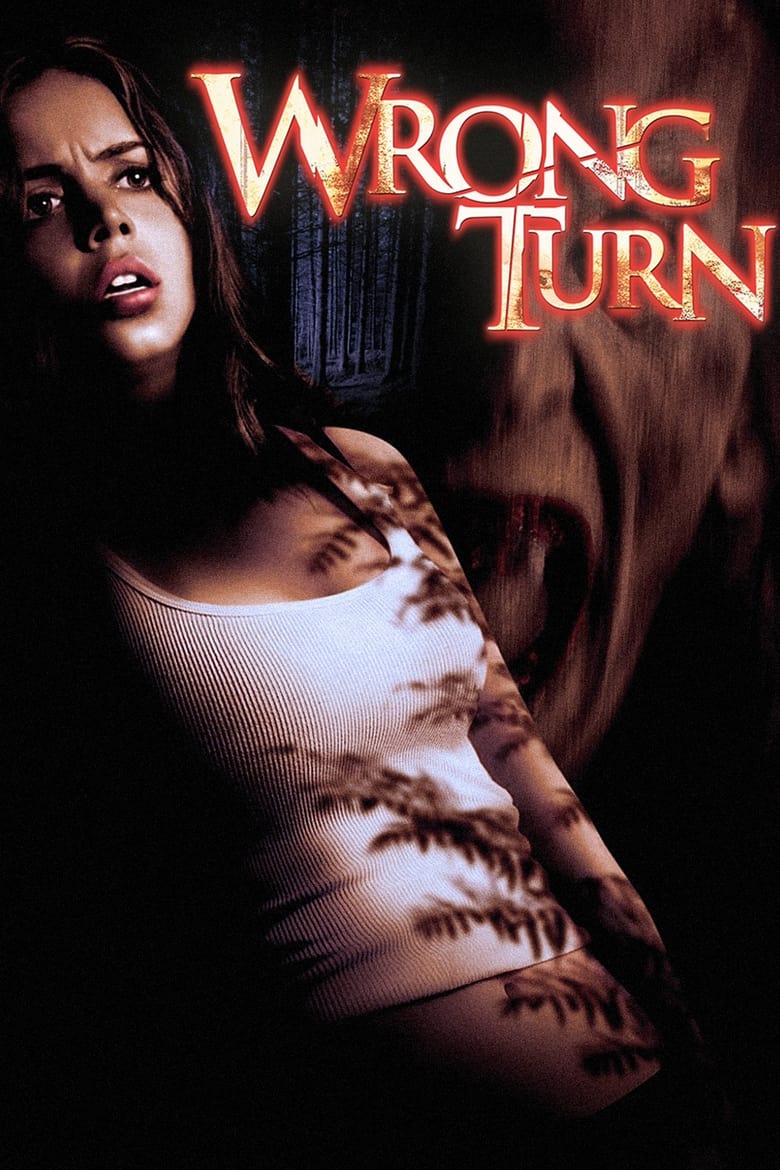
Wrong Turn
“It's the last one you'll ever take.”
Chris crashes into a carload of other young people, and the group of stranded motorists is soon lost in the woods of West Virginia, where they're hunted by three cannibalistic mountain men who are grossly disfigured by generations of inbreeding.
About Wrong Turn
Chris Flynn is still the reason this movie works
Wrong Turn is a compact, mean little slasher about six young people who end up stranded after a collision on a remote back road and are then hunted by three deformed, inbred cannibal mountain men in the woods.
What keeps the film snapping along is not only the stalk-and-trap setup but the fact that everything starts with Chris Flynn’s detour to avoid traffic. That small, apparently sensible decision drops him into the group, and from then on his choices — whether to distract, confront or keep people moving — shape the survivors’ options.
Rob Schmidt directs with a clear genre aim: tight, functional and without patience for filler. In 84 minutes the film does what it sets out to do — isolate people in the woods and see how resourceful, panicked or reckless they become.
The idea that sets Wrong Turn in motion
At its simplest, Wrong Turn is a road-trip-gone-wrong. Six young people find themselves marooned on a rural route; the woods around them aren’t neutral terrain but a place the attackers know intimately.
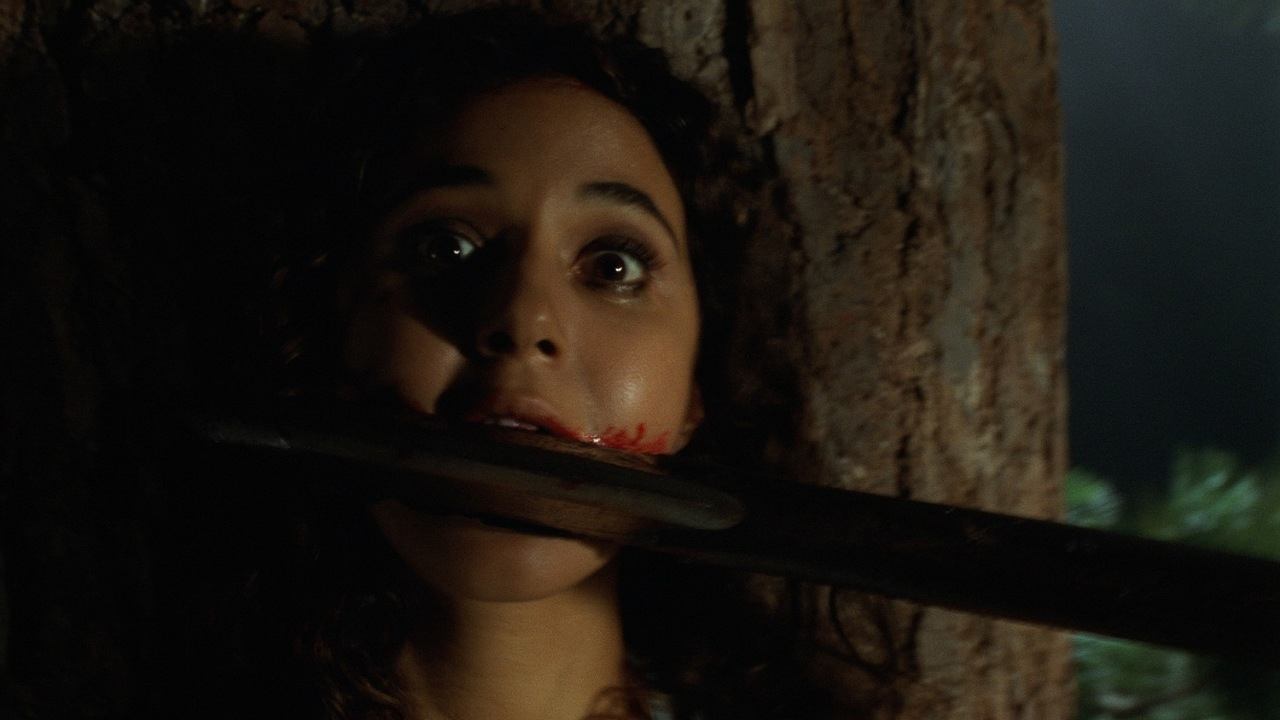
The antagonists don’t just chase; they use traps and local knowledge to pick off and dismember victims, which forces the group into improvised survival tactics. That shifting balance — frightened city or suburban outsiders vs home-ground killers — is where the plot’s tension lives.
It’s worth noting the practicalities: although set in West Virginia, the movie was filmed in Ontario and some of the forest-tower work was shot on set. The isolation is narrative, not a literal portrait of the state it pretends to represent.
Why Chris Flynn matters
Chris Flynn is the little hinge the whole film hangs on. He’s introduced as a punctual medical student and businessman who takes a rural detour to avoid traffic — and that detour literally puts him in the same broken-down vehicle as the students.
From then on his behaviour drives many of the group’s survival choices: he’s the one who confronts, distracts and makes plans when panic threatens to splinter the party. In a movie where decisions have immediate, brutal consequences, a character who actually makes decisions is unusually useful.
That usefulness is why Chris stays memorable. He isn’t a cartoon hero; he’s the practical pivot that lets the story escalate one sensible mistake at a time.
Why Desmond Harrington's performance matters
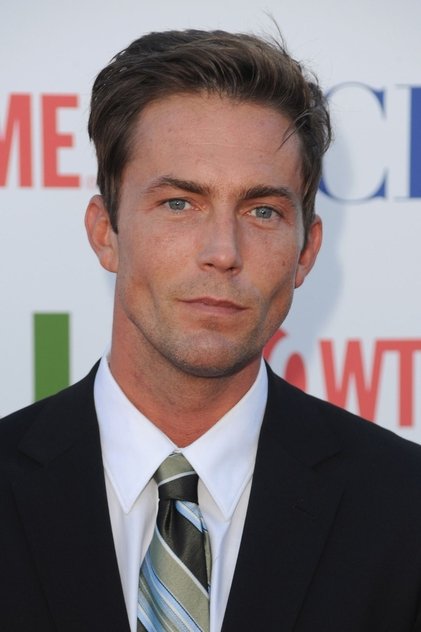
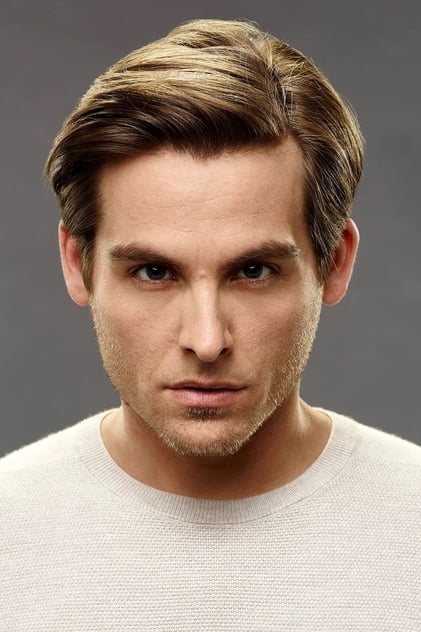
Contemporary coverage framed Wrong Turn as a young ensemble picture led by Desmond Harrington and Eliza Dushku. Reviews tended to discuss the cast in terms of what the genre demands from them — believable panic, plausible decision-making, the ability to sell terror — rather than treating anyone as a breakout star.
That context matters: the performances are useful to the film because they support the mechanics. The actors aren’t meant to be the point; they’re the vehicle for the story’s escalating set pieces and survival choices.
Wrong Turn has more on its mind than the plot suggests
On the surface it’s gore and traps; under that it’s a straightforward set of ideas about survival. Stranded people have to think creatively with scarce resources, and every choice is coloured by the immediacy of keeping breathing.
Isolation amplifies everything. Cut off from help, the group’s arguments, bad bets and small acts of courage take on life-or-death weight. That’s the film’s tight moral economy: ordinary faults become fatal when rescue is hours away instead of minutes.
Then there’s the backwoods otherness: the killers are positioned as the absolute ‘other’ to these outsiders. That contrast — unfamiliar urban/suburban group against a territory the antagonists rule — is classic backwoods horror, and Wrong Turn wears that label plainly.
Finally, it’s a road-trip story corrupted: a sensible detour turns into a collapse of control. That simple shift from reasonable plan to scramble is the emotional engine beneath the carnage.
How Wrong Turn was put together
Wrong Turn is a clear example of a director working to a tight genre brief. Rob Schmidt directed from Alan B. McElroy’s screenplay, and the crew credits reinforce that purpose: John S. Bartley handled cinematography while Michael Ross edited the film.
Those are useful, unflashy choices: this is a picture assembled to make the most of set pieces, traps and small-location tension, so the behind-the-scenes team is geared toward efficiency and clarity rather than stylistic flourish.
All of which explains why the film feels compact and continuous — it’s built to move, to put people in trouble and not linger on anything that doesn’t raise the stakes.
The effects work that gives Wrong Turn its physical personality
Stan Winston Studio is credited on the production, and the antagonists’ look in Wrong Turn leans on practical make-up and creature-design work rather than being principally digital.
That decision matters in a film that relies on physical menace and bodily threat: practical make-up gives the mountain men a tactile presence that the story depends on when it comes to traps and dismemberment.
Put simply: the movie’s nastiness has a hands-on, workshop feel to it, because it was built that way.
Wrong Turn could not belong to any other decade
Wrong Turn was developed and released in the early 2000s as a deliberate nod to 1970s-style horror. The decision to channel backwoods exploitation — traps, cannibal tropes, home-ground killers — fits the era’s taste for revivals and remakes of classic scares.
It arrived wide in late May 2003 and made enough of an impression to start a franchise; that initial theatrical push and subsequent sequels reflect a common 00s pattern where a modest hit turns into a series that later leans on direct-to-video follow-ups.
So while the film’s antecedents are older, its production and release are very 00s: revivals of older horror, quick theatrical windows, and the sort of franchise thinking that stretched a single idea into multiple entries.
Where Wrong Turn fits in
Wrong Turn launched a franchise; a direct theatrical sequel arrived in 2007 and the series continued beyond that. The original film therefore sits at the start of a multi-entry run that expanded the premise.
It also sits in a lineage of 1970s backwoods cannibal and slasher films: contemporary commentary often linked its tropes to those older pictures, placing Wrong Turn as a modern take on established, grim cornerstones of exploitation horror.
Why Wrong Turn still matters
Wrong Turn endures largely because it began something: it’s the first film in a franchise that kept returning to the same grim terrain, spawning sequels and reboots and turning its simple premise into a series of variations.
Its practical creature and make-up work is also a notable part of its afterlife — Stan Winston Studio’s involvement is frequently mentioned in production coverage as one of the company’s late-period projects, and that hands-on approach gave the movie the physical nastiness people still remember.
Finally, characters like Chris Flynn, Jessie Burlingame and others are easy anchors when a series grows: their initial gamble — a detour, a stopped car, an attempted call for help — is the seed that the whole franchise planted.
Does Wrong Turn still hold up?
Yes — if you want a compact, efficiently nasty backwoods horror that knows exactly what it is. The film’s premise is simple and unyielding: a detour by Chris Flynn strands a small group, isolation and scarce resources force improvised survival, and territorial attackers use traps and local knowledge to turn ordinary decisions lethal.
That framework gives the film a clear appetite and keeps it moving in its 84-minute runtime. Rob Schmidt directs a story that privileges momentum and escalating peril over character study; the result is a brisk survival horror that wears its 1970s inspirations on its sleeve.
It helps that the movie’s set pieces — the shack-like cabin and the watchtower moments — are built to structure attempts to call for help and escape. Those locations make the plot feel contained and immediate, which is exactly what this sort of picture needs.
So if you’re looking for thoughtful art-house horror, skip it. If you want a lean, unpleasant backwoods slasher with practical creature work and a central decision that snowballs into disaster, Wrong Turn still does the job.
Director & Cast