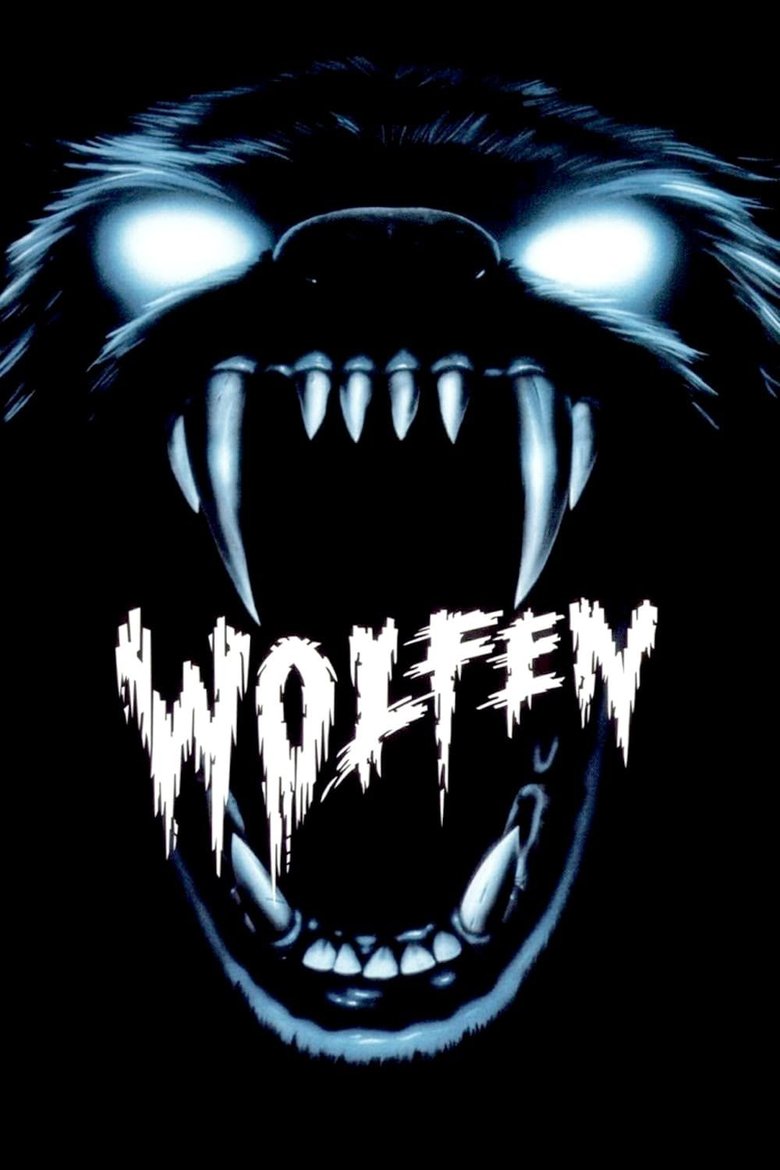
Wolfen
“They can hear a cloud pass overhead, the rhythm of your blood. They can track you by yesterday's shadow. They can tear the scream from your throat.”
A New York City cop and an expert criminologist trying to solve a series of grisly deaths in which the victims have seemingly been maimed by feral animals discover a sinister connection between the crimes and an old legend.
About Wolfen
What makes Wolfen worth revisiting
There’s a particular moment early on that tells you everything you need to know about Wolfen: a high-profile magnate, his wife and his bodyguard are found dead in Battery Park, and the case drags a retired cop back into the world he thought he’d left. It’s a familiar set-up — murder, pressure from the powers-that-be — but the movie quickly pivots into something stranger and darker.
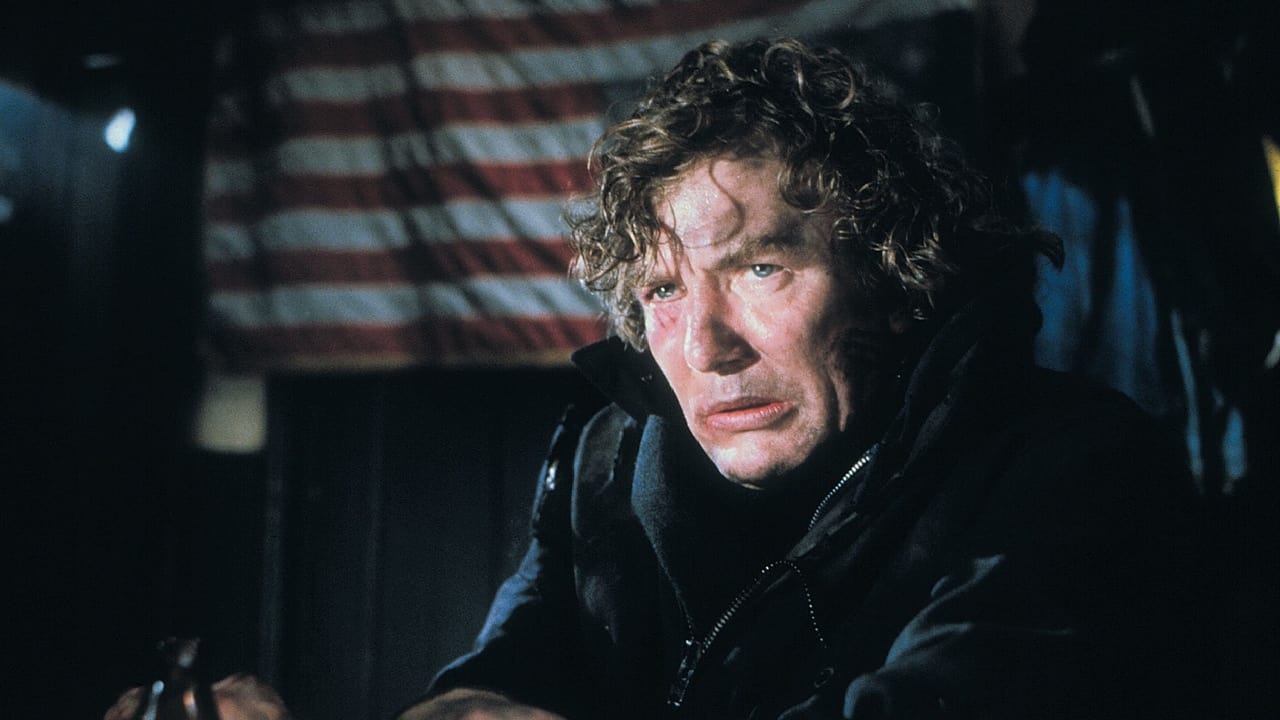
Michael Wadleigh directs a 115-minute film that refuses to be comfortably labelled. It’s part crime story, part horror, and the mix matters because the investigation never stops being a probe into the city’s blind spots. Albert Finney’s Detective Dewey Wilson is the steady centre drawn into that unease, partnered with Rebecca Neff as the case tightens and questions multiply. If you’re revisiting Wolfen, expect a film that sits with fear rather than explaining it away. The monsters are part of the puzzle, but the film is just as interested in how people — from detectives to coroner to the displaced — react when the city’s edges start to bite back.
The idea that sets Wolfen in motion
The engine of Wolfen is simple: Dewey Wilson is pulled back onto the job to solve a set of grisly murders that don’t add up. The deaths of Christopher Van der Veer, his wife and their bodyguard look like a high-profile hit, and everyone with influence wants a quick answer.
But the evidence disagrees with the tidy explanations. When investigators check the scenes they find non-human traces and encounters that don’t fit ordinary criminals — a bell tower that lures a detective with the sound of a baby, a howl heard only when someone is separated from the group — small details that make the case slippery and uncanny.
Those incidents push the film away from a pure whodunnit and into a different sort of investigation: why these victims, why these places, and who or what is defending them. The tension comes from watching familiar police procedure meet something that doesn’t answer to human rules.
In the film’s terms, the set-up works because it keeps the investigation concrete — check the evidence, follow suspects, stake out locations — while letting the horror elements widen the question. The result is a story that feels committed to both explanation and mystery.
Why Detective Dewey Wilson matters
Dewey Wilson is the film’s anchor: a returned NYPD captain asked to make sense of violence that seems to sit outside normal understanding. That positioning gives the movie a lens we can trust — someone who knows the system and still finds himself unnerved by what the system can’t explain.
Wilson’s arc is less about becoming the hero who solves everything and more about being forced to confront limits. He walks into situations — the church stakeout, the Wigwam Bar — that reveal how the city houses both the vulnerable and the secretive, and his reactions map the audience’s disbelief into the narrative.
There’s also a human thread: Wilson’s encounter with the community around Eddie Holt and the later scenes where he and Rebecca Neff are cornered make him someone who must choose between the rules he knows and the realities he discovers. That choice gives the film an emotional centre beyond the killings.
Finally, Wilson’s role ties into the movie’s closing images: he is the detective who tries to translate the hunt into human terms and then has to explain away what he saw. The decision to frame the finale through his perspective is why the film’s last notes land with a particular weight.
Wolfen has more on its mind than the plot suggests
On the surface Wolfen is a crime-horror hybrid, but underneath it’s chewing on a handful of big, sometimes uncomfortable ideas: fear, mortality, freedom and a certain kind of dehumanisation. The creatures in the story — presented not as supernatural apparitions but as predators higher on a different food-chain — force the human characters to face how society treats its weakest.
The film repeatedly points to who is vulnerable: the elderly, the sick, those on the margins. That pattern reframes the murders as a commentary on how the city discards people, and on the violence that follows when land and power are threatened.
There’s also a tension between belief and explanation. Some characters look for pragmatic causes — anarchists, terrorists — while others point to an older, spiritual account involving wolf-spirits. Wolfen sits between those poles and uses both to unsettle the viewer: belief and evidence are both partial lenses. Finally, friendship and community matter here. Encounters in bars, bridges and abandoned buildings remind us that survival isn’t just about individual bravery — it’s about how communities recognise and defend one another, or fail to do so.
Wolfen could not belong to any other decade
Released in 1981, Wolfen sits at a moment when genre films were happy to mix tones and take risks with subject matter. It’s very much a film of that transition — willing to be a police procedural and a folk-horror story without sacrificing either identity.
The way Wolfen folds social anxieties into a thriller reflects a certain early‑80s appetite for serious ideas inside commercial forms. It’s not nostalgia for its own period; it’s the decade’s taste for mixing commentary with entertainment.
Because it arrives at the start of the 1980s, the film reads like a bridge: old myths meet modern city problems, and the result feels of its moment precisely because it treats the urban landscape as contested territory rather than mere backdrop.
What has aged — and what hasn't
Some parts of Wolfen still land straight away: the city-as-hunting-ground idea is blunt and effective. The sequence where a homeless man explores an abandoned church — a place threatened by development — still reads as sharp commentary about displacement, and the film doesn’t shy away from the consequences of that choice.
The film’s appetite for combining forensic detail with uncanny moments also helps it hold up. The coroner discovering non-human hairs and bringing in a zoologist to identify them keeps the investigation feeling tangible even as the story drifts into myth.
Thematic elements like fear and friendship remain resonant. When characters gather — at the Wigwam Bar, on the bridge — the film remembers to show how people find each other in the margins, which is a durable touch.
What might feel less immediate to modern viewers is the film’s way of balancing social explanation with supernatural possibility; the mix can leave certain modern tastes wanting resolution. But when Wolfen chooses ambiguity, it’s usually to underline the moral questions rather than to be coy.
Why Wolfen still matters
Wolfen remains a film people remember because it refuses easy answers. The initial crime — the slaughter of a wealthy magnate, his wife and their bodyguard — feels like the opening of a standard thriller, but the investigation’s refusal to close neatly is what sticks in the mind.
Part of the film’s afterlife comes from the way it challenges official narratives. When the security firm pins the crimes on anarchists, Wilson’s doubts and the discovery of non-human evidence complicate the tidy blame game and ask viewers to look harder at what power wants you to believe.
The movie also made a habit of unsettling small, specific moments: the bell-tower crying that only some hear, the parabolic microphone stakeout that goes wrong, and the Wigwam Bar conversations where the Native community explains the Wolfen as protectors of a threatened hunting-ground. Those scenes give the film a mixture of forensic procedure and folkloric weight. Finally, the film’s closing bones — Wilson smashing the model of the development in the penthouse, the Wolfen vanishing when the threat is signalled, and the voice-over about predators and the human herd — keep the movie talking about class, visibility and survival long after the credits roll.
Does Wolfen still hold up?
Yes — with a caveat. Wolfen still works as a film that wants to unsettle and think. The basic hook — a retired captain pulled back to solve strange murders — gives the movie a procedural spine, and its refusal to reduce everything to a single cause is its strongest asset.
The movie’s insistence that these are predators, not ghosts — creatures higher on a different food-chain — keeps the stakes moral as well as physical. That voice-over about the human herd and predation isn’t just flavour: it reframes the deaths as something that asks uncomfortable questions about who gets noticed in a city.
If you’re watching now, bring patience. The film is 115 minutes and moves between forensic detail and folklore in ways that demand attention rather than passive viewing. If you allow it that attention, the sequences where Wilson and Rebecca Neff are tested — the bell tower rescue, being cornered in Van der Veer’s penthouse and the attempt to signal safety by destroying the development model — repay that patience.
So should you watch Wolfen? Yes, especially if you like genre films that aren’t content with tidy answers. It’s a movie that makes you watch the city differently — and that, in the end, is precisely what it set out to do.