Werewolf of London
“Beware the Stalking Being - Half-Human - Half-Beast!”
A strange animal attack turns a botanist into a bloodthirsty monster.
About Werewolf of London
Dr. Wilfred Glendon is still the reason this movie works
People still talk about Werewolf of London because it hinges on a single, properly odd idea: a distinguished botanist goes off to Tibet for a moon-fed plant and brings the trouble home with him. That premise is simple and strange enough to carry a hundred small jolts.
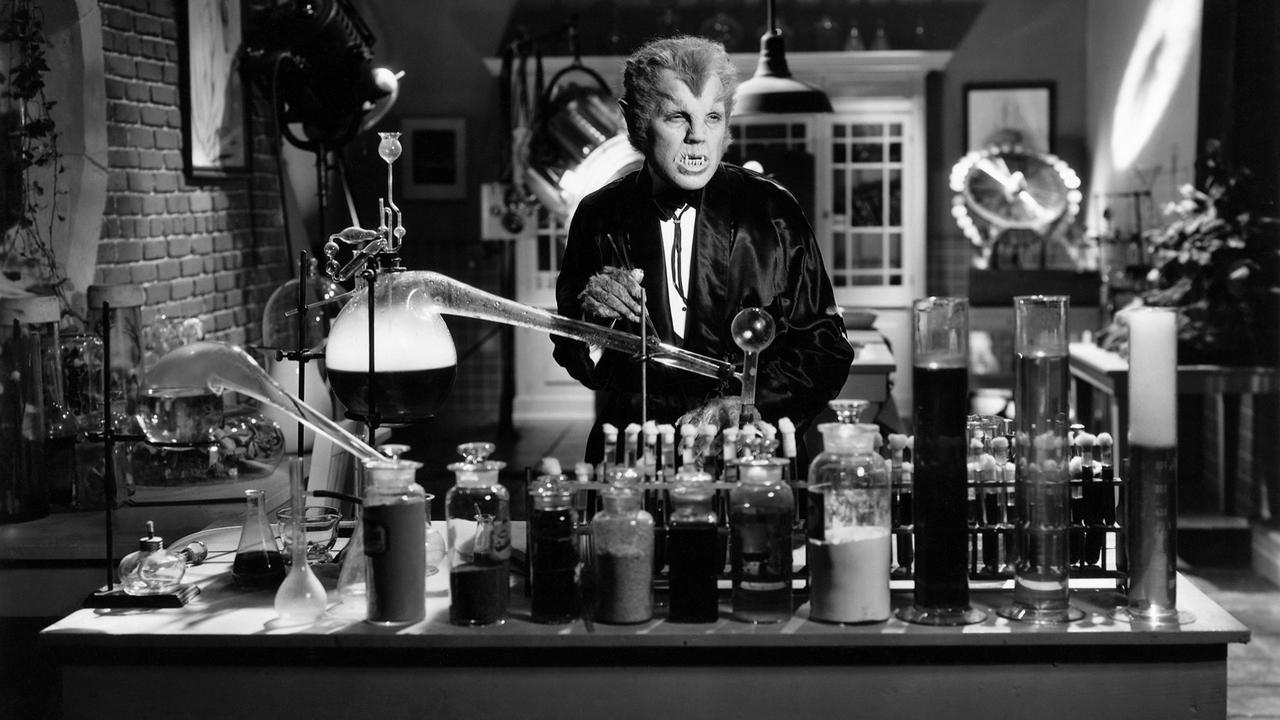
It’s a tight 75 minutes, directed by Stuart Walker and anchored by Henry Hull as Dr. Wilfred Glendon. There’s a practical throughline — he builds a lamp to mimic moonlight and waits for his rare specimen to bloom — and that device gives the film a neat, scientific logic that keeps the scares grounded rather than gooey. Beyond the crime-of-the-night moments, the movie is quietly obsessed with things you recognise: a house meant to be safe, a marriage under strain, and the hunger for freedom that can undo a person. That mix of horror and domestic worry, with Dr. Yogami’s unsettling claims hovering nearby, is what keeps this 1935 picture from feeling like a museum piece.
The idea that sets Werewolf of London in motion
The film opens from a clear recipe: a man who’s done adventurous science abroad brings back a rare plant that responds to moonlight. That one tidy conceit — Mariphasa blooms under artificial moonbeams — supplies the plot engine and its moral complications.
Trouble arrives in a domestic register. Wilfred opts out of a family night and, soon after, transforms. The shift from lab oddity to a violent, night-time problem is fast and blunt; it forces the drama back into the home where the consequences are personal.
There’s also a second, unnerving voice in the room: Dr. Yogami, who tells Wilfred the plant can treat "werewolfery" and warns that the werewolf will instinctively try to kill the thing it loves most. That exchange reframes curiosity as risk — and pins the central question to the household, not the laboratory.
Meanwhile, the authorities and a suspicious friend provide a procedural push: a murder in the street makes a newspaper, a sceptical Scotland Yard figure resists stranger explanations, and Wilfred’s attempts to isolate himself keep failing. The setup works because it keeps the stakes small enough to care about and strange enough to stay interesting.
Why Dr. Wilfred Glendon matters
Call him a scientist with the worst kind of curiosity. Henry Hull’s Dr. Wilfred Glendon is written as a man whose professional habit — travelling, collecting, experimenting — turns into a private tragedy. He’s not an anonymous monster when things go wrong; he is still the husband in the house, the man who tries to do the responsible thing and keeps failing.
A central image says it plainly: Wilfred locks himself away at Falden Abbey to protect the people he loves, then finds himself watching them through a window after he changes. That sightline — man inside, loved ones outside — concentrates the whole moral ache of the film.
His world contains a small ensemble that keeps him human: an assistant from his Tibet trip, a childhood rival for his wife’s attention, a house full of relatives and a Scotland Yard uncle who will complicate the cover-up. Those relationships mean the monster is never anonymous; every violent act reverberates back into personal life.
Put simply, Glendon matters because the movie makes us keep seeing the man behind the fur. The horror is anchored to a domestic loss, not an abstract curse, and that’s what gives the film a sympathetic pull even as it turns to blood and panic.
Werewolf of London has more on its mind than the plot suggests
At a glance it’s a monster film; under the skin it’s a drama about the limits of safety. Home and safety isn’t just a backdrop — it’s the thing the story keeps trying and failing to secure.
Humanity is another thread. The picture asks whether someone who behaves monstrously can still be seen as the person they were. It doesn’t hand us tidy answers, but it refuses to let the central figure become a faceless threat.
Freedom shows up as well: not the romantic kind, but the restless, scientific curiosity that pushes Wilfred overseas and then keeps pulling him toward dangerous knowledge. That pursuit of freedom produces liberation and catastrophe in equal measure. Those three ideas — staying safe, staying human and the cost of wanting more — sit together like a small moral triangle. The film’s horror follows from the way those needs collide, rather than from any single shock.
Werewolf of London could not belong to any other decade
This is a 1935 picture in every meaningful sense: it’s compact, direct and comfortable with a slightly theatrical rhythm. The economy of a 75-minute runtime gives it a no-nonsense momentum that suits its mixture of science and melodrama.
It wears its era in the way it arranges character and plot rather than in costume flourishes. Stories from the 1930s often balance societal roles and private anxieties, and this film plays that balance like a fiddle — private domestic terror nudging against public policing.
There’s also a tonal neatness that feels of its time: explanation and exposition are handled efficiently so the plot can flip from lab to drawing room without getting lost. That discipline helps the odd central idea land.
In short, the film is shaped by its decade’s storytelling habits: brisk, economical and ever-aware that a small ensemble can tell a strangely large horror tale.
What has aged — and what hasn't
One thing that still works is the film’s focus on home. That Falden Abbey sequence — where Wilfred tries to isolate himself and then finds himself watching the people he loves — keeps a clear emotional line that modern viewers can latch onto. It’s about how private danger infects familiar places.
The theme of safety versus compulsion retains bite today. We understand the idea of someone trying to quarantine themselves from harm and repeatedly failing; it’s a human problem that transcends the decade.
Where the movie might feel dated is in the broad strokes of its plotting: a murder in the street, a newspaper clue and a Scotland Yard sceptic are devices that were common then and now sometimes feel like stage directions rather than lived complications.
Still, if you want a lean horror-drama where the scares follow from character choices and a few sharp moral dilemmas, it holds up better than you might expect for a 1935 studio picture.
Why Werewolf of London still matters
The film’s neat legacy comes from its single strong conceit: a rare moon-fed plant, a homemade moonlamp and the idea that sap from the blossom can briefly reverse a transformation. That blend of the scientific and the supernatural gives the story a memorable hook.
Dr. Yogami’s intervention — his claim that the plant can treat werewolfery and his warning that a werewolf will instinctively seek to kill the thing it loves most — adds a moral riddle that lifts the stakes beyond a series of killings. Suddenly the curse feels like something that tests relationships, not just bodies.
The narrative also remembers to make the problem personal. Wilfred’s decision not to go to the party, the subsequent transformation, and the ripple of murders and investigations keep the drama intimate. It’s not just a mystery to be solved; it’s a life unraveling in front of a small group of people. And the ending — with Wilfred acknowledging the cost and Forsythe promising to tidy the official record — finishes the picture as a tragedy contained rather than a sensational spectacle. That restraint is part of why viewers who grew up with the film still return to it: it treats its central figure like a person, not merely a monster.
Does Werewolf of London still hold up?
Yes — if you’re after a short, character-forward horror with an oddball germ of an idea. The Mariphasa setup (the plant, the moonlamp, the blossom that can reverse fur) gives the film a clever mechanical clarity that still rewards curiosity.
It’s not a special-effects showcase or a shock-fest. It’s a drama about a man, played on paper as a scientist who crosses a line and then tries to keep his family safe. That domestic pressure — the attempt to lock danger away at Falden Abbey, the recognition through a window — gives the film emotional teeth.
From a modern viewer’s point of view, the movie’s short runtime and tidy plotting are virtues: there’s no padding, just a sequence of escalating problems that stay focused on how Wilfred’s condition spreads into his life. The themes of home, humanity and the desire for freedom still ring true.
So go watch it if you like your horror trimmed of excess and rooted in people. Werewolf of London doesn’t reinvent the shape of monsters, but it remembers to look at one up close — and for a film about transformation, that human gaze is its most lasting trick.