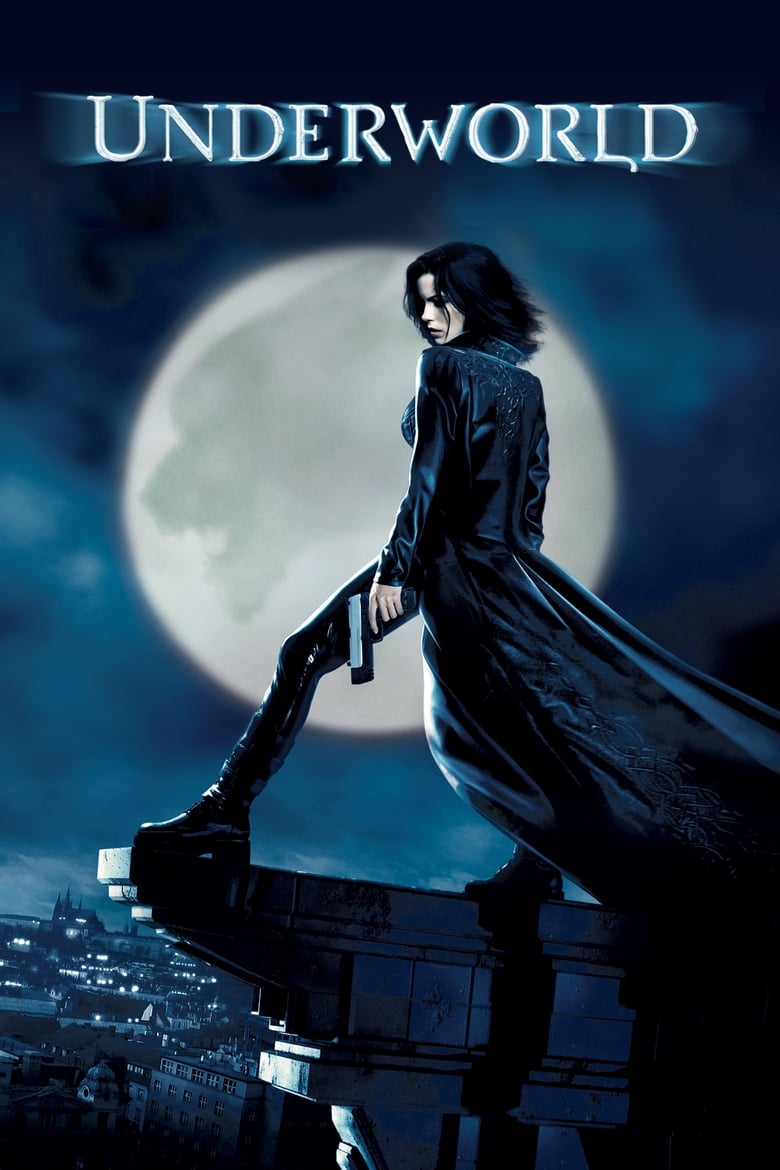
Underworld
“An immortal battle for supremacy.”
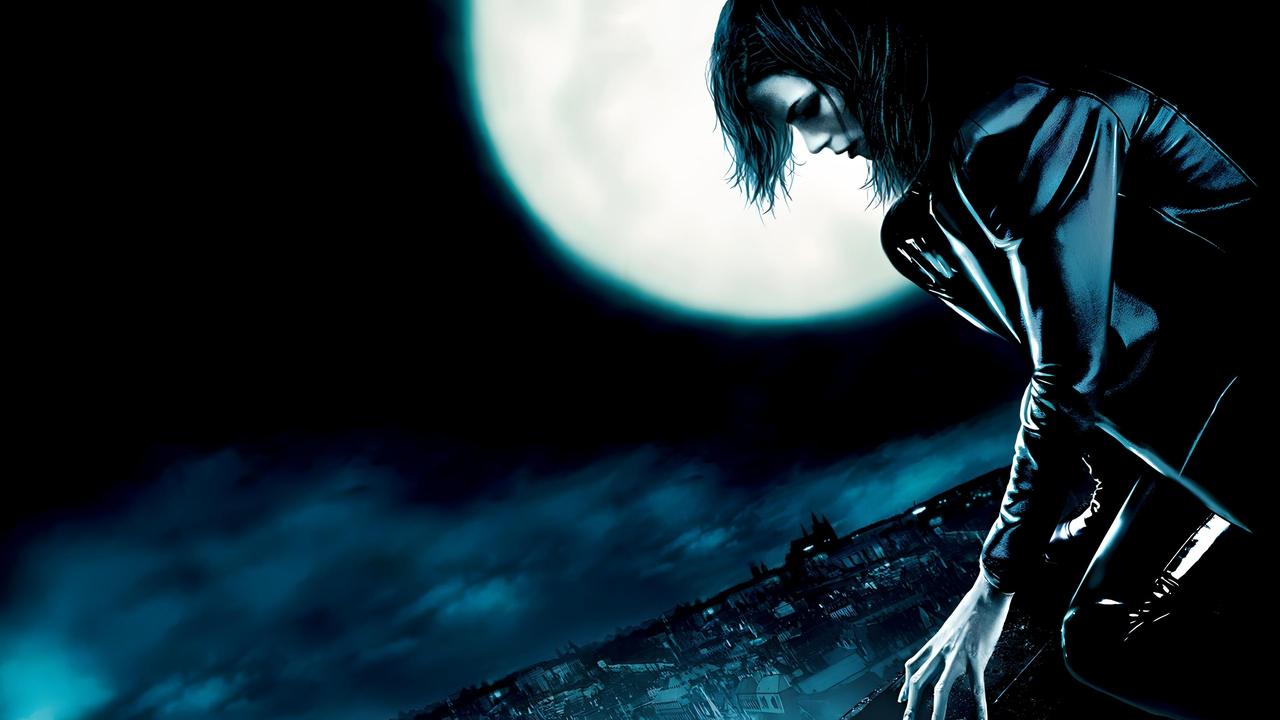
Vampires and werewolves have waged a nocturnal war against each other for centuries. But all bets are off when a female vampire warrior named Selene, who's famous for her strength and werewolf-hunting prowess, becomes smitten with a peace-loving male werewolf, Michael, who wants to end the war.
About Underworld
Why Underworld is still worth talking about
Right from the start Underworld gives you a neat, reliable hook: two secret species have been at each other’s throats for generations, and everyone assumes the score is settled. That setup promises scale, but the film spends most of its time very close to one person — Selene — and that intimacy is what makes the spectacle feel grounded rather than just noisy.
Len Wiseman’s 2003 film picks its pleasures and mixes them. It’s a vampire story, a werewolf revenge plot, a paranoid palace coup and — quietly — a romance about a human man drawn into a war he didn’t know existed. Kate Beckinsale’s Selene sits at the centre of all of it: a Death Dealer who keeps hunting Lycans even when the court has moved on. There’s a neat economy to that arrangement. You can enjoy Underworld as an action‑horror confection, or follow the film’s quieter insistence on family, loss and choices about how long you’ll hold on to hatred. Either way, it has a personality: this is a movie that wants to look hard and move fast, but still make you care who survives the night.
The idea that sets Underworld in motion
The film’s engine is simple and effective: the vampire side believes the Lycan threat ended when Lucian was apparently killed, but that apparent victory is built on a lie. Into this uneasy calm steps Selene, a Death Dealer whose instincts keep telling her the job is not finished.
Her investigation drags a normal man, Michael Corvin, into a hidden war. What looks like a routine pursuit becomes complicated the moment the Lycans take an interest in him; that attention is the story’s first pivot, because Michael is not just another victim — he carries a dangerous inheritance.
Selene’s relationship with Michael does more than provide a romantic subplot. As she tells him how she came to be a vampire after her family was slaughtered, the personal and the political blur: her quest for revenge sits beside secrets about betrayal at the top of vampire society, and those secrets change who she can trust.
The setup works because it keeps stakes both intimate and epic. There’s a courtly power struggle, but the film continually reframes it through loss, parentage and the question of what a life — or an immortal life — is actually for.
Why Selene matters
Selene is the film’s anchor because she carries both the job and the wound. She is a Death Dealer — an elite vampire hunter — and her life has been built around a single purpose: wipe out Lycans. That purpose gives her momentum and momentum gives the movie a pulse.
What makes her stick in the memory is the way Underworld uses betrayal to unpick her certainties. She keeps breaking rules, digging where she’s told not to, and the discovery that someone she trusted might have been the cause of her family’s death forces the whole world to be re‑read.
Those revelations change what her violence is for. Selene’s relationship with Michael peels away a layer of automatic hatred; she’s forced to ask whether loyalty to a cause is worth preserving when the cause itself is corrupt. That’s a tidy emotional beat for a film that likes its action loud.
In short: Selene matters because the film trusts her to carry both the shoot‑outs and the quieter moral reckonings. When she makes a choice — even a brutal one, like the moment she kills Viktor — the story follows. You feel the weight of it.
Underworld has more on its mind than the plot suggests
Beneath the fangs and furies, Underworld keeps returning to the idea of freedom. Lucian’s story — that Lycans rose up after generations of servitude — gives the conflict a political groove: it’s not just monsters fighting, it’s a history of domination and revolt.
Loss hangs over everything. Selene’s life is defined by family slaughter; Viktor’s decisions are shaped by grief and an attempt at protection that becomes monstrous. Those personal deaths feed the larger war, and make revenge feel less like sport and more like a kind of inheritance.
Mortality complicates the picture. Immortality is not an uncomplicated prize here — it brings duty, politics and the slow erosion of choice. The introduction of Michael as someone who might blend both species raises the question of whether escaping weakness is worth the cost to who you are. And at the heart of all that is family: not just blood ties but the parental instincts that justify violence. When a supposed protector claims he made Selene what she is out of love, the film forces us to ask whether protection can become control, and whether heroism sometimes looks dangerously like obedience.
Underworld could not belong to any other decade
Coming out in 2003, Underworld sits squarely in the early 2000s moment when genre lines were getting cheerfully blurred. It doesn’t commit to being only a vampire picture, or only an action thriller; that hybrid approach felt very of the time and helped the film find an audience who wanted a little bit of everything.
The film’s combination of romance, horror and action — and its willingness to centre a tough, weapon‑ready woman at the centre of that mix — is a neat example of the decade’s appetite for mashups that could wear more than one label at once.
Put simply: its release date matters because the film reads as a product of that era’s taste for cross‑pollinated genre entertainment, and that’s part of why it sounds like the 00s when you think about it.
What has aged — and what hasn't
The parts that still land are story and motive. The generations‑long war, the courtly lies, the idea that someone like Michael could change the rules — those structural pieces still feel satisfying. The hybrid concept, of a human who could bridge two warring species, remains an engaging twist.
Selene’s single‑mindedness also reads well today. A hunter who refuses to accept easy answers is still a clear, dramatic engine; when the film makes her question her loyalties, that internal change gives the action a moral texture that survives the years.
Where the film shows its age is not in theme so much as in some storytelling conveniences: betrayals revealed at a gallop, quick expositions to tie complex history into a single scene. Those moments can feel a little blunt when you watch now, but they rarely derail the emotional throughline.
Overall the bookend beats — betrayal, the potential for a new kind of life, and the choice to run together into an uncertain future — keep the film watchable. The core ideas about family, freedom and lifespan still read clearly, which is the most important thing for a film that trades so heavily on myth.
Why Underworld still matters
People remember Underworld because it made a clean bargain: a dark, ongoing war plus a woman at the eye of it, and a love story that complicates rather than softens the violence. The basic shape — hunters, traitors, and a man who may change everything — is tidy and replayable.
The movie also gives its cast a series of clear narrative beats to land on: the moment the Lycans bite Michael, the scientist Singe’s reveal about shared ancestry, and the escalating betrayals within the vampire hierarchy. Those plot pivots are the kind of hooks that stick in the memory.
It helps that the story ends with change rather than tidy closure. Selene and Michael fleeing together, and the idea of a vampire elder awakening as something new, let the film’s world feel larger than one film. It leaves room for continuation, which is a big part of why viewers kept coming back to this world. In short, Underworld matters because it offered a neat mythology, a heroine with agency, and enough unanswered questions to make its dark alleyways feel like a place you’d want to return to.
Does Underworld still hold up?
Yes — but with a caveat. Underworld’s pleasures are mostly structural: a generations‑old war, a rule‑breaking hunter, and a personal connection that forces everyone to choose sides. If you care about those things, the film still delivers.
It’s useful to remember what you’re signing up for. Len Wiseman’s 2003 picture runs just over two hours and trades in a particular mix of romance, horror and action. If you want a neat, mythic premise that keeps the stakes personal, this will do the job.
Some storytelling bits have the bluntness of a film tying up complicated ideas in a few scenes. But the central questions — freedom versus domination, the cost of immortality, and whether family can justify cruelty — still give the movie teeth beyond its gunfights.
If you’re revisiting, watch it for Selene’s arc and the way the film uses betrayal to change what revenge even means. Underworld still bites; more importantly, it occasionally bites with feeling.