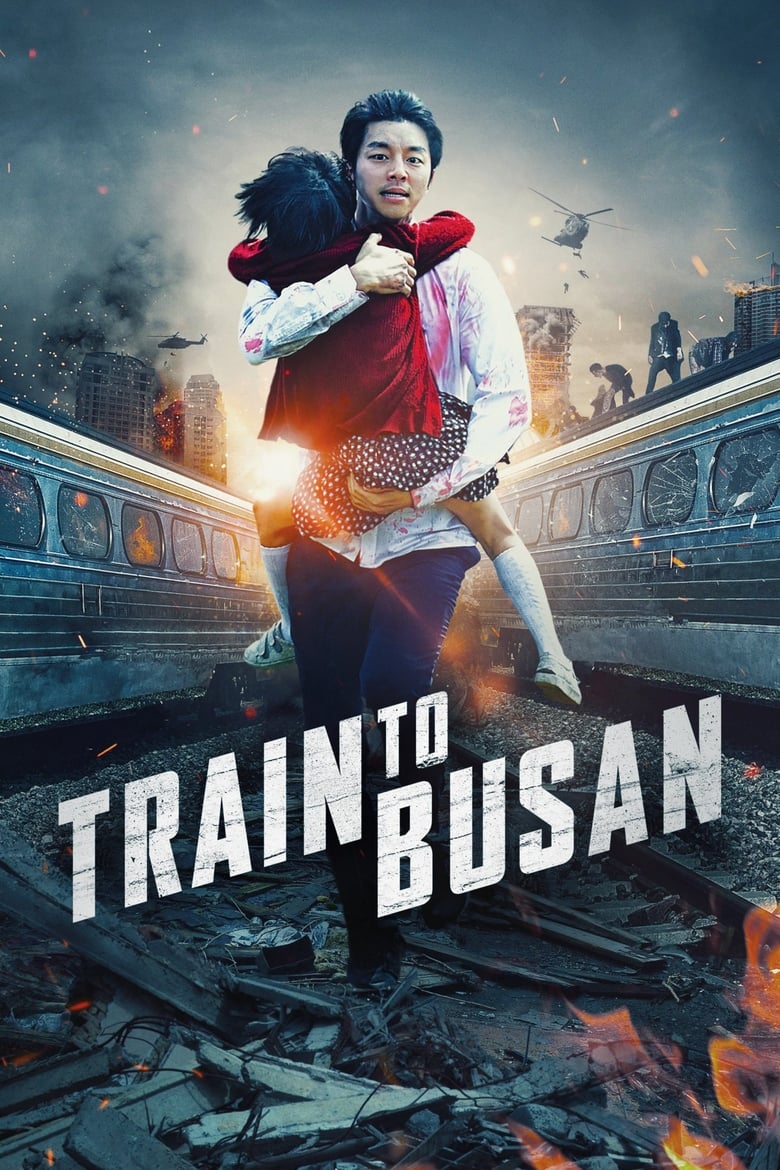
Train to Busan
“Life-or-death survival begins.”
When a zombie virus pushes Korea into a state of emergency, those trapped on an express train to Busan must fight for their own survival.
About Train to Busan
What makes Train to Busan worth revisiting
There’s a neat bit of misdirection at the film’s start: a deer is hit by a truck, gets up, and the world quietly tilts. It’s a small moment that sets the rules — life can snap back into something dangerous — and it announces that this isn’t going to be cosy.
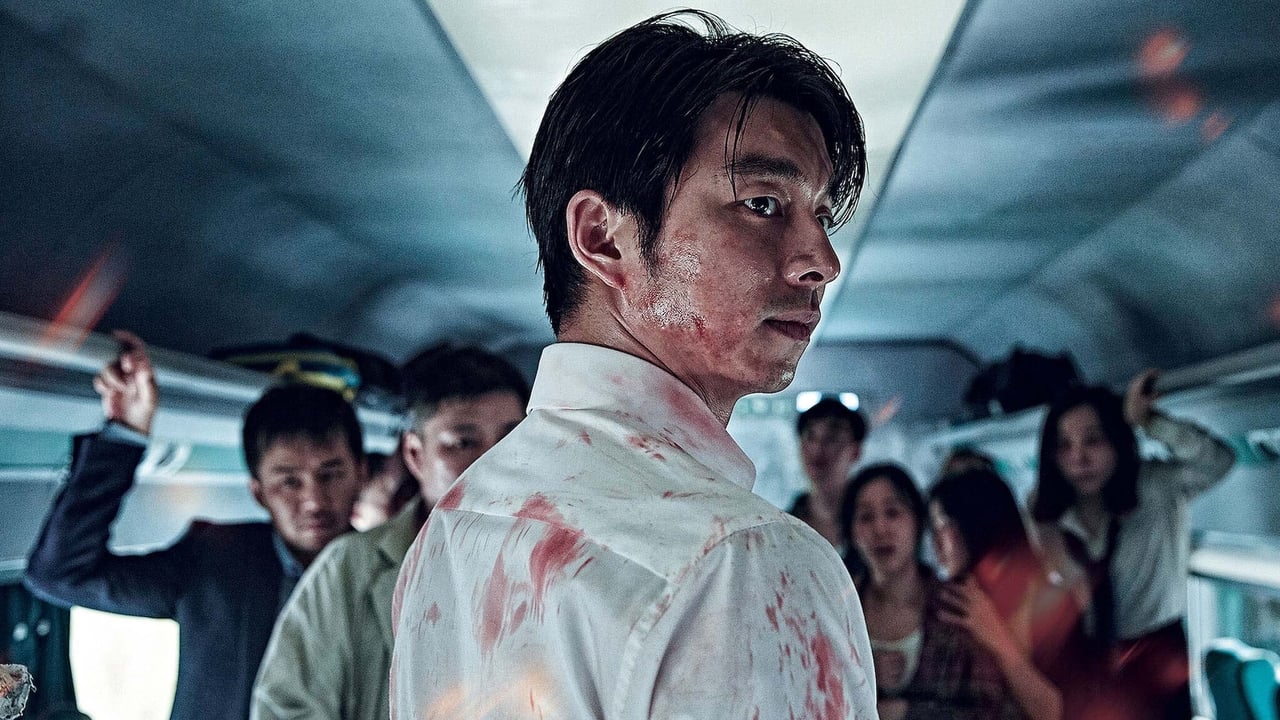
Yeon Sang-ho funnels that strange momentum into 118 minutes of packed, relentless motion. The film throws a tight group together on KTX 101: a divorced father, his daughter, a blue-collar couple, a baseball team, elderly sisters and a traumatised homeless man. That mix matters. It gives the movie a cross-section of people to argue and survive with, rather than a single archetypal hero.
And at the centre is Seok-woo: the workaholic dad whose promise to his daughter to visit Busan is supposed to be ordinary. From there, the scraped-up passenger who sneaks on at the last minute turns into the disaster that drags everyone along the track. It’s obvious in concept — a moving, sealed theatre of panic — but the film’s energy turns that simplicity into something gripping.
The idea that sets Train to Busan in motion
The premise is beautifully economical: a routine train journey becomes a sealed emergency when an infected passenger turns the carriage into ground zero. It’s not a slow-burn pandemic drama — it’s a forced social experiment on rails.
Because the story keeps its characters moving, it’s always clear what’s at stake. After a stop in Daejeon exposes that soldiers and an extraction team have already failed, the passengers are left to read the map themselves: keep going to Busan, where the army says there’s a quarantine zone, or fight for survival on the move.
That movement turns simple choices into moral tests. People who were strangers must decide whether to help one another, or to lock others out in the name of safety.
And when someone like Yon-suk decides to save himself at another’s expense, it sharpens the setup. The train isn’t just a vehicle; it’s a pressure cooker that accelerates both courage and selfishness.
Why Seok-woo matters
Seok-woo starts the film as the kind of dad you can imagine apologising with calendar invites: a cynical workaholic who has missed his daughter’s recital and bungled a present. That small, recognisable failing matters because it gives his choices weight when the crisis happens.
Agreeing to take Su-an to Busan is the tiny human promise that lands him on the train, and the film uses that promise to turn his arc into something watchable rather than schematic. He’s not a blank hero; he’s someone with things to atone for.
The crisis forces him to act in ways that reveal his priorities. He goes from corporate calls about an extraction team to crawling through a horde with Sang-hwa and Yong-guk to find the people he cares about. Those moments reframe him: the film makes you feel the difference between a man who survives and a man who keeps his child safe.
At the end of Train to Busan, the choices Seok-woo makes — the last frantic orders to protect Su-an and Seong-kyeong, the moment he puts them inside the engine room — are the point. The movie is less interested in spectacle than in whether this father will follow through on that promise.
Train to Busan has more on its mind than the plot suggests
On the surface it’s a zombie thriller; underneath, it’s a film about movement — literal and social. Freedom and the attempt to reach a safe place are constants: Busan is less geography and more the idea of refuge.
Family is the emotional engine. Seok-woo’s bargain with his daughter gives the mayhem a centre that isn’t just survival for survival’s sake; it’s about parental protection and the stubborn things families mean to each other when everything else falls away.
Corporate power slips into the story as a different kind of danger. The film drops the detail that Seok-woo’s company sent an extraction team and bears responsibility for what follows; calamity isn’t only viral, it’s sometimes bureaucratic.
So courage here isn’t about heroics on principle — it’s about small acts that defend home and safety: opening a door for someone, staying behind to buy time, or deciding not to lock others out for your own comfort.
Train to Busan could not belong to any other decade
This is a 2016 picture through and through. It sits in the middle of the 2010s cinema landscape where genre films were happy to be both crowd-pleasing and sharp about social behaviour.
Being a film from the 2010s means Train to Busan shows its ideas quickly and economically: a tight runtime, a clear hook and a willingness to mix thriller beats with human drama.
It’s of its decade because it trusts audiences to accept a bold premise — a crisis on a train — and then lets the characters tell you how the world looks when normal systems fail.
That decade-friendly appetite for high-concept storytelling with emotional stakes is what keeps Train to Busan feeling like a product of its time rather than a pastiche.
What has aged — and what hasn't
The film’s ensemble still reads clearly. The decision to cram a range of ordinary people onto one commuter train — blue-collar workers, a corporate executive, a baseball team, elderly sisters and a homeless man — means the moral arguments feel specific, not generic.
Moments that once felt wrenching still hit: passengers refusing to open a safe carriage door, a flaming locomotive smashing through carriages, or the homeless man sacrificing himself so others can escape. Those beats are simple and direct, and they retain their punch.
The film also hasn’t lost the way it makes you choose sides. The ugly practicality of locking others out when you believe it ensures survival feels the same now as it did on first viewing.
If anything, Train to Busan’s bluntness is its strength today. It refuses to moralise with nuance; it lays out pressures and watches what people do when the tracks run out.
Why Train to Busan still matters
Certain images from the film stick: the small, unsettling reanimation that begins the chain; the scraped-up woman whose boarding turns ordinary commuters into survivors; the locked carriage and the moral fights it creates.
The cast of characters — from Yon-suk the executive to Sang-hwa and his pregnant wife — aren’t just background. The way people act under pressure, whether heroic or selfish, gives the movie emotional texture. Sang-hwa’s sacrifice to buy others time and the homeless man’s last act of help are the kind of choices that people remember, because they’re human and costly.
There’s also a hard edge to the story: the detail that Seok-woo’s company was indirectly involved in the outbreak turns the crisis into something tinged with institutional failure, not only fate.
Finally, the film’s last walk through the tunnel — survivors meeting soldiers at the other end — leaves you with a clear sense of both loss and small rescue. Those tidy, devastating beats are why people keep bringing the movie back to the conversation.
Does Train to Busan still hold up?
Yes — if you want a tight, punchy thriller that cares about people as much as peril. From the opening reanimated deer to the final tunnel, the film keeps its promises: to scare, to sprint and to ask what you’d do when everything you trusted is gone.
Its heart is family. Seok-woo’s promise to his daughter and the way that promise is tested gives the violence a human counterweight. The film also keeps a useful edge by reminding the viewer that institutions and corporate decisions can matter in a crisis — the detail about an extraction team and company responsibility colours the chaos with a bureaucratic sting.
At 118 minutes it doesn’t overstay its welcome. It’s a film that prefers clear choices to moral gymnastics: who helps, who runs, who locks the door. Those instincts make it watchable for modern audiences who want emotional stakes alongside genre thrills.
So yes — watch it. It’s a movie that still punches you with the same blunt honesty it had in 2016: a reminder that in an apocalypse the monsters are noisy, but people’s decisions are the ones you’ll remember.