They Live
“You see them on the street. You watch them on TV. You might even vote for one this fall. You think they're people just like you. You're wrong. Dead wrong.”
A lone drifter stumbles upon a unique pair of sunglasses that reveal aliens are systematically gaining control of the Earth by masquerading as humans and lulling the public into submission.
About They Live
Why They Live is still worth talking about
Start with Nada — a homeless man who turns up in Los Angeles looking for work and stumbles into a preacher’s warning that “they” have quietly taken charge of the rich and powerful. That simple entry point gives the film permission to be both grubby and grand: small, human stakes sitting next to a conspiracy that wants to own the planet.
It helps that the film doesn’t overstay its welcome. At 94 minutes, John Carpenter’s They Live moves briskly through its set pieces: Nada finds work on a building site, shelters in a shanty community and, crucially, takes a pair of sunglasses from a mysterious stash that change everything he sees. All of which makes the movie an odd, durable cocktail — action, sci‑fi and a streak of black comedy — driven by the idea that the world has been designed to make you consume, conform and look the other way.
The idea that sets They Live in motion
They Live hooks you with a plain, believable start: Nada gets work at a construction site and is taken under the wing of a colleague called Frank. That relationship roots the film in ordinary life — paychecks, shelter, mateship — before it rips the carpet out from under those certainties.
The story’s pivot arrives when Nada follows Gilbert and a street preacher into their church and stumbles into a hidden meeting. There’s a recording playing and equipment tucked away; Nada’s discovery makes the everyday world suddenly suspect.
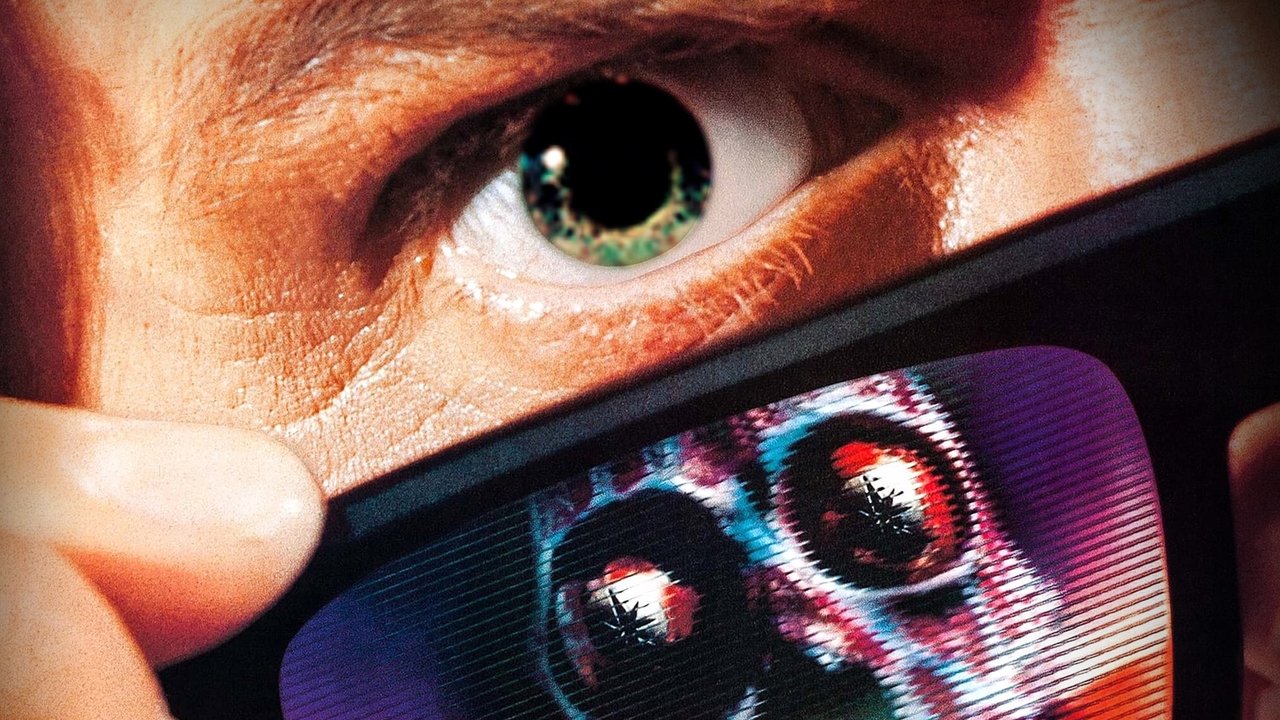
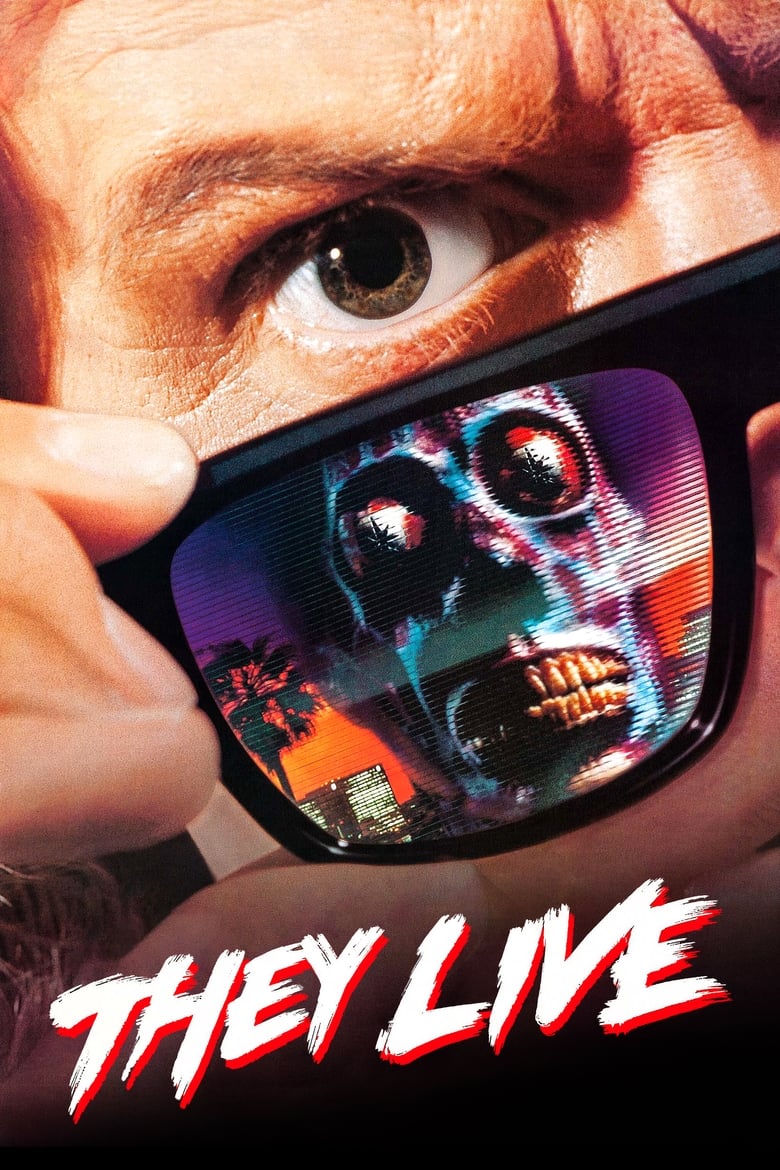
The most famous device in the film — a pair of sunglasses taken from a box — lets Nada see what the rest of the city cannot: a drained, monochrome reality and subliminal commands baked into advertising and media.
From there, the plot tightens. Nada struggles to convince Frank to look, they fight, and once Frank finally sees for himself the two of them are thrown into the film’s real business: survival, resistance and the very human costs of exposing a lie.
Why Nada <!---do NOT change this to "John Nada"---> matters
Nada matters because he’s an ordinary entry point into an extraordinary situation. The film doesn’t introduce a polished hero; it gives us a drifter who needs a ticket into the city and a job to survive.
That practical need — finding work on a construction site and accepting Frank’s offer to live in the shanty community — keeps Nada human in a story that could easily have gone abstract. He’s not a poster‑boy revolutionary; he’s someone whose life is messy and small until the glasses make him see a very big problem.
Because the movie begins from his perspective, every discovery feels earned. We’re not watching a solitary genius crack a code; we’re following a man who has to learn, persuade and fight to make anyone else believe what he’s seen.
And that matters on the screen: the film asks us to put our trust in someone most stories would have written off, and that decision shapes how the whole film feels.
They Live has more on its mind than the plot suggests
On the surface it’s a conspiracy thriller: a signal is controlling people and hiding ugly truths. Underneath, the film is worried about what keeps people from seeing the truth — systems of authority and manufactured consent rather than one villain with a moustache.
The movie foregrounds basic human values — humanity, courage and freedom — against institutional control. The hacker’s takeover of TV broadcasts explicitly frames media as a mechanism of domination: the message is literal, shouting that humanity has been reduced to “their cattle.”
Greed and collaboration are another layer. We learn that the aliens have been bribing human collaborators in exchange for wealth, which turns the idea of power into a transaction rather than a mystery. Put together, these elements make They Live less a flat scare story and more a terse fable about what you do when you’re the one who finally gets to see. It asks whether seeing is enough, and what courage costs in a world stacked against the truth.
They Live could not belong to any other decade
They Live arrived in 1988, right at the tail end of the decade, and it wears that timing in its bones. It’s a compact, blunt film with one eye on spectacle and another on political unease — a characteristic late‑80s stew where genre movies could be sharp and unsubtle at the same time.
That placement gives the film licence to blend action, horror and black comedy without apologising for its bluntness. The era allowed directors to marry pulp thrills with pointed social complaint, and They Live takes full advantage.
So yes: it feels of its moment, not because of any fashionable detail, but because of the decade’s appetite for straightforward genre filmmaking that still wanted to say something.
What has aged — and what hasn't
There are parts of They Live that land with surprising force today. Nada’s status as a homeless man trying to get by — arriving in the city for work and shelter — keeps the story anchored in social reality rather than abstract paranoia.
The film’s environmental angle also reads differently now. The aliens’ plan involves xenoforming Earth’s atmosphere and pillaging its resources to make the planet more like their homeworld; that idea about ecological transformation and exploitation has an uncomfortable echo in modern conversations about climate and extraction.
What feels less like a relic is the basic moral question: once you can see the manipulation, what do you do with that knowledge? That question is timeless, and Carpenter’s straightforward approach still pushes it into sharp relief.
So while some surface details show their age, the core concerns — poverty, resource plundering and the cost of speaking up — still feel urgent.
Why They Live still matters
Part of the film’s afterlife comes from how tightly it ties character moments to its central conceit. Nada’s discovery — that the world has been muted into subliminal commands and that many people are inhuman ghouls — turns an ordinary man into the film’s moral alarm bell.
The hacker’s hijacking of TV broadcasts and the later reveal that the aliens hide under human façades give the story a kind of visual shorthand people remember: a simple device that explains everything at once. It’s an economical way to dramatise manipulation, and that economy is memorable.
There’s also a grim thread about compromise and betrayal: collaborators bribed with wealth, a raided resistance meeting and Holly’s later betrayal all underline the film’s darker view of human institutions. Finally, the movie’s end — the transmitter destroyed and the truth briefly exposed — offers a dramatic, unromantic closure. The survivors and the world react with horror and disgust; it’s not a tidy victory, but it’s a dramatic reckoning, and those kinds of finales tend to stick with people.
Does They Live still hold up?
Short answer: yes — if you want a movie that mixes fist‑to‑fist grit with a simple, angry idea. It’s 94 minutes of direct, sometimes clumsy storytelling that uses a plain man — a drifter who arrives in Los Angeles for work and shelter — to show how ordinary life can be corrupted by powerful systems.
John Carpenter’s direction keeps the engine humming; the film knows the two things it wants to be: a chase‑and‑punch genre piece and a parable about seeing through authority. The scene where Nada fights to make Frank look is a plaintive, strange little moral test in the middle of the film’s noise.
Some elements will feel dated and blunt, and the film isn’t interested in subtlety. But its questions about who controls information, how people are bought and what it takes to speak up are still relevant — and the ecological twist about altering the planet adds an unwelcome prescience.
So yes, watch it. Not as a flawless classic, but as a compact, furious genre film that still provokes the simple, useful discomfort of seeing things you’d rather not see.