
The Woman in Black
“What did they see?”
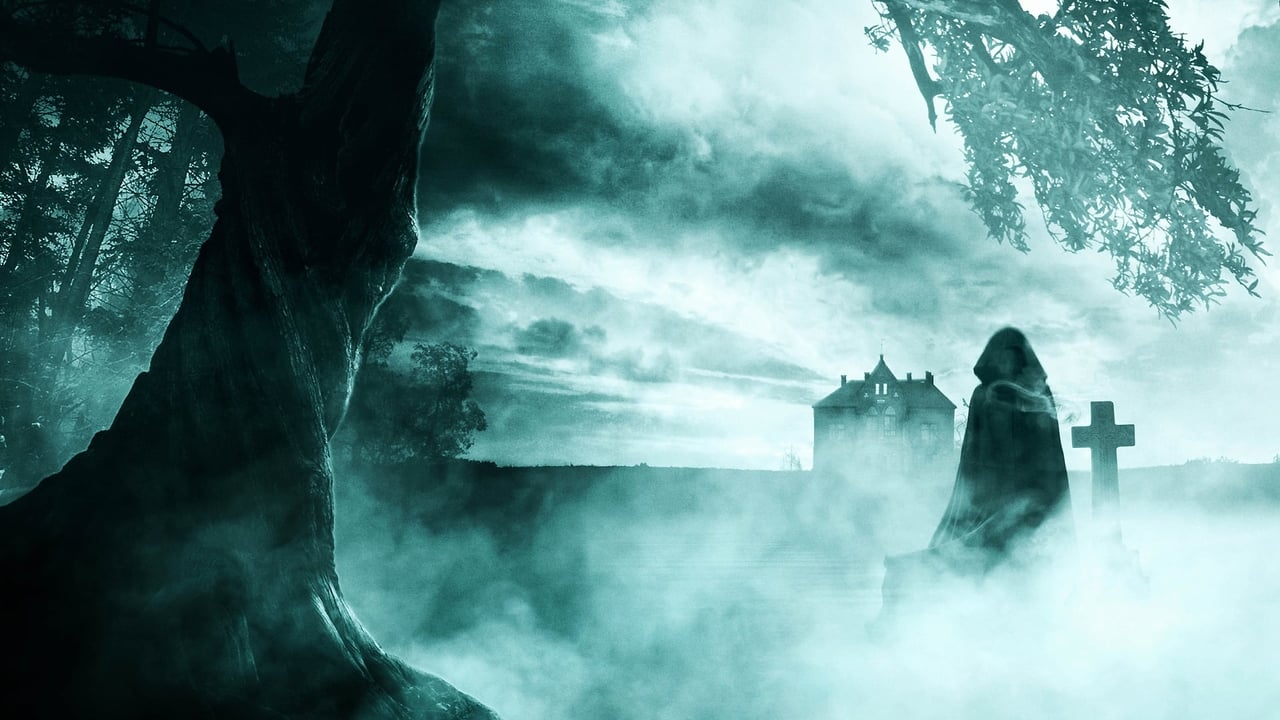
The story follows a young lawyer, Arthur Kipps, who is ordered to travel to a remote village and sort out a recently deceased client’s papers. As he works alone in the client’s isolated house, Kipps begins to uncover tragic secrets, his unease growing when he glimpses a mysterious woman dressed only in black. Receiving only silence from the locals, Kipps is forced to uncover the true identity of the Woman in Black on his own, leading to a desperate race against time when he discovers her true identity.
About The Woman in Black
What makes The Woman in Black worth revisiting
You remember that nursery scene. Three young girls, entranced — and then they throw themselves from a window. It’s a shock you don’t need a poster to recall, and it’s the sort of opening that does the film’s job for it: establish the horror as a domestic catastrophe rather than an abstract threat.
James Watkins directs the piece with an appetite for concise storytelling. It runs for just 95 minutes and keeps its focus tight: Daniel Radcliffe plays Arthur Kipps, a bereaved father whose new child and fragile household become the film’s most precious things to protect. Underneath the jump-scares and apparitions there’s a simple pull: this is a ghost story about family, parental protection and the loss of the sense of safety a home is supposed to offer. That combination is why people still talk about it — it treats fear as something that visits your house, not a thing that happens somewhere else.
The idea that sets The Woman in Black in motion
At the heart of the film is a very specific kind of loss: Arthur Kipps’s wife, Stella, dies after giving birth to their son Joseph. That moment leaves him a single parent and makes every small danger feel enormous.
While coping with fresh grief, Kipps stumbles onto an old family wound. Documents and letters reveal a past cruelty: a boy called Nathaniel was taken into another family under shameful circumstances, with consequences that didn't stay buried.
Those discoveries turn a private sorrow into a ticking threat. The story pivots on the idea that past wrongs can reach forward — and that discovering them sometimes means exposing the thing that will come for your child.
Ultimately the setup ties the beginning and end together: the film frames a man protecting his son, and the tale collapses inward so that family, loss and what protection actually costs are the stakes the audience watches until the last scene.
Why Arthur Kipps matters
Daniel Radcliffe is cast as Arthur Kipps, and the film centres around what that character loses and what he will do to keep what remains. The kernel of the whole picture is personal: a man recently widowed, a newborn son and the sudden burden of having to be both parent and protector.
Arthur’s not just investigating paperwork; he becomes the human conduit for every village suspicion and every ghostly accusation. Children collapse in his arms, neighbours cry that they have seen ‘that woman’, and the weight of the past lands on him as if it were his fault to carry.
He’s the handy, believable angle the story needs. Without a believable, ordinary figure at the centre — a lawyer turned desperate father — the ghost would be an abstract menace. Arthur keeps the film grounded in the human cost of the haunting.
The ending — where the family’s fate folds into something resembling peace — is a payoff specifically tailored to him. Arthur matters because the movie asks us to follow one man’s attempt to stop the past from killing his future.
The Woman in Black has more on its mind than the plot suggests
Strip away the jump-scares and the film becomes a tight study of domestic vulnerability. Themes of family and parental protection are threaded through every scene: the central question is always the same — how far will someone go to keep a child safe?
Home is not a sanctuary in this story. The nursery, the railway, the station — these are supposed to be ordinary places of comfort and routine. The Woman in Black turns them into sites where the past can break in and damage what is most fragile.
Mortality and loss are ever-present, too. Grief starts the film and grief finishes it; the ghost’s revenge is a tragic extension of her own loss, and that cyclical sorrow weighs on everyone who lives in the village. Friendship and communal ties come under strain as neighbours react with fear, suspicion or dull dismissal. The emotional engine isn’t merely the supernatural; it’s the human responses — how people protect, accuse or abandon one another when something terrible returns.
The Woman in Black could not belong to any other decade
Released in 2012, The Woman in Black is very much a 2010s film in the simplest sense: it’s part of that decade’s varied approach to horror, where old ghost stories were revisited alongside newer subgenres.
What it brings to the 2010s is restraint. There’s no indulgent length; it tells a single, focused story and closes the book in under an hour and three-quarters. That economy feels like a choice that suits modern viewing habits without betraying the source material’s traditional sensibility.
By wearing its period trappings plainly and prioritising family stakes over spectacle, the film sat comfortably among other 2010s movies that preferred atmosphere and contained narratives to knockabout thrills.
Put simply: it’s a 2012 ghost story that remembers how to be a ghost story, and the decade around it was ready for that kind of faithful, compact retelling.
What has aged — and what hasn't
The elements that still land are the emotional ones. Family, the idea of home as both refuge and target, and the small human moments between characters continue to hold up because they’re simple and true to the story’s shape.
The film’s willingness to tie its scares to the jeopardy of a child keeps it feeling urgent. That’s not a gimmick: it’s a clear narrative premise that translates to any era — people still react, quite naturally, to threats against children.
Some peripheral bits — like a background character in a street scene — are of no consequence to modern viewers. What matters is the central relationship: the film gives you reasons to care about what is at stake.
And the ending, which reunites the family in a final image, still works as a kind of bittersweet closure. It’s bleak and consoling at once, and that emotional finish tends to age better than a cheap surprise.
Why The Woman in Black still matters
Part of the film’s afterlife comes from how memorably it stages the threat against children. It begins with that nursery tragedy and never lets the idea go: children die, a community is haunted, and the accusation that 'that woman' causes catastrophe lingers like a stain.
The movie also matters because of its neat moral knot. Arthur unearths a family secret — a child taken in under shameful circumstances — and Jennet’s grief becomes the engine of vengeance. That linkage of personal tragedy to communal consequences is what stays with you.
The villagers’ chilly reactions, the bolted nursery and the spectral figure in black give the film a sustained sense of dread rather than a series of disconnected shocks. Small town suspicion and institutional dismissal are repeated beats: people ignore warnings, children suffer. Finally, the attempt to put the past to rest — recovering Nathaniel’s body, confronting the old wrongs — and the catastrophic fallout that follows, makes the film feel like a complete story. It doesn’t finish on a cheap twist; it finishes on the cost of trying to fix something that was already broken.
Does The Woman in Black still hold up?
Yes — with a clear rider. If you want modern horror that reinvents the wheel, this isn’t for you. But if you want a compact, emotionally focused ghost story about family and the fragility of home, it still delivers. The film’s spine is straightforward: an ordinary man trying to protect his child from a past that refuses to stay buried.
The cast and the direction keep things disciplined. Daniel Radcliffe’s Arthur is the human reference point, Ciarán Hinds’s Sam Daily provides steadiness and Liz White’s Jennet embodies the persistent wrong that won’t be forgotten. James Watkins keeps the running time tight and the scares purposeful.
Where it touches a nerve is not in novelty but in sympathy. The film trades on parental fear and the idea that a house can be invaded by grief; those are timeless anxieties. When the narrative funnels everything into the attempt to protect Joseph, the stakes feel immediate and recognisable.
So should you watch it now? Absolutely—if you like your ghost stories tidy, unflashy and built around people rather than effects. It’s a short, sharp reminder that the worst hauntings are often the ones that target the people you most want to keep safe.