The Witches
“Saving the world from witches is a tall order for a boy they've turned into a mouse!”
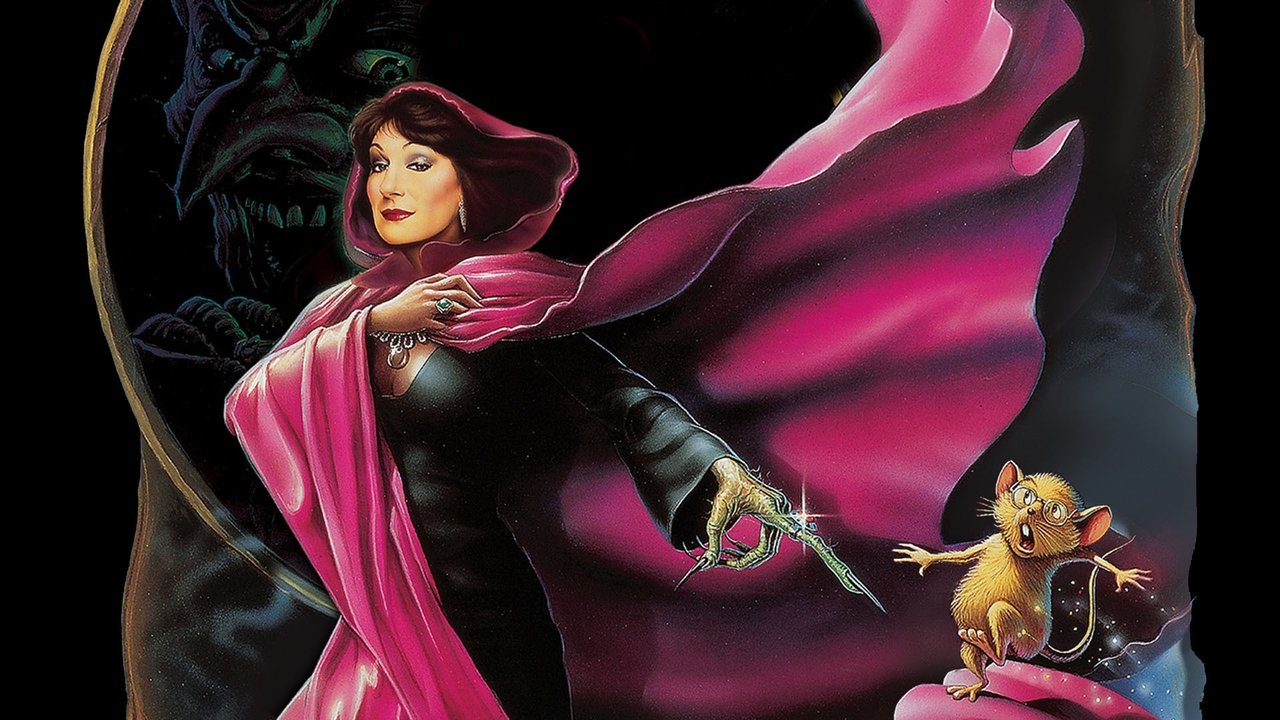
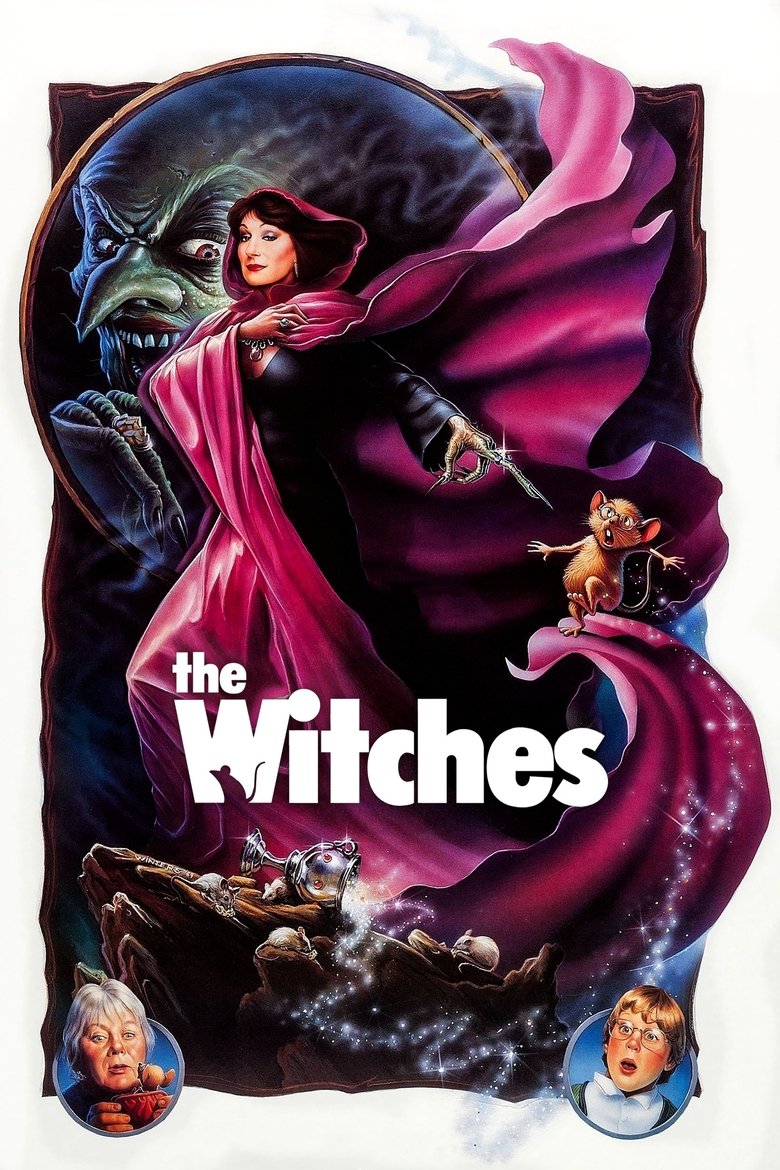
While staying at a hotel in England with his grandmother, Helga, a young boy named Luke inadvertently spies on a convention of witches. The Grand High Witch reveals a plan to turn all children into mice via a magical formula. When they discover the eavesdropper, the witches test the formula on him. Now, with the help of Helga and hotel manager Mr Stringer, Luke the mouse must fight back against the witches.
About The Witches
Why The Witches still works
The Witches opens with something very small and specific: an old woman telling an eight-year-old about a secret world where ordinary-looking women are actually predators. That framing — a grown-up handing down a warning to a child — immediately sets the film's tone. It feels like a bedtime tale that has teeth.
Nicolas Roeg directs with a habitually sharp sensibility across a compact 91 minutes, steering a story that sits at the curious intersection of fantasy, horror, children’s picture-book logic and a pinch of comedy. The result is a film that wears its strangeness proudly but never forgets who it’s for. At the centre of the chaos is the Grand High Witch — a presence the story treats as absolute authority — and a hotel full of secret enemies masquerading as a respectable society. That contrast between cosy adult institutions and the danger they hide is what keeps the film humming long after the credits roll.
The idea that sets The Witches in motion
The practical seed of the film is heartbreak and relocation: after Luke loses his parents he goes to live with his grandmother Helga, and their move to England places them squarely inside the film’s domestic anxiety. It’s a simple move that funnels the story into one place — a seaside hotel — where ordinary rules are about to be tested.
At that hotel Luke makes a friend in Bruno, a boy defined by appetite and cheerfulness; their friendship gives the film a warm, human centre. At the same time Luke’s small incidents — a pet mouse upsetting the manager — create believable friction with the adult world, which the witches are quietly exploiting.
The setup turns quickly from suspicion to peril: Luke sees the world of witches for what it is, and a medical emergency with Helga complicates the escape routes. Those personal stakes — a sick guardian, an inquisitive child — keep the plot from turning into a mere series of scares.
And when the family finally returns home, they aren’t just survivors. They inherit a literal resource that allows them to plan a future response. The story’s beginning, then, is less an origin story than the first beat in a chain that makes family its battlefield and its refuge.
Why Grand High Witch matters
The Grand High Witch isn’t a background menace. She’s the story’s organising force: the witch convention, the potion to change children into mice, the plot that upends the hotel — it all radiates from her. That concentrated source of evil gives the story a single target, which helps the film keep its focus even when things get oddly literal and grotesque.
Her appearance at the witches’ gathering under a respectable alias makes the film’s paranoia feel procedural rather than random. She represents an adult order that’s rotten beneath the polite surface — a neat counterpoint to Helga’s robust and loving household.
Crucially, the Grand High Witch’s invention — a potion intended to make children disappear from human life and enter the commercial stream as mice for confectionery goods — turns the film’s threat into something almost mundane and monstrous at once. It’s the marriage of fantastical cruelty and real-world greed that sharpens the story.
And when the Eveshims end up with the Grand High Witch’s trunk full of money and an address book, that object shifts her role from distant overlord to a defeated force whose fall has practical consequences. She matters because her rise and fall drive both the danger and the family’s opportunity to fight back.
Why Anjelica Huston's presence matters
Anjelica Huston occupies the role of the Grand High Witch — the figure whose plans and eventual unravelling give the story shape. Her character is the pivot for the film’s climax: when the villains are routed the Eveshims receive the witch’s trunk, and that delivery changes the family’s prospects.
That suitcase full of money and the address book left behind is the concrete aftermath of the Grand High Witch’s downfall. It’s proof that the threat was not an abstraction and that removing it has immediate, usable consequences for the family.
So while this section doesn’t argue about style or manner, it’s fair to say the role itself functions as the story’s fulcrum: the Grand High Witch’s scheme is what the family must survive and respond to, and the items she leaves behind are what let them plan a life after the horror. Taken like that, Huston’s casting matters because the character she plays is the author of both the crisis and the unexpected resolution the family inherits.
The Witches has more on its mind than the plot suggests
On the surface The Witches is a tidy set of genre moves — child in danger, monsters in disguise, a plan to stop them. Underneath, it’s preoccupied with family and the measures adults take to keep children safe. That’s why Helga matters: she’s not just a guardian, she’s the story’s answer to the threat.
Parental protection here isn’t cosy. It’s practical and sometimes grim: medical vulnerability, travel, quick thinking under pressure. Those are the kinds of risks the film frames as everyday, which makes the supernatural menace feel more immediate.
Friendship anchors the child-centred side of the picture. Bruno’s uncomplicated joy and Luke’s loyalty give the film its human heartbeat, so the danger never feels like mere spectacle. When the plot threatens those relationships, the emotional stakes are clear.
There’s also a thread about consumerism and how monstrous impulses can be folded into commerce — a potion designed to funnel transformed children into confectionery supply chains is exactly that sort of ugly, modern merger. All of which means the film is concerned not just with monsters but with the adult worlds that enable them.
The Witches could not belong to any other decade
Released in 1990, The Witches sits on the cusp of two eras: it’s a product of late-20th-century children’s storytelling but wears that transition oddly well. It doesn’t lean on the decade for visual shorthand; instead it carries an attitude that feels of its moment — a willingness to be dark in a film that’s pitched at young audiences.
That mixture of moods — fairy-tale caution for children with an adult appetite for strange and unsettling imagery — was comfortably at home at the turn of the decade. The film treats childhood peril seriously rather than sugar-coating it, which is part of why it reads like a 1990 film rather than a decades-earlier fairy tale.
So the 1990s connection isn’t about fashion or set dressing. It’s about tonal confidence: a mainstream children’s fantasy that accepts a degree of menace and moral complexity, and trusts its audience to feel both frightened and comforted by the same story.
In short, The Witches is very much of 1990 because it balances a child’s perspective with grown-up stakes in a way that feels neither over-protective nor prudish.
What has aged — and what hasn't
Some parts of The Witches feel timeless: the small, domestic moments of an aunt or grandmother sheltering a child, the way friendship between boys like Luke and Bruno creates real warmth. Those themes — family, home and protection — still land because they’re human and immediate.
The central idea of children being hunted by grown-ups disguised as respectable people keeps working too. It’s a simple, effective anxiety that plays on a parent’s worst imaginings and a child’s sense of vulnerability.
Where the film ages more visibly is in its mixture of tones. The abrupt shifts between fairly bleak peril and lighter comic beats can feel jarring to contemporary viewers used to more seamless family-fantasy blends. But that jolt is also part of the film’s character: it refuses to totally soften its edges. Finally, the tangible payoff — the Eveshims returning home with the Grand High Witch’s trunk of money and an address book — still reads as a satisfying piece of narrative bookkeeping. It ensures the family’s ordeal produces a concrete future, which modern audiences can appreciate as a form of story closure and agency.
Why The Witches still matters
There are vivid, almost grotesque details in the film that linger: witches who hide claws with gloves, masks of hair that give them rashes, and a sharp sense that children’s cleanliness is itself a vulnerability. Those sorts of specific, creepy touches are easy to recall and explain why scenes stick in the mind.
The story of Erica — a childhood friend trapped inside a painting and slowly vanishing over years — is exactly the sort of almost-mythic anecdote that makes the world feel larger, older and properly threatening. Little narrative set-pieces like that build a sense of folklore inside the film.
At the centre of many people’s memory of the film are the relationships: Luke and Helga’s guardianship, Luke and Bruno’s friendship, the family trying to make adults believe a transformed child. Those human knots are what give the spectacle an emotional anchor.
And practically speaking, the ending’s logistics matter for the film’s afterlife: the witches’ plot to turn children into mice for use in confectionery channels, the banquet where the plan is foiled, and the Eveshims’ final receipt of the witch’s trunk and address book turn defeat into a tool for the family’s future. That tidy resolution — justice that brings resources and knowledge — helps the movie feel complete, rather than merely scary.
Does The Witches still hold up?
Yes—if you accept its blunt mixture of children’s fable and adult menace. The Witches is a compact 91-minute film that doesn’t dilute its premise: a boy warned by his grandmother about a secret, organised evil, and a story that asks what adults will do when that evil arrives.
It’s a film that trades in specific, memorable details and in relationships that feel consequential: Helga’s care, Luke and Bruno’s friendship, and the way ordinary adults can suddenly seem untrustworthy. The Grand High Witch is the literal centre of the danger, and the story’s final bookkeeping — the trunk of money and the address book — transforms the family from victims to people plotting a future response.
Watching it today, you won’t find a perfect tonal balance, but you will find a film that still has energy, purpose and a clear moral axis: protect the children, tell the truth, and turn fear into action. Those are choices that age better than any single special effect or comic beat.
So should you watch it? If you want a children’s story that takes the threat seriously, that centres family and practical care, and that doesn’t shy from being a little unsettling, then yes. It’s a movie that reminds you why a good warning from a grandmother can be as dramatic — and as useful — as any spell.