
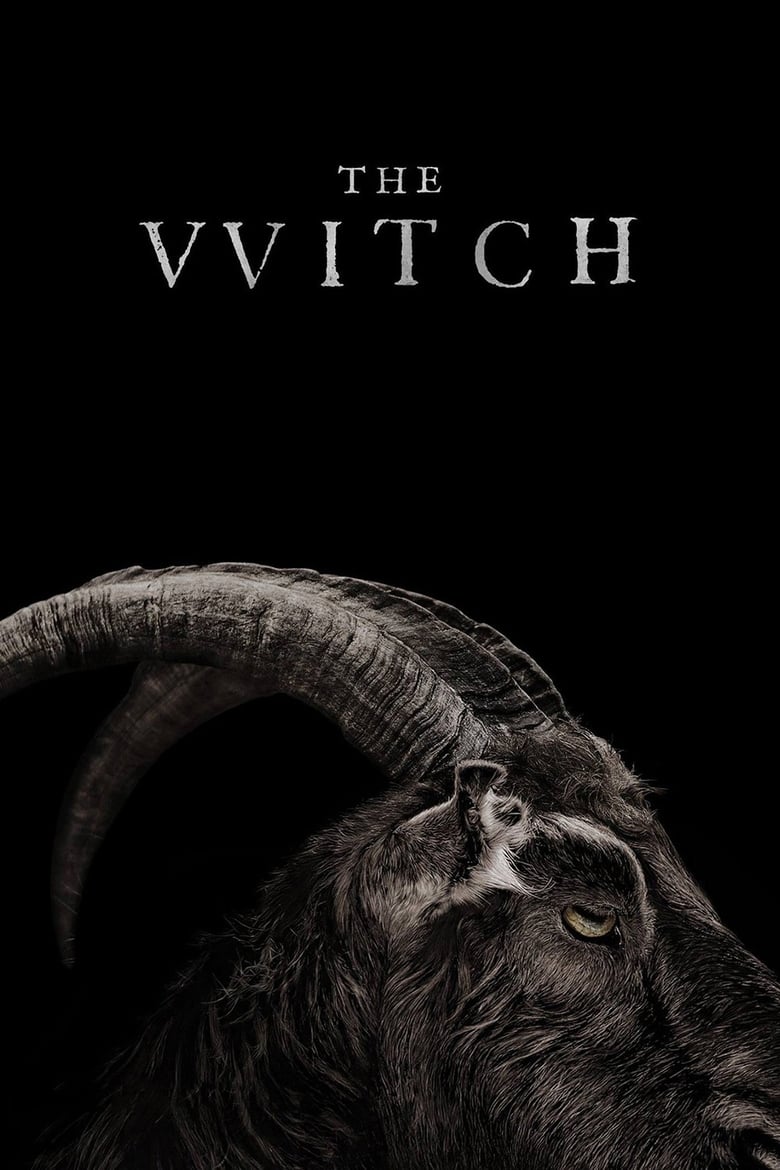
The Witch
“Evil takes many forms.”
In 1630, a farmer relocates his family to a remote plot of land on the edge of a forest where strange, unsettling things happen. With suspicion and paranoia mounting, each family member's faith, loyalty and love are tested in shocking ways.
About The Witch
Why The Witch is still worth talking about
Put simply: it makes the domestic feel dangerous again. Robert Eggers's film drops a Puritan family into isolation and spends its time watching the way grief, blame and hunger rearrange what should have been a safe home.
The cast are sharply drawn into that pressure — with Anya Taylor‑Joy as Thomasin at the story's eye — and the film never lets you forget there's a forest waiting beyond the farmhouse. Even the family's goat becomes a voice in the household; small details like that turn ordinary family life into the fuel for real dread. It runs tight, too. At just over an hour and a half, The Witch refuses to pad the tension; it presents events clearly and then lets the consequences land hard. That economy is part of why, years on, people still find themselves mentioning it in the same breath as other memorable horror from the 2010s.
The idea that sets The Witch in motion
The Witch doesn't begin with a grand massacre. It escalates from small, violent shocks. One of the first jolts comes when Caleb discovers their dog Fowler brutally killed — a clear sign that something in the woods is not natural.
From there the film threads a very particular line: domestic responsibility, youthful curiosity and the forest's quietly predatory otherness collide. The story keeps returning to moments where innocence meets corruption.
Later, temptation turns into a contract. A goat's invitation culminates in a scene where a once-animal figure takes human form and guides Thomasin into signing away something that will change her life.
So the setup works because it moves from intimate household pains to a single, decisive act of crossing a threshold — the private horror of a family in ruins becomes the gateway to something larger and stranger.
Why Thomasin matters
Thomasin is the film's barometer of domestic collapse. Anya Taylor‑Joy plays the teenager at the centre of a household that has already been exiled and then hollowed out by loss and suspicion.
Her guilt is not theatrical; it’s practical and mundane. She is, after all, caring for the baby when he vanishes, and that ordinary duty becomes the hinge around which the family unravels — her mother explicitly blames her for the loss.
There are several scenes that underline how exposed she is: overhearing discussions about poverty and being sent away, being accused by her siblings, and the moment she wakes and is guided home by her father's voice. Those moments make her the person everyone looks to when the family needs a scapegoat.
By the end, Thomasin's choices are framed as both survival and rupture: when everything inside the house collapses, she is the one who walks out and into something else entirely.
Why Anya Taylor-Joy's performance matters
Anya Taylor‑Joy is cast as Thomasin, and the role often depends on quiet, precise moments rather than grand gestures.
One small but telling beat: Thomasin awakens and finds her way home by following William's voice. It's the kind of unemphatic detail that threads the character through the family's crisis.
That scene — simple in description, loaded in context — is representative of what the role asks for: presence in the face of accusation, and the ability to carry a scene's tension without obvious exposition. Put another way, Thomasin's arc leans on moments like that to carry the weight of the story.
The Witch has more on its mind than the plot suggests
At face value it's a horror about a witch in the woods. Beneath that, the film is intensely occupied with family — how it protects, blames and ultimately fails its members.
Loss sits everywhere: the missing infant, a household reduced to prayer and tears, and a mother's grief that becomes a form of accusation. That sorrow is not abstract; it rearranges the family’s decisions and their sense of home.
Home and safety are persistent anxieties. The family were cast out once already, they are hungry, and arguments about leaving or sending Thomasin away underline how fragile any refuge has become.
And threaded through all of it is fear: fear of starvation, fear of damnation, fear of each other. The witch, and even a talking goat, become external shapes for those private terrors.
The Witch could not belong to any other decade
The Witch was released in 2016, which firmly places it in the 2010s slate of movies that favoured restraint over loudness.
As a horror–mystery it shares the decade's appetite for stories that treat dread as something to be lived with rather than explained away.
Its compact runtime and refusal to over-explain plot points are characteristic choices for indie horror around this period: the film trusts the audience to sit in the discomfort.
All of that makes the film feel like a product of its moment — not because of fashion, but because of how it treats storytelling priorities in the 2010s.
What has aged — and what hasn't
What still hits is the film's insistence that the most ordinary elements of family life can become terrifying. The basic situation — a family exiled, sheltering near a forest — keeps the anxiety focused and intimate.
The themes of family, home and fear remain clear and immediate; a mother who spends her days in prayer after a devastating loss feels recognisably human, and so do the arguments about whether the household can survive.
Little moments also survive repeated viewings: the twins talking to the family's billy goat, or the overheard conversation about sending Thomasin away, are quietly unnerving in a way that doesn't depend on shocks. Even the simple beats — Thomasin waking and finding her way back by following her father's voice — still function as the kind of grounded touch that makes the larger horrors believable.
Why The Witch still matters
The Witch endures because its story is stubbornly small and stubbornly strange: a missing infant, a family's collapse into mutual suspicion, and the way a talking goat and a hidden hovel reshape their fate.
Those narrative pieces — the disappearance of Samuel, the mother's breakdown, the children's accusations — are memorable because they feel inevitable rather than contrived.
Thomasin's final choice, when she steps into a world of witches and levitation, is the kind of payoff that converts the film from domestic tragedy into something mythic; the sequence of signing away and walking into the woods leaves a clear, singular impression.
Put together, these elements give the movie a distinct identity: not simply a haunted tale but a picture of what happens when a family's internal fractures are met by an external, supernatural pressure.
Does The Witch still hold up?
Yes. If you respond to horror that trusts mood and domestic dread over spectacle, The Witch is still very much worth your time. It’s concise — 93 minutes — and it keeps its focus tight on family, loss and the erosion of home.
Thomasin’s position at the centre of the household, the accusations she faces after the baby's disappearance, and the overheard conversations about hunger and sending her away all add up to a pressure cooker that never feels padded.
The film's final movement — the deal with a talking goat and the step into the witches' company — fulfils the promise the story has been making from the first small, cruel incidents in the woods. That escalation feels earned.
So watch it for the way it makes the most familiar terrors feel strange again. The Witch is one of those films where the home is the starting point for horror, and that particular turn of imagination still lands.