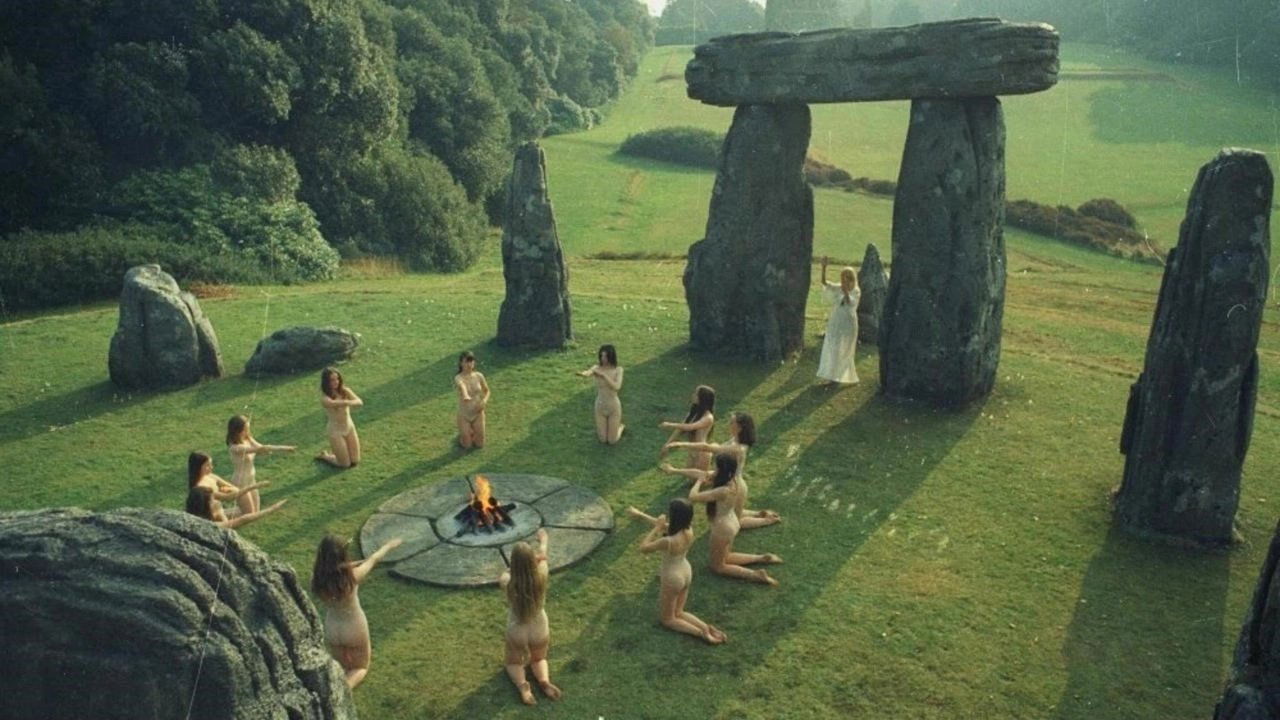

The Wicker Man
“Flesh to touch...Flesh to burn! Don't keep the Wicker Man waiting!”
Police sergeant Neil Howie is called to an island village in search of a missing girl whom the locals claim never existed. The investigation is further complicated as Howie’s religious views clash with those of the island’s residents.
About The Wicker Man
Why The Wicker Man still stands out
The Wicker Man begins with a very simple, very British premise: a policeman flies to a remote Hebridean island to investigate a missing girl. That set-up — Sergeant Neil Howie arriving by seaplane on 29 April 1973 — gives the film its compact momentum. You know immediately that this is a story about an outsider confronting a closed place.
Robin Hardy keeps the clock moving; at 88 minutes it barely lingers, which is why every scene feels deliberately placed. The island’s customs are the kind of detail that quietly shove the audience off balance: churches emptied, old beliefs honoured, and a devout Howie discovering a world that pinches at the edges of everything he thinks proper. And then there’s Lord Summerisle: Christopher Lee’s presence as the island’s leader gives the film someone to argue with, someone who can explain, almost casually, how the island’s modern life grew from an older ritual logic. That conversation — polite, unsettling, necessary — is where the film earns the right to linger in memory.
Why Lord Summerisle matters
Lord Summerisle matters because he is the island’s explanation. When Howie asks permission to exhume the girl’s grave, he meets the man who can lay out the thesis of the place — how belief, economy and family history braided together to make the community what it is.
He is not a vague figurehead; the script gives him a genealogy. He is the grandson of a Victorian agronomist who, back in 1868, bred fruit trees for a hostile climate and then linked that agricultural success to a return to older gods. That origin story is the island’s founding myth, and Lord Summerisle is its living advert.
Because of that family story, Summerisle’s arguments about prosperity and ritual are not abstractions. They read like management: his grandfather offered a fix for poor harvests, the island embraced the cure, and the community adapted their faith around it. The result is a leader who speaks for continuity as much as control.
Which is why he’s memorable: he’s the human face of a system that has every right to be questioned — and every reason to preserve itself. The film doesn’t let him be merely enigmatic; it gives him concrete roots in the island’s past, and that keeps the moral choices of the story oddly, horribly plausible.
The Wicker Man has more on its mind than the plot suggests
At surface level it’s a mystery. Peel back another layer and the film is quietly preoccupied with loss. The missing girl is the engine, yes, but her absence also makes the islanders’ choices feel like answers to a history of scarcity and fear.
Mortality stalks the edges of the story. The community’s rituals read as practical responses to a precarious environment — ways of bargaining with fate — and that bargaining forces characters to measure what they will sacrifice in the name of survival.
Family runs through the whole thing, not as cosy domesticity but as lineage and obligation. The island’s traditions are handed down; the past is not a neutral backdrop but an active force that shapes who has authority, who is protected, and what counts as betrayal.
And threaded through all of it is the idea of protection versus freedom. Some see ritual as safeguarding the community; others, as erasing individual rights. The film lets you sit in that tension without spelling out the answers, which is why it keeps worrying at you after the credits roll.
The Wicker Man could not belong to any other decade
Released in 1973, The Wicker Man carries a 1970s appetite for stories that mix social unease with rural otherness. It isn’t nostalgia for the past or blind celebration of tradition; it’s the decade’s willingness to ask awkward questions about how communities remake belief when the old certainties fail.
That sensibility matters for this film because the plot hinges on a clash between incoming authority and local tradition. A policeman turns up from the mainland and finds churches abandoned and older rituals back in place — a neat shorthand for a Britain wrestling with cultural change.
The era was interested in stories where modern institutions meet older practices and neither is entirely in the right. The Wicker Man slots into that mood; it’s both a horror and a parable about how societies cope when the usual rules don’t produce the expected results. Put simply: the film’s compact date and setting make the tensions feel of their time. The island’s attempt to solve a practical problem by reviving ancient rites is the kind of narrative worry that felt especially urgent in the early 70s.
Why The Wicker Man still matters
People keep coming back to The Wicker Man because it’s a small movie that tells its tale without grand gestures. It begins with a clear, unsettling problem — a policeman arriving to investigate a missing girl — and then lets that problem expand into questions about belief and community.
The island’s social customs are the kind of specifics that lodge in the memory: schoolchildren denied the existence of the girl on the register, a landlord who says a recent harvest photograph has been broken, a landlord’s daughter who tries to seduce the investigator and is met with his moral refusal. Those moments are quietly unnerving because they’re domestic and direct.
There are also the narrative turns that give the story its bite: an exhumation that reveals a hare instead of a body, the discovery that human sacrifice is a possible remedy for failed harvests, and the revelation that Howie himself matches the island’s criteria for the ultimate offering. Those beats reframe the whole mystery into something darker and more inevitable.
Finally, the ending — Howie trapped inside the wicker man as the community sings and he recites Psalm 23 — is the sort of conclusion that sticks with you because of its terrible clarity. The film refuses tidy answers, and that refusal is part of why viewers still find it chillingly effective.
Does The Wicker Man still hold up?
Yes — but with a note. The Wicker Man still works as a compact, unnerving piece of British storytelling because it trusts the audience to live in a corrosive idea: that a community might collectively choose a terrible remedy in the name of survival. That premise plays straight through to the end, where the island’s leader calmly explains why the choice is made and what will happen.
The film’s pleasures are precise: the steady arrival of a policeman from the mainland, his culture clash with island life, the small domestic details that show how the community protects itself, and the escalating discoveries — a missing harvest photograph, an empty grave, a plan for sacrifice — that change the tone from curious to outright dreadful. It doesn’t waste its 88 minutes.
If you value storytelling that holds tension in a human-scaled way — through conversations, customs and the slow tightening of a trap — then The Wicker Man remains worth watching. It asks hard questions about loss, mortality and family without lecturing, and it lets the island explain itself until you can see, horribly clearly, where the logic leads.
So watch it for the way it makes a small world feel complete and dangerous at once. The final image — a man trapped by communal certainty as the singers close in — is not only the film’s point of horror but its last argument: belief has consequences, and sometimes those consequences arrive like a tide you can’t stop.