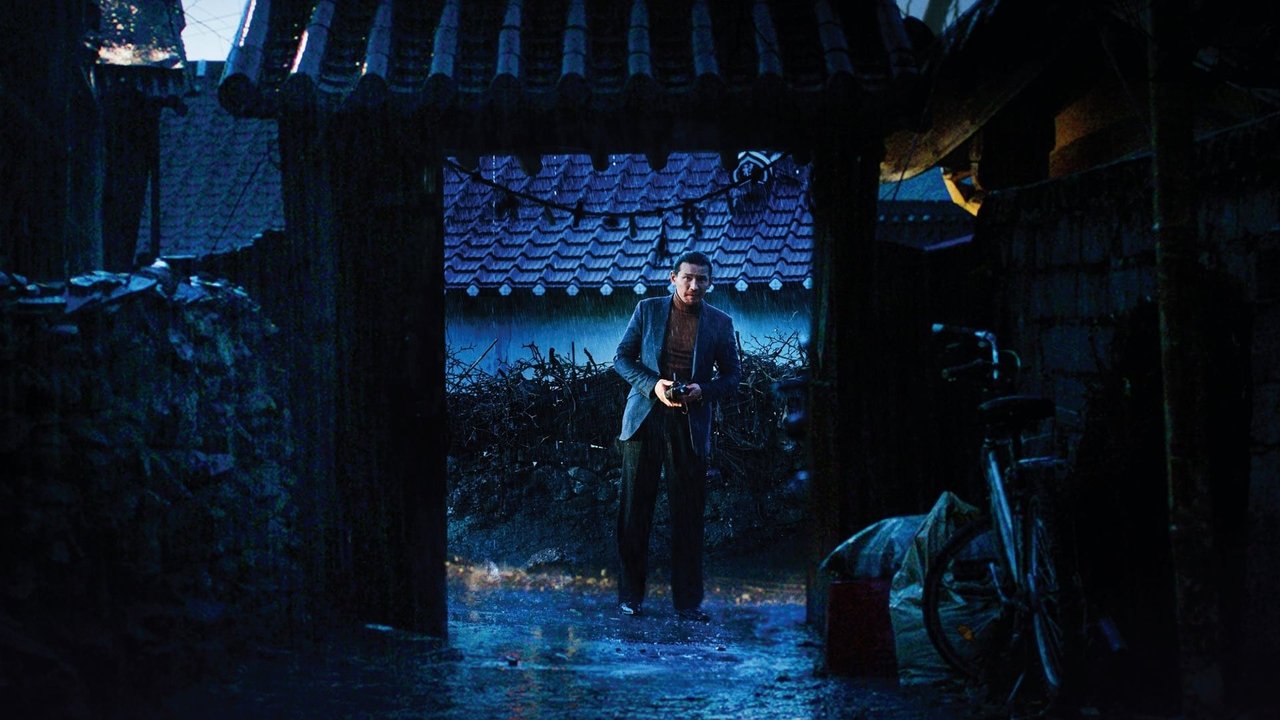

The Wailing
“Never be tempted.”
A stranger arrives in a little village and soon after a mysterious sickness starts spreading. A policeman is drawn into the incident and is forced to solve the mystery in order to save his daughter.
About The Wailing
What The Wailing gets right
Right from the odd little arrival — a Japanese stranger turns up in Gokseong, a tiny mountain village — The Wailing knows how to unsettle the ordinary. That premise is deliciously simple on paper and, crucially, it allows Na Hong-jin to turn a cosy community into a place where small, private certainties start to feel fragile.
It’s a long film, intentionally: at 156 minutes it lets tension breathe and suspicions thicken, rather than rushing for cheap shocks. The running time gives the story room to make you care about who’s affected before the horror closes in. At the centre is Jong-goo, a local policeman and father, pulled into the mess when his daughter becomes one of the first to fall ill. Around him orbit a handful of memorable figures — a shaman, a mysterious young woman who claims the stranger is evil, and a Japanese man whose presence keeps creating new riddles — and those relationships are the engine of the whole thing.
The idea that sets The Wailing in motion
The Wailing starts with a disaster that looks almost banal until it isn’t: a strange infection spreads through the villagers and people begin to turn on their own families. That grim pivot — from neighbourly life to domestic violence — gives the story an immediate and terrifying clarity.
Jong-goo’s involvement is personal, not procedural. His daughter, Hyo-jin, is taken by the illness, and the film quickly makes his panic the audience’s anchor. Once a parent’s child is threatened, questions stop being philosophical and become painfully specific.
The film complicates that panic by introducing competing explanations. A young woman called Moo-myeong insists the Japanese stranger is the evil at work, while other routes — including a Japanese-speaking deacon who gets pulled in — open up different ways of trying to understand what’s happening.
So the premise works because it’s both intimate and puzzling: terrifying events at home, plus a mystery that resists any easy answer. You spend most of the film trying to work out who’s lying, who’s deluded, and which action will actually save anyone.
Why Jong-goo, policeman and father of Hyo-Jin. matters
Jong-goo is the film’s moral lightning rod: he’s a cop, so he’s supposed to have answers, but he’s also a father whose private life is dissolving. That double burden — public duty versus private panic — is what hooks the story to something human and urgent.
The stakes are literal and brutal. The infection doesn’t merely make people sick; it makes them turn on their kin. One early image: Jong-goo’s household finds a dead goat at their gate, and an infected child stabs a neighbour. Those facts keep the danger painfully close to home.
Things only escalate. The film reaches one of its most devastating moments when Jong-goo returns to find his wife and mother-in-law slain by his daughter and himself under attack. That turn forces him from bafflement into survival mode, and the personal cost is irreversible.
Even as the plot widens — with news arriving that other families have been slaughtered and with repeated discoveries of victims kept as trophies — Jong-goo’s arc stays focused. The story doesn’t let him detach and become a bystander; it keeps him in the centre of the family rupture until the very end.
The Wailing has more on its mind than the plot suggests
On the surface it’s a horror-mystery about an outsider and a sickness. Underneath it’s a film obsessed with family: how fragile domestic safety is and what parents will do when the rules that normally protect a household fracture.
Fear in The Wailing is contagious in two ways: the literal infection that makes people violent, and the spread of suspicion that turns friends and neighbours into potential enemies. When villagers begin to slaughter their own, home stops being a refuge and becomes the scene of the crime.
That collapse of trust forces characters into terrible choices. People try exorcisms, confrontations and investigations, but the film repeatedly returns to the same idea — that being a parent means making ruinous decisions in the hope of protecting those you love. Mortality and courage thread through it too. Faces in photographs, shrines filled with victims’ belongings, and the sight of a stranger enticing a child with candy are reminders that the threat is both mundane and existential. The Wailing treats those pressures — of keeping family alive, of standing against a force you don’t understand — as the true heart of its dread.
The Wailing could not belong to any other decade
Released in 2016, The Wailing sits squarely in the 2010s moment when genre films indulged longer, more ambiguous storytelling. That decade made room for horror that preferred complication over tidy resolution, and this film uses its time to let doubt grow.
Being a mid-decade title also meant audiences were ready for films that blurred mystery, thriller and horror — stories that refused to slot neatly into one comfort zone. The Wailing leans into that hybrid identity and makes the ambiguity part of the experience.
In short: it’s very much a 2010s movie in how it lets unease spread slowly, allows characters to argue and fail, and resists neat answers. The result is a film that feels of its era because it trusts viewers to sit with uncertainty rather than resolving everything for them.
What has aged — and what hasn't
What endures most clearly is the film’s central emotional pressure: family under siege. The idea of loved ones becoming threats — whether via infection or possession — is timelessly alarming, so those scenes where villagers turn on kin still land hard.
Concrete set pieces keep their punch. Discovering a shrine full of victims’ photos and belongings, seeing the dead goat at a gate, or the moment an infected child eyes a knife are the kinds of images that retain their shock because they’re about ordinary things made horrific.
Where the film might feel of its moment is in how long it lingers on ambiguity; contemporary viewers used to faster answers might find the patience testing. But that patience is also part of what gives the story heft: when characters misread clues and make the wrong choice — such as jumping to conclusions about who is the real threat — the consequences feel earned.
Finally, the film’s refusal to offer tidy comfort still works. Il-gwang’s photographs of dead families and the repeated reminders of other victims keep the stakes broad, and that scale — the sense that this isn’t just one household’s nightmare — still gives the ending its punch.
Why The Wailing still matters
People remember this film because it balances a tight, recognisable premise with escalating, often grotesque consequences. A stranger arrives; then communities unravel; then families are destroyed. That basic escalation is memorably drawn and hard to forget.
The Wailing also gives us arresting, repeatable images — a hunter’s report of a man with glowing red eyes eating a deer carcass, a shrine of victims’ belongings that includes a child’s shoe, or a man who repeatedly photographs potential victims. Those moments lodge in the memory because they are both specific and strange.
Beyond single images, the film’s moral uncertainty matters. Characters offer conflicting interpretations — a shaman says one thing, a young woman another, a deacon yet another — and that refusal to settle on an obvious enemy keeps discussions alive long after the credits. Finally, it’s the human cost that keeps people talking: the detective who becomes a desperate father, families unmade, and a final sense that the threat doesn’t end with a neat victory. Those threads — grief, doubt and the collapse of trust — are what linger.
Does The Wailing still hold up?
Yes — if you’re in the mood for a slow-burn mystery-horror that spends its length making family loss feel immediate. At its core the film asks painfully simple questions: who do you trust when those closest to you look dangerous, and what are you willing to gamble to protect them? Those are pretty good reasons to sit through 156 minutes.
It’s not an easy watch. The story forces Jong-goo into decisions that cost him everything, and the accumulation of dead households, photographed victims and small domestic horrors makes for a grim experience. But that is precisely why it still matters: the film doesn’t let you off the hook by offering easy answers.
For a modern viewer the mixture of mystery, thriller and horror remains compelling. The Wailing keeps its focus on family and fear, and it refuses to reduce the problem to a single villain — even when a red-eyed figure and alarming discoveries suggest an answer. That stubborn ambiguity is one of its strengths.
So watch it when you want a horror that sticks in your head because it made you care about the people being hurt. The Wailing doesn’t just scare you; it makes you think about what protecting home actually costs, and that question is likely to outlast whatever nightmares it hands you.