The Town That Dreaded Sundown
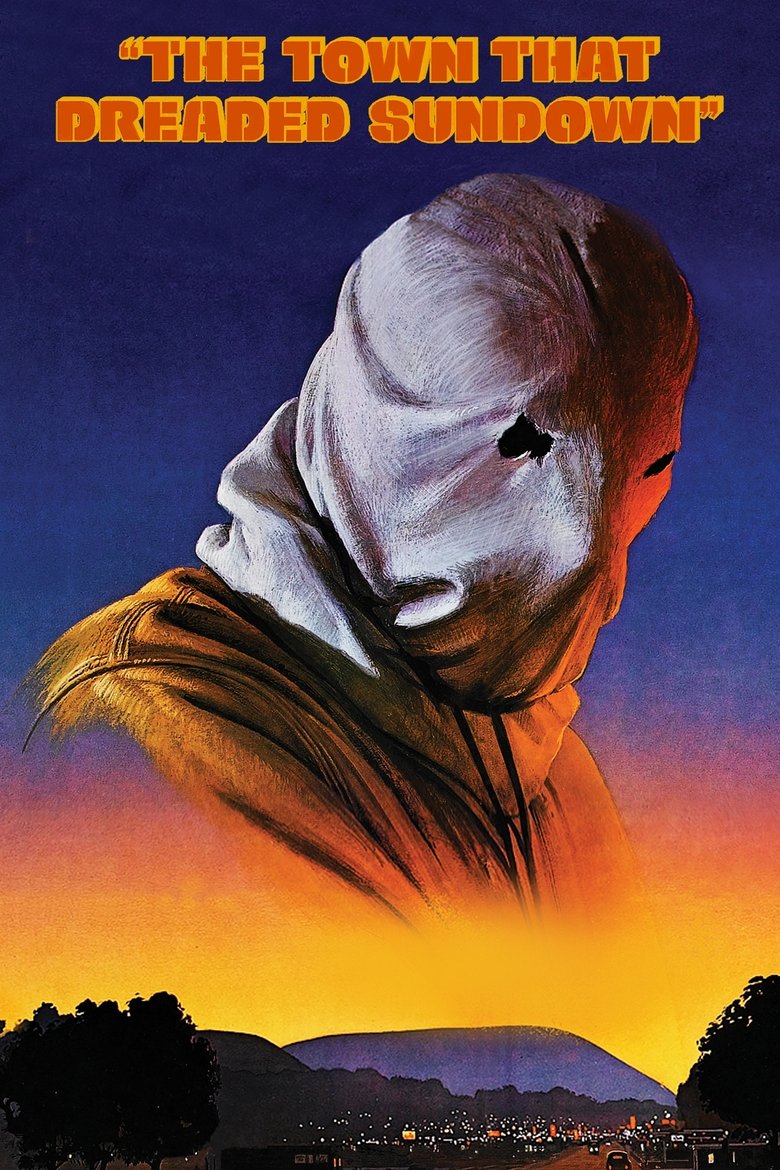
“In 1946 this man killed five people... Today he still lurks the streets of Texarkana, Arkansas.”
When two young lovers are savagely beaten and tortured on a back country road in Texarkana, local police are baffled and must find "the Phantom Killer" before he can kill again.
About The Town That Dreaded Sundown
Why The Town That Dreaded Sundown still works
The Town That Dreaded Sundown lands with a peculiar, uncomfortable insistence: it opens in a place that feels set for a straightforward future, and then that ordinary life is punctured. The film establishes a pre-attack Texarkana where people are planning ahead and living ordinary lives, which makes what follows matter in a very immediate way.
Charles B. Pierce directs a compact 90-minute picture that wears its mixed genres — part horror, part mystery, part crime drama — like a single, anxious garment. It’s economical storytelling: a hooded assailant turns community routines into danger, and the film treats the investigation with the same attention as the terror. There’s also a procedural anchor: Ben Johnson appears as Captain J.D. Morales, the figure called in to take charge. That presence means the film never drifts into pure shock-for-shock’s-sake; it keeps returning to the idea of authority trying, sometimes clumsily, to restore ordinary life while the town increasingly feels anything but safe.
The idea that sets The Town That Dreaded Sundown in motion
The engine of the film is simple: ordinary couples, a string of increasingly brutal assaults and a town that slowly realises this is not a one-off. It begins by showing how ordinary life was — then demonstrates how quickly the ordinary gets upended when a violent intruder starts targeting people parked out of sight.
That upheaval forces local law enforcement to bring in outside help. Morales arrives and labels the attacker the Phantom, which immediately gives the violence a name and the investigation a focal point: this is no anonymous misfortune, it’s a pattern that someone can be tracked.
The film ties that pattern to dates and rituals, which is why the prom-night attack feels so effective in context. A young musician leaves the dance with her boyfriend; what should be a small, private moment becomes a staged, public horror, and the town’s attempts to outwit the killer — decoys and stakes — underline how fragile normal plans have become.
A scene that cuts hard to the domestic is the home invasion that follows later: the ordinary act of sitting by a window, of listening for noises, is turned into a trap. That swing from lovers’ lanes to screened doors is what keeps the story moving and keeps the audience on edge.
Why Captain J.D. Morales, based on the lead investigator, Texas Rangers Company B Captain M. T. "Lone Wolf" Gonzaullas matters
Captain J.D. Morales is the film’s practical fulcrum. He’s the named force of order who arrives to take charge, and that matters because the movie spends as much time on how a community responds as on the murders themselves.
Morales’s presence turns the narrative from a sequence of shocks into an inquiry. That structural choice keeps the story anchored: we’re watching people try to rebuild a sense of safety, not just tally violence for spectacle.
The movie also reminds us who is at stake by grounding the crimes in family and relationships. One of the early murders leaves a young couple viciously assaulted, and other victims are tied into the town’s ordinary social life — prom dates, neighbours, husbands and wives. Morales’s role is partly to stitch those ruptures back together.
Put simply: Morales gives the film a procedural heartbeat. He’s the character who insists the town is worth protecting, and that insistence gives the story its moral frame — an attempt to defend family and everyday life against an anonymous, cruel intrusion.
The Town That Dreaded Sundown has more on its mind than the plot suggests
At first blush it’s a horror-crime hybrid about catching a killer. But the film’s recurring concerns start to pull it in a tighter direction: home, freedom and fear. Almost every scene asks what ordinary living looks like when people don’t feel safe in their own spaces.
Freedom appears as the small freedoms we usually take for granted — a drive out of town, leaving a dance early, sitting by a window — and the film shows how those freedoms become liabilities when violence is unpredictable.
Fear drives civic behaviour here. Panic isn’t just an emotional reaction; it’s practical. The town’s response — from selling out of safety supplies to posting decoys — shows how fear reshapes everyday decision-making and community life. Underlying all of this is a sense of mortality. The attacks remind people of fragility: relationships, plans and futures can be terminated in a single moment. That makes the film less a blood-splatter exercise and more a picture of a community counting what it might lose.
The Town That Dreaded Sundown could not belong to any other decade
This is a 1976 film, and it sits squarely in a moment where American cinema liked to collapse genres together and let stories live in a greyer moral world. The Town That Dreaded Sundown feels of its year: unfussy, a little rugged, and interested in realism as much as shock.
That straightforwardness helps the picture. It doesn’t dress its scares in an art-house glaze or a glossy studio sheen; it prefers the look and feel of local drama — a small-town investigation rather than a blockbuster hunt.
Because it’s clearly of 1976, it also takes its time with procedural beats. The arrival of an outside investigator and the town’s reactions are plot points that the film treats as important, not as mere exposition, which gives the narrative a measured pace.
In short, the film’s decade is relevant because the film chooses the shape of its storytelling in ways that align with the era: plainspoken, interested in community consequences and not afraid to let ordinary people carry the story’s weight.
What has aged — and what hasn't
Some elements remain potent. The film’s attention to communal panic — people boarding up windows, shops clearing out of safety goods — still reads as an unnerving study of how fear spreads and how ordinary behaviour changes when danger feels close.
The basic territoriality of the film holds up. Scenes that make the living room or the lovers’ lane feel unsafe still provoke that small, personal dread: you’re not being asked to fear the abstract, you’re asked to imagine your own routines interrupted.
A few specifics are rougher by modern standards. The doctor’s horrifying description of a victim’s injuries is graphic in a way that can feel sensational now rather than contextual, and that kind of detail can read differently to a contemporary audience.
But on balance the elements that matter most — the town’s reaction, the procedural strain of bringing in an outside investigator, and the focus on family and domestic life — still provide a clear emotional throughline for viewers today.
Why The Town That Dreaded Sundown still matters
There’s a persistent memory people carry from the film: the sense that ordinary townsfolk were blindsided. The story begins with a community that imagined a solid future and then finds itself cataloguing outrages — an early couple assaulted on a lovers’ lane, others tied and killed — which gives the picture a mournful civic weight.
The movie also lingers because it combines the local and the procedural. Sheriff Barker’s decision to bring in the ‘Lone Wolf’ investigator and the arrival of Morales frames the violence as something the town must understand and confront, not just a series of sensational acts.
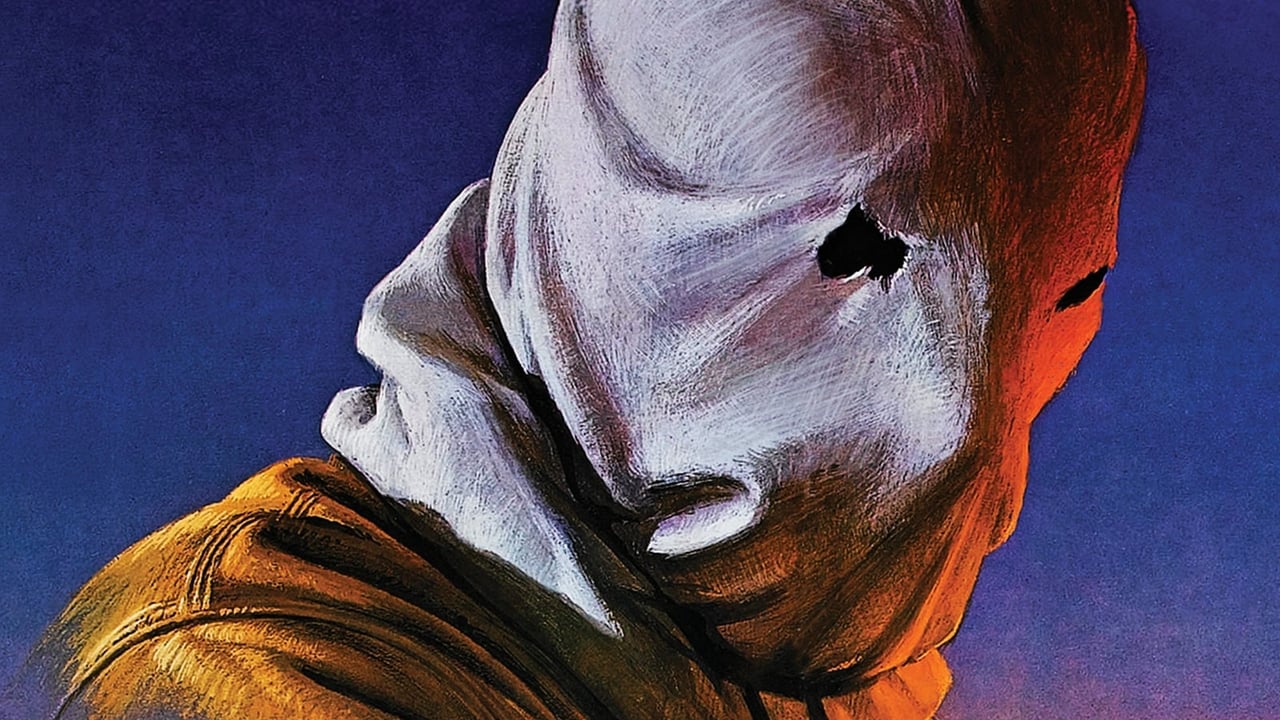
Certain images stick: the hooded figure improvising sabotage at a car, frightened teenagers at a dance, the town running through panic-buying and boarding up. Those moments are memorable because they’re specific ways a community reacts under pressure. And the film finishes with a reminder that the story leaves marks: years later, a screening of the film inside the town turns into a moment where the killer’s presence is implied again. That kind of looping final image keeps the movie in people’s heads long after the credits roll.
Does The Town That Dreaded Sundown still hold up?
Yes — with a rider. If you come for slick modern scares the film will feel dated. But if you value atmosphere, economy and a story that cares about how a community unravels, it still delivers. The 90-minute runtime and the film’s procedural throughline keep it lean and focused.
Ben Johnson’s Morales and Andrew Prine’s Deputy Ramsey give the investigation shape: they’re the reason the film never becomes mere exploitation. The movie continually asks what policing, authority and communal action look like when ordinary life is under threat.
There are moments that read differently today — the graphic hospital description and a few sensational beats — but those don’t erase the film’s stronger virtues: its interest in home and safety, its attention to fear as something that reshapes behaviour, and its refusal to treat victims as background colour.
If you watch it now, expect a compact, often effective piece of local horror rather than a modern slasher. It still makes you think twice about leaving the doors unlatched — and that’s a tidy trick for a film that began in 1976.