The Thing
“Anytime. Anywhere. Anyone.”
A research team in Antarctica is hunted by a shape-shifting alien that assumes the appearance of its victims.
About The Thing
Why The Thing is still worth talking about
It starts with a dog — a Norwegian helicopter pursuing a sled dog until it barges into an American research base — and that small, weird beginning is the film's masterstroke. From that single, animal-sized disturbance, John Carpenter sets up a world where the simplest kindness (kennel the stray) gets you into trouble fast.
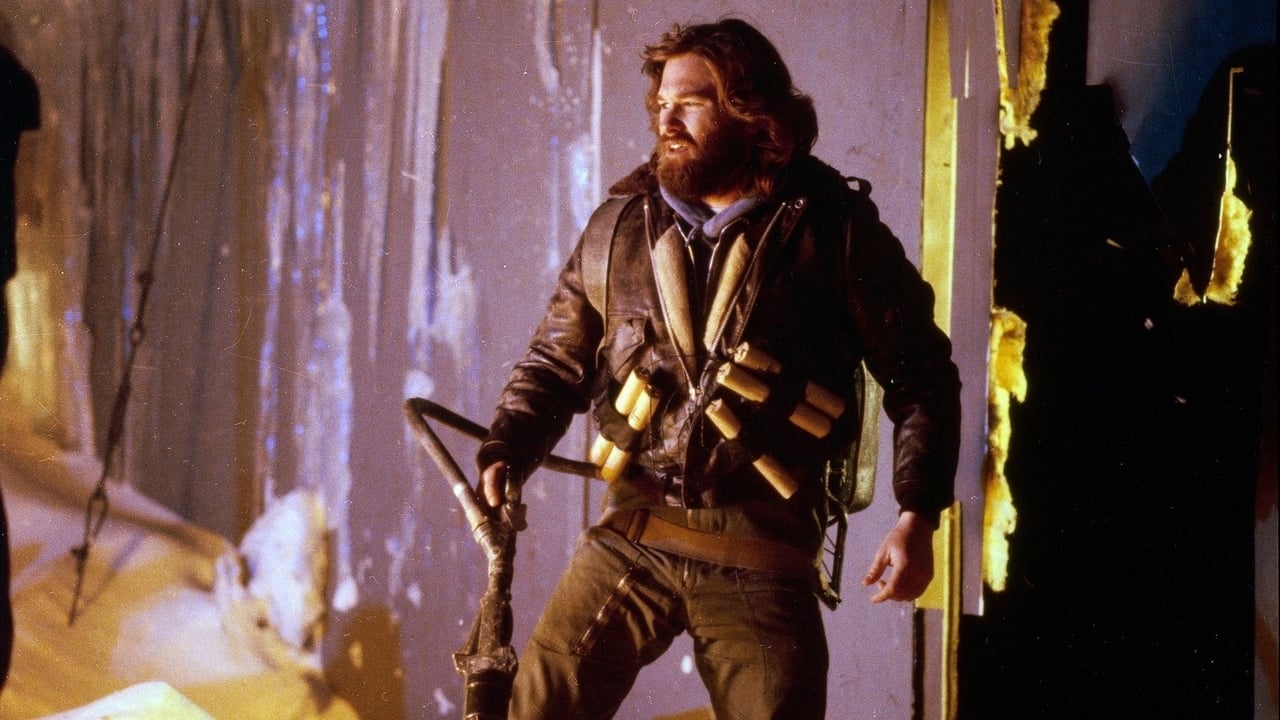
This is 1982 filmmaking with the blinds closed: claustrophobic, lean and unromantic. Carpenter directs a compact 109-minute picture that gradually converts an Antarctic outpost into a lab for distrust, and he does it around a cast led by Kurt Russell's R.J. MacReady and Wilford Brimley's Blair.
You can call it horror, science fiction, body-horror, survival film or a mystery — and you'd be right. What keeps people talking about The Thing isn't a single label but the way those genres collide into a sustained, uncomfortable question: who in this room is still human?
The idea that sets The Thing in motion
The premise is cleverly simple: a thing that can perfectly imitate life gets loose inside a tiny community with nowhere to run. It arrives disguised as a dog, then spreads by absorption — Clark kennels the sled dog, and it soon metamorphoses and absorbs other station dogs, which is the moment the trouble becomes everybody's trouble.
Once the crew realises imitation is the game, the story tightens into procedure. Blair, the station's biologist, runs a computer simulation and goes from curiosity to full-blown paranoia after the results suggest the creature could, given time, assimilate all life on Earth.
His reaction is extreme but logical inside the film's rules: he sabotages the station — destroying vehicles, killing the remaining dogs and wrecking the radio — and the others lock him in a tool shed to stop him. That containment is the film's first moral question: when survival is at stake, how much liberty do you take away from one person to protect the many?
MacReady steps into the gap left by lost confidence. When Copper proposes a blood test and the team discover their stored samples are gone, leadership fractures and MacReady takes command. He organises the men, forces a brutal, practical test on their blood, and when Clark lunges at him with a scalpel he shoots — the movie is constantly reminding us that choices made to survive are messy and immediate.
The Thing has more on its mind than the plot suggests
On one level The Thing is a survival thriller — but beneath the action it's quietly obsessed with loss. The crew keep losing what defines them: dogs, colleagues, control of the station itself. That steady bleed turns the film into a running inventory of absence.
Freedom is another idea the movie keeps playing with. Blair's choice to destroy escape options is framed as paranoid and monstrous, but it also asks: when the wider freedom to live might mean dooming the rest of the planet, what sort of freedom are we protecting? The film doesn't hand out easy answers.
Mortality sits on every frame. The characters make practical, sometimes brutal decisions to delay death — testing blood, burning suspected bodies, detonating the station — and those acts are never abstract heroism. They're improvisations against an organism that doesn't respect what we call life.
Power, too, creeps through the story: not the grand political sort but the everyday authority in a tiny community. When the generator dies and the men are left without heat, the situation becomes literal — control over warmth becomes control over survival — and small leadership choices ripple into life-or-death consequences.
The Thing could not belong to any other decade
Released in 1982, The Thing wears its decade like a sober shirt — not flashy, but unafraid to be blunt. The early eighties still had a taste for genre mash-ups, and Carpenter's film is exactly that: horror, science fiction, mystery and survival all shoved into a disciplined, often clinical narrative.
The era mattered because filmmakers then were comfortable letting genre do the heavy lifting while keeping the human story tight and unsentimental. The Thing is very much of that moment: it trusts the audience to follow the rules and to sit with an ending that refuses to neatly tie everything up.
So yes, it feels of its time — but that 'time' is a practical approach to storytelling rather than a decorative style. Its 1982-ness is about confidence: make the premise strict, run the experiment, and let the consequences do the talking.
Why The Thing still matters
People remember The Thing because it earns those memories scene by scene. The discovery of a burnt, malformed humanoid transferred back to the American station starts a chain of practical investigations that spiral into paranoia — and it's that spiral, more than any single scare, that keeps the film lodged in the head.
Blair's autopsy of the Dog-Thing, concluding it can perfectly imitate life, hands the rest of the movie a simple, terrifying rule. From then on every interaction is coloured by doubt: who are you, and how sure are we that the person next to us is human? It's a premise that turns ordinary station life into a series of potential betrayals.
There are moments that people replay in their heads — Bennings being assimilated and then burnt, Copper's attempt to revive Norris turning into an immediate, visceral shock — but the film's persistence comes from the moral choices the characters make under pressure. The staged blood test, the imprisoning of Blair, the decision to destroy the station with explosives: those are the durable images that keep conversations alive.
Finally, the ending — MacReady triggering the explosives and then, exhausted and freezing, sharing a bottle with Childs — leaves a bruise of ambiguity. It refuses to give a tidy moral or a triumphant finish; instead it offers the small, stubborn human gestures that remain when larger certainties have been stripped away.
Does The Thing still hold up?
Yes — The Thing is still worth watching. Kurt Russell's MacReady anchors a tight story where the rules are clear and the stakes escalate in realistic, ruthless steps. Carpenter directs with the economy of someone who understands how to make a small cast and a remote location feel like a whole world.
What keeps it working now is the film's refusal to sentimentalise. Themes of loss and freedom thread through practical decisions: men burning bodies, restraining colleagues, sabotaging escape. Those are choices that land hard whether you first saw the movie in 1982 or yesterday.
The structure matters, too. From the initial Norwegian chase to the discovery of the alien remains, to the blood test and the decision to blow the station, the film reads like an experiment run to its logical conclusion. The ending — the station destroyed, the two survivors sharing a bottle of J&B — leaves you with atmosphere and a question rather than a neat moral.
So if you're deciding whether to watch: go. It's 109 minutes of cold, precise dread that still asks uncomfortable questions about trust and survival. And if you emerge from it talking about the dog, the blood test, or that final, exhausted sip of whisky, it's done its job.