
The Texas Chainsaw Massacre
“What you know about fear...doesn't even come close.”
After picking up a traumatized young hitchhiker, five friends find themselves stalked and hunted by a chainsaw-wielding killer and his family of equally psychopathic killers.
About The Texas Chainsaw Massacre
What The Texas Chainsaw Massacre gets right
Start with the obvious: this isn’t a polite horror. It’s a film that sets five young people on a road trip — Erin Hardesty, her brother Morgan, her boyfriend Kemper and their friends Andy and Pepper — and refuses to let them walk home in one piece.
Marcus Nispel directs, Jessica Biel plays Erin, and Andrew Bryniarski is the hulking figure at the centre of the trouble. Simple facts, but the film’s energy comes from how tightly it strings them together: you arrive expecting a night out and get dragged into something much darker. It’s a slasher at heart — lean enough to run for 113 minutes — and it makes that genre work for it. There are set-piece shocks, and a household of characters who turn the idea of ‘family’ into a weapon. That contrast is the engine that keeps you watching.
The idea that sets The Texas Chainsaw Massacre in motion
The film opens with a small, unglamorous premise: five young adults heading to a concert after a stop in Mexico to buy marijuana. It’s an instantly recognisable beginning — a bunch of people, some bad decisions, and an open road.
From there, things tighten. When Erin discovers Kemper is missing she and Andy go back to a house that seemed like it might offer help. That return trip is the fork in the road: it’s when the safe plan dissolves and the movie switches from tension to full-on survival.
Inside that house, the rules are different. A family member called Monty summons Leatherface from the basement and the violence that follows is blunt and relentless — a reminder that this place is organised around saving itself, not helping strangers.
The set-up works because the film doesn’t pretend everything will be okay. That early feeling of ‘we’ll be fine’ is stripped away quickly, and the movie lets you feel the loss of control in real time.
Why Erin Hardesty matters
Jessica Biel’s Erin is the film’s thread to the real world. She’s not a detective or an action hero; she’s one of a group of friends who get trapped and then have to improvise a way out. That ordinariness is a strength: her struggle feels immediate because it’s recognisable.
Her connections matter. She arrives with Morgan, her young brother, and with friends Pepper and Andy and a boyfriend, Kemper. Those relationships give the film stakes — these are people who should be able to rely on each other, which makes the betrayals and losses sharper.
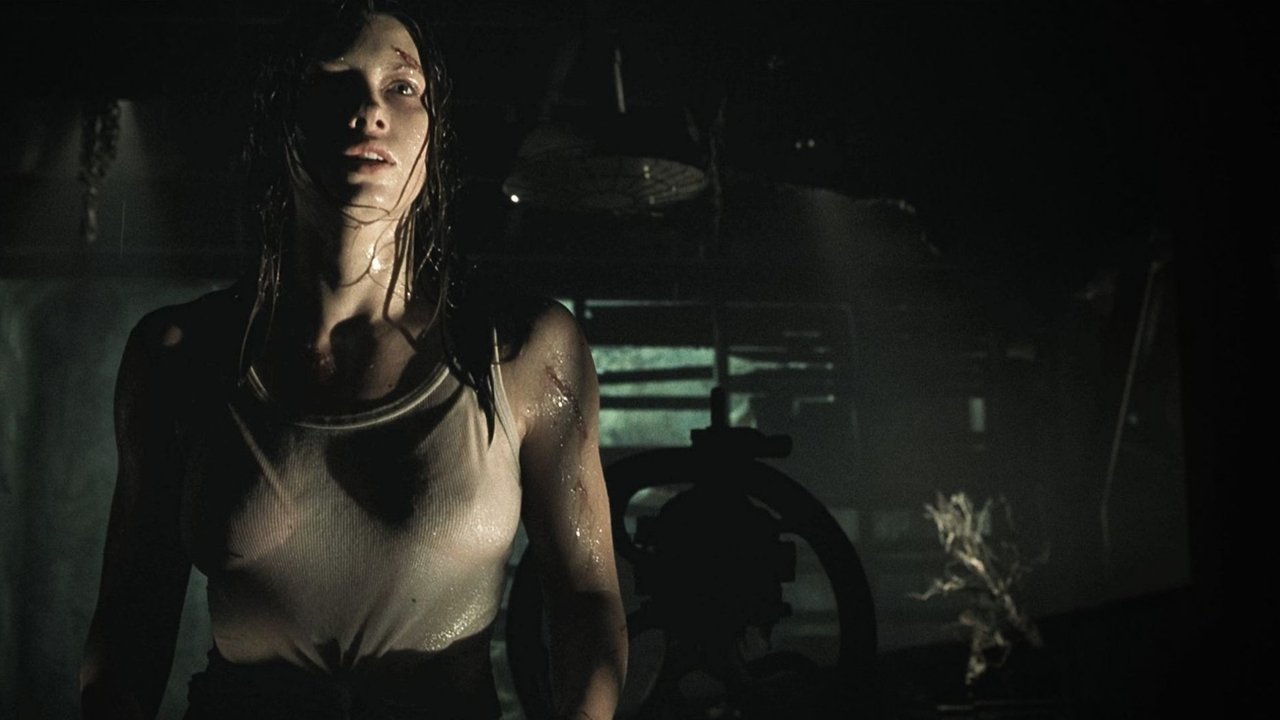
Crucially, Erin also ends up inside the Hewitt household, waking up surrounded by Leatherface and his relatives. That moment reframes the whole film: the house isn’t just a location, it’s an opposing force to everything Erin represents.
And the movie gives her allies in unexpected places. Jedidiah — a boy who disagrees with his family and is forced to stay out with their dogs — eventually helps Erin and Morgan escape. That small act of dissent matters: it refuses to let the Hewitts be a single, unstoppable machine.
The Texas Chainsaw Massacre has more on its mind than the plot suggests
On the surface this is a slasher: a small group trapped and picked off. Pull a layer back and the film is fussing with the idea of freedom. These characters set out on a night they expect to control; the movie spends its time showing how quickly that illusion can be taken away.
Home and safety are turned inside out. The Hewitt place — the family home — should be sanctuary, but here the household becomes the opposite: a place that encloses and punishes. Erin waking up surrounded by the family is the visual shorthand for that inversion.
Family itself is treated as both motive and system. The Hewitts act to protect their way of life, and that protection looks monstrous. But the film also gives us Jedidiah, who disagrees with his relatives; his choice to help undercuts the idea that family allegiance is automatic. And fear is the engine tying everything together. It’s not always loud; sometimes it’s the knowledge that help is organised differently on the other side of town. That persistent unease keeps the movie moving.
The Texas Chainsaw Massacre could not belong to any other decade
This is a 2003 film, and it wears that year plainly. It’s a product of the 2000s horror landscape — a time when filmmakers were willing to sharpen older ideas and present them with a kind of no-nonsense intensity.
Label it what you like — a 2003 slasher — but the important bit is the film’s confidence in a compact, hard-edged approach. It doesn’t meander; it sets up a premise and pushes it until something snaps.
That decisiveness is part of its 2000s personality. It moves quickly, aims for visceral reactions, and treats the genre’s mechanics — threat, chase, enclosure — as the backbone of the story.
Put simply: as a horror movie released in 2003, it feels very much of its moment. The decade’s appetite for direct, unvarnished scares is part of what defines the film’s tone.
What has aged — and what hasn't
A lot of the film’s power comes from simple oppositions: freedom vs enclosure, safety vs threat. Those are story ingredients that don’t date. The idea of a ‘‘home’‘ becoming a trap still lands because the emotional logic is easy to follow.
Some scenes keep their punch. Erin waking up surrounded by the Hewitt family is still an effective image — it makes the threat immediate and personal. Likewise, moments where the household’s cruelty is on show, or where the group’s plans collapse, still feel sharp.
There are elements that read differently now. The film includes moments like Erin hiding in the Tea Lady’s trailer and being given drugged tea, or the presence of a traumatised hitchhiker whose arrival unsettles everything. Today those beats register with extra discomfort, because they underline how vulnerable the characters are in small, intimate ways.
What most clearly survives is the human hinge in the story: Jedidiah’s refusal to go along with his family. That tiny moral crack provides an escape route and reminds modern viewers that even in the worst stories there can be an unexpected human choice.
Why The Texas Chainsaw Massacre still matters
People remember this film for the way it arranges its set pieces. The road-trip start, the eerie plantation house, the moment Kemper is struck and dragged away — those are images that stick because they change the rules of the story in an instant.
Characters matter here too. Luda Mae directing the group to meet Sheriff Hoyt, Hoyt taking the hitchhiker’s body, Leatherface as the family’s blunt instrument — those figures set the terms of the threat. They’re memorable because they make the Hewitt household feel like a functioning, if monstrous, social world.
Then there are the human beats that resonate: Erin waking up in the house, finding Andy on a meat hook, and the small, almost shy kindness of Jedidiah when he helps the prisoners escape. The film mixes spectacle with those quieter, awful moments, and that combination is why it sticks with people. Finally, the closing business — Erin’s scramble to save herself and the baby, and the aftermath of officers investigating the house — leaves the story open-ended. It doesn’t tidy things up; it leaves a lingering unease, which is the sort of thing viewers tend to carry with them.
Does The Texas Chainsaw Massacre still hold up?
Yes — if you’re after a lean, relentless horror that treats the idea of home as something breakable, this is worth a watch. It’s a 2003 film with a clear purpose: to take ordinary people on a road trip and make the place they thought was safe into the source of danger.
Jessica Biel’s Erin is worth following because she keeps the story grounded; waking up surrounded by the Hewitt family is a simple dramatic pivot, and the film uses that moment to keep the stakes personal. You’re not just watching a monster hunt; you’re watching someone try to pull a life back together in chaos.
There are rough edges — some scenes are deliberately unpleasant, and certain beats sit uncomfortably with modern sensibilities — but that unpleasantness is part of the design. The movie asks you to feel unsafe, to mistrust the domestic, and it delivers on that promise.
So should you watch it today? If you want a compact, often vicious slasher that refuses to sentimentalise its characters or tidy up its ending, yes. It’s a film that remembers why horror can make you think twice about what ‘home’ actually means.
Explore the Horror
The Texas Chainsaw Massacre franchise follows Leatherface and the terrifying families surrounding him across multiple continuities, remakes and reboots. Beginning with Tobe Hooper's landmark 1974 horror film, the series became one of the defining franchises of American slasher cinema.
EXPLORE FRANCHISE →