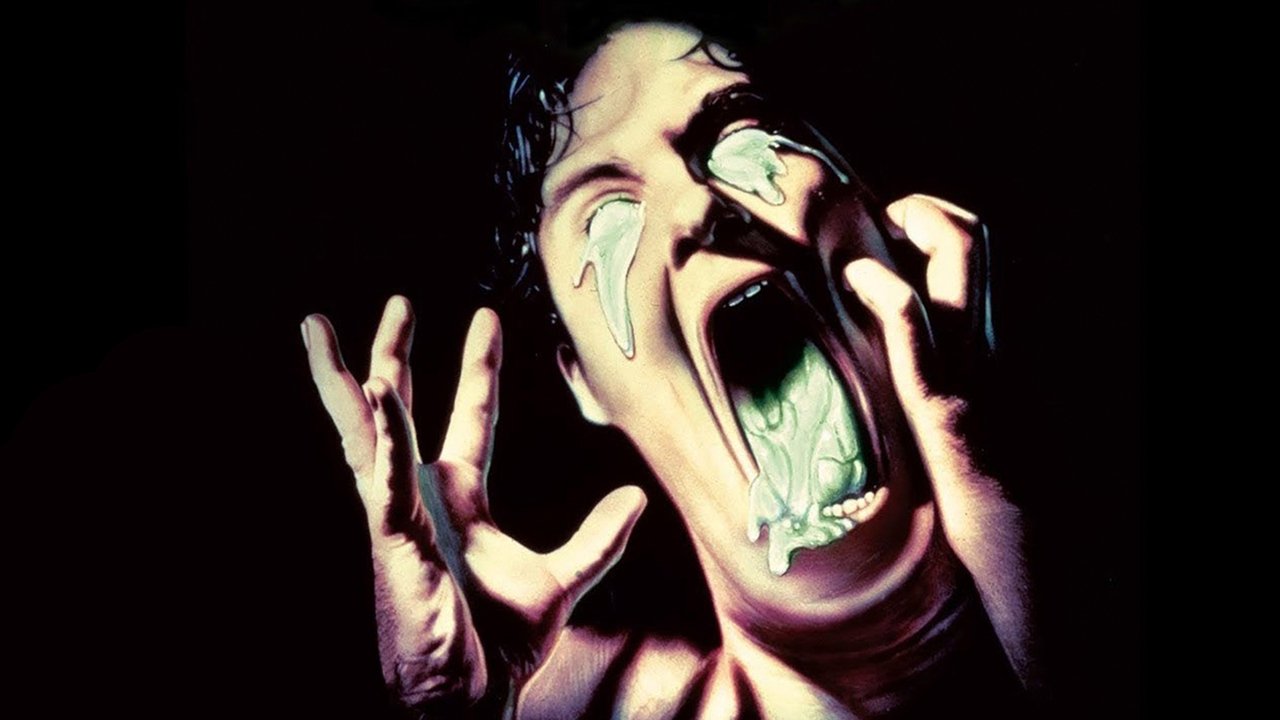
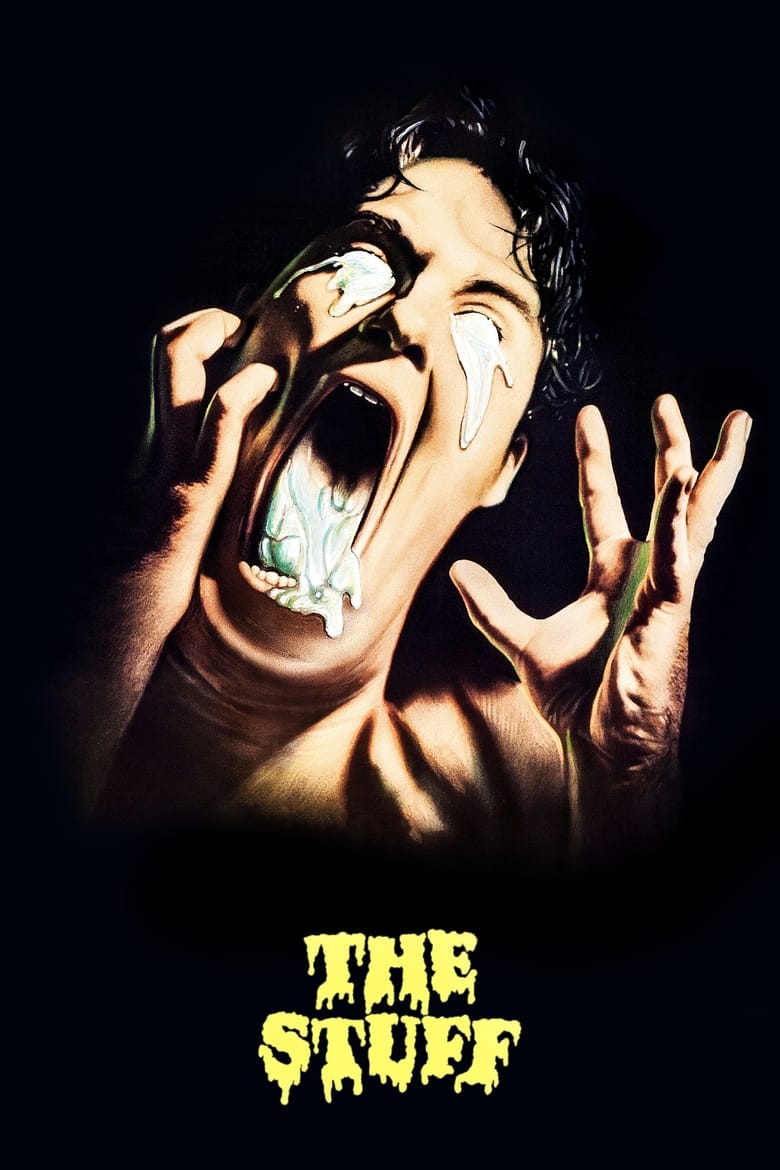
The Stuff
“Are you eating it... or is it eating you?”
Amalgamated Dairies hires David Rutherford, an FBI man turned industrial saboteur, to investigate a popular new product called “the Stuff,” a new dessert product that is blowing ice cream sales out of the water. Nobody knows how it’s made or what’s in it, but people are lining up to buy it. It's got a delicious flavor to die for!
About The Stuff
What The Stuff gets right
There’s an excellent bit of madness at the heart of The Stuff: workers find a white, cream‑like goo bubbling out of the ground. It looks like dessert, it’s sold like dessert, and for baffling reasons the public eats it by the bucketload.
Larry Cohen keeps the movie lean — 93 minutes — and smartly plays to its strengths: satire wrapped in a genre skin. Call it comedy‑horror, call it a B‑movie with an agenda; whatever label you use, the film treats the premise as a rich joke rather than a mere gimmick. The central figure the movie hands that joke to is David “Mo” Rutherford. Put a professional problem‑solver into a world where people are literally giving themselves away to a product and you immediately get some sharp collisions — between common sense and appetite, and between investigation and the pleasant tyranny of mass habit.
The idea that sets The Stuff in motion
The film's engine is simple and obnoxious in equal measure: a mysterious, zero‑explained product becomes a nationwide hit despite no one really knowing what it is. That premise lets Cohen do two things at once — stage grotesque body‑horror beats and mock the way people treat novelty as trust.
A child called Jason gets the alarm clock moment — he discovers the Stuff appears to be alive — and promptly hits the wall of adult dismissal. His family, and by extension a complacent public, ignore him and keep consuming the product.
When Jason tries to be heard he ends up on the wrong side of the law: he’s arrested in a supermarket after vandalising Stuff displays. That little beat cuts to the movie’s comedy‑of‑errors logic — the system defends the habit, not the kid sounding the alarm.
The stakes widen when authority answers the crisis in full‑force fashion: a retired colonel forms a militia and uses a civil‑defence broadcast to tell people to destroy the Stuff with fire. And when Mo finally corners the moguls behind the product, the movie gives us a concise, moral one‑liner — a question aimed at anyone still comfortable with convenience.
Why David "Mo" Rutherford matters
David “Mo” Rutherford is the movie’s pragmatic intruder: a former FBI agent turned industrial saboteur, hired by a threatened ice‑cream industry to get to the bottom of a problem nobody else seems to be willing to name.
That set‑up does useful work. Mo is the adult who notices patterns; he’s the professional with a file and a plan dropped into a world where habit has short‑circuited critical thought. A story about mass appetite needs an outside perspective to call the mess what it is.
His presence also gives the film a muscle it would otherwise lack. When institutions either ignore the threat or enable it, Rutherford becomes the organised counterweight who can push the plot into confrontational territory.
And because the movie makes room for other characters — a distressed child and a retired colonel among them — Mo’s role isn’t lonely. He’s the node the story uses to bring incompatible approaches together: investigation, military bluntness and frightened, often stubborn civilians.
The Stuff has more on its mind than the plot suggests
On its surface The Stuff is a monster movie. Underneath it’s doing something a little sharper: a satire of corporate power. The product isn’t just a threat because it’s alive — it’s a manufactured desire, pushed and packaged until people stop asking questions.
Mortality threads through the film as well. The Stuff literally consumes people, and that bodily consequence turns what might have been only metaphor into a direct, grotesque cost. It’s a blunt reminder that choices about consumption can be fatal in both literal and figurative ways.
Authority features in two guises: the people who build and sell the product, and the institutions that respond to it. The film stages collisions between those who profit and those who try to protect the public, sometimes with force. That friction is where the movie’s satirical teeth show. Freedom and peer pressure sit on the same shelf. Individuals make choices, but the film shows how social habit and marketing can turn those choices into compulsion. It’s not just that people want the Stuff — they start to need it, and the loss of freedom looks frighteningly like normal behaviour.
The Stuff could not belong to any other decade
Released in 1985, The Stuff sits comfortably in its moment because it makes a decade‑specific worry its centrepiece: what happens when commerce gets ahead of common sense. The film uses a single, laughable product to talk about a culture that treats novelty as trust.
There’s something very eighties about the idea of a corporate solution sold as salvation — a product pitched as the answer to a problem, however murky the pedigree. The Stuff packages that anxiety into a premise that’s both silly and unnerving.
As a genre piece from the period, it’s content to be B‑movie rowdy while keeping the agenda visible. That blend of mocking commercialism with plain‑spoken menace is a particular flavour you’d expect from mid‑decade satire.
In short: the film’s timing matters because it makes its decade’s conversations about consumption and corporate reach the basis for its horror and its jokes.
What has aged — and what hasn't
One of the film’s cleaner beats still lands: the kid who sees the truth and is dismissed by adults. That moment — a child’s alarm ignored while the grown‑ups keep dunking spoons into a strange tub — feels uncomfortably familiar even now.
The dynamic between warning and willful blindness is durable; it’s a simple human exchange and the movie stages it plainly. People choosing comfort over uncomfortable facts is not a trend that has an expiry date.
As for the movie’s lighter trimmings, small casting details — even uncredited extras and family members — give the film a lived‑in texture that reads as a proper crowd, which helps the satire feel grounded.
So while some of the era’s packaging may feel specific to its time, the core interactions that drive the story — addiction, denial, and the price paid by those ignored — continue to speak to a modern audience.
Why The Stuff still matters
The movie’s best trick is how quickly it turns a silly premise into a series of escalating shocks: a mysterious cream is found bubbling from the earth, it’s sold in tubs as if it were harmless, the country laps it up, and then a child discovers it’s alive. That chain — novelty, habit, denial — is compact and memorable.
Cohen keeps raising the stakes: investigators find corpses in a small town, the product is revealed to be parasitic and people become zombie‑like hosts. Those beats let the satire punch through the absurdity: it’s not just about a monster, it’s about how systems reproduce themselves.
The film also doesn’t stop at exposure. There’s a concerted corporate effort to distribute the Stuff as a solution to world hunger; the heroes infiltrate the plant and even blow up the extraction lake. The story gives its revenge — and its spectacle — an organisational target. But the final sting is a reminder the story leaves us uneasy: the executives shrug that the Stuff exists elsewhere, and they pitch a watered‑down follow‑up called The Taste. When Mo forces the moguls to eat what they sold, he asks the question the movie has been angling toward all along — and the film closes on a note that suggests the appetite never fully goes away.
Does The Stuff still hold up?
Yes — if what you want is a sharp little genre film that uses a comic premise to make an argument about consumption and responsibility. The Stuff’s starting image (a cream‑like goo discovered in a quarry) and its escalation into national obsession still read as a neat piece of satire rather than mere camp.
Michael Moriarty’s Mo is exactly the kind of figure this story needs: a professional dropped into chaos to pull threads and force decisions. The film gives him clear work — expose the product, confront the companies, and try to save the people being erased by their habit.
Where it earns a modern rewatch is in its refusal to let the monster be only a monster. The narrative ties the parasitic threat back to corporate decisions, distribution plans and a follow‑up product pitched as compromise. That makes the horror political, and the politics, in turn, funny and pointed.
So should you watch it? If you enjoy a B‑movie that’s clever enough to make you laugh and uncomfortable enough to make you think, then yes. The Stuff remains a sticky, shameful little parable — and its last image, a reminder that appetite outlives any single victory, is the movie’s final, perfectly sour aftertaste.