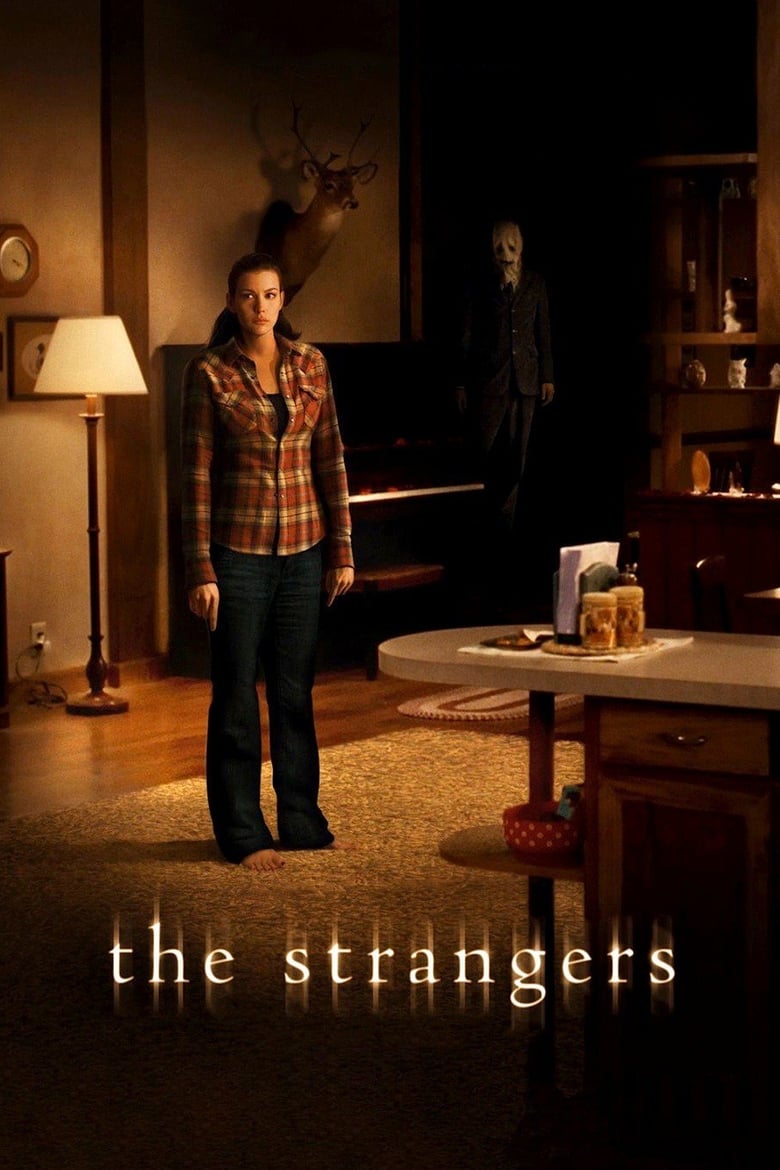
The Strangers
“Lock the door. Pretend you're safe.”
After a 4 a.m. knock at the door and haunting voices, Kristen McKay and James Hoyt’s remote getaway becomes a psychological night of terror as three masked strangers invade. Now they must go far beyond what they thought themselves capable of if they hope to survive.
About The Strangers
What makes The Strangers worth revisiting
There’s a particular kind of horror that doesn’t need monsters or twists — just an ordinary place you expect to be safe and someone resolutely outside it. The Strangers opens with James and Kristen arriving at his isolated childhood summer home; that domestic stillness is the muscle the film flexes for most of its 85 minutes.
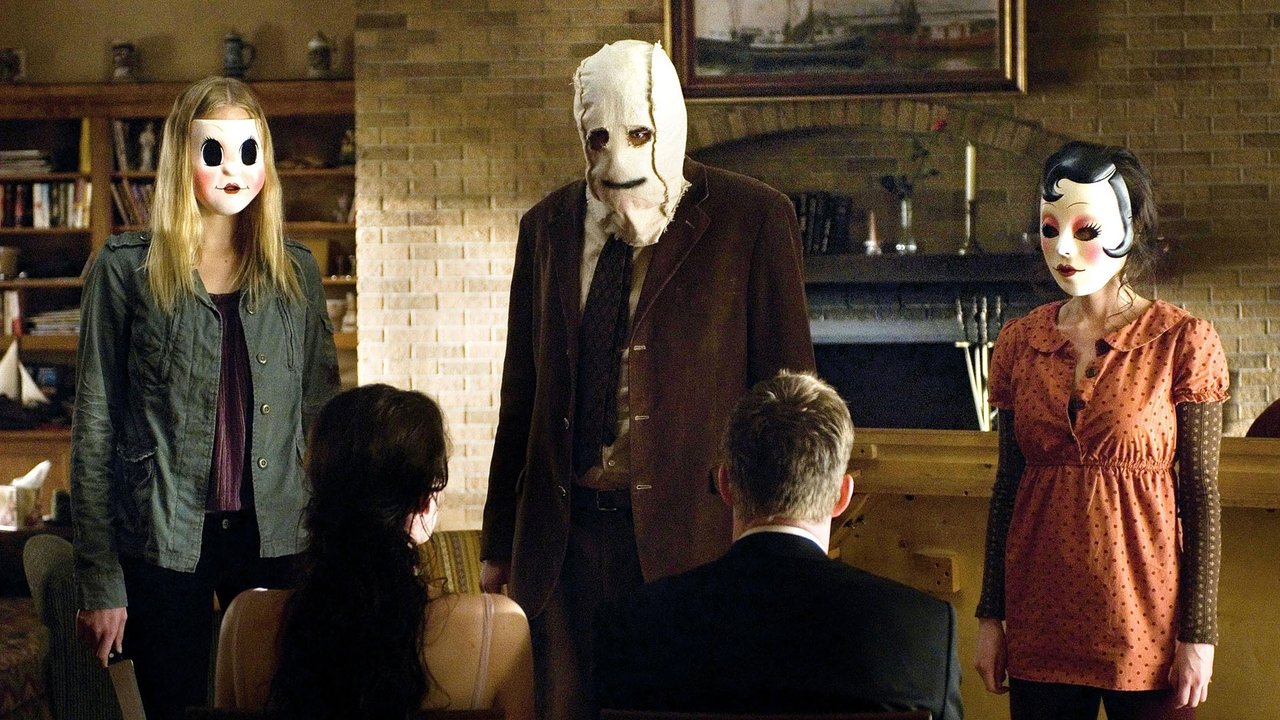
Bryan Bertino directs this short, sharp piece of dread, and he gives the picture a single, focused job: make the familiar feel vulnerable. Liv Tyler plays Kristen and Scott Speedman plays James, while the intruders — Dollface, the Man in the Mask and Pin‑Up Girl — turn up like punctuation marks that won’t leave. It’s horror in the plainest register: human beings, an ordinary house, and the suggestion that the world outside has decided to come in. That simplicity is exactly why it still pulls you in.
The idea that sets The Strangers in motion
The basic engine of the film is simple and, crucially, believable: James and Kristen arrive at an empty family house after a wedding where something important between them has already frayed. That emotional bruising — James reeling after Kristen turns down his proposal — gives the opening a tender human ache before the danger arrives.
Intimacy is interrupted by a knock at the door. A young woman asks for someone who isn’t there; James brushes her off. That small, odd exchange is the hinge for everything that follows — an unwelcome persistence that keeps returning.
When the house is finally breached, James and Kristen find themselves reduced to a bedroom and a shotgun, defending a place that no longer feels like refuge. Panic and misjudgement follow: a friend, Mike, arrives and is accidentally shot by James, which deepens the couple’s desperation.
Even the possibility of help is snuffed out — James remembers an old radio transmitter in a garage and tries for a lifeline, only for that avenue to be cut off. The setup works because the film keeps narrowing their options until there are almost none left.
Why Kristen McKay matters
Kristen McKay is the emotional centre you keep returning to when the film gets clinical about terror. Liv Tyler plays her, and the story plants Kristen in a very ordinary set of relationships — with James, with friends — before everything goes wrong.
Because the couple are at James’s childhood home, Kristen functions as the visitor whose sense of safety is disrupted. That outsider perspective matters: she’s not the owner of the space, but she’s subject to its violations in the same intimate way as James.
Her presence also gives the film room to be about more than survival. The Strangers pitches itself around the erosion of private life — family ties and friendships that normally prop you up — and Kristen is the person who experiences those losses up close.
Put simply: she’s the human measure of the film’s cruelty. The audience experiences both the fragility of their relationship and the fragility of the home through her point of view.
The Strangers has more on its mind than the plot suggests
At surface level it’s a home‑invasion thriller. Underneath, the film keeps circling a cluster of ideas: what the film labels as home and safety, love, mortality and family. Those are the quiet things that get smashed when anonymous violence arrives at your door.
Love matters here not as a romantic subplot to be resolved but as a source of fragility. The couple’s private break — a rejected proposal — leaves emotional rawness that the film doesn’t soothe. That vulnerability makes their household all the more exposed.
Mortality is never distant. The story doesn’t treat death as melodrama; it’s an inevitable escalation that the characters are forced to reckon with. The threat feels mundane and total at once, which is what keeps the tension so immediate. And finally, family and friendship are the film’s social supports that crumble under pressure. The absence of safety is not just physical; it’s the sudden evaporation of the little human systems — friends, routines, trust — that usually keep life ordinary.
The Strangers could not belong to any other decade
Released in 2008, The Strangers sits squarely within a period of 2000s horror that liked to strip things back: fewer set pieces, more scenario-driven dread. The film’s economy — a couple, a single house, and a handful of intruders — feels of a moment when indie horror preferred pressure over spectacle.
That taste for austerity lets the movie focus on the everyday. James and Kristen arriving at an isolated childhood home is a modest set-up, but it’s precisely that ordinariness that the decade’s audiences found unnerving: domestic life as battleground.
This is a 2000s movie that turns on a knock at the door and takes the long, cold view from there. There’s nothing flashy about its approach, and that restraint is very much of its time.
Viewed historically, it’s an example of the decade’s appetite for horror that made terror feel like a breach of normal life rather than a parade of effects.
What has aged — and what hasn't
The core fear the film trades in — that your private life can be intruded upon with no reason and no warning — is stubbornly timeless. Putting James and Kristen at an isolated childhood home makes that fear feel intimate and specific; the setup still hits.
Small, terrifying details hold up, too. The couple trying to defend themselves with a shotgun in a bedroom is a blunt, physical moment that keeps the stakes raw. Similarly, the intruders’ blunt answer when asked why they did it — that it was simply because the couple were at home — remains chilling rather than dated.
What hasn’t aged as well is the film’s refusal to explain motive at all; for some viewers today that lack of context can feel unsatisfying rather than mysterious. The Strangers asks you to accept cruelty as a fact rather than an idea to interrogate.
But if you come for a compact, unrelenting piece of home‑invasion dread, the film’s economy and its willingness to end on a bleak note still work to unsettle.
Why The Strangers still matters
There’s a reason people keep circling back to the film: its cruelty is ordinary and that ordinariness is what lingers. The movie stages a chain of small intrusions — a woman asking for someone who isn’t there, a masked figure watching from a window, a ransacked car and slashed tyres — and each one compounds the sense that nothing in that house is private anymore.
It’s also memorable for how it removes safety’s scaffolding. Help is attempted and lost — Mike arrives then is accidentally shot; James tries a radio transmitter only to be stopped; the garage option is destroyed — so the couple are forced into ever-smaller choices.
The way the intruders unmask the couple’s life — literally and figuratively — and then leave is a cold touch. Their parting behaviour, including an exchange with two young boys handing out religious tracts and a final line promising it will be easier next time, lingers because it reads like a memo on cruelty: random, unaccountable, and casual. Finally, the last jolt — Kristen suddenly regaining consciousness and grabbing a boy’s hand — reintroduces panic at the very end, ensuring the movie doesn’t allow for a neat emotional reset. That refusal to comfort the viewer is a big reason the film keeps coming up in conversation.
Does The Strangers still hold up?
Yes — if what you want is a tight, austere horror that makes ordinary domestic life the thing under attack. Bryan Bertino’s 85‑minute film wastes no time: the couple arrive at an isolated family home, tensions between them are already frayed, and the knocks at the door escalate into something relentlessly cruel.
The film asks little of you beyond bearing witness. It stages a painful unravelling — the accidental shooting of a friend, failed attempts to summon help, a shelter that proves not to be one — and it refuses comforting answers. That bluntness still feels brave and nasty in equal measure.
If you prefer motive, explanation or catharsis, The Strangers may feel unsatisfying. But if you’re after the particular chill of being made suddenly, arbitrarily unsafe in your own house — and the way that plays out in a relationship already on the rocks — it remains a potent experience.
So watch it for the slow, grinding removal of safety and the way Kristen and James are left to face consequences with almost no options. It’s not cosy, and it won’t make you feel better afterwards — and that, in this case, is precisely the point.