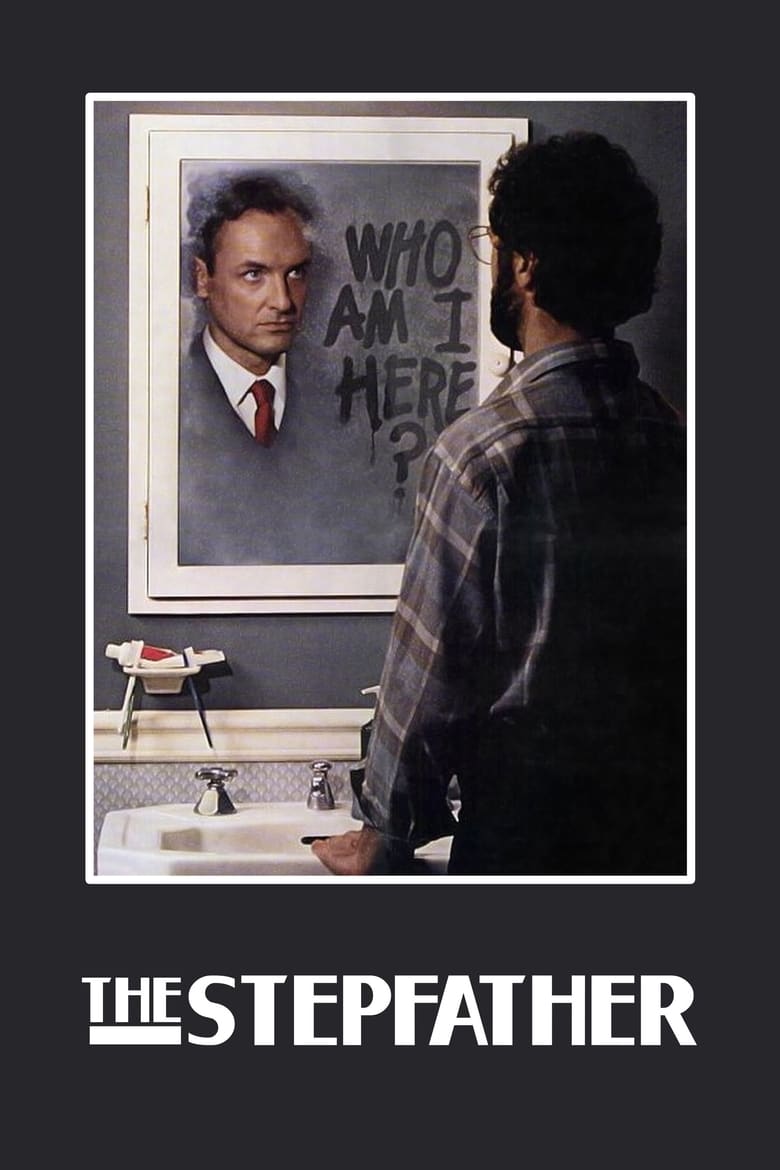
The Stepfather
“He wanted a perfect family in a perfect town. But they couldn't measure up...Neither could the others...”
Seemingly mild-mannered Henry Morrison has just murdered his entire family. After adopting a new identity and skipping town, he begins building a new relationship with a widow and her teenage daughter. However, he soon begins struggling to hide his true identity and maintain a grip on reality.
About The Stepfather
Why The Stepfather is still worth talking about
You remember the opening because it refuses to let you look away. A man finishes washing his hands, changes his face and walks out of a house that contains the evidence of a massacre. It’s tidy, chilling and refuses melodrama — the sort of clean, efficient violence that nags at you long after the credits.
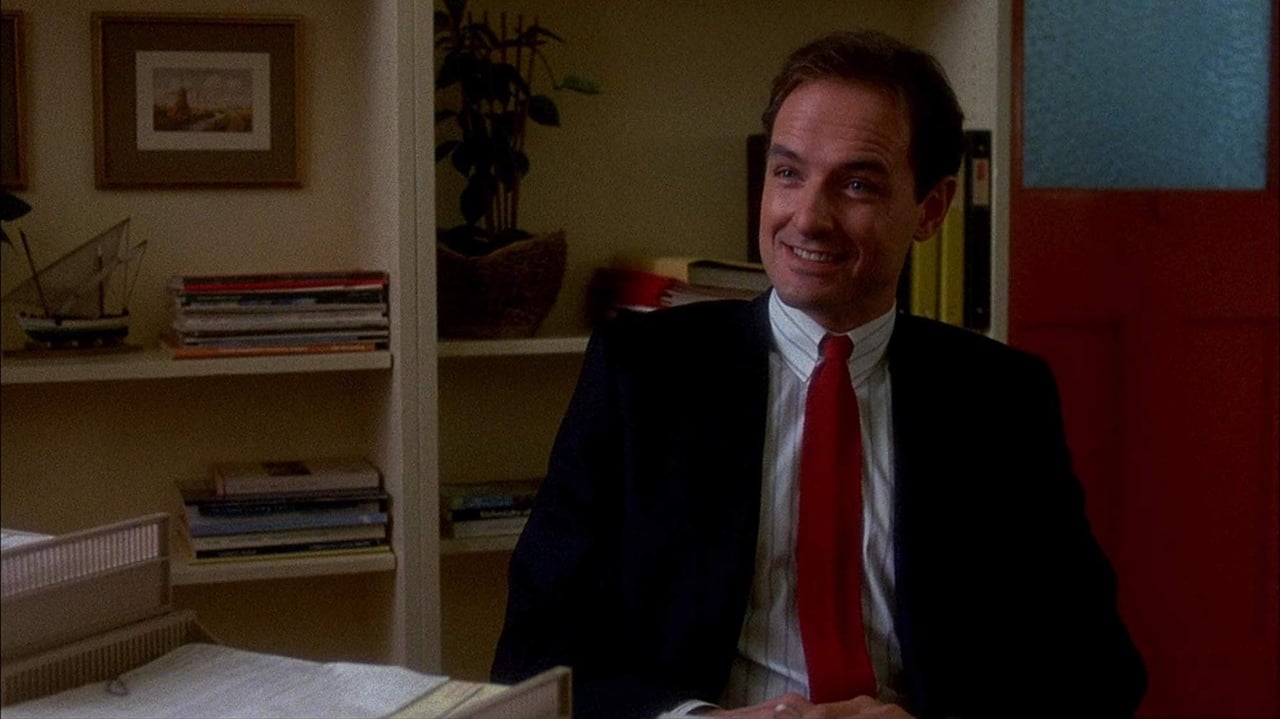
One year on, that same man has swapped identities and suburban anonymity for a new life as Jerry Blake, a real estate agent who has married a young widow called Susan Maine. The film wastes no time moving from the dread of the first sequence to the domestic strain of a new family trying — uneasily — to fit together. Directed by Joseph Ruben and clocking in at a compact 89 minutes, The Stepfather keeps its focus narrow. That focus is what lets the movie do its work: it’s less about elaborate set-pieces and more about the slowly unfolding suspicion that the man in your kitchen is not who he says he is.
The idea that sets The Stepfather in motion
The central idea is deceptively straightforward: a man with a murderous past slips into a new family and tries to be someone reliable. That promise of domestic normality — house-hunting, barbecues, the awkward rituals of step-parenting — sits beside a history the audience knows and the family does not.
Tension grows from small things. When Susan calls Jerry's office to mention that someone has been looking for him, she discovers he quit days earlier. An identity frays with a single phone call; what follows is panic disguised as explanation, and violence masquerading as a desperate attempt to hold everything together.
The movie keeps the spotlight tight on those domestic collisions. When Jerry confuses his identities while explaining himself to Susan, that slip is not just a plot engine — it’s the moment his two lives collide and the terrible consequences begin.
From there the film pushes towards confrontation. The claustrophobic set-up — a stepdaughter who distrusts the stranger in her house and a husband who will not be questioned — makes for a compact, inexorable build to the moments where private lies become public danger.
Why Jerry Blake / Henry Morrison / Bill Hodgkins / The Stepfather matters
Jerry Blake is not a mystery in the sense of a whodunnit — the audience knows he has killed before. What makes him interesting is how the film sets him up as an attempt at normality. He’s the man who can change his name and move on; he’s also the man whose past always threatens to catch up.
That backstory — a man who once left a bloody house and discarded the items of his former life into the sea — gives every polite gesture an edge. Being kind to the neighbours, fixing a birdhouse, taking a daughter to a fair: these are not innocent acts in the film. They are tests. They are rehearsals for a version of family that keeps failing.
The friction with Stephanie matters. Her suspicion and refusal to accept Jerry’s father figure role create the dramatic strain the movie needs. When she finds the article about past killings and begins to put things together, the everyday scene becomes charged with dread.
And Jerry’s choices push the story into darker territory: he courts another single mother while planning to end the family he’s already built. That duplicity — the capacity to wear different names and faces — is the character’s engine. It’s why he dominates every scene he’s in, even when he’s simply sitting at the kitchen table.
The Stepfather has more on its mind than the plot suggests
At its simplest the movie is a horror about broken trust. But under that is a cluster of quieter obsessions: family, mortality, loss and the lengths people will go to preserve a version of themselves. The film keeps returning to the idea that families are fragile constructions.
The man who abandons one family in blood and then tries to readopt another forces the film to ask who gets to belong. Love is presented awkwardly here: not a balm but sometimes a justification for control. When Jerry says he loves someone near the end, it reads as the final, twisted attempt to make that claim stick.
Mortality and lifespan are woven in too. There’s an economy to the way the story shows consequences: people leave, identities end, lives are violently interrupted. That gives the movie a bleak undertow — the domestic scenes are warmer precisely because the threat of loss is never far away. In short, The Stepfather is a slasher on the surface but a domestic tragedy under the skin. It uses genre shorthand to make sharper observations about what family can mean — and how dangerous the desire to fix or reinvent it can be.
The Stepfather could not belong to any other decade
Released in 1987, The Stepfather sits near the end of a decade that enjoyed straddling mainstream domestic life and genre extremes. It’s a film that uses the familiar backdrop of suburban routine to let a darker story move in unnoticed.
There’s a particular 1980s appetite for thrillers that probe the ordinary. The Stepfather belongs to that moment because it assumes audiences will recognise domestic rituals — dating, house-buying, barbecues — and understand how easily they can be weaponised in a thriller.
That timing matters. The film isn’t trying to be avant-garde. It wants to unsettle by taking the everyday seriously, and the era’s genre tendencies give it permission to do just that.
Seen in context, it’s less a product of 1980s fashion and more a film of its moment: comfortable with mainstream settings while prepared to pull the rug out from under them.
What has aged — and what hasn't
A lot of The Stepfather’s power rests on situations that don’t feel invented: a teenager distrustful of her new stepfather, a community that wants to believe the best in a stranger. Those dynamics still read as believable, and that keeps the film tense rather than silly.
The opening — a man cleaning himself and leaving a scene of horror behind — remains a strong, economical shock. It gives the movie authority early on, and that economy helps it survive repeated viewings.
Some plot mechanics feel of their time. The way information travels — an article in a paper, a letter requesting a photograph — underlines how suspicion used to spread without the internet. That can feel quaint, but it also sharpens the sense of isolation: characters cannot instantly verify a stranger’s past, and that makes the danger more plausible.
What endures is the film’s interest in home and safety. The idea that the most private spaces can contain the greatest threats is evergreen. Where the movie shows domestic routines being corrupted, it still lands hard.
Why The Stepfather still matters
There are a handful of images and moments from the film that stick: the man discarding his past at sea, the polite real estate agent who is not what he seems, the teenager who won’t be silenced. Those are economical narrative threads that make the film easy to recall.
The film’s set pieces — an investigator who tries to expose the truth, a psychiatrist who pokes too close and pays for it — are compact and memorable. They’re the sorts of scenes that give the story momentum without turning it into a sprawling epic.
What many remember is how the movie turns domestic gestures into signals of menace. The bond-building scene that ends up undermined, the intercepted letter that nearly exposes the truth, the slow unravel of identity: these are all small items that accumulate into a larger, unsettling whole. And the final image — the stepdaughter acting to defend her home and cutting down a birdhouse she once helped build — ties the personal back to the film’s central concern: what happens when the promise of family becomes impossible to keep.
Does The Stepfather still hold up?
Yes — with a caveat. The Stepfather still works as a tight, tense piece of genre filmmaking because it keeps its sights narrow: identity, domestic trust and the small violences that break a family. That origin-sequence — the man washing away blood and leaving his old life behind — gives the whole film a constant hum of menace.
It’s short and to the point: an 89-minute film directed by Joseph Ruben that prefers pressure to explosion. When the story asks the right questions — who belongs, who can be trusted, what we do to keep a life intact — it usually lands.
There are elements that feel dated, chiefly how information is discovered and shared, but those same elements also make the film feel suspenseful in a way modern thrillers sometimes short-circuit. The slow accumulation of suspicion, the intercepted letter, the investigator poking into a closed life — these build atmosphere rather than telegraphing every beat.
If you’re deciding whether to watch today: come for the quiet dread and the way ordinary domestic life is made suddenly precarious. It doesn’t pretend to be anything bigger than a sharp domestic thriller; and because it never overreaches, it still bites.