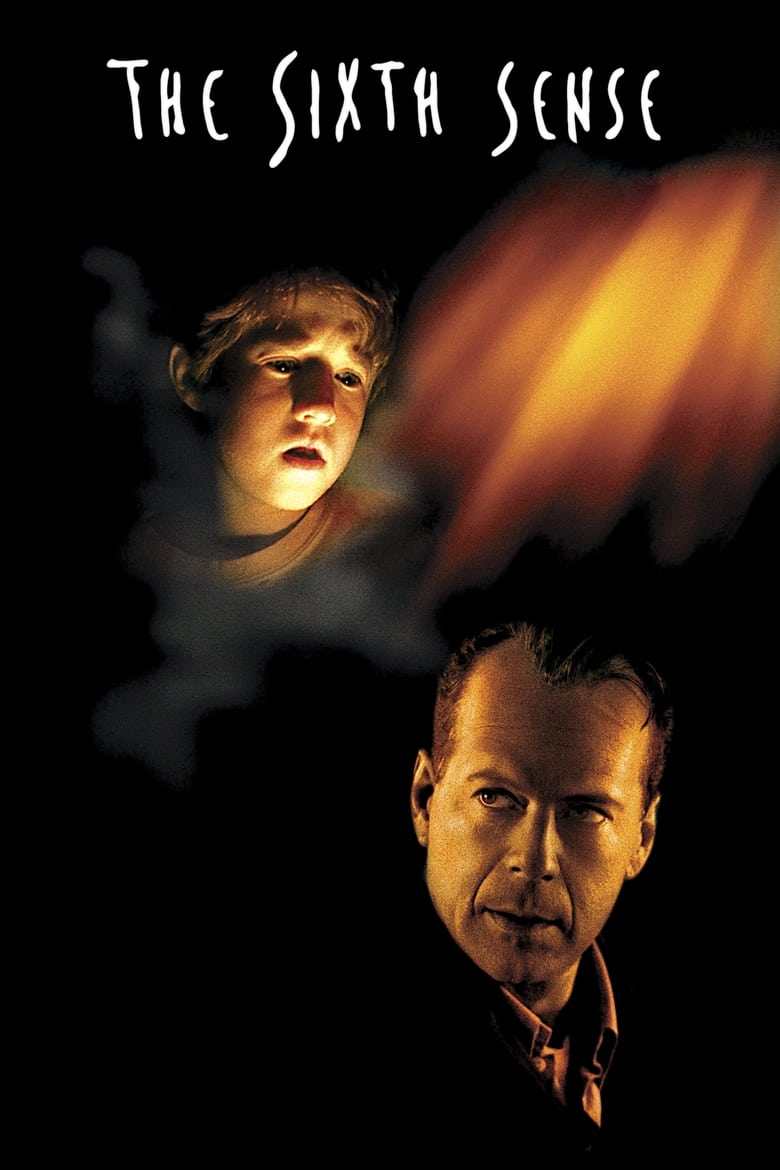
The Sixth Sense
“Not every gift is a blessing.”
Following an unexpected tragedy, child psychologist Malcolm Crowe meets a nine year old boy named Cole Sear, who is hiding a dark secret.
About The Sixth Sense
What The Sixth Sense gets right
It opens in the most ordinary place: a house in Philadelphia where Malcolm Crowe is alone with his wife. That domestic calm doesn't last — a former patient bursts in, accuses Malcolm of failing him, and then kills himself. It's a beginning that tells you everything you need to know: the film will treat the familiar as the place where danger lodges.
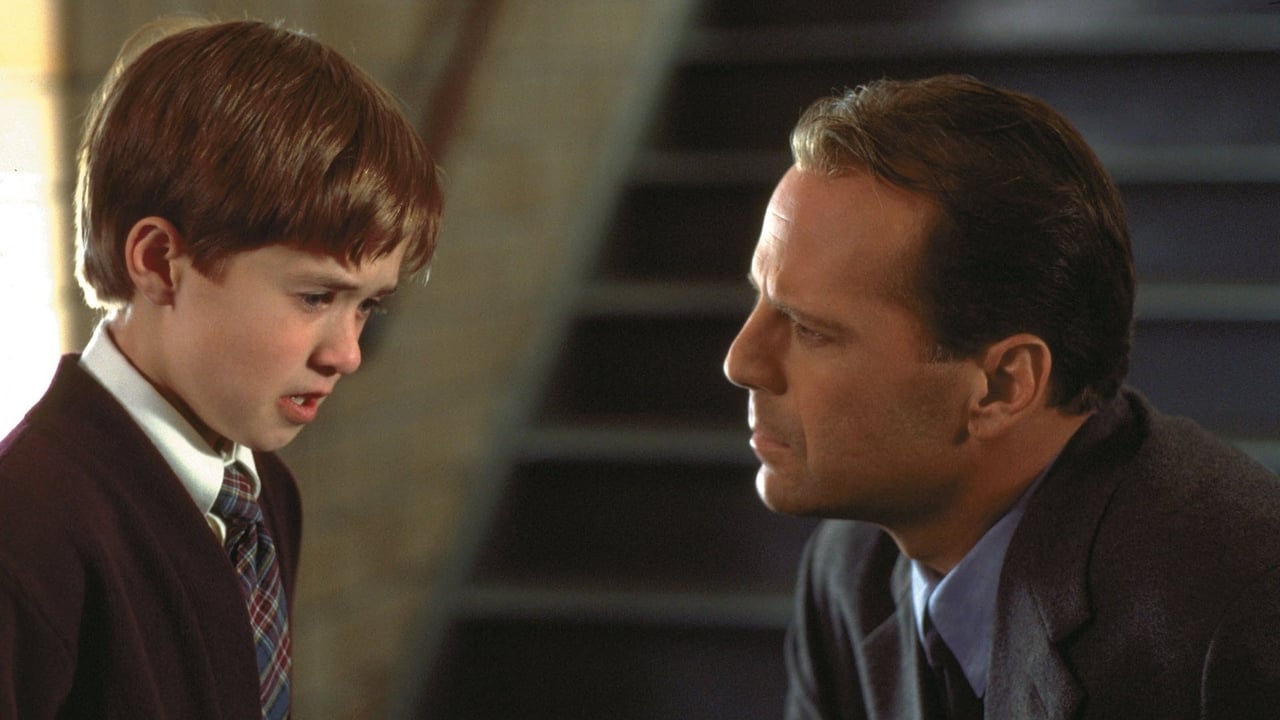
M. Night Shyamalan steers this compact 107-minute picture so the story feels tight rather than sprawling. The cast is lean: Bruce Willis as Malcolm, Haley Joel Osment as the troubled child Cole, and Toni Collette and Olivia Williams filling the domestic corners of the story. That economy helps the film keep the pressure on without wasting time. Underneath the genre labels — horror, thriller, drama — The Sixth Sense is quietly obsessed with family, home and mortality. Its final reckonings are not just supernatural payoffs but domestic moments of recognition: when Malcolm realises the truth about his own situation, and when a shaken household begins to breathe again, the film closes the circle it set up at the start.
The idea that sets The Sixth Sense in motion
At its heart the film is a simple exchange: an adult with questions; a child with a secret. Lynn Sear is worried about her son after worrying signs turn up and strange incidents leave the boy traumatised. That domestic alarm is the propulsive engine — someone has to figure out what’s happening in a house that should be safe.
Malcolm begins sceptical. A tape from a prior session with another troubled patient unsettles him: there’s a voice on it he can’t explain. That single discovery shifts his posture from clinician to someone who has to listen differently, because normal explanations no longer do the job.
Rather than locking Cole away or insisting on a conventional diagnosis, Malcolm suggests a different approach: if the boy truly sees the dead, perhaps talking to them and helping them is how he will stop being afraid. It’s a practical idea born out of shock and curiosity, and it gives the story its urgency without turning the child into a prop.
From there the film follows practical steps — investigating who the dead might be, visiting a reception where the past is still being sorted — and lets small discoveries build into something larger. It’s not a sprawling mystery; it’s the work of two people trying to make a house livable again.
Why Malcolm Crowe matters
Malcolm Crowe is the sensible adult in a film full of frightened adults and terrified children. He lives at home with his wife and is, by trade, a child psychologist — the sort of person you imagine can explain things. That expectation is what makes his story interesting; the movie keeps asking what happens when the expert is undone by what he can't explain.
He isn't a presence that dominates every scene. Instead, he’s the hinge: the figure the story keeps returning to because his relationships — professional and personal — are the score that the film plays against. Family sits at the centre of his life, and the threats to family life are what pull him out of routine.
The moments linked to Cole’s fear — the cupboard incident, the fainting afterwards — are the kind of domestic crises that push Malcolm into action. Likewise, the small investigations that discover a child's secret tape or a parent’s tragic guilt are the work Malcolm becomes wrapped up in, which underlines his role as a mediator between living people and problems that refuse tidy explanations.
Finally, Malcolm matters because the story compels him to confront things he can’t control. He’s the adult who must learn to listen in a new way: not to treat the child as a case, but to see the household as something fragile that needs repair.
The Sixth Sense has more on its mind than the plot suggests
Family is the movie’s steady heartbeat. The plot's scares are never divorced from domestic stakes: children frightened at home, parents who don’t know how to protect, and adults whose relationships fray under pressure. The supernatural elements simply raise the temperature on ordinary family anxieties.
Alongside family is an argument about home and safety. Houses are supposed to be shelters; here they’re places where past violence and secrets can still intrude. That inversion — the safe place becoming uncertain — keeps the film tense without needing endless shocks.
Mortality is present in the background and the foreground. The notion of lifespan — what we have left and what we’ve already lost — slowly colours conversations and choices. When the story asks who gets to move on and who stays behind, it’s talking about more than ghosts. Finally, the film is quietly interested in belief. It’s not an instruction manual for the supernatural, nor a polemic. Instead it asks how people respond when something happens that doesn’t fit their understanding: do they listen, deny, or try to fix things with what they know? That question supplies the emotional friction.
The Sixth Sense could not belong to any other decade
Released in 1999, The Sixth Sense arrives at the tail end of the 1990s. That timing matters: it’s a product of the decade’s appetite for genre hybrids, where horror could sit alongside intimate drama without either element being diminished.
Because it wears both labels — psychological thriller and ghost story — the film feels of its moment: precise, economical and slightly wary of spectacle. It’s the kind of late‑90s picture that prefers a slow tighten to a constant set of shocks.
Being a 1999 movie also meant audiences were ready for a film that asked you to pay attention. This was cinema that rewarded the quiet details as much as the big reveal, which is why the film’s final turns landed the way they did for viewers at the time.
What has aged — and what hasn't
The most durable thing is the film’s small‑scale focus. Watching adults struggle to make a home safe again — whether by listening differently or making hard confessions — still lands. Those scenes don’t rely on time-bound tricks, so the emotional beats continue to feel honest.
The structural idea of a child who sees the dead and is taught to try and help them gives the story a practical, almost procedural spine. That choice — to have Cole actively resolve other people’s unfinished business — keeps his arc readable even now.
Moments in the movie that hinge on private recognition still work: a wedding tape playing, a sleeping spouse saying something that finally opens a conversation. Those quiet domestic recalls are the kinds of things that don’t date, because they’re about people admitting what they feel.
What feels more tied to its moment is how the film sets up disbelief. Malcolm’s route from sceptic to someone who changes his clinical approach comes across as a neat narrative turn. Today it’s still reasonable, but modern viewers might watch it with more questions about the institutions and vocabularies the film relies on to explain the unknown.
Why The Sixth Sense still matters
There’s a practical storytelling reason the film lingers: it ties its shocks to domestic consequences. The violent break-in that traumatises Malcolm at the start is not an isolated spectacle; it threads through everything that follows, including why he takes Cole’s case personally and how relationships get tense at home.
The movie also earns its emotional moments through small acts of revelation. A child who can describe details he couldn't know, an audiotape that contains an inexplicable voice, and a videotape that uncovers a parent's crime — these discoveries feel earned because they’re presented as investigations that change people’s lives.
The relationship beats — a mother learning to believe her son, a psychologist trying a new way of helping, a husband finally allowing something unsaid to be voiced — are what keep the story meaningful. The supernatural material gives the film stakes, but it’s the human responses that stick with you. Finally, the way the film closes those domestic loops — allowing household tensions to be acknowledged and, in some cases, released — is why it remains emotionally satisfying for viewers who remember the first time they saw it: it isn’t all twist for twist's sake; there’s a wholehearted attempt to restore some measure of peace.
Does The Sixth Sense still hold up?
Short answer: yes. It’s a tight 107 minutes that uses its runtime for steady pressure rather than spectacle. That economy of shape is one of the reasons it still reads well on a modern screen.
Its scares come from the fact that the threat is domestic: a professional’s life upended by an intrusion, a child whose daily safety is uncertain, and a household left to pick up the pieces. Those themes — family, home and mortality — haven't lost their bite.
If you’re cautious about older supernatural dramas, watch for the film’s insistence on listening. Malcolm’s route from sceptic to someone who changes how he helps is the emotional throughline, and the story pays off by giving the people involved moments of recognition and closure.
So yes — watch it. Not for cheap shocks, but for a ghost story that treats the idea of being heard as its scariest and, eventually, most consoling proposition.