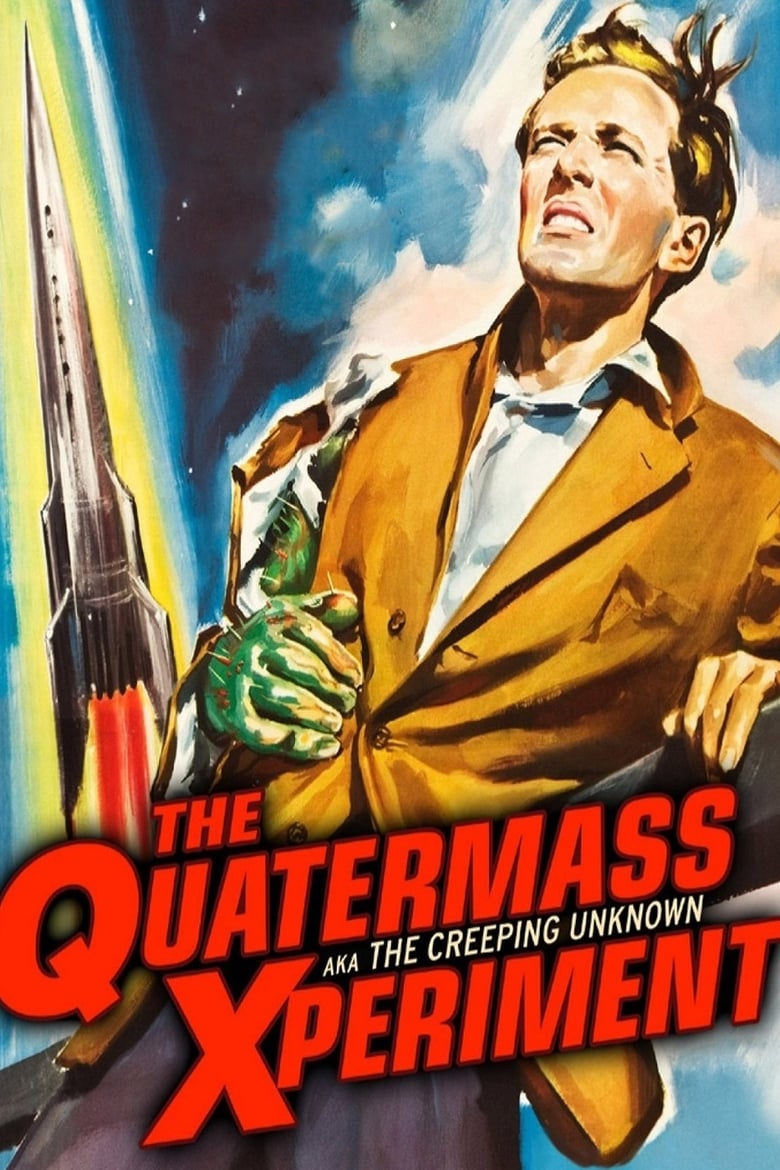
The Quatermass Xperiment
“You Can't Escape It!”
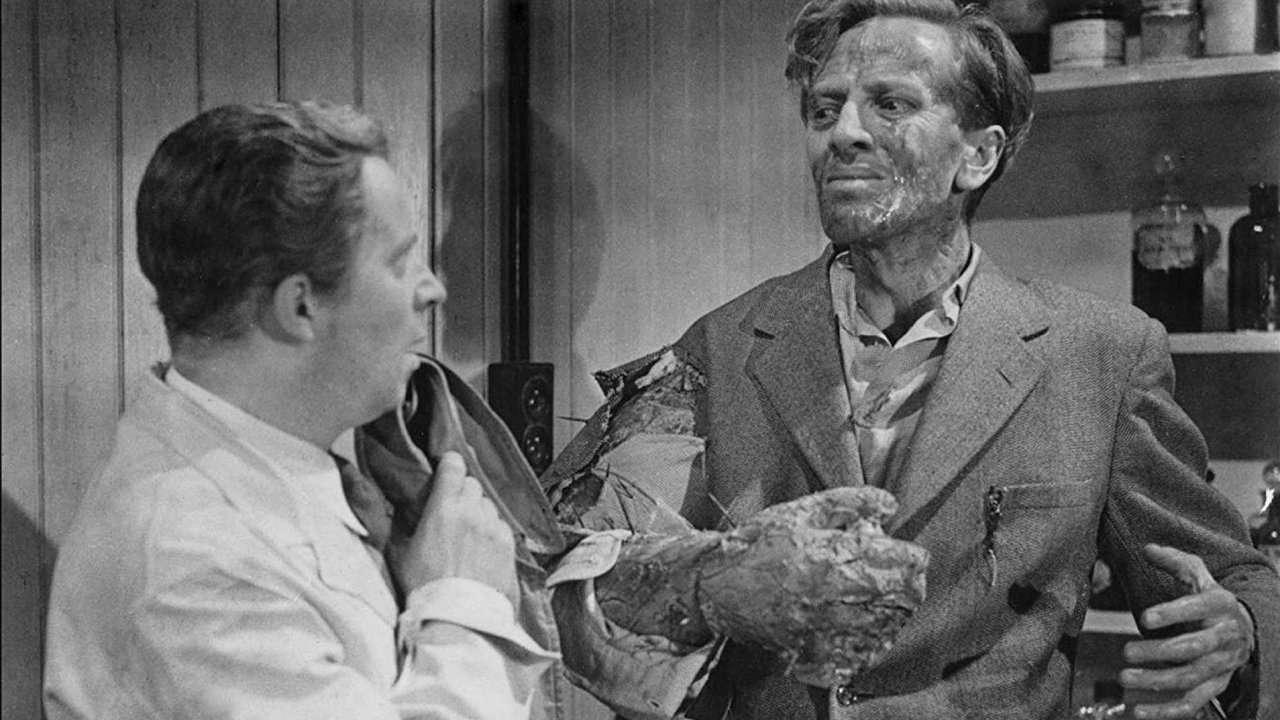
The first manned spacecraft, fired from an English launchpad, is lost from radar before roaring back to Earth and crashing in a farmer's field. The rocket is found to contain only one of the three men who took off in it; and he is unable to talk but appears to be undergoing a torturous physical and mental metamorphosis.
About The Quatermass Xperiment
What The Quatermass Xperiment gets right
There’s a moment very early on where a British‑American rocket — the first crewed launch from Quatermass’s group — comes home and everything that was supposed to be simple has already gone wrong. It’s a neat trick: you open on achievement and immediately tilt the frame so the audience has to worry about what comes next. That tug is the film’s engine.
Val Guest keeps things economical. In 85 minutes he moves from a closed rocket cabin to a citywide manhunt and an ending that forces practical, almost administrative choices about how to stop a threat — rather than theatrical heroics. The cast are a busy, recognisable lot: Brian Donlevy as Bernard Quatermass, Richard Wordsworth as Victor Carroon and Jack Warner as Inspector Lomax all steer the story’s momentum.
There’s also a pleasingly British crowd to the proceedings: doctors, policemen, a BBC TV crew and a zoo superintendent all show up not as ornament but because the story asks them to. That population of ordinary people — worried officials, baffled loved ones and the professionals called in to cope — gives the film its personality, and the personality is pragmatic, slightly impatient and often bleak in a way that still lands.
The idea that sets The Quatermass Xperiment in motion
At its heart the film runs on two small, clear ideas: a rocket goes up and then, crucially, something comes back with it that shouldn’t. That inversion — achievement becoming danger — is a tidy way to kick the whole thing off.
Inside the cabin the men behave as if an invisible presence has crowded them. That’s the turning point: the empty suits, the last survivor stumbling out half‑alive, and the immediate inability of ordinary hospitals to cope. Once the problem stops being hypothetical, you have a thriller that has to juggle expertise, authority and panic.
From there the story splits into sensible beats rather than melodrama. Quatermass and his assistant arrive at the crash, doctors analyse the stricken survivor and the police begin to treat the case as one part criminal, one part disaster. It’s procedural in a way that lets small details — a fingerprint, a disfigured shoulder, a reel of developed film — carry real weight.
Those details pay off because the film treats them as clues, not just effects. The idea works because the setup keeps asking a practical question: what do you do when achievement brings back something lethal and incomprehensible? The answers the film reaches are often grim and delightfully unsentimental.
Why Bernard Quatermass matters
Quatermass is the organising mind of the film. He heads the British‑American Rocket Group; he’s the scientist who launched the mission and therefore the man who must face what it brought back. That position makes him practical and responsible in ways that the plot needs.
Casting matters only insofar as it clarifies who’s in charge, and Brian Donlevy’s Quatermass is the person the plot keeps returning to when a decision must be made. He’s the one who walks into the crash field, assesses what the others cannot, and insists on doing the messy, administrative work of containment and explanation.
Because the film populates its world with ordinary officials and relatives — Maggie, her father George, Maggie’s boyfriend and a handful of policemen and medics — Quatermass functions as the link between specialist knowledge and everything else. He’s a hinge: expert without being isolated, willing to speak in clinical terms to people who need plain answers.
That role makes him memorable because the movie never turns him into a sermonising genius. He is a scientist with responsibility; the drama comes from how he applies that responsibility when the stakes are beyond anything he expected.
The Quatermass Xperiment has more on its mind than the plot suggests
On the surface it’s a tidy monster picture: a man returns from space changed and the authorities must stop what he has become. Scratch that surface and you find a film quietly working through loss — of body, of identity and of the comfortable idea that progress is purely good.
Authority is its other preoccupation. The rocket’s very existence forces questions about who takes responsibility when science overreaches: Quatermass, ministry officials and the police all have different mandates, and the story is more interested in how those mandates clash than in neat moralising.
Humanity threads through both ideas. The film repeatedly asks whether the thing chasing London is still a person worth saving, or simply a biological hazard. That question of when compassion becomes danger — and whether the two can coexist — is what stops the movie being a mere series of scares and lets it feel, at times, quietly sorrowful.
The Quatermass Xperiment could not belong to any other decade
Released in 1955, the film sits in a moment when spaceflight was still a speculative achievement everyone argued about. That anxious optimism – we can go to space, but should we? — colours the whole narrative and gives its fear a particular texture.
It’s not retro dressing that defines the movie; it’s the cultural assumption that technological triumph will bring bureaucratic and moral headaches. The story treats a rocket launch as both a national accomplishment and the sort of event that forces uncomfortable questions about who signed the paperwork.
The film’s concerns — about progress producing new kinds of loss and requiring new forms of authority — read like a shorthand for the decade. The result is a movie that’s of its time without needing to wink at its audience. It feels like a 1950s conversation that got stormy and then went quiet.
Why The Quatermass Xperiment still matters
People remember the film because it keeps a tight string of cause and effect: the rocket loses contact, a man returns altered, and a series of sensible investigations and ugly discoveries follow. That clarity makes the narrative stick in the memory. It’s easy to tell someone the spine of the plot without fobbing them off with spectacle.
There are moments that lodge: the survivor stumbling out of the rocket in shock; fingerprints that aren’t human; a hospital patient whose flesh begins to change in ways doctors can’t name. Those concrete beats are the building blocks of the film’s continuing emotional pull.
It also stages escalation neatly. A broken cactus fusing to a man’s arm, the discovery of animal carcasses with life absorbed from them, and the final creature revealed in a place of national meaning all add up to a progression that feels inevitable once you’re on board. The electrocution at the Abbey — the wires, the cables, the decision to use the city’s power — is an administratively grim but dramatically satisfying solution.
Finally, the film ends on a small but striking refusal of fanfare: once the danger is stopped, Quatermass walks away and says he will start again. That shrug — weary, determined and a little haunted — is the kind of final image that keeps viewers thinking about the story long after the credits roll.
Does The Quatermass Xperiment still hold up?
Yes — but with a rider. The film’s compact runtime (85 minutes) and procedural clarity mean it doesn’t waste time. From the rocket’s troubled return to the discovery of empty suits and a stricken survivor, the story moves with purpose and keeps the choices grounded rather than theatrical.
What helps it endure are the questions it refuses to tidy away: what do you owe a person who is no longer wholly themselves, how do institutions balance secrecy and safety, and what cost are you willing to impose on a city to stop an invisible, spreading threat? Those are not questions that date like a costume; they remain interesting because they’re practical and morally awkward.
It isn’t a love letter to spectacle. Instead it’s a tight, intelligent thriller that prefers investigation and hard decisions to pyrotechnics. That makes it better company for viewers who like their horror to think as it frightens, and who appreciate an ending that gives the hero work to do rather than applause.
So should you watch it? Yes, if you want a film that treats science and responsibility as problems rather than background detail. The Quatermass Xperiment still works because it keeps its focus on people making difficult choices — and because it knows when to stop talking and start acting.