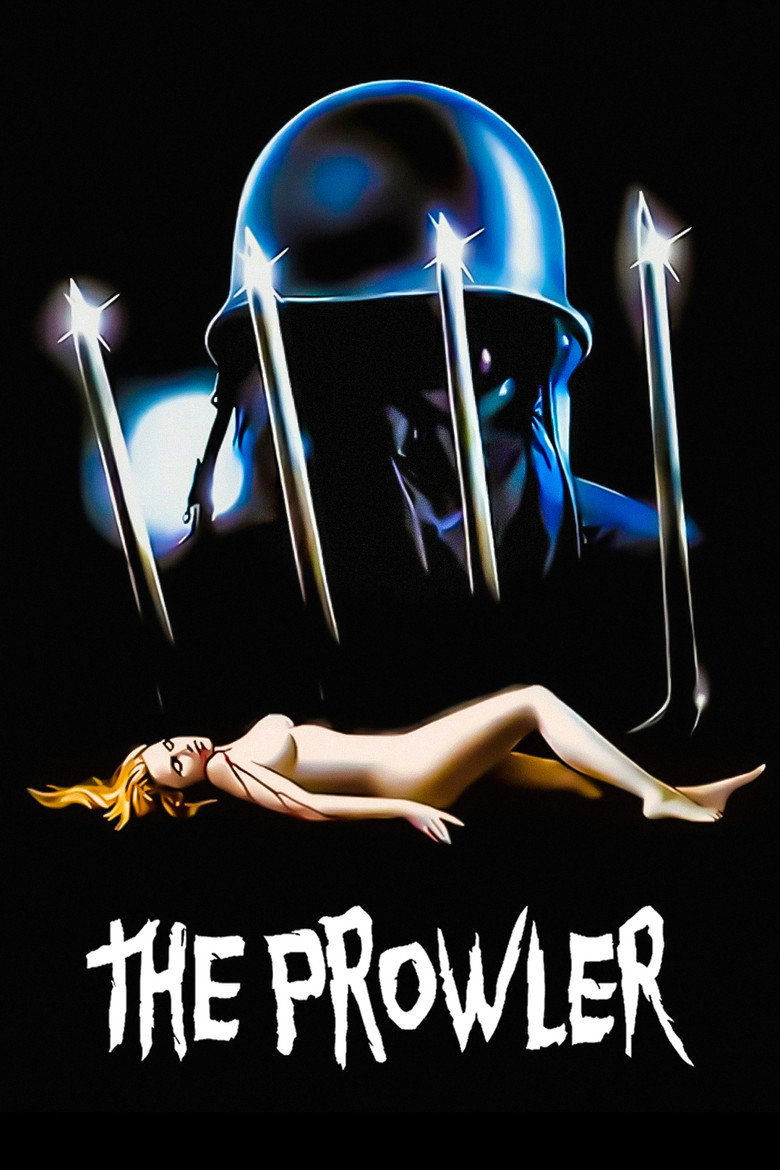
The Prowler
“If you think you're safe... you're DEAD wrong!”
Thirty years after a murder on the night of Avalon Bay's graduation dance, the sleepy town's teens meet grisly ends at the hands of a prowler once thought to be a jilted soldier home from war.
About The Prowler
Why The Prowler still works
Start with a lakeside gazebo, a red rose on the grass and a pair of students who will never return to that dance. That 1945 murder — a wartime echo left like a stain — gives The Prowler a neat, nasty hook: the past didn’t stay past.
Joseph Zito keeps the film compact. Clocking in at 89 minutes, it moves like someone on a deadline, a tight little machine that prefers steady pressure over grand gestures. The movie wastes no time in reminding you why the dance matters: it’s the first one since those killings, and everyone’s nerves are quietly, deliciously raw. At the centre is Pam MacDonald, organised and understandably jumpy on the night she’s trying to make normal again. Vicky Dawson’s Pam is the anchor around which students, a nervous deputy and an entire town’s unease orbit — which is why the film keeps finding ways to take safety away, one ordinary choice at a time.
Why Pam MacDonald matters
Pam is not mysterious. She’s practical: a college senior organising a graduation ball that the town has been too afraid to hold. That makes her interesting in a slasher where most characters are either oblivious or already gone.
Her life is threaded through friendships — Lisa, Sherry and Carl — so when danger arrives it doesn’t feel like random body-count bookkeeping. The film builds stakes by showing what Pam stands to lose instead of explaining it with clumsy lines.
Pam is also the town’s conscience in miniature. She overhears reports about a prowler and worries for Mark, the deputy she’s seeing; that worry is the kind that rubs off. It turns a personal fear — a boyfriend’s safety, a friend’s life — into the engine that keeps the story moving.
She leaves the dorm with her friends and keeps trying to do the sensible thing: warn people, check for answers, go where adults won’t. That steadiness is why the final confrontation lands the way it does — because the audience has been let into Pam’s practical, protective wiring from the start.
The Prowler has more on its mind than the plot suggests
At first glance it’s a slasher: teenage victims, a prowler, gory set pieces. But underneath sits a movie about home and the ways we convince ourselves it can be held together. The dance is supposed to be a reclaiming of ordinary life — and the film keeps testing whether ordinary life survives the memory of violence.
Mortality isn’t abstract here. The story folds two timelines together, the 1945 murders bleeding into 1980, to show how death becomes a town story you carry. Characters make simple choices — go for a swim, stay behind to shower, split off from the group — and those choices map straight to vulnerability.
Family and friendship give the plot emotional weight. Major Chatham’s old grief is not just background colour; it’s the town’s inheritance. Pam’s relationships with Lisa, Sherry and Carl make their fates feel personal, so the film’s shocks hit people you know, not just anonymous targets.
There’s also an authority question running through it. What happens when people in charge — the sheriff, for example — are implicated by the violence or the cover-up? The Prowler quietly asks whether the structures you rely on for safety can be trusted to protect you at all.
The Prowler could not belong to any other decade
Released in 1981, The Prowler sits at the moment American horror went leaner and meaner. It’s a tight, no-nonsense picture that shares the decade’s appetite for films that put young people in danger and refuse to coddle them.
The decision to stage the threat around a college graduation ball — specifically the first dance since a gruesome wartime double murder — is very of its time. It’s a neat, slightly paranoid setup: the past intruding on right-now youthful hope, and the film enjoys letting that collision be awkward and ugly.
The Prowler wears its era in what it chooses to centre: a community, a local deputy and a group of students. That focus on small-town social mechanics is something 1980s horror liked to return to; it’s a decade comfortable with the idea that terror could be local, domestic and stubbornly persistent. Because it’s from 1981, the film also has that economical storytelling the period favoured — brisk scenes, quick escalation and a refusal to linger where it doesn’t need to. It’s efficient horror, which is part of why it still surprises viewers who expect a longer, more explanatory slow-burn.
What has aged — and what hasn't
Some elements feel timeless: the way a group of friends makes a night out feel like a small economy of care. As a teen-centred picture, The Prowler still understands the currency of those relationships; losing a friend in a shower or at a pool still hurts because the film gives us the circles those characters live in.
The core theme — home and safety being fragile — remains stitch-tight as an idea. Watching people treat familiar places like dorms, a Major’s house or a dance as if they’re secure, and then seeing that illusion stripped away, still produces real tension even now.
Family dynamics also survive the years. The presence of Major Chatham and the revealed history behind his loss keeps the emotional stakes rooted in something older than the night’s scares; grief doesn’t date, and the film uses that to keep its quieter moments from collapsing into pure shock.
Where it shows its age is less obvious than dusty clothing or hairstyles — it’s in the rough economy of character information. The story expects you to fill in gaps about who people are and how their choices matter. For many viewers that still works; for others it can feel blunt compared with more character-heavy modern horror.
Why The Prowler still matters
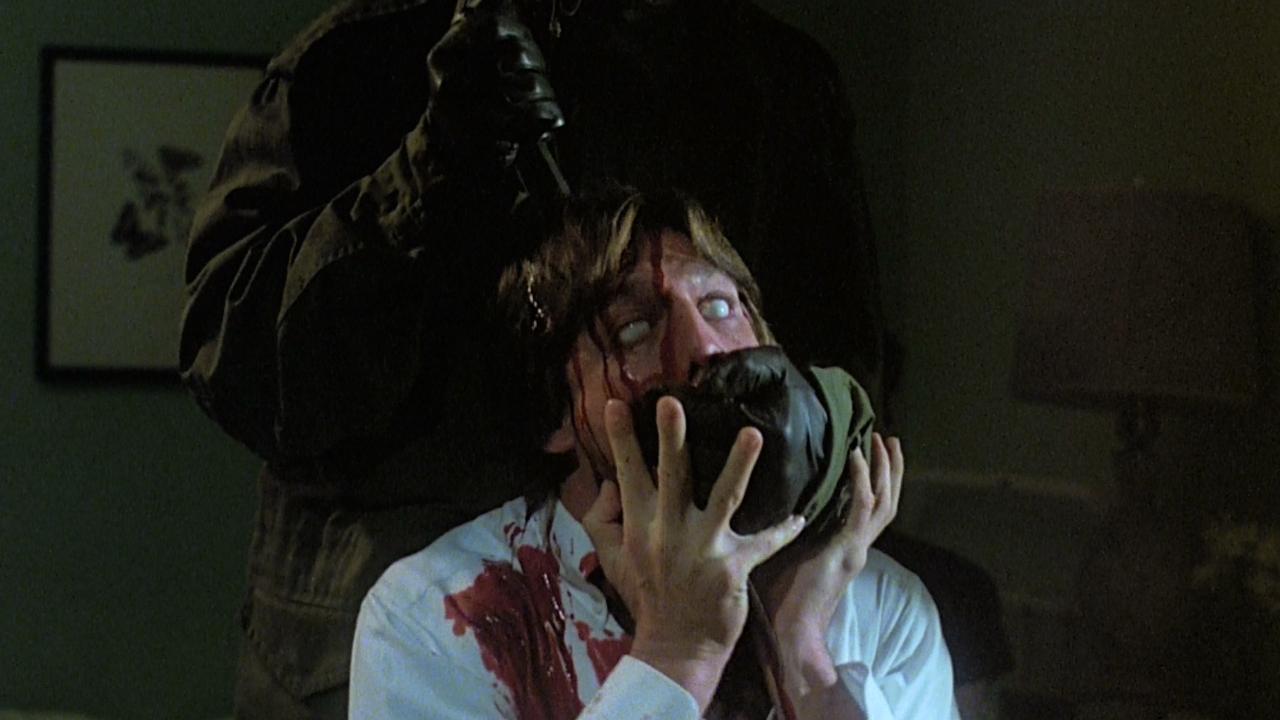
People remember The Prowler because it refuses to make every kill abstract. The film strings a handful of sharp, memorable set pieces — a bayonet attack, an impalement in a shower, a swim that goes wrong — into a single night that keeps returning to the same wound from 1945.
Reopening the town’s old case by staging the first graduation ball since those murders gives the film a social charge: it’s not just about random violence, it’s about communal memory. That’s why viewers who grew up with this film recall not only the shocks but the idea of a town trying and failing to put a lid on its past.
The cast of characters helps, too. Pam, Mark the deputy, Major Chatham and the victims are more than slasher fodder; their connections — friends who plan the dance, a chaperone trying to keep order, a groggy small posse looking for the prowler — make the night feel like a community unravelling in real time.
Finally, the movie’s final reckonings lean into the darker side of authority and trust. When the layers of that small-town safety peel away, people who should protect end up implicated in the violence — and that betrayal is part of what keeps conversations about the film alive.
Does The Prowler still hold up?
Yes — if you want a lean, focused slasher that trades explanation for atmosphere and keeps its eye on what the violence does to a small community. At 89 minutes, Joseph Zito’s film doesn’t dawdle; it tightens the screws and leaves you little room to breathe.
It’s a movie that rewards viewers who care about the people before they’re killed. Pam MacDonald’s efforts to arrange a normal night, her concern for Deputy Mark London and the friendship network around her mean the film’s shocks land as losses, not just set-piece show-offs.
If you’re put off by sparse character detail or prefer horror that lingers on motive and psychology, The Prowler might feel a bit blunt. But if you like your scares direct and your themes uncompromising — home unsafe, authority fallible, the past a waiting thing — it still packs a punch. Bottom line: watch it for the way a small town’s ordinary night gets dismantled. By the time the truth comes out and the final confrontation closes the circle, the film has done its work: it turned trust into a liability, and that’s a neat, unsettling trick that hasn’t lost its teeth.