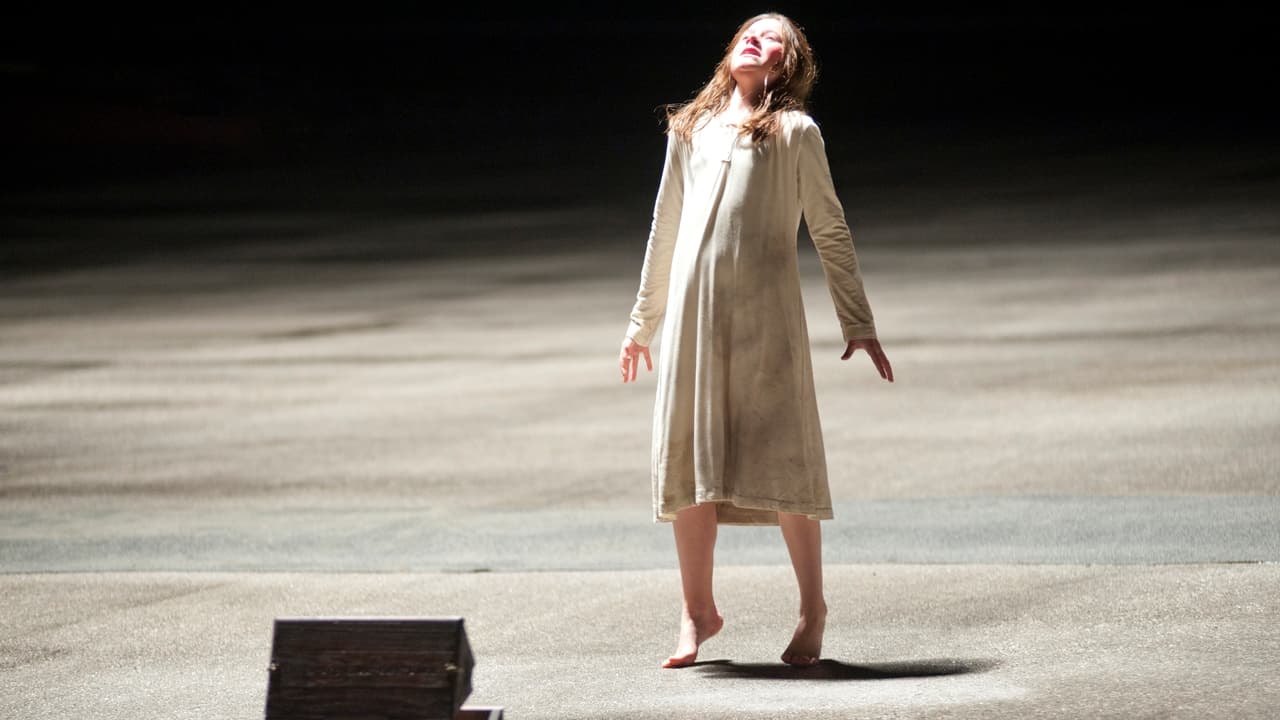

The Possession
“Fear the demon that doesn't fear God.”
A young girl buys an antique box at a yard sale, unaware that inside the collectible lives a malicious ancient spirit. The girl's father teams with his ex-wife to find a way to end the curse upon their child.
About The Possession
What makes The Possession worth revisiting
Open on a middle-aged woman staring at a battered wooden box. It whispers a Polish line that translates to “I will eat your heart.” Even before anyone starts running through corridors, the film has given you its promise: ordinary objects can be cruel, verbal threats can be intimate, and the small domestic detail will do most of the work.
That promise is exactly the engine of the film. Ole Bornedal directs this compact 92‑minute 2012 horror with an eye for family friction: Clyde Brenek — one half of a couple finishing a divorce — suddenly has to become a protector as his daughters help him settle into a new home. The box arrives like bad mail from another life and, slowly, everything that feels safe begins to fray. From yard‑sale discovery to whispered menace, the story rides on one object and the way it changes a household. The Possession keeps its attention tight — family, fear and parental protection — and, as a result, its small, specific horrors still land.
The idea that sets The Possession in motion
At its simplest, The Possession sets a small domestic premise against a very old kind of threat: a mysterious box finds its way into a child’s hands and, rather than being a curiosity, it becomes an obsession.
That obsession isn’t cute. The child withdraws from the family, growing solitary and protective of the object. The film takes that behavioural shift seriously — the box doesn’t just frighten the adults, it remakes a child’s interior life.
We also see what the box can do before the family fully understands it: another woman, helpless and attacked by an unseen force, is violently thrown around her living room. Those opening moments underline that this isn’t merely a psychological problem; something dangerous is attached to the object.
The set‑up works because it forces ordinary parenting decisions — curiosity, discipline, whether to throw something away — into the space of escalating peril. It’s a classic horror bargain: keep the scenario intimate, and the stakes feel enormous.
Why Clyde Brenek matters
Clyde Brenek is the parent the story hands the keys to. Played in the casting list by Jeffrey Dean Morgan, he’s introduced in the awkward middle of a marital split — a basketball coach moving into a new place while the legal separation with his wife finishes.
That separation gives Clyde something to lose beyond his marriage: his children’s safety. When his daughter’s behaviour turns dangerous and accusatory, he’s the one who tries to act — to take the box away, to understand what it is and, eventually, to confront it.
The film makes Clyde active rather than passive. He joins an attempt at an exorcism alongside Tzadok, and the struggle between him and the dybbuk becomes literal: the fight turns physical and puts him in the direct line of danger.
Because of that risk, Clyde’s arc matters to the emotional payoff. The family is reunited and the estranged couple’s relationship is rekindled — so the father’s willingness to do violence on behalf of his child is what restores the household, at least for the film’s final breath.
The Possession has more on its mind than the plot suggests
On the surface it’s a demonic‑object horror; under the surface it’s about what a family will do to protect a child. The film repeatedly brings the threat back into the domestic — bedrooms, hospitals, a parent’s weekend — so the terror feels personal rather than cosmically abstract.
Fear in this film is a family business. The presence attached to the box doesn’t isolate a household from the world so much as reveal fault lines inside it. Parental protection becomes an insistence: someone has to act, even if the action breaks other things.
Home and safety are treated as fragile. Objects brought into a house — a secondhand box — can undo the ordinary mechanics of trust and routine, and the film uses that to make its scares immediate. There’s also an implicit caution about exploitation: the dybbuk’s story is a reminder that histories and objects carry weight. When family members try to make sense of what’s happening, they are simultaneously defending the living and reckoning with something that should have stayed boxed away.
The Possession could not belong to any other decade
The Possession arrived in 2012, squarely in the 2010s, and it wears that timing in its storytelling choices rather than its wallpaper. The decade’s mainstream horror often trimmed excess and focused on the household — small casts, compact runtimes and stories that made the domestic feel threatening.
At 92 minutes, Bornedal’s film keeps that economy of tone: it doesn’t overstay its welcome and it channels its nerve into a few sustained fears rather than broad spectacle. That feels very 2010s in the best way: efficiency over indulgence.
Its preoccupation with parents, custody and the sanctity of home fit a run of films from the era that used family relationships as the emotional and horror fulcrum. The Possession is part of that same impulse — personal stakes, not just set‑piece shocks.
So while it’s a horror film first, it’s also a neat artefact of its decade: tight, domestically focused and unapologetically personal in its scares.
What has aged — and what hasn't
The parts that age best are the human ones. Family as a battleground still reads — two parents making terrible decisions under stress, children shuffled between homes — and when the film leans on that, it still bites.
Small, specific moments also stick. A child looking into a window and seeing a bandaged woman being cared for is the kind of eerie image that doesn’t depend on tricks; it’s quietly unsettling and remains effective.
The film’s decision to bring danger into recognisable spaces — school, the hospital, the home — keeps the stakes legible. The exorcism sequence, where Clyde and Tzadok try to drive the force out, is a blunt, physical confrontation that still plays as high‑risk and personal.
If you watch it now, The Possession feels like a tidy, focused piece of horror that remembers who its characters are. That focus is why it survives better than some more scattershot contemporary titles.
Why The Possession still matters
There’s a handful of images and beats from The Possession that stick in memory: the whispering wooden box, the yard‑sale origin of the curse, and the moment a teacher’s curiosity turns deadly when she’s thrown from a window. Those moments are blunt and specific — easy to retell and hard to unhear.
The movie also gives its antagonist a provenance: the box is traced back to a Jewish Polish village of the 1920s–30s and identified, through research, as a dybbuk container. That particularity — a named, culturally rooted spirit rather than a generic demon — gives conversations about the film something concrete to hook onto.
Clyde’s trip into the Hasidic community and the explanation that a possession progresses through stages make the threat feel codified and therefore, narratively satisfying. The exorcism’s aftermath — the dybbuk emerging from Clyde and crawling back into the box — reinforces the movie’s central bargain: the family saves itself, but at a cost. Finally, the last image of the box, intact and whispering after a fatal collision, is a neat cruel twist. It keeps the worry alive: the family survives, the house is restored, but the object that started it all is still out there, still talking.
Does The Possession still hold up?
Yes — if your appetite is for compact, domestic horror that treats family dynamics as real stakes. The Possession (2012) is a short, focused fright directed by Ole Bornedal that spends its runtime on a few intimate horrors rather than sprawling spectacle.
Its strengths are the specific hook — that whispering box that a child finds at a yard sale — and the way the story forces a father to step into danger. Jeffrey Dean Morgan’s Clyde is the axis around which protection and reconciliation rotate, and the film earns the emotional pay‑off of a reunited family by putting him in harm’s way.
The film doesn’t apologise for being straightforward: teacher murdered, possession escalates, hospital exorcism, a dybbuk crawls back into its box. That clarity is a virtue; it means you know the rules, the risk and the cost. The final image — the box surviving a crash and still whispering — leaves the last ache where it should be: under the skin, not explained away.
So watch it for the box, watch it for the family tension, and watch it if you like your scares small and stubborn. The Possession doesn’t pretend to be more than it is, which, in its case, is quite enough.