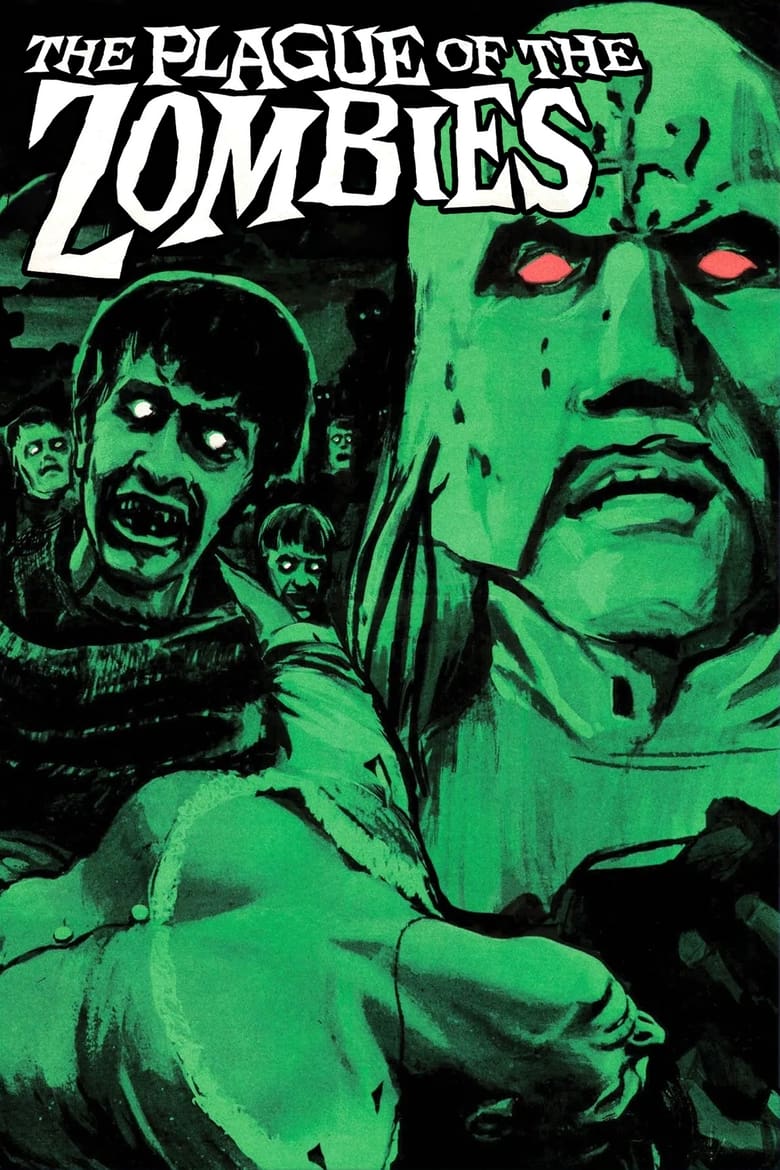
The Plague of the Zombies
“Only The Lord Of The Dead Could Unleash Them!”
Sir James Forbes arrives in a remote Cornish village to identify a mysterious plague afflicting the population. He discovers that one of the squires is a disciple of Haitian witchcraft and using dark magic to resurrect the dead. As the plan to create undead servants unravels, the squire unleashes his zombie army on the unsuspecting village.
About The Plague of the Zombies
Why The Plague of the Zombies is still worth talking about
The Plague of the Zombies opens with a simple, sharp premise: a Cornish village in the summer of 1860 finds itself ravaged by a mysterious sickness that keeps spreading, and nobody locally — not even the doctor — can put a stop to it. That basic helplessness gives the film something immediate to chew on: an ordinary community losing its bearings.
John Gilling directs with the kind of economical focus that suits a 90-minute picture; there’s no padding, just the progression from unease to investigation to confrontation. André Morell turns up as Sir James Forbes, the outsider summoned because the locals’ own remedies have run out; he’s the muscle the plot uses to pry open what’s really going on. And the film introduces its emotional logic quickly through family and friendship: Sir James arrives with his daughter Sylvia, who’s more than a passenger — she’s a link to the town and its people. Small moments, like her standing between rowdy fox hunters and a trapped animal, tell you the stakes: this is about protecting home and keeping people safe when all reason says they shouldn’t be able to.
The idea that sets The Plague of the Zombies in motion
The engine of the film is refreshingly straightforward: a village with bodies being buried that shouldn’t be buried. A funeral runs into trouble when local fox hunters interrupt the procession — a ruckus that ends with a coffin being dropped and a corpse revealed in a very undignified way.
That public, small-town upset pushes characters into sleuth mode. The doctor, Peter Tompson, is out of answers and brings in Sir James Forbes, who begins to treat the situation like a case rather than a local calamity.
Sir James’s investigations take him where he shouldn’t look. In the Squire’s house he finds eerie small figures tucked into coffins — a detail that flips the explanation from natural disease into something deliberately engineered.
A scuffle in that house escalates; a room catches light during the struggle and Sir James uses the chaos to force information out of a servant before he flees. The setup works because the mystery moves fast and every new discovery raises the stakes for home and family.
Why Sir James Forbes matters
Sir James Forbes is the film’s pragmatic centre — the man called in when local remedies have failed. The story hands him responsibility because someone needs to translate fear into action: that’s his role, and it keeps the movie honest about who can actually do anything about the situation.
He’s not just a distant official; he arrives with a connection to the village. His daughter Sylvia knows the place, and that tie makes Sir James’s involvement feel personal rather than merely professional. Family and friendship are the threads that pull him and others into the mystery.
Crucially, Sir James is the point of contact between the frightened community and the outside world. When coffins are found empty and suspicion turns inward, someone has to ask awkward questions — and that someone is him.
The film uses his presence to show how far protection can reach. He doesn’t arrive to lecture; he arrives to act. That makes him memorable not because he’s larger-than-life, but because he’s the one who takes the village’s panic seriously enough to do something about it.
The Plague of the Zombies has more on its mind than the plot suggests
At surface level it’s a horror yarn about walking corpses and a sinister squire. Underneath, the film keeps returning to what it means to have a safe place taken away. Home and safety aren’t abstract ideas here; they’re the losing and desperate impetus for almost every choice the characters make.
Family and parental protection thread through the action — Sir James and Sylvia don’t just wander into danger for curiosity’s sake, they do it because the threat has crept into people they care about. That personal angle keeps the scares rooted in human concern rather than spectacle.
Freedom and mortality sit oddly together in the story: villagers are robbed of both freedom of will and the final dignity of death. The result is a steady tension between the normal life people expect and the loss that the plague represents. There’s also a friendship element: ties between characters (old mentors, neighbours, childhood friends) supply both motivation and vulnerability. Those human bonds are what the film suggests are worth fighting for, even when the town feels beyond saving.
The Plague of the Zombies could not belong to any other decade
Released in 1966, The Plague of the Zombies sits comfortably in a very particular moment of British filmmaking where modest, well-oiled genre pictures could still focus on small communities and slow-burn dread rather than spectacle.
That mid‑60s timing matters because the film prefers a tight, story-driven approach that trusts atmosphere and social unease over flashy set-pieces. It’s a Hammer picture in the way it favours a compact runtime and a pointed handful of ideas.
The result is a movie that feels of its era without ever descending into period pastiche; it uses its historical setting as a lens rather than a costume, which is why it reads like the kind of 1960s horror that took its threats seriously and its scares personally.
Put simply: this is a 1966 film that behaves like a 1966 film — economical, slightly formal and deeply interested in the social dynamics of a threatened community.
What has aged — and what hasn't
If you watch the film now, the strongest things are the human ones: the themes of protecting home, of family ties and the way friends pull together. Those bones are durable; the film’s scares are often quieter because they rest on relationships rather than shock alone.
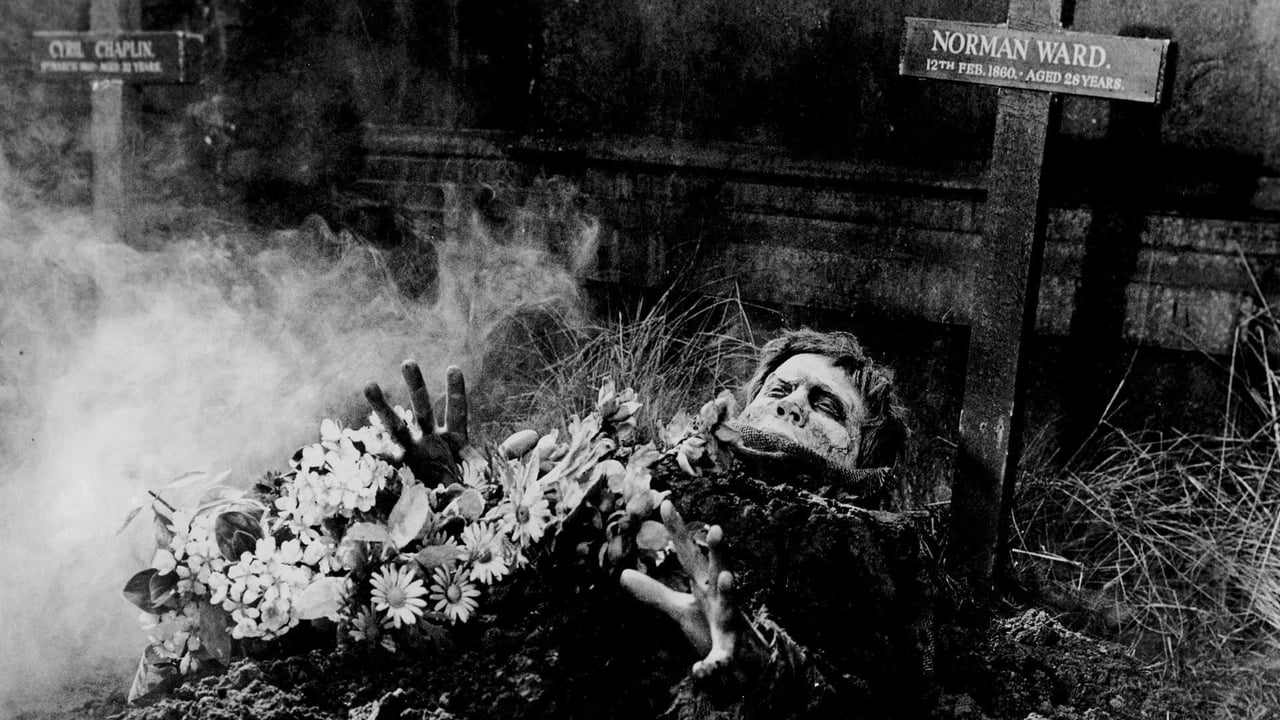
Some plot beats still read neatly as a mystery — the moment when a coffin is dropped and an apparently dead man is exposed, or the terrifying discovery that the village graves are not what they seem. Those revelations still produce a genuine shiver.
There are narrative strands that might feel clumsy to modern eyes: a drunken man accused of murder and insisting he saw his dead brother walking by the mine is a basic but serviceable device to create suspicion. It’s the kind of tidy plot-turn that sometimes trades subtlety for momentum.
Overall, the film’s central concerns — keeping family safe, fearing the loss of bodily autonomy, and the fragility of small‑town security — carry across time. They’re simple, but they still land because they’re human problems rather than gimmicks.
Why The Plague of the Zombies still matters
People remember The Plague of the Zombies because it wraps classic horror elements — voodoo, the uncanny dead, a sinister squire — around a recognisable English village and decent motives. The set-up of a Cornish community stricken by a spreading illness is plain and effective, and the film keeps the focus on how that illness breaks social trust.
The story gives us connective moments that stick in the memory: funeral chaos that reveals a corpse, empty coffins in the churchyard, a grey‑skinned figure by an abandoned mine and the terrible discovery of a lifeless woman thrown near the shaft. Those beats give shape to the threat and to the characters’ responses.
There’s also the cold, practical motive that grounds the horror: the Squire is revealed to be turning his neighbours into the walking dead so he can run the tin mine with cheap, obedient labour. That mixture of supernatural method and mercenary purpose keeps the story from feeling purely mystical — there’s a nasty human greed at its centre. Finally, the rescue sequence — the inferno in the Squire’s house, the burning of the little coffined figures and the rush to the mines to save Sylvia — ties the film together. It ends the plague by collapsing the Squire’s power, which is a satisfying, if stark, resolution to a tightly run narrative.
Does The Plague of the Zombies still hold up?
Yes — if you’re after a compact, character-rooted piece of Hammer horror that values small-town dread over grandstanding gore. The central problem — a Cornish village suffering a spreading, unexplainable sickness that the local doctor cannot cure — remains an effective spine for the film’s concerns about safety and community.
The movie’s strengths are its economical storytelling (90 minutes, no flab), its clear moral stakes — family, friendship and parental protection — and the way Sir James Forbes is used as the instrument of practical investigation. Those choices keep the drama moving and give the scares an emotional anchor.
If you’re watching for modern frights or flashy effects, this isn’t the place. But if you want a horror picture that makes anxiety about home feel tangible — where a funeral can turn into the moment a community realises it is no longer safe — The Plague of the Zombies still rewards. It’s sharper and more purposeful than its modest running time might suggest.
So watch it for the mood, the mystery and the grim practical motive at the heart of the plot. It’s a movie that remembers people first and the monsters second — and that’s why, more than half a century on, it still bites.