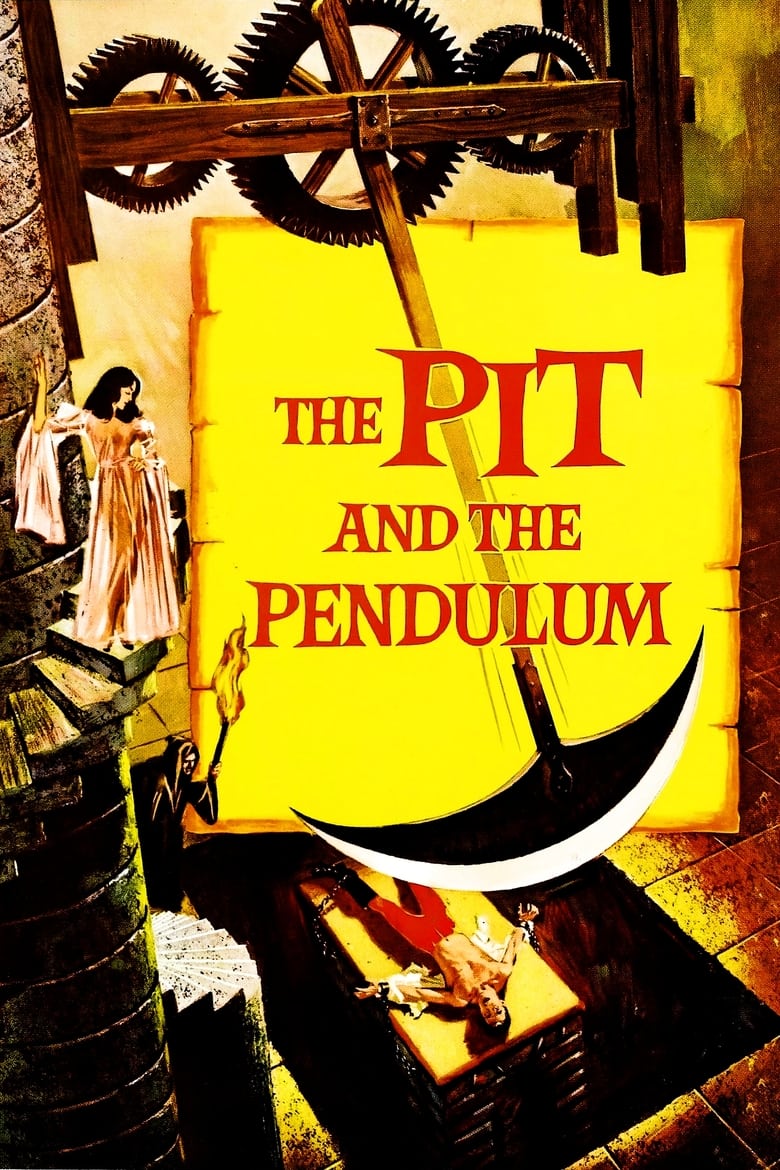
The Pit and the Pendulum
“Betrayal cuts both ways!”
In the sixteenth century, Francis Barnard travels to Spain to clarify the strange circumstances of his sister's death after she had married the son of a cruel Spanish Inquisitor.
About The Pit and the Pendulum
What makes The Pit and the Pendulum worth revisiting
Start with the obvious: someone arrives at a forbidding family home to ask awkward questions. Francis Barnard turns up at his brother-in-law Nicholas Medina’s castle to investigate the disappearance of his sister, Elizabeth — and that small, simple premise is the engine of the whole film.
Roger Corman keeps the engine running fast. At a taut eighty minutes, the film gives us a tight Gothic horror that moves from polite dinner-table politeness to something much more poisonous without faffing about. And Vincent Price as Nicholas / Sebastian Medina anchors the whole thing. He’s the man whose family history — and the violence in it — is the film’s real subject, so the movie always feels like it’s about people and their pasts, not just about machinery and jump-scares.
The idea that sets The Pit and the Pendulum in motion
The film opens with a detective’s curiosity rather than a scream. Francis refuses to be fobbed off when Nicholas and Catherine offer a half-explanation that Elizabeth died of a strange illness; he stays until he finds out what really happened.
That refusal matters. It drags family secrets into daylight and forces the household to show its true shape — and that shape is not just the castle’s architecture but a history of brutality and buried guilt.
From there the story threads tighten: Elizabeth’s apparent obsession with the castle’s torture chamber, the discovery of her corpse in the sarcophagus, and the revelation that several people had motives to deceive Nicholas push the plot toward a confrontation with the past.
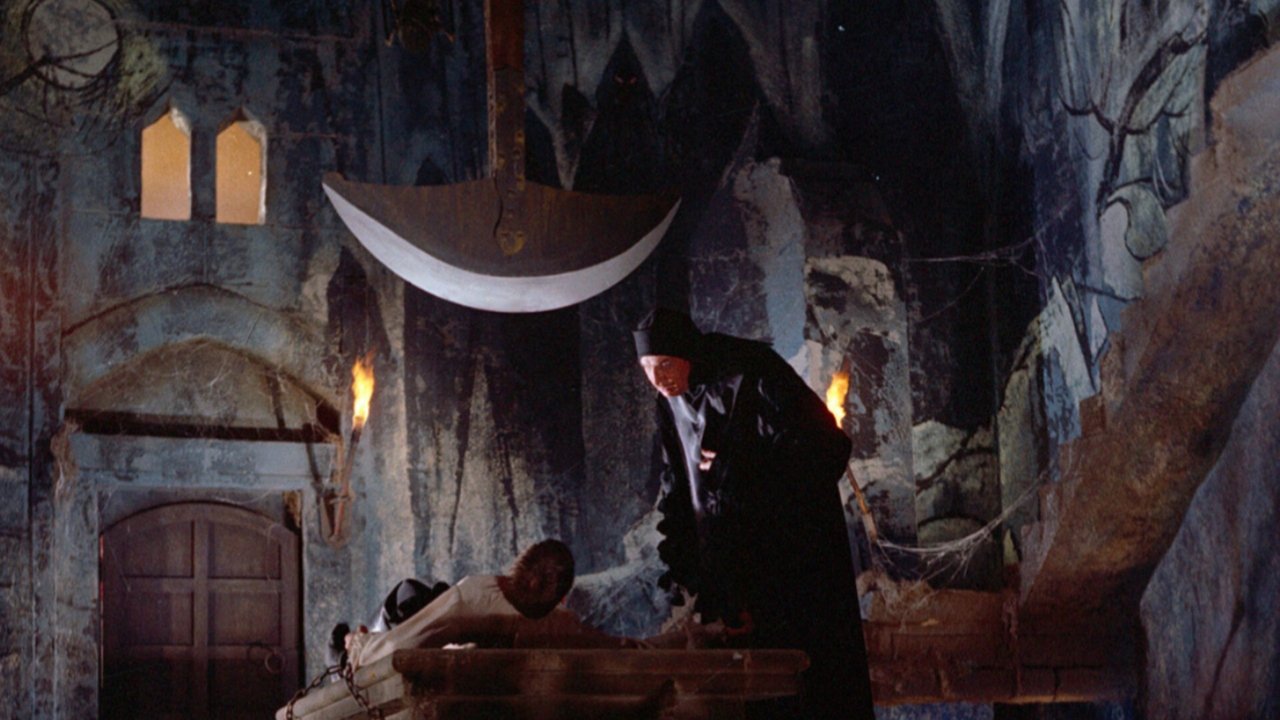
By the end, the literal instruments of torture — including the descending pendulum — have become the moment where family history, madness and revenge all meet.
Why Nicholas / Sebastian Medina matters
Nicholas is the house made human. The castle’s past — his father Sebastian’s brutality, the family violence he witnessed as a child — lives inside him and eventually cracks what’s left of his sanity.
That backstory isn’t ornament. It explains why Nicholas behaves evasively when Francis asks about Elizabeth, why he’s haunted by the idea of premature burial, and why the household can harbour such dark secrets without everyone falling apart at once.
The film stages a neat psychological swap: Nicholas’s identity is porous enough that he can, in the film’s dramatic moment, slide into the role of his own tormentor. The horror isn’t only external; it’s the way history repeats itself inside a person.
And because family is the movie’s organising idea, Nicholas matters beyond his final actions — he’s the hub that makes the other characters’ choices make sense, and the story only becomes urgent because of who he once was and what he’s been made to carry.
The Pit and the Pendulum has more on its mind than the plot suggests
On the surface it’s a castle mystery with a torture device. Underneath it’s a family drama about the way violence passes down and the long reach of loss. The Medina household is full of heirlooms: grief, fear and the memory of a violent father.
Mortality is threaded through the film in a few uncanny ways — the fear of being buried alive, the shock of a sudden death, and the way the living keep behaving as if the dead are still running the place. Those ideas work because they’re bound to family history, not tacked on for atmosphere.
There’s also the question of belief. Several characters react to the idea of a ghost, a curse or a haunting; what matters is how those beliefs drive behaviour. The film uses that to turn private grief into public paranoia. Above all, fear here is relational. It isn’t an abstract threat; it’s the thing that family members do to one another, whether knowingly or from a past they cannot escape.
The Pit and the Pendulum could not belong to any other decade
Released in 1961, this is a film that wears its era in how economical it is. There’s a confidence to getting straight to the point — a bargain-basement virtuosity, if you like — that characterises a lot of early-60s genre filmmaking.
That economy matters. At eighty minutes the movie does what many longer Gothic pictures dither over: it keeps the story tight, lets the central family drama breathe, and doesn’t bleed into subplots that would dilute the tension.
Roger Corman’s direction feels of a piece with the decade’s appetite for compact, sharply focused thrills. The film’s period setting is a stage for a moral and psychological play, and the production choices are all in service of the story, not spectacle.
In short: it’s very much a 1961 film in temperament — brisk, unshowy and stubbornly interested in story rather than indulgence.
What has aged — and what hasn't
The film’s compact storytelling still reads well. A modern viewer can follow the through-line easily: a man arrives, asks questions, and the house slowly reveals its rotten core. That clarity is refreshing in an age of overplotted thrillers.
Some elements feel of their time: the ways characters discuss death and the supernatural are framed in period language and assumptions. But those moments are part of what the movie is about — the fear of being buried alive and the weight of family sins — and they still land as human concerns.
The scenes that involve Nicholas’s childhood memory and the possibility of premature interment still have a prickle to them. The idea that the past can collapse into the present — literally, in the film’s climactic confusion — is a storytelling move that keeps working.
Where it frays is only where modern tastes expect more complexity from every character. The movie isn’t trying to be a psychological case study; it’s trying to stage a concentrated Gothic drama, and on that score it remains effective.
Why The Pit and the Pendulum still matters
People remember it because it folds familiar Gothic ingredients into a tight family tragedy. Francis’s insistence on finding out what happened to Elizabeth turns a murder mystery into an excavation of memory and guilt.
The film keeps returning to the specifics of a household — a doctor who claims Elizabeth died "of fright", the harpsichord playing by itself, a ring showing up where it shouldn’t — small things that accumulate into an atmosphere of paranoia and calculation.
Nicholas’s history — witnessing his father’s murderous cruelty and a mother entombed alive — gives the film a clear through-line: the past doesn’t stay dead. When Nicholas eventually confuses himself with his monstrous father, the story’s central argument becomes blunt and tragic. And the ending, where survivors walk away while something dreadful remains sealed in the house, is the sort of final image that sticks. It’s a reminder that in Gothic tales the house often outlives anyone’s attempt to put the past to rest.
Does The Pit and the Pendulum still hold up?
Yes — if you’re in the mood for a concentrated Gothic tale about family, fear and the way the past keeps running people over. It’s not trying to be subtle about its themes: mortality, loss and inherited violence are the point, and the plot is built around forcing those things into the open.
Vincent Price’s central role as a man carrying his father’s crimes inside him gives the film its dramatic weight, while Francis’s refusal to leave until he knows the truth provides the moral spine that keeps the story moving.
At eighty minutes it feels like a short, sharp shock rather than a museum piece. The film’s economy — its refusal to waste scenes — is where most of its modern appeal comes from.
If you want a tidy, ruinous family story dressed in Gothic trappings, watch it. If you expect modern psychological subtlety at every turn, you might find it blunt. Either way, the image that lingers is perfectly faithful to what the movie sets out to do: show how a single household can harbour a lifetime of cruelty.