
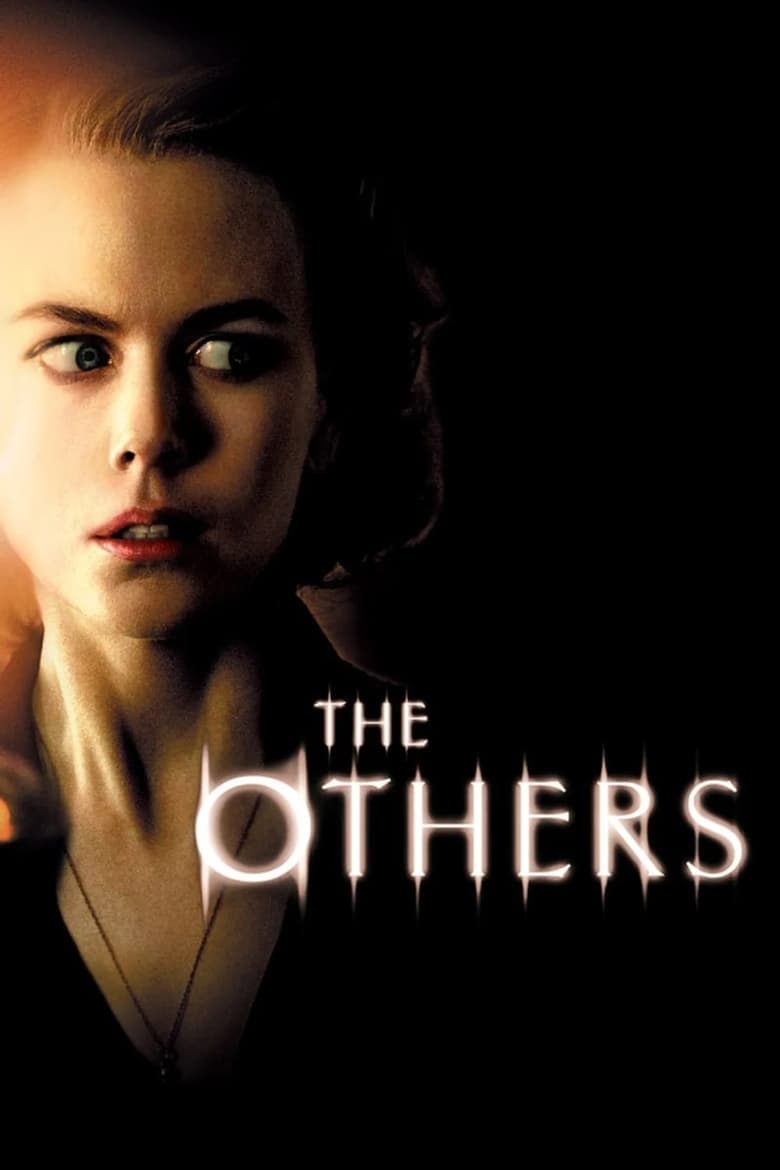
The Others
“Sooner or later they’ll find you.”
Grace is a woman who lives in an old house kept dark because her two children, Anne and Nicholas, have a rare sensitivity to light. When the family begins to suspect the house is haunted, Grace fights to protect her children at any cost in the face of strange events and disturbing visions.
About The Others
Why The Others still stands out
There are two things you remember immediately: the curtains and the children. Grace Stewart has kept the house in near-darkness because Anne and Nicholas cannot bear light, and that single decision turns the family home into a fortress with its own rules.
That tight premise is the engine. Alejandro Amenábar directs a 101-minute piece of horror‑drama-mystery that never wastes time; every creak and mystery springs from the household’s attempt to protect itself. Nicole Kidman plays Grace, and the arrival of new staff — including Bertha Mills, Edmund Tuttle and the mute Lydia — upends the fragile normality. It’s the kind of film that asks you to sit with discomfort. You watch domestic routines and parental vigilance until you begin to wonder who exactly the house is meant to keep safe.
The idea that sets The Others in motion
Start small. Grace hears things — footsteps, voices — and a piano begins to play on its own. Those incidents force her to treat a private anxiety as a problem that needs solving: are there intruders in her home?
Her search for answers escalates from a house‑wide inspection to bringing strangers into the house, and from suspicion to confrontation. The tension works because each move is believable for a parent who thinks their children are at risk.
The narrative keeps the focus tight: incidents build on each other until a discovery — communicated via automatic writing — overturns everything Grace believes about herself and her family.
Even when the rug is pulled, the story remains about the collapse of a household’s rules and the terrible logic of a parent trying to reclaim safety.
Why Grace Stewart matters
Grace is the spine of the film. We meet a woman who has organised every detail of daily life around protecting her children from light; that practical, obsessively cautious parenting gives the story its moral tension.
She’s not just a worried mother — she’s someone whose faith and sense of duty push her into actions that blur the line between care and control. When she searches for a priest and orders the grounds checked for graves, those are moves of someone trying to enforce order on a world that keeps slipping.
The later revelations force a reappraisal of everything she did. The moment Grace learns the truth about the household flips the film from mystery to reckoning; suddenly every precaution, every command, is read in a different light.
That shift is why the character stays with you. Grace isn’t memorable because of one big scene; she matters because the story makes you live in her decisions long enough to understand how they were made.
The Others has more on its mind than the plot suggests
On its surface The Others is a ghost story, but the repeating concerns are family and the idea of home as refuge. The house starts as a shelter and gradually becomes a place of claustrophobia and dispute.
Parental protection is the film’s beating heart. Grace’s measures — the curtains, the rituals, the searches — are all gestures of protection that can become suffocating when carried to an extreme.
There’s also an anxiety about belief: Grace struggles to reconcile what she experiences with her Catholic faith, and that unwillingness to accept uncertainty shapes many of her choices. Fear in The Others is intimate rather than theatrical. It’s not only about unseen forces but about the damage fear can do inside a family and a home.
The Others could not belong to any other decade
Released in 2001, The Others arrived at the turn of the century when compact, psychological horror was comfortably in vogue. It’s very much a 2000s piece in how it favours atmosphere and story economy over shock for shock’s sake.
That precise timing also meant audiences were ready for horror that leaned on mood and moral ambiguity, a style that sat alongside other early‑00s films that preferred suggestion to spectacle.
So while the plot’s period setting is earlier, the film’s approach to tension, pacing and restraint is recognisably of the 2000s — measured, economical and quietly confident.
What has aged — and what hasn't
The core elements age well because they’re simple and human: a mother protecting children, a house that feels like a small world, and the slow build of dread. Those beats translate across time with little loss.
Some of the film’s shocks come from physical discoveries — an album of old postmortem photographs, evidence in the grounds — and those concrete moments still land because they’re woven into the family story rather than tossed in as set dressing.
Grace’s struggle with faith and doubt is also durable; it gives her decisions weight in a way that purely jump‑scare horror rarely achieves.
What matters today is not whether the movie looks of its time but that its central conflicts — safety versus freedom, care versus control — still feel immediate and, sadly, recognisable.
Why The Others still matters
People remember The Others because it ties a genre twist to an emotional knot. The household rules, the servants who once worked the house, the mysterious boy Victor and the apparitions Anne describes all add up to a story where revelations reframe the familiar.
The film’s moments — a piano playing itself, curtains taken down, headstones revealed in a nearby cemetery — are the kind of specifics that stick in memory because they’re felt through family life rather than as isolated set-pieces.
That final reappraisal of who the intruders are forces viewers to revisit everything that came before; it’s an ending that turns domestic detail into a different kind of dread. For many who came to it in the early 2000s, The Others endures because it refused to make ghosts just about fright. It made them about family, possession and the terrible lengths a parent might go to preserve a world.
Does The Others still hold up?
Yes — if you’re after a compact, clever piece of horror that treats family dynamics as the engine of dread. Alejandro Amenábar’s direction keeps the film tight at 101 minutes, and the setup — a mother who darkens her home for light‑sensitive children — never stops generating tension.
It asks the viewer to live inside a household of rules until those rules are questioned, and that experience rewards patience more than gore. The arrival of servants, the strange noises, the postmortem album and the eventual revelations all belong to that single, chilling logic.
You should watch it if you want a ghost story that’s as interested in parental choices as it is in supernatural suggestion. It’s not noisy; it’s quietly inexorable.
Final thought: the film ends by insisting the house remains theirs. Whether you leave the room comforted or unsettled depends on how you feel about the price of keeping a home safe.