
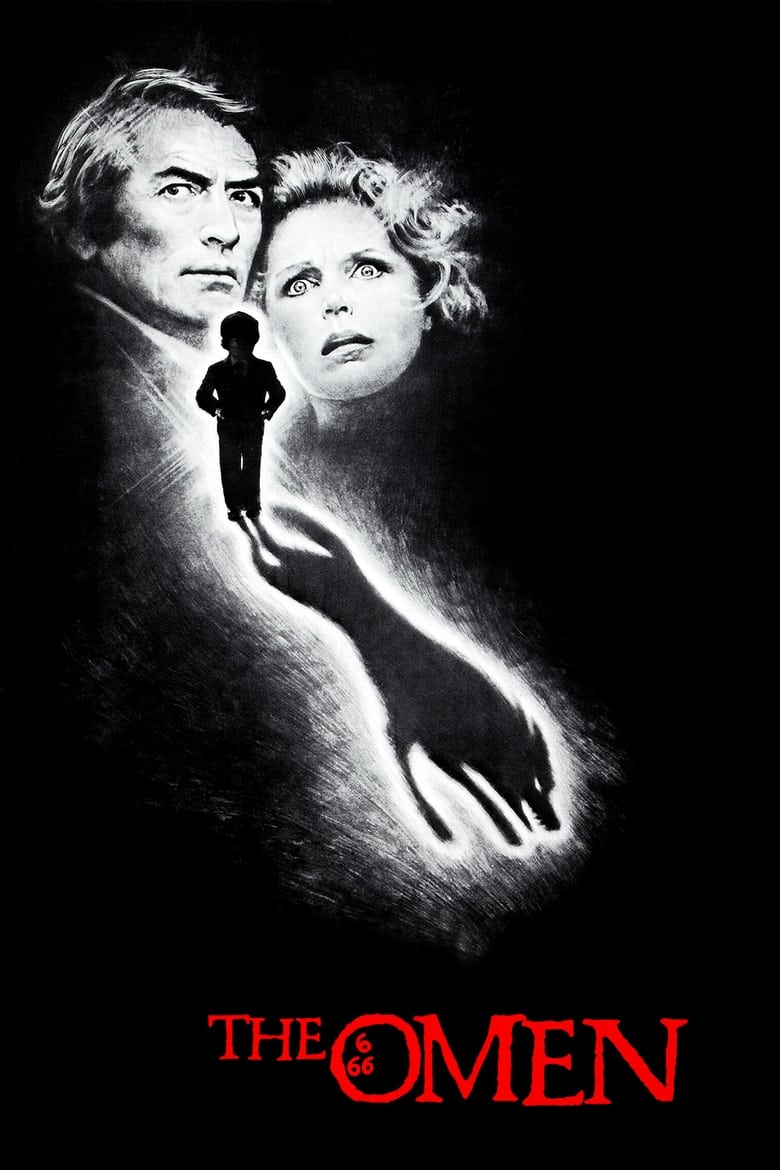
The Omen
“You have been warned. If something frightening happens to you today, think about it. It may be The Omen.”
Immediately after their miscarriage, the US diplomat Robert Thorn adopts the newborn Damien without the knowledge of his wife. Yet what he doesn’t know is that their new son is the son of the devil.
About The Omen
Why The Omen still stands out
The Omen begins with a perfectly recognisable domestic moment — an American diplomat and his wife in Rome welcoming a newborn — and then quietly cheats the rules of that morning. Robert Thorn is handed a different baby and told to keep it secret. That small, private deception is the engine of everything that follows.
Richard Donner directs the story in a tight 106 minutes, letting the unnerving details do the work: a nanny who hangs herself at a birthday party, a menacing dog arriving uninvited, a child who hates church. The film doesn’t rush to spectacle; it accumulates unease around the Thorn household until ordinary life is no longer safe. Gregory Peck plays Robert Thorn; Lee Remick is Katherine; Billie Whitelaw turns up as the quietly terrifying Mrs. Baylock; and Harvey Spencer Stephens is the unnerving child, Damien. Those names anchor the film in recognisable acting ground, but it’s the scenario — a parent keeping a secret about their child — that still makes people talk about The Omen.
The idea that sets The Omen in motion
The film’s inciting gamble is short and simple: in Rome a hospital chaplain persuades Robert Thorn to take home a baby that isn’t his after his own infant supposedly dies. The lie is sealed in a whisper and a promise to keep the truth from Katherine.
From that choice, the story stretches forward five years. What begins as a secret about parentage becomes a mystery laced with threats that arrive at the house — animals that behave oddly, a nanny who kills herself in public, strangers who won’t leave their side.
The Omen turns investigation into escalating danger. The search for answers sends Robert and an ally to Rome and to burned, damaged witnesses; what they find in a graveyard — a jackal and a child’s shattered remains — is the kind of physical evidence that turns suspicion into horror.
And when the film decides to punish disbelief, it does not do it mildly. One of the film’s shock beats is sudden and brutal: a character investigating the threat is killed in a way that underlines how real and inescapable the danger has become.
Why Robert Thorn matters
Robert Thorn isn’t simply a parent in trouble — he’s the man who agrees to a private fraud and then has to live with the consequences. That initial choice defines him: the film keeps returning to the cost of secrecy and the collapse of a life built on diplomatic polish and public duty.
Peck’s Thorn is a useful focal point because he occupies both worlds the film cares about: family life and official authority. He’s a father and an ambassador, and the plot keeps pulling those responsibilities in opposite directions. When priests and investigators warn him, it’s not just about threats to his country — it’s about what his role as a father actually requires.
The discoveries that follow — burned witnesses in a monastery, clues in a cemetery — force Thorn into action he never wanted: he is pushed from denial into grim practicality. The film stages that shove so the audience can watch a man lose the comfort of certainty and learn what his silence cost him.
That trajectory makes Robert Thorn memorable because his choices matter. The movie’s scares are effective precisely because they’re rooted in his failure to be honest, and in the slow realisation that the family he thought he was protecting might be the thing in danger.
The Omen has more on its mind than the plot suggests
On the surface The Omen is a satanic thriller, but what actually keeps it ticking are very human concerns: family, and what parents will do — or refuse to do — to keep their children safe.
Mortality threads through the picture. Birth and death are stacked next to one another from the opening: a baby who dies, a baby who replaces him, and then a series of deaths that puncture any illusion of safety. The film treats death like an unavoidable fact the Thorns must confront.
Parental protection is the largest moral problem the movie spins on. The central secret — that the child in the nursery is not who the parents think — forces questions about what protection looks like when the danger comes from inside the family itself. Authority also gets a look-in: priests, doctors and diplomats turn up as figures who try, and often fail, to resolve what’s happening. The Omen is interested in how institutions respond when ordinary rules collapse, and whether private truth can survive public responsibility.
The Omen could not belong to any other decade
Released in 1976, The Omen lands squarely in a 1970s moment that favoured stories where institutions wobble and private life is exposed to public crisis. The film shares that decade’s appetite for narratives where ordinary settings become sites of real danger.
There’s a practiced patience to the way the story unfolds — it’s happy to sit with unease before it obliges you to look. That kind of slow, accumulating dread felt very of a moment when genre movies were comfortable trading immediate shock for lingering discomfort.
The Omen doesn’t rely on in-your-face gimmicks so much as steady escalation. That restrained, deliberate approach to terror is a hallmark of a certain strand of 1970s horror and mystery filmmaking.
Put simply: the film’s confidence in small domestic horrors, its distrust of institutional certainty, and its refusal to rush to spectacle are choices that make it feel like a product of 1976 rather than any later trend.
What has aged — and what hasn't
Many of the film’s set pieces still land because they’re simple and unforgiving: a nanny killing herself at a birthday party, a dog that turns up and feels like a threat, a child who won’t enter a church. Those moments work because they’re about atmosphere and consequence rather than relentless visual noise.
The Omen’s tether to family concerns also helps it survive modern viewing. The central lie — that the child is not who the parents believe — remains a potent emotional hook. The uneasy parent-child dynamics continue to translate across generations.
Where it might feel dated is in what the movie expects you to accept without question: certain plot conveniences push the story forward in ways that modern audiences sometimes notice more quickly. That said, the film’s focus on family keeps the fear grounded and therefore still effective.
If you watch it now, expect a measured pace and a sustained accumulation of dread rather than instant thrills. For viewers who appreciate a slow burn that keeps tightening around a family, it still rewards attention.
Why The Omen still matters
The Omen’s afterlife rests on a handful of unforgettable conceits: a newborn replaced in secret, the steady arrival of ominous signs around a single household, and a final, unnerving confirmation that the threat was never merely a rumour.
Moments like the lightning-struck death of a priest, the horror of discovering a child’s remains in a grave, and the collapse of the Thorns’ domestic life into violence are the kind of scenes that stick. They turn abstract dread into concrete evidence that something has gone irretrievably wrong.
The movie is also relentless in its escalation: once the clues cohere, the action moves quickly from investigation to desperate attempts to stop what’s coming — daggers, hallowed ground, a rushed trip to a cathedral. Those late sequences are the film pulling every string it has left. And it’s not shy about its final image. The film closes with a funeral and a small, deliberate moment where the child meets the camera. That last look is a neat, chilling punctuation that leaves the audience with an unresolved sense of being watched.
Does The Omen still hold up?
Yes — with caveats. If you’re drawn to horror that creeps rather than flashes, The Omen’s lean 106-minute runtime and steady build make it worth a watch. Richard Donner keeps the film focused on the thinning line between family life and existential threat, and the central conceit — that Damien is not who his parents think — continues to feel disturbing.
It helps that the scares are anchored in family stakes. The film asks what a parent will protect and what they will deny; those questions remain human and sharp even now. Scenes where residents around the Thorn household react to inexplicable events still carry tension because they’re about consequences, not cheap shocks.
Some plot mechanics will feel schematic to modern eyes, and a few late turns are brutal in a way that won’t suit every viewer. But the combination of domestic dread, institutional failure, and escalating evidence of something truly wrong gives the film a clarity of purpose that keeps it watchable.
If you’ve never seen it, treat it as a compact, well-constructed piece of dread. If you grew up with it, you’ll recognise why particular scenes lodged in memory. Either way, The Omen remains a movie that understands how to turn a private family secret into something frighteningly public.