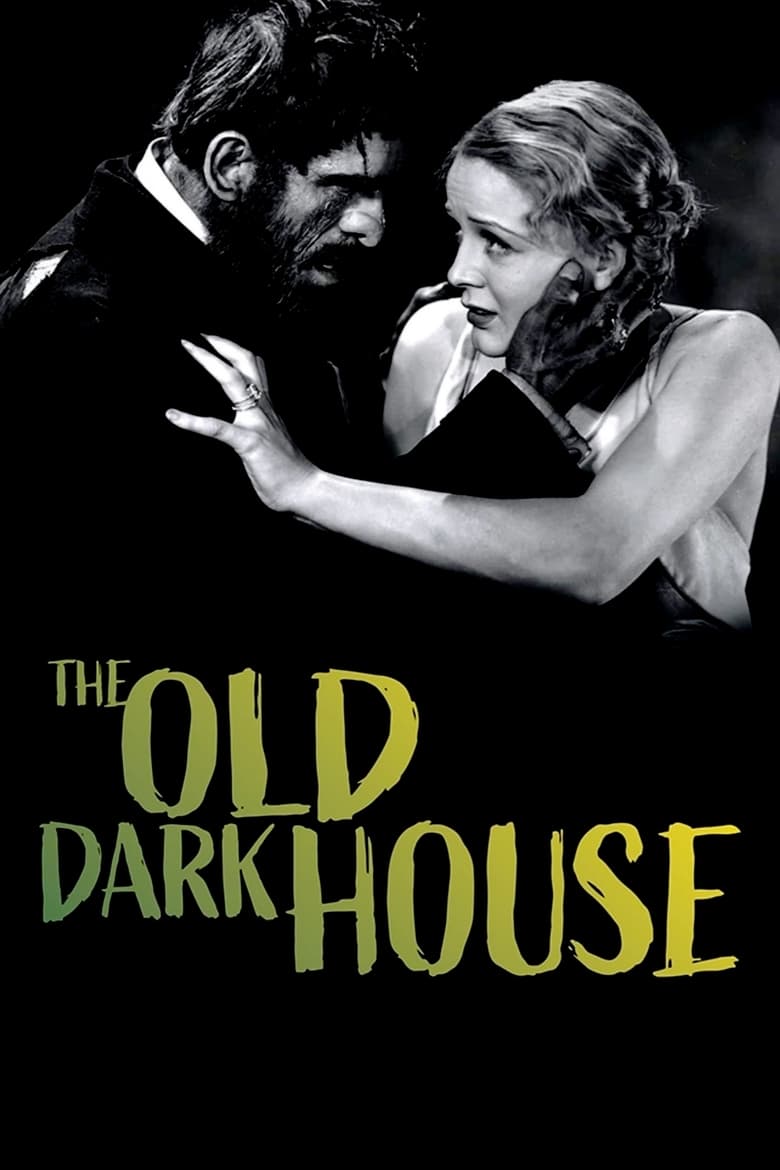
The Old Dark House
“Beware the night!”
In a remote region of Wales, five travelers beset by a relentless storm find shelter in an old mansion.
About The Old Dark House
Morgan is still the reason this movie works
The film opens with the perfectly British misfortune of being lost in a storm: Philip Waverton, his wife Margaret and their friend Roger Penderel find themselves taking refuge in an old Welsh house. It’s the sort of situation that promises both hospitality and trouble, and The Old Dark House wastes no time in making that tension the point of the evening.
James Whale directs the whole thing with a brisk economy — the film runs just seventy minutes — and that compactness helps. There’s no luxuriating; the house’s weirdness and the family's oddities are introduced quickly and allowed to collide, which keeps the film taut and, bafflingly, oddly warm. And then there’s Morgan. Boris Karloff plays the household’s mute butler, a man we’re explicitly warned about early on: Horace tells the travellers that Morgan drinks heavily and can be dangerous. If you remember one thing from The Old Dark House, it’s probably him — not because the movie builds a mystery around him, but because he keeps the story honest about how a household can both protect and imperil its guests.
Why Morgan matters
Start with the facts: Boris Karloff is listed as Morgan, the household’s mute butler. He’s introduced not as an enigma to be solved but as a practical hazard the other characters are told to be wary of — a description that tells you a lot about how the film treats danger.
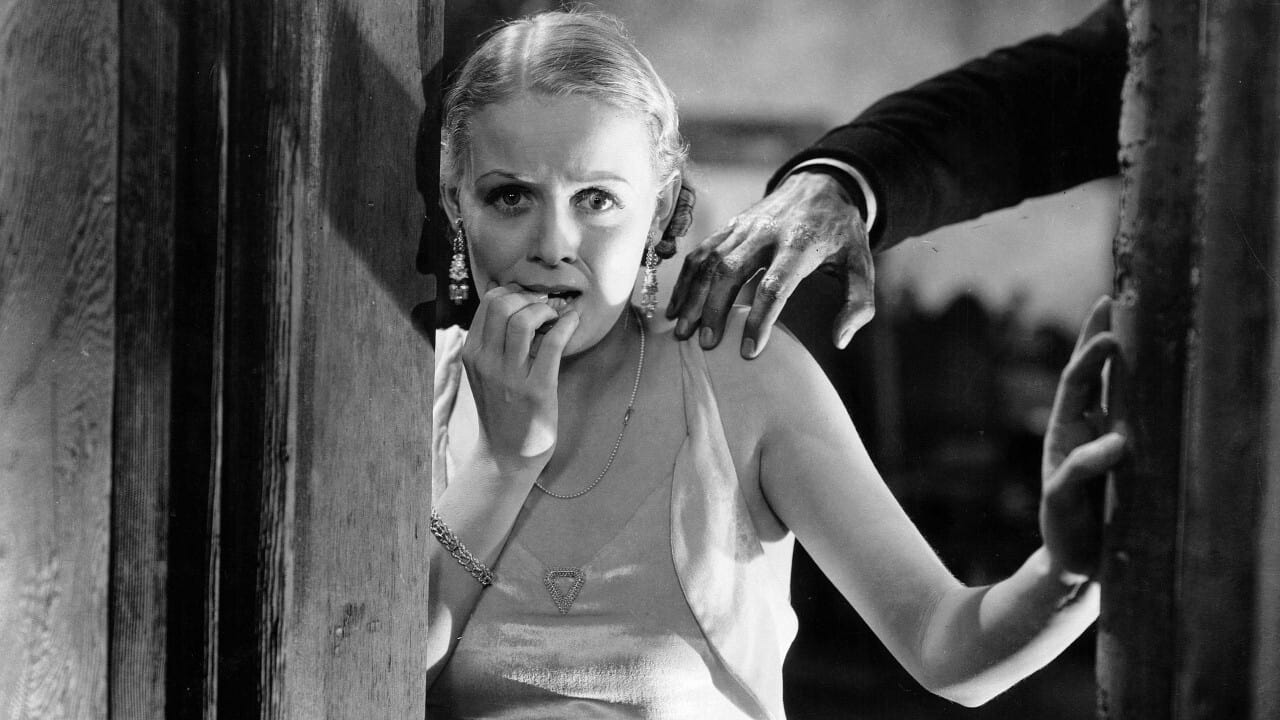
The danger is literal. When Morgan drinks and loses control he becomes a physical threat — he attacks Margaret in the main room and chases her up the stairs. The moment escalates when Philip throws a lamp at him, knocking him down; it’s a blunt, effective way of showing how volatility lives in the house’s mechanics, not just its locked rooms.
But Morgan isn’t one-note. The plot later turns on the fact that he has let Saul out of the locked room, which brings the family’s darker secrets into the open. And when the house faces its crisis, Morgan returns to the main room and frees the women hiding in a closet before taking Saul’s body upstairs. He’s both the spark and the clean-up crew.
That push-and-pull — dangerous and protective, unpredictable yet integral — is why Morgan matters. He doesn’t exist to be explained away; he’s the household’s living contradiction, the place where family obligations and menace meet.
The Old Dark House has more on its mind than the plot suggests
On the surface it’s a shelter-in-a-storm story: strangers find a house and are taken in. Underneath, the house constantly negotiates what shelter actually means. Is it safety, obligation, a trap or all three? The film keeps nudging at that question.
Family is threaded through every scene — not only in the formal sense of kinship but as inherited behaviour. Rebecca’s account of the Femm family as sinful and godless throws the household’s peculiar rules and secrets into relief; the family isn’t merely eccentric, it’s morally complicated, and the strangers’ presence forces those complications into daylight.
Love enters as a softer counterpoint. The romantic thread between Roger and Gladys — which ends with a proposal — is uncomplicated, immediate and oddly comforting amid the house’s tensions. It reminds us that human connection can feel urgent and simple even when the environment is noisy and dangerous.
So the film is quietly juggling three things: the idea of home as refuge, family as the source of buried dysfunction, and love as a spur to action. That combination gives the movie a weight it wears lightly.
The Old Dark House could not belong to any other decade
Released in 1932, The Old Dark House sits squarely in the early 1930s — an era when films could be compact, stagey and still wildly inventive about tone. The movie’s willingness to mix unease with lighter moments feels at home in that moment.
Its short running time and economical storytelling are also very of the period: there’s no padding, just an appetite for getting to the next character moment or twist. That rhythm reads as classic 1930s filmmaking rather than a modern pastiche.
And thematically it wears its decade: the anxieties about family reputation, moral judgment and shelter are the kinds of social concerns that films of the early 1930s often turned into small, intense dramas. Put simply: The Old Dark House is a product of 1932 in the best sense — it solves its problems in the way films then tended to, direct and unafraid of tonal shifts.
What has aged — and what hasn't
Some elements feel timeless: the central idea of a house that both protects and threatens still lands. Horace’s fear that the storm will trap everyone inside gives the plot a simple, credible engine that modern viewers can follow without fuss.
What reads as more dated are the moral pronouncements around the Femm family. Rebecca’s readiness to call the household sinful and to accuse Margaret of sin reflects attitudes that can come across as moralising by today’s standards. It’s part of the film’s texture, but it’s also a flavour of another era.
Meanwhile, the small romantic payoff between Gladys and Roger — she suggests living with him, later accepts a proposal — plays as straightforward and almost old-fashioned romance. For some viewers that will be charming; for others it may feel too neat.
Overall, the central questions about home and family survive the decades. The specifics of judgment and propriety are the bits that show their age; the drama’s core — people trying to shelter themselves and each other — still feels sharp.
Why The Old Dark House still matters
There are easier ways to describe this movie — 'a haunted house story' or 'a chiller with a twist' — but its staying power comes from the way ordinary characters are put into an extraordinary household. Strangers arrive in a storm and are given shelter by the Femms, a family whose eccentricities and secrets turn the evening into something combustible.
Warnings about Morgan, the mute butler who drinks heavily, punctuate the dinner-table chatter and keep the tension personal rather than supernatural. The film repeatedly returns to that warning; when Morgan becomes violent and later admits Saul from his locked room, the story’s dangers feel less like coincidence and more like family business gone wrong.
The chaos culminates in a violent set-piece: Saul sets a curtain alight, a fight sends people falling from a landing, and the household’s contradictions expose themselves. By morning the storm has passed and the damage is, narratively speaking, contained — which makes the film feel like a compact moral fable rather than a sprawling epic.
Finally, the lighter threads — the romance between Roger and Gladys, the practical decision to fetch help — round the film out. Those small human touches, set against the oddness of the Femms, are why the movie still gives viewers something to remember.
Does The Old Dark House still hold up?
Yes — with caveats. The Old Dark House is brief, direct and uneven in a way that feels intentional rather than careless. Its economy (seventy minutes) and James Whale’s steady guidance help the film keep moving from one character beat to the next.
If you’re watching for atmosphere and a strong central presence, Morgan — played by Boris Karloff — is the film’s anchor. The household warning about him, his drunken attack on Margaret and the later revelation that he’s let Saul out are the moments that spline the plot together; he’s the element that makes the house feel alive and dangerous.
At the same time, the film is rooted in concerns about home and family, and those threads still land. Horace’s worry about being trapped, the Femm family’s inward-looking secrets, and the tidy romantic wrap-up between Roger and Gladys all contribute to a compact piece of storytelling that rewards patient viewers. So should you watch it? If you’re curious about early 1930s tone-shifting — a film that can be funny, odd and alarming in quick succession — it’s worth the short investment. Bring a taste for small-cast dynamics and let Morgan do most of the heavy lifting; he’s the reason the house never quite lets you settle.