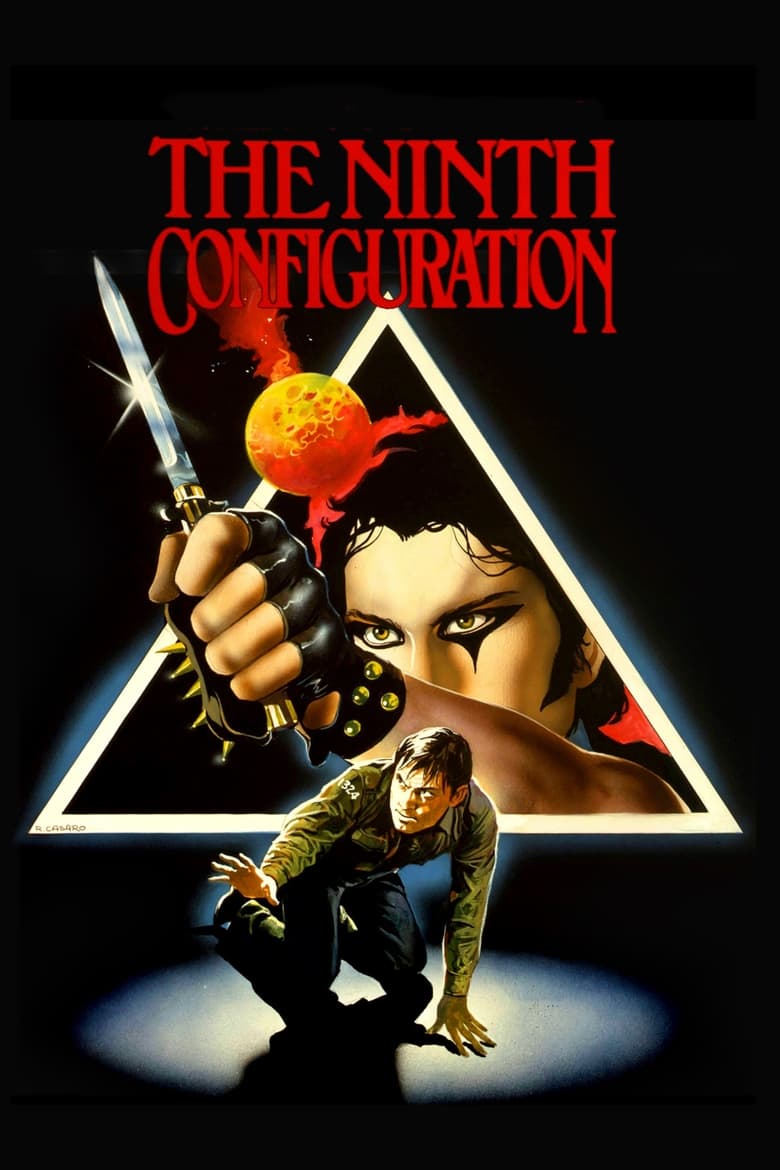
The Ninth Configuration
“How do you fight a war called madness?”
Army psychiatrist Colonel Kane is posted to a secluded gothic castle housing a military asylum. With a reserved calm, he indulges the inmates' delusions, allowing them free rein to express their fantasies.
About The Ninth Configuration
What makes The Ninth Configuration worth revisiting
Imagine a castle in the Pacific Northwest repurposed as an asylum for military personnel — not gothic romance, but government business. That is the film’s basecamp: a place for damaged soldiers, oddball doctors and arguments you didn’t know you needed to overhear.
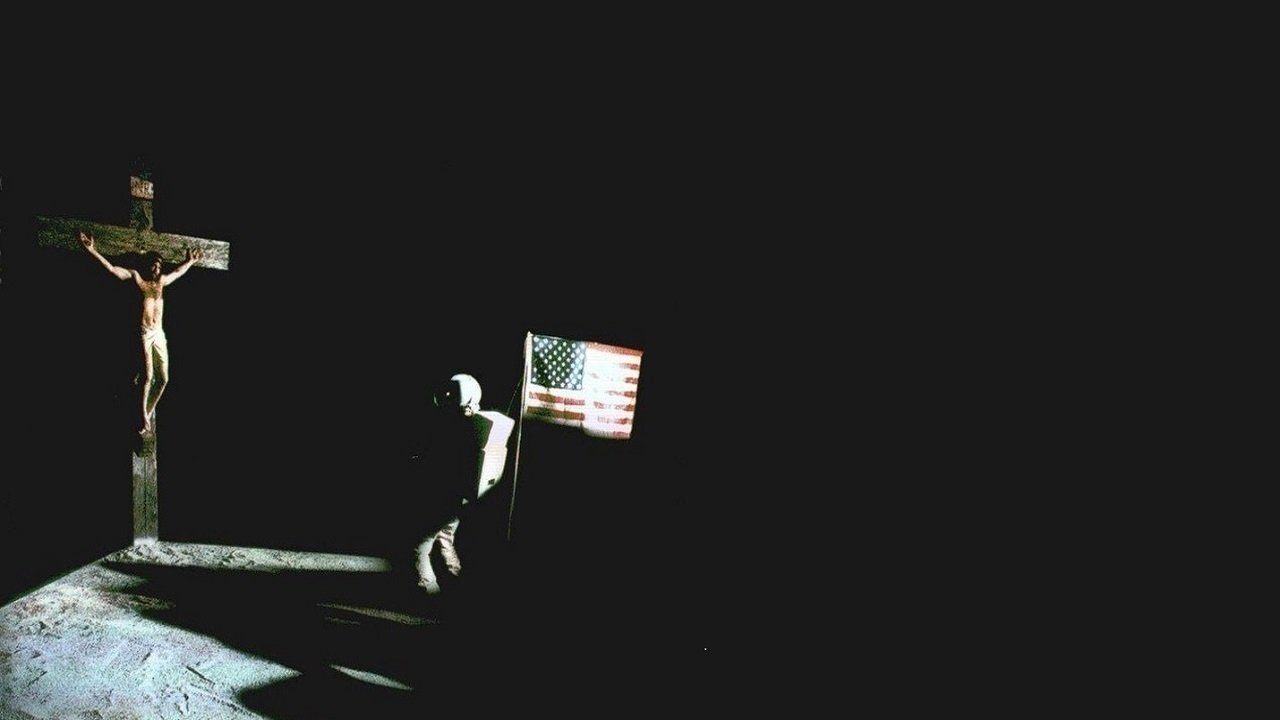
William Peter Blatty directed the thing, and he wasn’t interested in tidy genre labels. The Ninth Configuration sits somewhere between a comedy and a sort of horror — riffing on madness while letting questions about faith and sacrifice take the floor. At the story’s heart are two figures you’ll remember long after the credits: Colonel Vincent Kane (played by Stacy Keach), ostensibly the healer, and Captain Billy Cutshaw, the astronaut who came apart after aborting a Moon launch. Their conversations — and the ways they test one another — are the film’s stubborn engine.
The idea that sets The Ninth Configuration in motion
Don’t expect a neat thriller. The Ninth Configuration opens less with a mystery to be solved and more with a curious arrangement: army psychiatrists keeping up a charade so a troubled man can believe he’s someone else.
Into that arrangement arrives Captain Billy Cutshaw, an astronaut who walked away from a Moon launch and has been reduced, for now, to flashes and refusals. He gives Colonel Kane a St. Christopher medal and asks Kane, if he dies first, to send a sign proving there’s an afterlife.
Kane, meanwhile, is taunted by a new patient who calls him “Killer Kane,” and the film leans on that tension — who is caring for whom, and why? The setup works because it places deep philosophical questions inside the small, claustrophobic rituals of a military hospital.
The oddest prop of all is a promise: a tiny, physical test of belief. A Saint Christopher’s medal later turns into a short, sharp proof that ripples out from the private to the existential.
Why Colonel Vincent Kane matters
Colonel Vincent Kane is not an obvious protagonist. Stacy Keach plays him, and the script makes him a walking contradiction: a self‑declared healer who carries dreams — and crimes — he cannot shake.
The film slowly reveals that Kane is haunted by nightmares of his brother, Vincent, a dead patient and murderer. That image isn’t just atmosphere; it’s the psychological wound that drives Kane’s choices.
We learn the backstory in a neat, tragic knot: when his brother Hudson Fell was recalled to America, Kane received the dispatch by mistake and assumed his brother’s identity. He remade himself as a healer, as if stepping into the role could atone for something darker.
There’s something stubborn about a character who chooses to repair others because he can’t forgive himself. Kane matters because the movie continually asks whether redemption can be performed — or if it’s always a personal illusion.
The Ninth Configuration has more on its mind than the plot suggests
On paper the film is about military patients and eccentric therapy; under the paper it turns into a debate club about humanity. The Ninth Configuration keeps circling back to whether people are capable of true goodness.
Authority is another recurring note. The army, the doctors, the assumed roles — these structures are both shelter and cage. The charade that allows Kane to impersonate his brother is an extreme example of how institutions bend identity.
Mortality is never background noise. The astronaut who fled the Moon, the men who have seen violence, the conversations about sacrifice — death and what might come after are the questions everyone is skirting. At its bluntest, the film offers a specific argument: Kane suggests that acts of selfless sacrifice point toward something larger than random chance. Whether you buy that or not is the point; the movie wants you to have the argument alongside its characters.
The Ninth Configuration could not belong to any other decade
Released in 1980, The Ninth Configuration arrives at the cusp of a new decade but still carries late‑70s sensibilities: uncomfortable moral questions dressed up in genre clothing.
That moment matters. The film’s willingness to mix comedy, horror and earnest theological debate is very much of its time — a period when filmmakers were ready to experiment with tone in unexpected combinations.
It’s not nostalgia for style that roots the film in its era; it’s how the movie treats institutions and authority at a time when public trust in them was complicated and changing.
So while you might notice certain dated beats on first viewing, what really marks this as an ’80s picture is its appetite for argument — and its refusal to make the argument convenient.
What has aged — and what hasn't
Some elements still hit. The film’s exploration of identity — a man pretending to be his brother, attempting to heal as recompense — reads as a compelling psychological shape even now. That central twist keeps the emotional stakes honest.
The nightmares and flashbacks that haunt Kane retain their purpose: they’re not cheap shocks, they’re the engine of his guilt. The idea that someone might take on a caretaker role to atone for violence remains resonant.
Where it’s trickier is tone. The movie moves between dark comedy and philosophical seriousness in ways that can feel abrupt to modern viewers who expect clearer genre boundaries.
Still, if you come for the questions rather than a smooth genre ride, the film’s core concerns — responsibility, penance and whether sacrifice proves anything — continue to provoke.
Why The Ninth Configuration still matters
The Ninth Configuration lingers in people’s minds because it does something most films avoid: it stages a prolonged conversation about faith inside a bizarrely specific set — a military asylum in the Pacific Northwest — and lets that conversation do the work.
The presence of Captain Billy Cutshaw, the astronaut who walked away from a Moon launch, gives the film a useful symbol: a man undone by isolation and terror. His arc makes the philosophical questions feel lived in, not theoretical.
Blatty fills the cast with eccentric figures — from a dog‑theatre‑loving lieutenant to patients who both mock and illuminate the main debates. Those colourful types keep the film from becoming a two‑handed lecture. At its end the film still manages a small miracle: a physical token — the Saint Christopher’s medal — becomes a shorthand for the larger question of whether goodness ever needs proof. That tidy, unsettling gesture is the sort of thing people remember.
Does The Ninth Configuration still hold up?
Yes — if you’re willing to be argued with. The Ninth Configuration asks large questions about humanity, authority and mortality from inside a very particular and sometimes strange environment: a military asylum where an astronaut, a healer and a chorus of eccentric patients collide.
Stacy Keach’s Colonel Kane is central to whether the movie works for you; the plot hinges on his decision to become a healer, a choice rooted in a traumatic past and an odd attempt at atonement. That moral experiment drives the narrative forward until the film forces its own test: can sacrifice be evidence?
The film’s final exchange with the Saint Christopher’s medal — the physical sign that arrives after Kane’s self-sacrificial act — is the sort of conclusion that will either feel satisfying or disappointingly neat, depending on how literal you are about proof.
So watch it if you like movies that are willing to be messy and to leave you arguing in the car on the way home. The Ninth Configuration isn’t comfortable entertainment; it’s a provocation in a castle, and for some evenings that’s precisely what cinema should be.