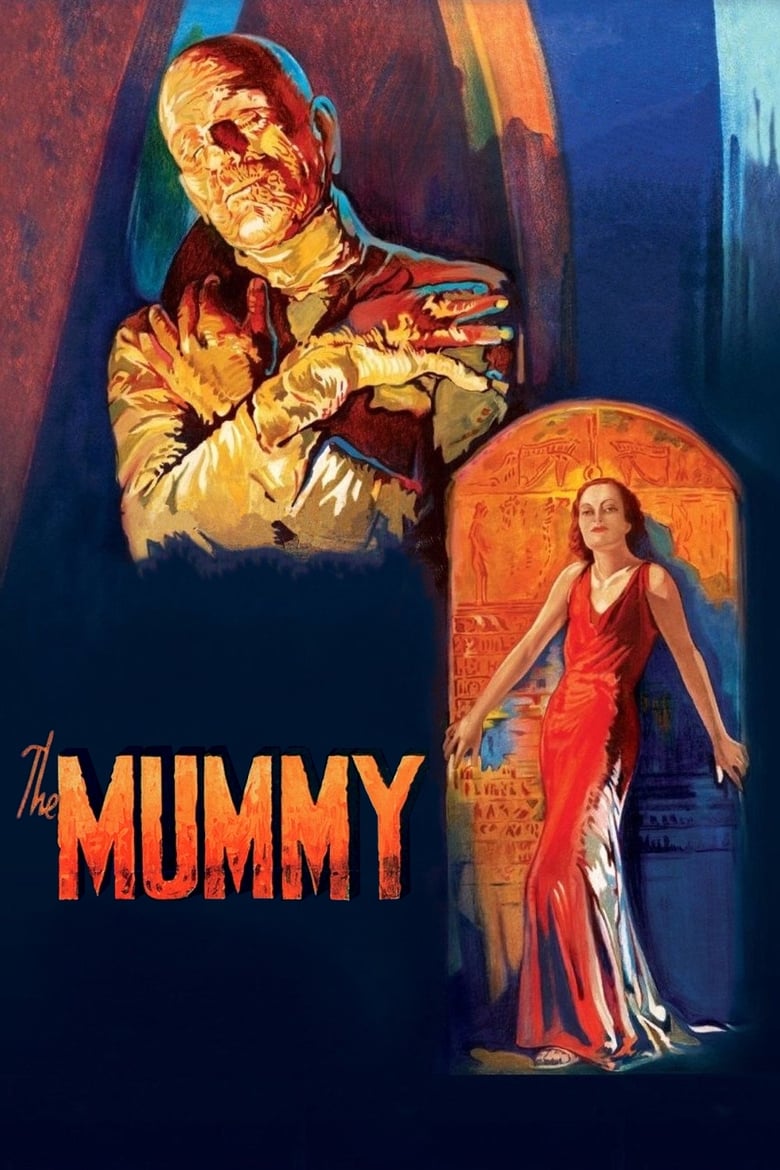
The Mummy
“It comes to life!”
An ancient Egyptian priest named Imhotep is revived when a British archaeological expedition finds his mummy and one of the researchers accidentally reads an ancient life-giving spell. Imhotep escapes from the field site and searches for the reincarnation of the soul of his lover.
About The Mummy
Imhotep is still the reason this movie works
You remember the face before you remember the plot. The film opens with an archaeological find: the mummy of Imhotep — an ancient high priest — is dug from the sand, and that single discovery ricochets through everything that follows.
Boris Karloff is the name on the poster and the presence at the centre, but Karl Freund’s short, focused picture (it runs just 73 minutes) is built around what Imhotep represents rather than spectacle. The movie is economical, direct and stubbornly single-minded. What keeps people talking about The Mummy isn’t a string of set-pieces. It’s the idea of a buried life refusing to stay buried, and how that refusal collides with modern lives who think they understand, catalogue and contain the past.
The idea that sets The Mummy in motion
The engine is simple and stubborn: archaeologists unearth a burial that was never meant to be a resting place. Dr Muller notices the tell-tale signs — the viscera weren’t removed and the body struggled before being sealed — and that small observation turns polite curiosity into genuine dread.
Curiosity curdles into calamity when Sir Joseph’s assistant uncovers a sealed casket containing the Scroll of Thoth. The scroll does something old horror loves: it gives words power. Read aloud, those words bring Imhotep back.
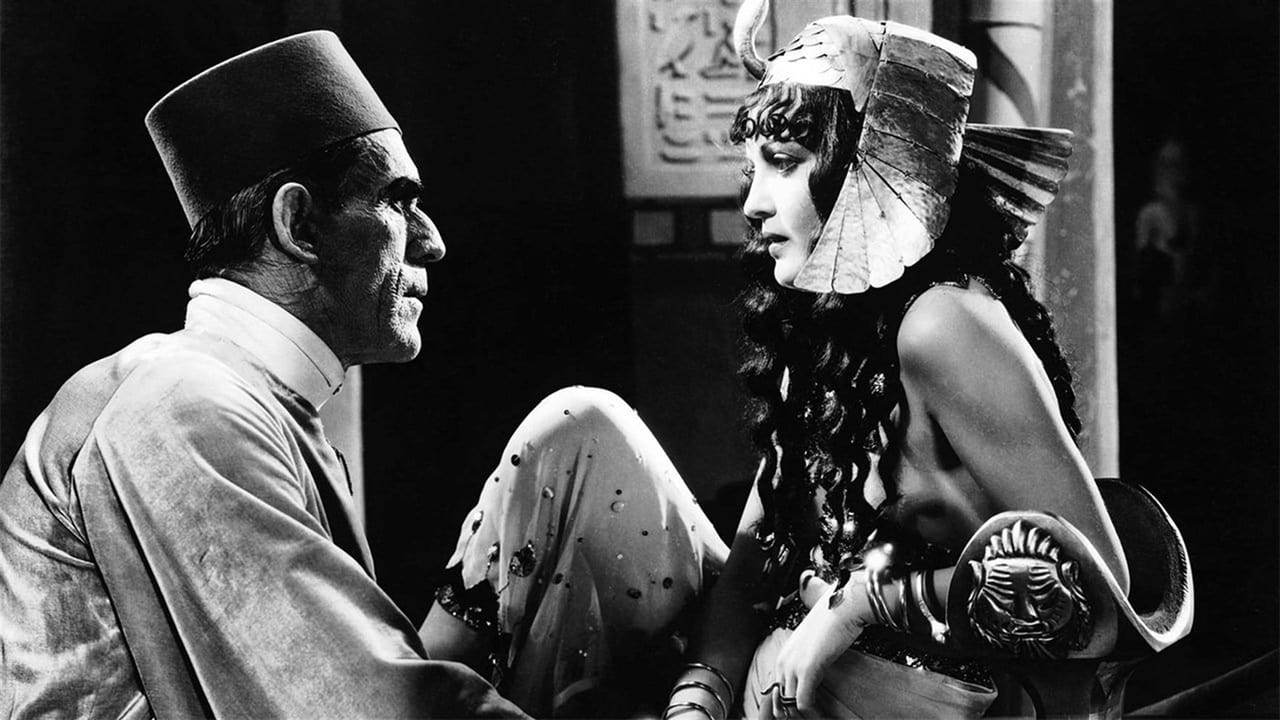
Rather than immediately ramping into a chase, the film lets Imhotep slip into a disguise and modern life as Ardath Bey. He shows the younger archaeologists where to dig, the tomb is opened and the treasures move to the museum — after which the stranger quietly disappears, and the ripple effects of that moment begin to spread.
The setup also keeps a dark personal edge. When Imhotep finally reveals his history and his crime — an attempt to reunite with a buried lover — the danger becomes intimate. The horror isn’t just ancient curse; it’s a man trying to remake a person he has already lost.
Why Imhotep matters
Imhotep is not just a spooky return from the past. He’s a very specific kind of refusal: someone who cannot accept the boundaries of life and death. That clarity makes him oddly memorable — and the plot keeps bending to show the lengths he’ll go to.
The film establishes his horror quietly at first: the discovery in 1921 implies a punishment gone wrong, a living burial rather than a clean death. That detail gives Imhotep a different texture from a random monster — he is a figure with a backstory and a transgression.
He’s also adaptable. Ten years after the tomb, he has taken the name Ardath Bey and moved among modern people, using learned manners and knowledge to hide the thing underneath. It turns the threat from brute force into something more unnerving: a presence that can charm and then control.
And control is the point. When the scroll is threatened, Imhotep moves ruthlessly — killing, hypnotising and turning servants into instruments — because his project isn’t conquest for conquest’s sake. It’s an attempt to rebuild the life he lost. That obsession is what makes him stick in the memory.
The Mummy has more on its mind than the plot suggests
On the surface it’s horror and fantasy: curses, scrolls and an ancient ruler who won’t stay dead. Below that, the film keeps returning to a cluster of human concerns — parental protection, loss and the stubborn fact of mortality.
Parental protection is subtle but present. The film’s archaeologists are guardians of the past in a way: they open tombs to preserve and study, and the consequences of opening something that should remain buried read as a kind of childlike mistake with adult costs.
Loss and the refusal to accept it are the real motor. Imhotep’s crime was trying to reverse death — to take a lover out of the grave and insist she be his forever. That’s different from wanting power; it’s grief turned into an obsession with denying an ending. And the film does not romanticise immortality. The final unmaking — the scroll burning and Imhotep’s body turning to dust — is a blunt, almost moral end. It refuses the fantasy that one can simply live forever without consequence.
The Mummy could not belong to any other decade
This is emphatically a 1932 movie. The release year matters because the film’s length and focus reflect a cinema that prized narrative economy: tell the eerie story, make the point and move on.
The Mummy sits in the overlap between horror and fantasy common to that moment. It doesn’t pad; it presents a neat, self-contained moral tale about the past colliding with the present.
That compactness is part of the film’s personality. There’s a confidence in keeping the story tight and centered on one troubling figure — a mood that reads very much of early ’30s storytelling choices.
Seen that way, the movie feels native to its decade: concise, idea-driven and willing to let a single concept — the returned lover, the cursed scroll — shape everything that follows.
Why The Mummy still matters
There are practical story beats that lodge in the mind: the moment the Scroll of Thoth is read and Imhotep rises is a neat, awful pivot — one word spoken and the past walks upright into the present.
But it’s Imhotep’s quiet reinvention as Ardath Bey, slipping into modern life, that gives the film staying power. He’s not merely a corpse that lurches; he becomes a presence who can move among people, making the threat more unsettling and more narratively interesting.
The film’s emotional highlight is its romance-turned-obsession: Imhotep’s attempt to reclaim his buried lover turns a supernatural plot into a human grief story. That linkage — horror as a corrupted form of love — is why the movie still has an audience.
And when all the schemes are undone — the desperate appeal to a goddess and the burning of the scroll — the ending is satisfyingly final. It gives the film a clean, dramatic resolution that sits neatly alongside its opening shock, so the whole thing feels like a complete, memorable package.
Does The Mummy still hold up?
Short answer: yes — if you’re interested in a compact old-school horror that centres on character and idea rather than endless set-pieces. The film is anchored around Imhotep and a few decisive narrative moves: the discovery, the reading of the scroll and the later revelation that the polite scholar is something else entirely.
It asks recognisable questions — can you stall loss, what price do you pay for denying death — and it answers them in a way that feels deliberately tidy. The movie’s 73-minute runtime means there’s no flab; everything exists to push the central conflict forward.
If you’re watching for mood, neat plotting and a story that ties supernatural belief to very human grief, The Mummy still delivers. There are no modern frills, just a clear through-line about a man who refuses to accept an ending and the people who have to stop him. So yes: watch it. Treat it as a slim, clever piece of old horror cinema — a film where one obsessive character does nearly all the heavy lifting. It’s proof that sometimes a single idea, fiercely pursued, is more unnerving than a dozen jump-scares.