
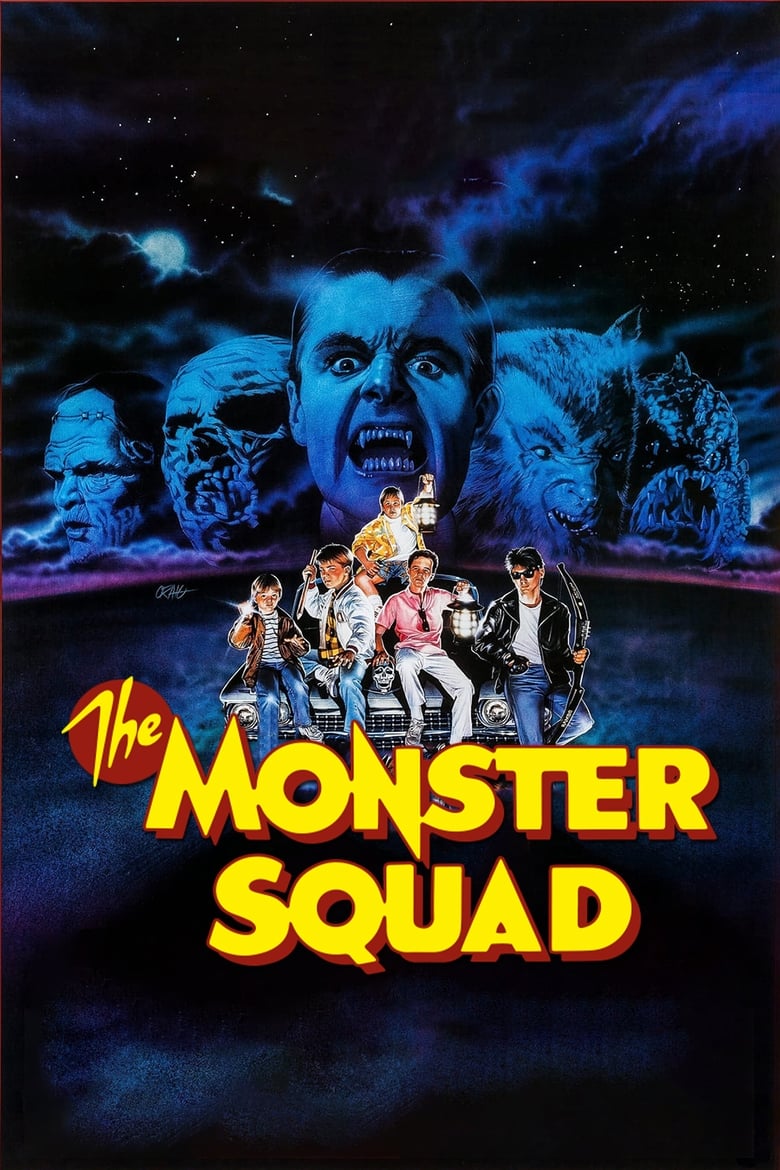
The Monster Squad
“You know who to call when you have ghosts. But who do you call when you have monsters?”
Count Dracula returns to the world of humans accompanied by Frankenstein's Monster, the Wolfman, the Mummy, and the Gillman. The uglies are in search of a powerful amulet that will grant them the ability to rule the world. A group of horror-loving heroes are the only ones daring to stand in their way.
About The Monster Squad
Why The Monster Squad is still worth talking about
There are movies you remember because of one image. This one gives you a dozen: kids with badges, a crate of monsters, and a Count who wants a relic that could let him take over the world. At its centre is a club of pre‑teens who reverently memorise the Universal monster movies they adore — and then discover those movies’ subjects standing in their town.
Fred Dekker directs the whole thing like a brisk, no‑fat midnight show: it’s 82 minutes long, economical and eager to get on with its business. That economy suits the premise — a children’s fantasy that’s part comedy horror, part crossover of every classic creature you can name — and it never overstays its welcome. If you like the idea of Duncan Regehr’s Count Dracula squaring off against Tom Noonan’s reluctant monster, or of small‑town kids suddenly having to behave like actual heroes, there’s a reason this one still turns heads. It puts familiar monsters in an unfamiliar neighbourhood and trusts that the collision will do the rest.
The idea that sets The Monster Squad in motion
The film works off two simple premises that dovetail neatly. The first is a single bit of lore: once every century, when good and evil balance, an otherwise indestructible amulet becomes vulnerable. That ticking window is the engine — it turns a monster movie into a race against time.
The second is the Squad themselves: a band of kids who idolise the monsters and treat them like the celebrities from their favourite films. That affection matters, because it lets the story do something mild‑ly radical — to treat some monsters as beings who can be known and, crucially, changed.
That’s why the switch of allegiance by Frankenstein’s monster is more than neat plotting. When the boys recognise he isn’t evil and he chooses them over Dracula, the stakes shift from a simple monster‑hunt to something about understanding and responsibility.
Why Count Dracula matters
Count Dracula functions as the obvious threat — the villain with a plan. The film makes his aim blunt and old‑fashioned: get the amulet and bend the world to his will. That straight‑forwardness gives the kids something real to fight against, which a children’s story needs.
Dekker opens the film with a Van Helsing prelude that frames Dracula as a lingering old enemy, once fought and not finally beaten. That backstory turns a suburban invasion into a continuation of a much older, mythic struggle — and gives the children’s quest weight beyond mere playground bravery.
Dracula’s cruelty is specific rather than abstract: when he wrecks the Squad’s clubhouse, he doesn’t just attack property, he breaks the kids’ safe place and drags adult protectors — like Detective Del Crenshaw — into the conflict. It’s an action that reminds the audience why family and community matter here.
Finally, Dracula’s presence sharpens the film’s emotional choices. Attempts to solve the crisis with a borrowed adult or a substitute (the failed incantation read by Lisa) fall short, and it’s only when the Squad looks inward — to Phoebe and their own courage — that the threat is confronted. That’s what makes Dracula more than a monster-of-the-week: he’s the test the children must pass.
The Monster Squad has more on its mind than the plot suggests
On its face it’s a monsters‑vs‑kids movie. Underneath, it’s about belief — both in the supernatural and in each other. The children’s devotion to classic monsters starts as game, but becomes a framework for recognising that fear can be met with knowledge and loyalty.
There’s a recurring concern with home and safety. The clubhouse, the Crenshaw family, and the idea of fighting to keep a neighbourhood safe give the film a domestic heartbeat: these are kids defending a bundle of small, cherished things, not a city or empire.
Friendship is the engine. The Squad’s effectiveness comes from their particular mix of personalities — the little details that make them a team — and the story asks the audience to value those ties as much as any heroic deed. Family sits beside friendship as a stabiliser. When parents and detectives are pulled in, the children are not abandoned; the adults’ involvement complicates the stakes and underlines that heroism here is communal rather than solitary.
The Monster Squad could not belong to any other decade
Released in 1987, The Monster Squad sits squarely in the 1980s appetite for children’s adventures that also leaned into darker genres. It’s the kind of film that happily blends family comedy with genuine horror elements — a crossover move very much in tune with the era.
The decade loved stories where kids were the ones left to sort things out, and this film uses that premise without apology. That disposition — give children the agency, make the stakes big, and then let them surprise you — is a defining mood of many late‑80s pictures.
It’s not nostalgia for nostalgia’s sake. Being from 1987 here means the film is concise, direct and comfortable mixing tonal registers: spooky and funny in quick succession, which keeps the pace brisk and the audience engaged.
So while it shares its year with many other 80s titles, The Monster Squad’s particular blend of kid‑club earnestness and reverence for classic monsters is very much of that moment.
What has aged — and what hasn't
Some elements remain surprisingly clean: the core idea of a group of kids who idolise Universal monsters still reads as a very human spark. That single conceit keeps the film affectionate rather than mocking — the boys’ enthusiasm is the movie’s heartbeat, and that enthusiasm still works.
Themes of home, friendship and family feel durable. Watching the Squad defend a clubhouse and stand with one another still lands emotionally, because those are basic, recognisable loyalties.
Certain surface choices are more of their time. The presence of the vampiric consorts and the way some plot shortcuts are handled can feel like a late‑80s storytelling shorthand. They don’t fatally damage the film, but they’ll read differently to a modern audience that expects nuance in places the movie doesn’t linger.
Overall, the emotional throughlines — kids learning responsibility, a small community under threat, and the unexpected kindness between Phoebe and Frankenstein’s monster — are what keep the picture watchable now.
Why The Monster Squad still matters
The movie endures because it stitches together two pleasures: a kids’ club that feels real and a parade of classic monsters that feel generically familiar. That combination makes it easy to care — you want the club to win because you understand what they’re protecting.
At the plot level, the Van Helsing diary and the amulet of concentrated goodness provide a tidy, mythic throughline: the children must find the relic and use it with an incantation to close a hole between worlds. That fairy‑tale logic gives the film structure and a clear finish line.
On a more emotional level, the friendship with Frankenstein’s monster is crucial. The creature’s reluctance to serve Dracula, Phoebe’s kindness toward him, and his eventual choice to help the Squad turn a monster movie trope into a small act of human connection. And there are moments of proper payoff: Dracula’s reaction to the Squad’s meddling, the clubhouse being destroyed and adults being forced into the situation, Phoebe completing the incantation — these beats all give the story shape and a sense of earned sacrifice, which is why the film keeps getting pulled out of the vault by people who loved it when they were kids.
Does The Monster Squad still hold up?
Yes — with a caveat. The Monster Squad is short, sharp and sincere: Fred Dekker’s 82‑minute film from 1987 moves briskly and has a clear, heartfelt centre. If you respond to stories about kids taking responsibility and protecting a small, beloved world, this will still land.
Count Dracula is what drives the danger, and the plot device — a once‑a‑century vulnerability in an amulet — keeps the action tense and focused. The emotional payoffs hinge on small choices: Frankenstein’s monster siding with the children, Phoebe finishing the incantation, and the Squad refusing to back down.
There are moments that feel of their time, and the film isn’t trying to be subtle about its thrills. But those choices also give it character: it’s an unapologetic kids’ fantasy that isn’t embarrassed by its monsters or by expecting children to be the ones who save the day.
If you’re in the mood for an affectionate mash‑up of old‑school monsters and earnest teen heroism — and you don’t need every plot corner smoothed into modern polish — The Monster Squad is worth a watch. It’s a reminder that courage doesn’t have to be grand to be real: sometimes it’s a handful of kids, a torn clubhouse and a business card that says who they are.