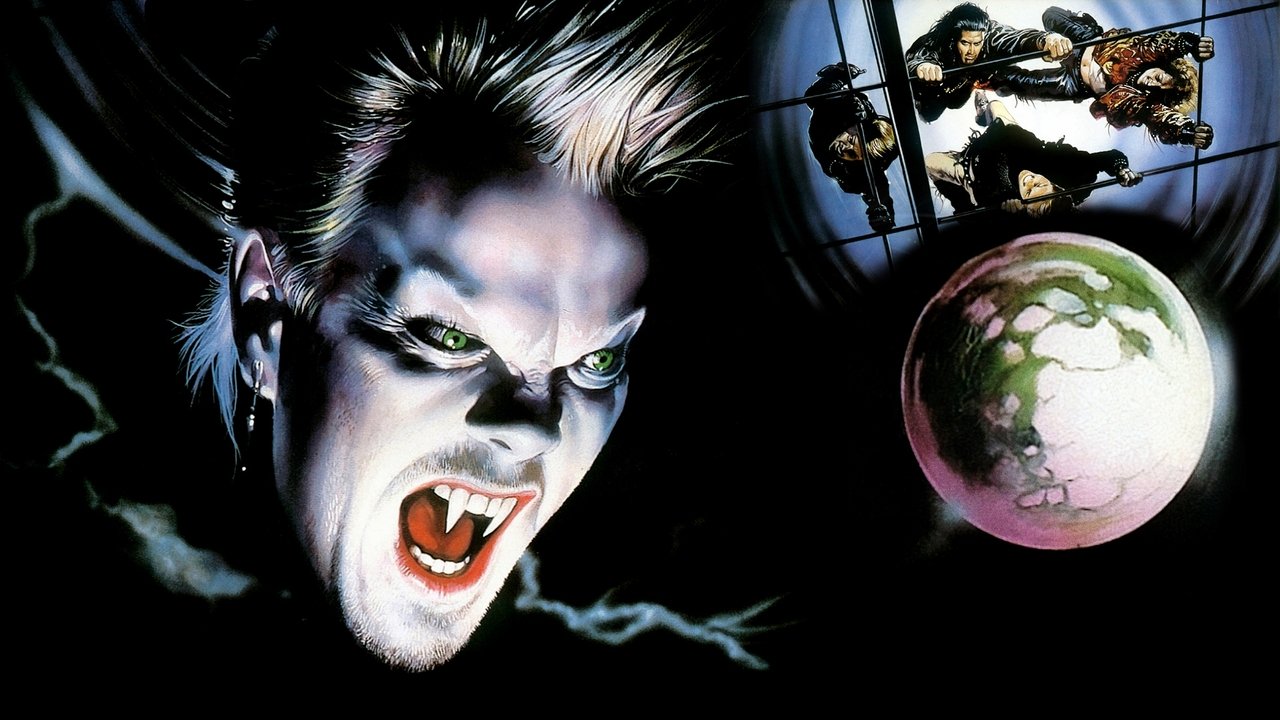
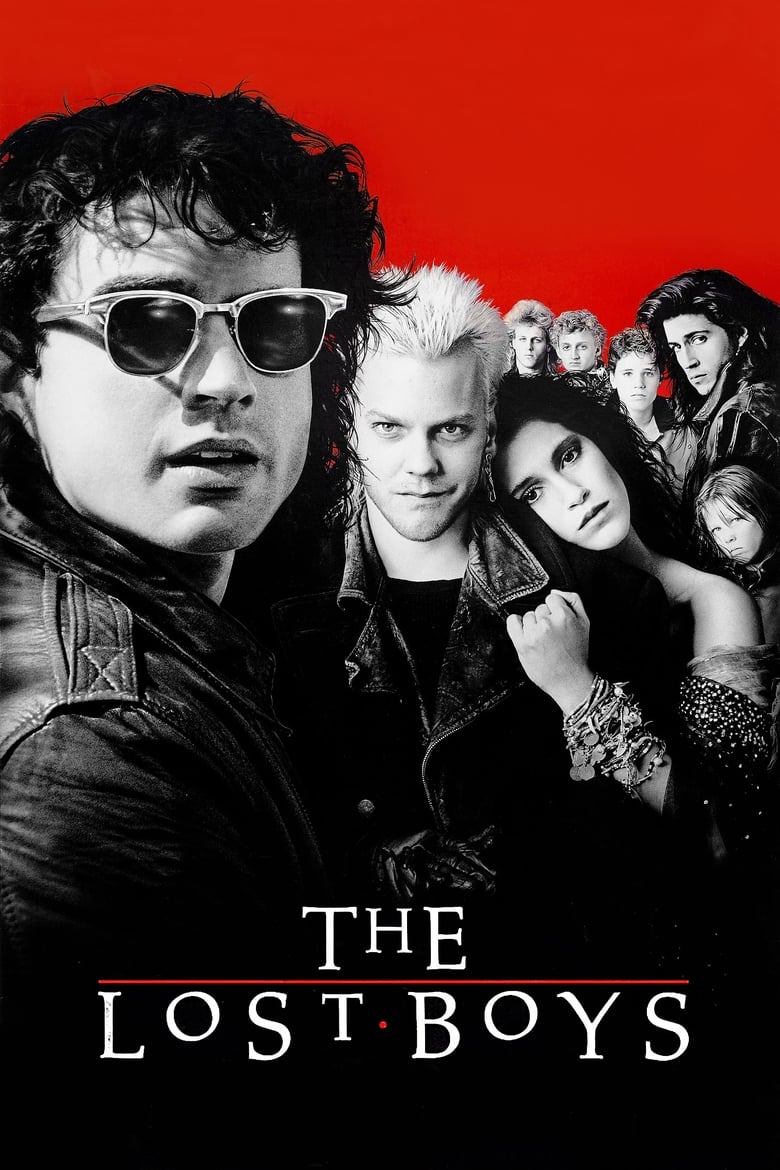
The Lost Boys
“Sleep all day. Party all night. Never grow old. Never die. It's fun to be a vampire.”
When an unsuspecting town newcomer is drawn to local blood fiends, the Frog brothers and other unlikely heroes gear up to rescue him.
About The Lost Boys
What makes The Lost Boys worth revisiting
People come back to The Lost Boys because it layers familiar teen-movie moves — a family relocation, a crush on the boardwalk, the awkward new-kid dynamic — over something stranger and nastier. Michael Emerson, his younger brother Sam and their recently divorced mother land in Santa Carla and the film wastes no time letting the town’s edge show through.
Joel Schumacher keeps the pace tight: at 97 minutes the film rarely lingers where it doesn’t need to, which lets the story hop from curiosity to menace fast. The set-up gives the leads space to become shorthand for the movie’s central choices — attraction, danger, loyalty — and those choices land quickly because the cast populate them with unmistakable energy. Underneath the surface there are clear themes — family, home and safety, courage and parental protection — so The Lost Boys never feels like it’s just playing at scares. The vampiric threat is the engine; everything else is what it threatens. That mix is why it remains an easy film to recommend to someone who wants a sharp, character-driven genre ride.
The idea that sets The Lost Boys in motion
The movie starts with a move: Michael, Sam and their mum uproot to Santa Carla, and that new town functions as the story’s faultline. It’s a small, closed place where strangers get noticed and where new attachments form quickly.
Sam’s curiosity pulls him into the town’s subculture — he meets the self-styled vampire hunters Edgar and Alan Frog at the comic-book shop — and that introduces the film’s other genre logic: teenage territory crossed with supernatural rules.
Michael, meanwhile, meets Star on the boardwalk and is pulled into a crowd led by David. That attraction is the hinge: romantic interest becomes temptation, and temptation becomes the thing that reveals what the gang really is.
The basic setup works because the film keeps the stakes readable. Ordinary family concerns — fitting in, keeping the kids safe — sit beside very particular vampire mechanics: Michael’s changes, the questions about reflection and garlic, and the idea that killing the head vampire might reverse what’s been done.
Why Michael Emerson matters
Michael is the movie’s nervous centre: a teenager who arrives in a new town, chases a girl and then discovers that the price of fitting in might be his humanity. Jason Patric plays him, but it’s the choices the character makes — who he trusts, what he resists — that carry the emotional weight.
He’s memorable because his arc moves in uncomfortable, believable steps. First there’s the boardwalk crush on Star, then the dare to keep up with David’s gang, and then the moments where small, creepy changes make ordinary life feel wrong: food that revolts him, light that hurts, reflections that fade.
Those details matter because they turn Michael from a typical teen into someone the family must fight for. He doesn’t just need rescue; his situation forces the people around him — Sam, their mum, Grandpa, the Frog brothers — to act. That’s where the film invests its drama.
And crucially, Michael becomes the one who chooses heroism. When he leads Sam and the Frog brothers into the gang’s lair and later takes on David, the plot’s theatrical vampire beats are doing something simple but satisfying: they make a teenager the centre of a family’s resistance.
The Lost Boys has more on its mind than the plot suggests
On the surface it’s a vampire story about teenagers and temptation. Underneath it’s preoccupied with family and the fear that the things you love can be taken or transformed. The movie repeatedly returns to the idea of people being pulled away from home and the struggle to pull them back.
Parental protection is foregrounded: Lucy’s decisions, Grandpa’s eccentric watchfulness and Sam’s determination to save his brother all speak to a film that treats family as an active battlefield rather than a warm backdrop.
Heroism here is domestic as much as it is physical. The boys assemble holy water, stakes and a longbow, but those weapons are only effective because they’re defending a home and the people inside it. Courage in The Lost Boys is about refusing the easy seduction of the gang in order to keep a family intact. There’s also a quieter idea of loss threaded through the story — what happens if a loved one changes beyond recognition — and that gives the vampire plot a sharper emotional edge than a straight monster movie would have. The head vampire’s plan to manufacture a vampire family makes that threat literal: it isn’t just bodies being taken, it’s a family being remade.
The Lost Boys could not belong to any other decade
Released in 1987, The Lost Boys wears its decade in the way it mixes teen melodrama with genre pulp; there’s an almost confident lack of shame about being a scary, fun movie at the same time. That combination — youth culture plus genre — was a distinctive strand of 1980s cinema.
The film’s brisk running time keeps things lean and cinematic in an era when studios liked high-concept pitches that could be sold quickly: a seaside town, a gang of dangerous kids, and a family caught in between. It feels like a movie built to be experienced in one sitting and to leave a clear, slightly thrilling impression.
There’s also an energetic approach to character types that feels period-appropriate: the tough, charismatic gang leader, the earnest little brother with a plan, the slightly weary single parent. Those archetypes help the film move fast while allowing the genre elements to do their work.
Put simply: The Lost Boys is a product of 1987 that uses its decade’s appetite for mixing tone and audience — teen and horror — to create something that still reads as bold rather than merely nostalgic.
What has aged — and what hasn't
What still works: the basic family story and the way small domestic choices ramp up the stakes. The move to Santa Carla, Sam meeting Edgar and Alan Frog, and the simple fact of a brother trying to save another are all narrative bones that feel direct and immediate today. Those elements don’t rely on period detail to land.
The vampire mechanics — Michael’s aversion to light, his loss of reflection, the rule that killing the head vampire can reverse transformations — keep the supernatural threat clear. That clarity helps modern viewers follow consequences and moral choices without needing a glossary.
The film’s set-piece logic also endures: the daytime raid on the gang’s lair, the nighttime break-in at the Emerson home and the desperate fight that follows are concise sequences that still produce tension. When the stakes are personal — a family under siege — the drama doesn’t feel like a relic.
On the other hand, some structural conveniences are plainly of their time: the idea that the head vampire can hide in plain sight because he was invited into the house is a memorable twist, but it’s also a tidy plot device that the movie resolves in a very theatrical way. That doesn’t ruin the fun, but it’s worth noting the film wears its pleasures openly rather than trying to tuck them away as deeper psychological complexity.
Why The Lost Boys still matters
People remember The Lost Boys because it combines small-town family peril with memorable character types: Michael and Sam, the Frog brothers, Star and the charismatic but dangerous David. Those figures give the film repeatable moments that get told again and again — a hangover of good scenes rather than a single, easily named claim to fame.
The movie also stakes a claim for mixing tones. It’s comfortable flitting from boardwalk romance to gruesome vampire reveal to home-defence melodrama. That willingness to move between register keeps it watchable: there’s always something to latch onto, whether you want a creep-out beat or a familial payoff.
Part of its emotional stickiness is how the threat is framed as a takeover of family life. The head vampire’s plan — to construct a vampire family and force Lucy into a role she never chose — puts the film’s themes in plain language. It isn’t just about monsters; it’s about the fear of losing loved ones to a very different life. And the finale’s very physical rescue — Grandpa’s dramatic intervention and the return to normality for Michael, Star and Laddie — leaves a simple, satisfying trace. It’s an ending that says the family survived the worst and the movie can close on a line of brittle humour that undercuts the horror: a grumble about ‘all the damn vampires.’
Does The Lost Boys still hold up?
Yes — if you want a tight, entertaining mix of teen melodrama and vampire menace, The Lost Boys still delivers. It’s ninety-seven minutes of clear genre beats and family stakes: a move to Santa Carla, a boy taken by curiosity and a town that tests what ‘home’ means.
Joel Schumacher’s movie isn’t coy about its pleasures. It gives you a solid cast of characters — Michael, Sam, Star, the Frog brothers, the gang led by David — and sets them against a threat that’s both supernatural and disturbingly domestic: the head vampire’s scheme to build a family of his own.
Some elements show their age in structure and convenience, but that rarely spoils the central experience. The film’s emotional logic — protecting family, refusing easy corruption — remains straightforward and effective, which is exactly the kind of thing you want from a genre picture that makes its case quickly.
So watch it. For a modern evening when you want a film that’s fun, a little teethy and still concerned about what happens to the people we love, The Lost Boys holds up. It’s less about reinvention than about a confident blend of scares and heart — and it’s all the better for knowing what it is.