
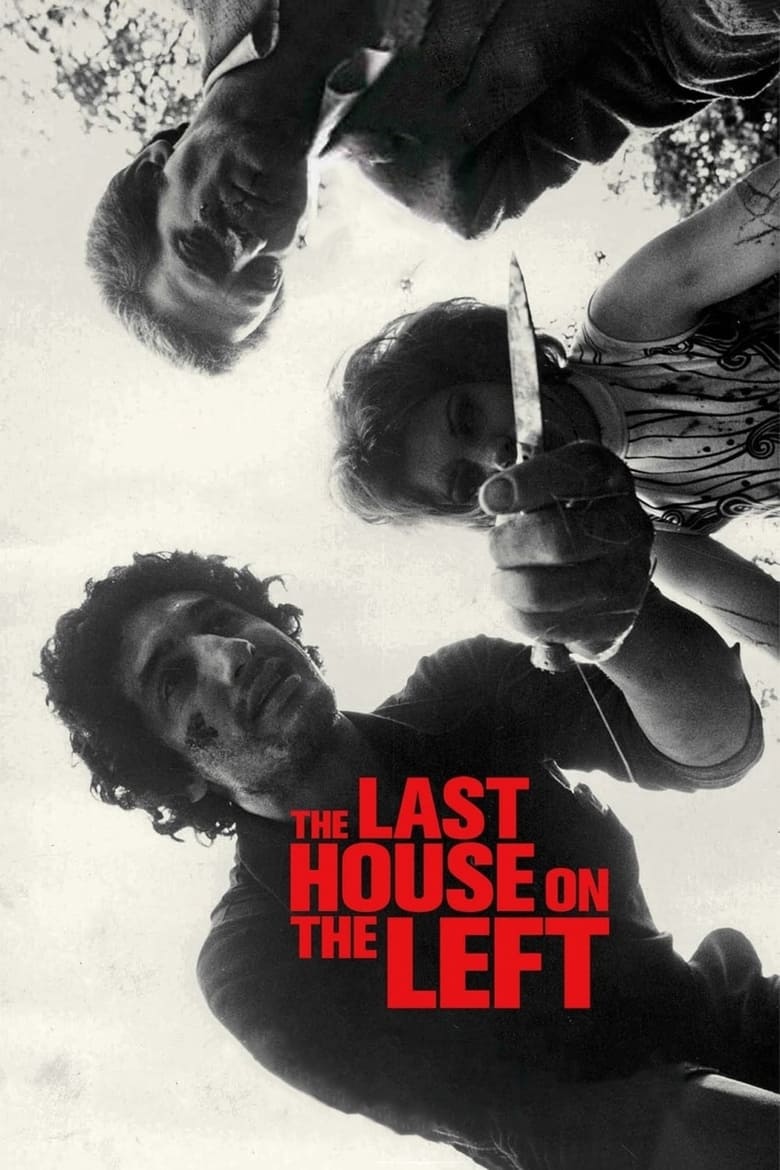
The Last House on the Left
“To avoid fainting keep repeating, it's only a movie... Only a movie... Only a movie...”
On the eve of her 17th birthday, Mari and friend Phyllis set off from her family home to attend a rock concert in the city. Attempting to score some drugs on the way, the pair run afoul of a group of vicious crooks, headed up by the sadistic Krug.
About The Last House on the Left
Why The Last House on the Left is still worth talking about
Put simply: the film starts small. Mari Collingwood plans to celebrate her seventeenth birthday by going to a concert with her friend Phyllis Stone — the kind of ordinary teen night that makes the film’s later violence land harder because it interrupts something recognisable and everyday.
Wes Craven directs the lean, 84‑minute picture, and he doesn’t waste time. From casting — Sandra Peabody as Mari, Lucy Grantham as Phyllis, David A. Hess as Krug Stillo and Fred Lincoln as Weasel — to the raw genre mix (horror, exploitation, rape‑and‑revenge and vigilante drama), the movie keeps the pressure on without padding. Underneath the shocks there are steady themes: family and parental protection, freedom and the costs of losing it, and plain old mortality. Those ideas are stitched through the small opening gesture — parents worrying, a peace‑symbol necklace handed over — which is why the film still provokes conversation rather than fading into grindhouse forgetfulness.
The idea that sets The Last House on the Left in motion
At base the film turns on a single cruel piece of dramatic irony: the people who destroy Mari’s night later walk into her parents’ house pretending to be harmless travellers.
After the gang change out of the clothes they’d been seen in, they show up at the Collingwoods’ home and are accepted as travelling salesmen. That one decision — a disguise, an unremarked‑upon lie — shifts the centre of the story from the city back to the family living room.
The setpiece that follows makes the premise unbearably intimate. What began as strangers’ crimes turns into an invasion of a private place, and the Collingwoods’ domestic routine is forced to reckon with what those visitors have already done.
It’s a tidy, grim mechanism: the film’s premise doesn’t rely on coincidence so much as on the false comfort that open‑door civility can be trusted. That’s what gives the homecoming scene its punch.
Why Mari Collingwood matters
Mari Collingwood is the story’s hinge. Sandra Peabody’s character is introduced in a single recognisable mood: a seventeen‑year‑old off to a concert, the sort of small freedom every parent frets over.
That tiny liberty — her parents reluctantly handing over a peace‑symbol necklace and letting her go — is the film’s emotional seed. It’s a detail that means more than ornament; it’s a little blessing that will later become the evidence of what has been taken.
Mari matters because she’s both ordinary and the measure against which the other characters are tested. Her night out isn’t exotic; it’s a simple act of growing up, which is why the violence that follows feels like an assault on everyday life rather than just one more grisly episode.
If the film asks any character question it’s this: what do parents do when the small freedoms they granted are returned in rubble? Mari’s presence makes that question personal rather than abstract.
The Last House on the Left has more on its mind than the plot suggests
On the surface the film is a revenge thriller; underneath, it’s about family and the fragile architecture of safety. Those themes are not decorative — they’re the emotional gears the story uses to push the violence into moral space.
Freedom features throughout, but not as a triumphant value. The girls’ night out is a small claim of independence, and the movie tracks what happens when that claim collides with ugly, predatory forces.
Mortality and loss are blunt instruments here. The film is willing to show the cost of those collisions without softening it, and that bleak honesty is part of why those few family moments earlier in the film feel so heavy when they return. Finally, parental protection is complicated rather than simplistic. The Collingwoods’ response grows organically from the assault on their private life; the film makes you reckon with how ordinary anger and grief can tip into full‑blown vengeance.
The Last House on the Left could not belong to any other decade
Released in 1972, the film wears its era in a particular way: it’s an independent, rough‑edged picture that expects the audience to do some of the heavy lifting.
That early 70s spirit — distrustful of institutions, willing to push taboos and keen to show consequences without tidy moralising — is baked into the film’s choices. It feels direct rather than cinematic in the glossy sense, and that means it bites.
The movie sits comfortably among other 1970s pictures that favoured realism and moral ambiguity over neat closure. Its lean runtime and spare approach are part of that decade’s independent appetite for stories that unsettle rather than reassure.
You can’t pluck the story out of 1972 and drop it elsewhere without losing an important part of its tone: it’s of its moment and that moment sharpened its ruthlessness.
What has aged — and what hasn't
Some elements still hit. The family core — parents who fret, give a peace‑symbol necklace and try to protect what’s theirs — keeps the film emotionally grounded. Those small, recognisable gestures still read as real, even decades on.
The idea that the criminals later find photos and recognise the Collingwoods’ house is a nasty, effective plot turn: it sharpens the story into a personal invasion. That kind of dramatic logic remains immediate and unnerving.
Other moments feel of their time. The trajectory from a teenage night out to total family collapse plays differently for modern viewers, who may watch with an awareness of how violence has been portrayed and discussed since the 70s.
But the central friction — the breach of home and safety, and what grief does to ordinary people — remains clear. That is the part of the film that ages best: the human reaction to the unthinkable still reads as a dangerous, complicated thing.
Why The Last House on the Left still matters
People remember images more than plots, and this film has several that stick. It begins with an ordinary birthday plan — Mari and Phyllis heading to a concert — and spirals into a sequence of events that makes the family the theatre for punishment and grief.
There are grisly set pieces that audiences of certain tastes will always bring up: the gang discovering Mari’s photos and realising precisely whose house they’ve entered, then the Collingwoods stumbling on their daughter’s body and choosing revenge. The leap from private loss to violent retribution is what keeps conversation about the movie alive.
Certain scenes are unforgettable in how they combine embarrassment, cruelty and human reaction: Phyllis’s attempts to escape, Mari’s desperate manoeuvring to gain Junior’s trust, and the parents’ escalation from shock to bloody reprisal. Those beats lodge in the memory because they’re personal rather than merely sensational. That the film’s ending leaves law and order arriving only as a ghastly aftermath — covered in blood, police and parents alike — is part of why it refuses to feel like neat entertainment. It’s a picture people talk about because it doesn’t let you off the hook.
Does The Last House on the Left still hold up?
Yes — but with a strong rider. The Last House on the Left remains a compact, unflinching piece of work: 84 minutes, directed by Wes Craven, that starts with a teen’s wish to go to a concert and ends with a family forced to answer with violence.
If you come for shock, the film delivers; if you come for the human cost, it still registers. Mari’s small acts of freedom — the peace‑symbol necklace, a night out — are used as emotional anchors so that when the gang later find the Collingwoods’ photos and realise whose house they’re in, the invasion feels truly invasive.
That domestic core is the film’s strength. The Collingwoods’ discovery of Mari’s body and the decision to take revenge make the story about family protecting what they have left, however far that protection goes. The arrival of the sheriff only underscores that law turns up after the damage is done.
So: watch it if you want a lean, morally thorny horror that refuses easy comfort. It’s not pleasant, it’s not neat, but it’s rigorously honest about what breaking the boundary between freedom and safety does to people.