
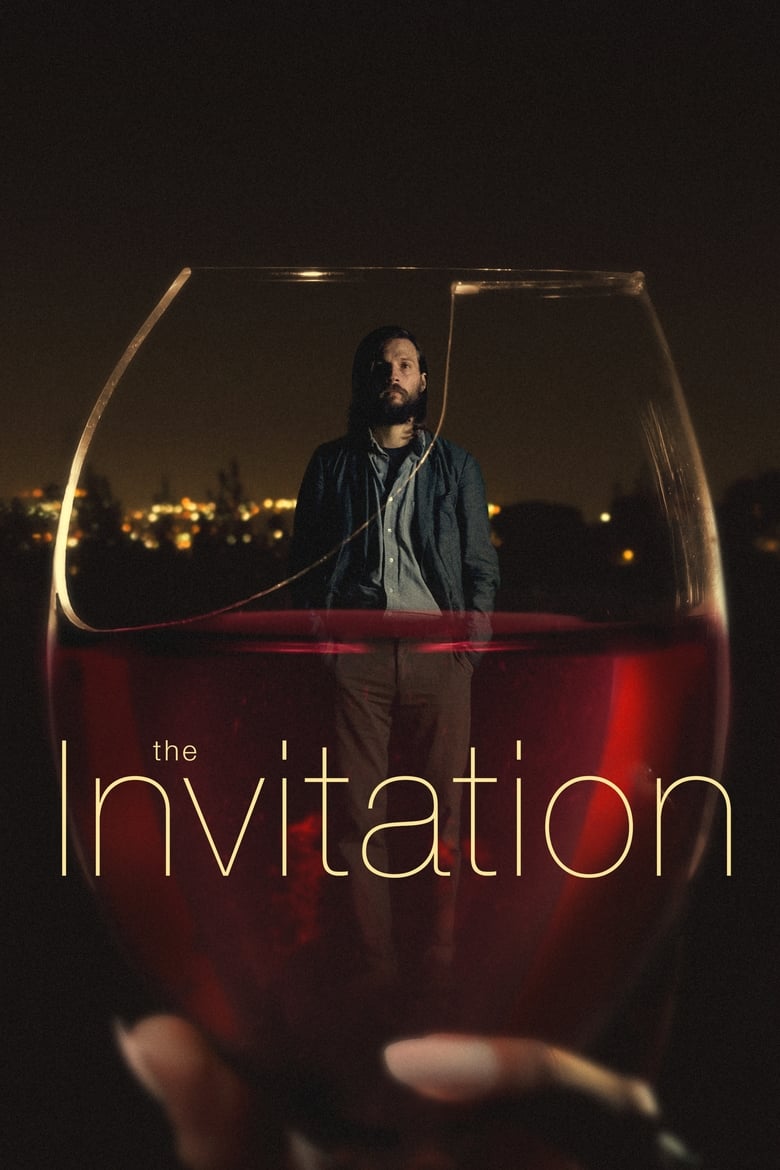
The Invitation
“There is nothing to be afraid of.”
Will and his new girlfriend Kira are invited to a dinner with old friends at the house of Will’s ex Eden and her new partner David. Although the evening appears to be relaxed, Will soon gets a creeping suspicion that their charming host David is up to something.
About The Invitation
Why The Invitation is still worth talking about
There’s an immediate, uncomfortable clarity to the opening image: Will turns up, not to a stranger’s flat but to his ex-wife’s house. The premise — Will arriving with his girlfriend Kira at Eden and David’s dinner in the Hollywood Hills — flips ordinary domestic manners into a quiet, electric threat.
It’s a tidy, economical picture: directed by Karyn Kusama and released in 2016, The Invitation asks a lot of its audience in just 99 minutes. Logan Marshall-Green plays Will; Tammy Blanchard is Eden and Michiel Huisman plays David. That small cast and tight running time keep the pressure focused where it should be — on one house and the people inside it. Underneath the party trappings the film is working on familiar human stuff: house as shelter and trap, grief and the way mourning stretches a life into before-and-after. The backstory — Will and Eden’s marriage split after the accidental death of their son, and Eden meeting David in a Mexico support group — gives the evening a hard emotional edge. It’s why the movie still sticks in the teeth: the terror comes from what’s already broken, not from some sudden, inexplicable violence.
The idea that sets The Invitation in motion
At its simplest the film gives us a very particular mismatch: a man who’s still raw about what he’s lost showing up at the home that holds those memories. Will and Eden’s marriage ended after their small son died, and Eden has since rebuilt a life with David — a background that fills the party with old ghosts.
What Kusama and the writers do with that set-up is insist on small escalations. Nothing dramatic happens at first; it’s the tiny uncanninesses that accumulate. Will wanders the house and keeps tripping over past life: familiar rooms, painful flashbacks, a past attempting to gatecrash the present.
The evening is peppered with odd moments that don’t immediately add up. After dinner Will spies Sadie making strange faces into a mirror. It’s a small, eerie beat, the kind of thing that suggests there’s more behind the polite conversation than anyone admits.
That mirror moment isn’t just creepiness on the side; it’s the beginning of a pattern. Sadie follows Will outside and crosses a line with an indecent proposal — an encounter that turns the guest-list into a testing ground for Will’s suspicions and everyone’s ability to read what’s actually happening.
Why Will matters
Will is the movie’s emotional compass because he’s carrying the one thing everyone else is trying to explain away: loss. He’s back in the house that was once his, and what he does most of the night is walk through it — literally moving through memory after memory, including the trauma of Eden’s attempted suicide.
That wandering matters because it makes Will suspicious in a believable way. He’s not a conspiracy theorist for fun; he has spent the last years watching the exact place that should have been safe turn into a site of unbearable things. A glimpse through Eden’s bedroom window shows him hiding a bottle of pills — a small observation that changes how he reads everything else.
Will’s suspicion grows into action. He finds a voicemail that suggests someone else had been at the house earlier; he confronts Eden and David about their ties to the group they call The Invitation; and when he thinks the toast might be poison he smashes the glasses himself. Those are not melodramatic leaps: they’re gestures you might expect from someone who has already lost the thing that made a home a home.
When the worst happens, Will becomes the one who keeps moving. He flees, hides with Kira and Tommy, and carries the literal and moral weight of the night — right up to the moment Eden asks him to take her outside. The story keeps returning to him because his loss, and his refusal to accept easy answers, are the things that force the other choices into daylight.
Why Logan Marshall-Green's performance matters
There’s a particular dramatic job the film asks of Will at one point: to discover a voicemail that changes everything. He finally gets a signal and finds a message from Choi saying he’d been at the house earlier than the rest of the party.
That moment is a hinge. It turns Will’s unease into a concrete accusation and forces the rest of the room to choose how to respond. The actor who plays Will is therefore carrying not just rage but the responsibility of prompting those choices.
Because the film keeps its world small, these small beats — a found message, a look, a shove — are the only way the story escalates. The voicemail scene is the sort of structural nudge actors live for: it’s where private suspicion becomes public confrontation. So while the script hands Will the arc — from remembering to doubting to acting — that voicemail is one of the cleanest, most decisive sparks the performance has to work with.
The Invitation has more on its mind than the plot suggests
On paper it’s a home-invasion type set-up turned inward, but thematically the film keeps circling a few human certainties: what a house means, how long grief can last, and what bravery looks like when everything you trusted has gone wrong.
Home isn’t just a location here; it’s the measure of safety — and the moment that measure is lost becomes the engine of fear. The film repeatedly asks whether the places that used to keep us safe can be trusted after trauma.
Mortality and loss are the marrow. The characters are gathered around the idea of finishing pain, and Will’s refusal to accept the group’s explanations — even smashing the glasses at a toast because he suspects they’re poisoned — is a simple, visceral response to people offering quick answers to the hard business of living with death.
Finally, there’s the question of courage. It isn’t swagger. It’s the messy, persistent decision to keep turning up, to walk through rooms that hurt, to refuse the comfort of an easy end. That’s the moral texture the film digs at more than once.
The Invitation could not belong to any other decade
Being a film released in 2016 places The Invitation squarely in the 2010s, a decade when indie thrillers liked to squeeze dread out of everyday situations rather than rely on spectacle.
Its discipline — a single house, one night and a tight running time — reads very much like the decade’s appetite for smaller, idea-driven cinema: films that make a single social or psychological question last for an evening.
That compactness is part of its personality. The Invitation’s time of release helps explain why it favoured quiet escalation and emotional mess over broad horror beats — a choice that feels of a piece with how many 2010s thrillers thought about dread.
What has aged — and what hasn't
The film’s central conceit — that home can become a threat — still lands. Will arriving at Eden and David’s house and then walking its rooms while memories surface remains an effective way of making the audience share his unease.
Certain bits feel surprisingly modern: the way a locked front door and a sudden lack of phone signal ratchet tension into the evening; these are still reliable, immediate ways to make a familiar space feel isolating.
The moment Will breaks the glasses at the toast because he suspects poison still reads as a raw, human refusal to accept explanation. It’s a small action that cuts through the cultivated calm of the party and still jolts. Where the film can be less forgiving is in the way its final reveal spreads outward — seeing the red lanterns in other houses and realising it wasn’t contained to one home. That extension from private nightmare to neighbourhood problem still works as a final sting, but it turns the intimate into something larger in a way that will either satisfy or frustrate you, depending on what you came for.
Why The Invitation still matters
There are a handful of images and beats that stick: the party’s gradual reveal that Eden and David have joined a group called The Invitation; the leader’s recorded comfort of a dying woman; and the small, uncanny moments — Sadie in front of a mirror, an unwelcome advance — that make the social gathering feel unsafe.
A couple of sudden turns — like Gina collapsing after she sips a drink, or the garden suddenly lit with red lanterns — are the kind of jolts that people still talk about because they arrive out of nowhere and change the film’s tenor in one beat.
What keeps the film in conversation is less a single scene than the way it stitches grief to suspicion. The backstory of a couple torn apart after their child’s death, and Eden meeting David in a Mexico support group, gives the movie an emotional hook that elevates the night beyond mere shock.
Put simply: it’s remembered as much for its emotional setup — loss, attempted explanations, the allure of a neat escape from pain — as for the violent turn the evening eventually takes. Those two halves still make the movie a good one to argue about.
Does The Invitation still hold up?
Yes — but with a caveat. If you want a compact, claustrophobic thriller that treats grief as the fuel for suspicion, The Invitation still delivers. Its tight running time and Karyn Kusama’s steady direction keep the pressure on one house and one man’s refusal to be placated.
Logan Marshall-Green’s Will is the necessary anchor: a man wandering a place full of memories, noticing small betrayals — Eden hiding a bottle of pills, the locked front door, a voicemail that doesn’t fit — and insisting on answers. That refusal carries the film from uneasy dinner to last, terrible revelations.
It isn’t perfect for everyone. The movie asks you to accept that a private grief can be turned into a mass answer to pain, and the final discovery — that other houses are lit the same way — expands the scale in a way that will either broaden the nightmare or make it feel less intimate.
If you like your thrillers as domestic pressure-cookers, where the real horror comes from people trying to fix what’s broken in the wrong way, this is still worth a watch. It’s a movie that remembers how dangerous politeness can be and refuses to let a house be only a home.