The Innocents
“Apparitions? Evils? Corruptions?”
In a mid-19th century Essex country house, a young governess for two children becomes convinced that the house and grounds are haunted by ghosts and that the children are being possessed.
About The Innocents
What The Innocents gets right
The Innocents opens with a deceptively simple proposition: Miss Giddens has applied for her first job as a governess. From that modest first step the film gradually widens its scope — not by piling on effects, but by piling on obligations. Deborah Kerr’s Miss Giddens is placed into a household where adults have already decided what matters most, and that choice matters to every scene that follows.
Jack Clayton’s direction keeps the pressure contained. The wealthy bachelor who hires Miss Giddens is frank about one thing above all: he values his freedom to travel and socialise and has "no room, mentally or emotionally" for his niece and nephew. That admission is the motor of the story; it hands responsibility to someone who hasn’t asked for it and then expects her to shoulder it without complaint. The film holds together because its pieces — the children, the kindly housekeeper, the shadowy past of the previous governess, and the suggestion of spirits — all point at the same hinge: who protects the family, and at what cost. There are apparitions and disembodied voices, yes, but the real tension comes from adults’ choices about love, duty and freedom.
The idea that sets The Innocents in motion
At the heart of The Innocents is a small domestic problem that steadily becomes catastrophic. The boy Miles returns from boarding school after being expelled as a "bad influence" — a complaint that Miss Giddens and the housekeeper, Mrs Grose, initially treat as overblown.
That mismatch — adults trusting their own read on the children while the outside world reports trouble — is what makes the setup grip. It turns a familiar country‑house situation into something unstable: a child who is charming on the surface, and perhaps not what he seems underneath.
The set pieces that follow, the moments when Miles suddenly snaps or bolts from a conversation, are driven by that simple seed. Miss Giddens is forced, scene by scene, to ask whether she can trust appearances.
And when she chases him, begging him to say the name of the thing that taught him his worst behaviour, the film makes its central question obvious: who — or what — has been shaping these children?
Why Miss Giddens matters
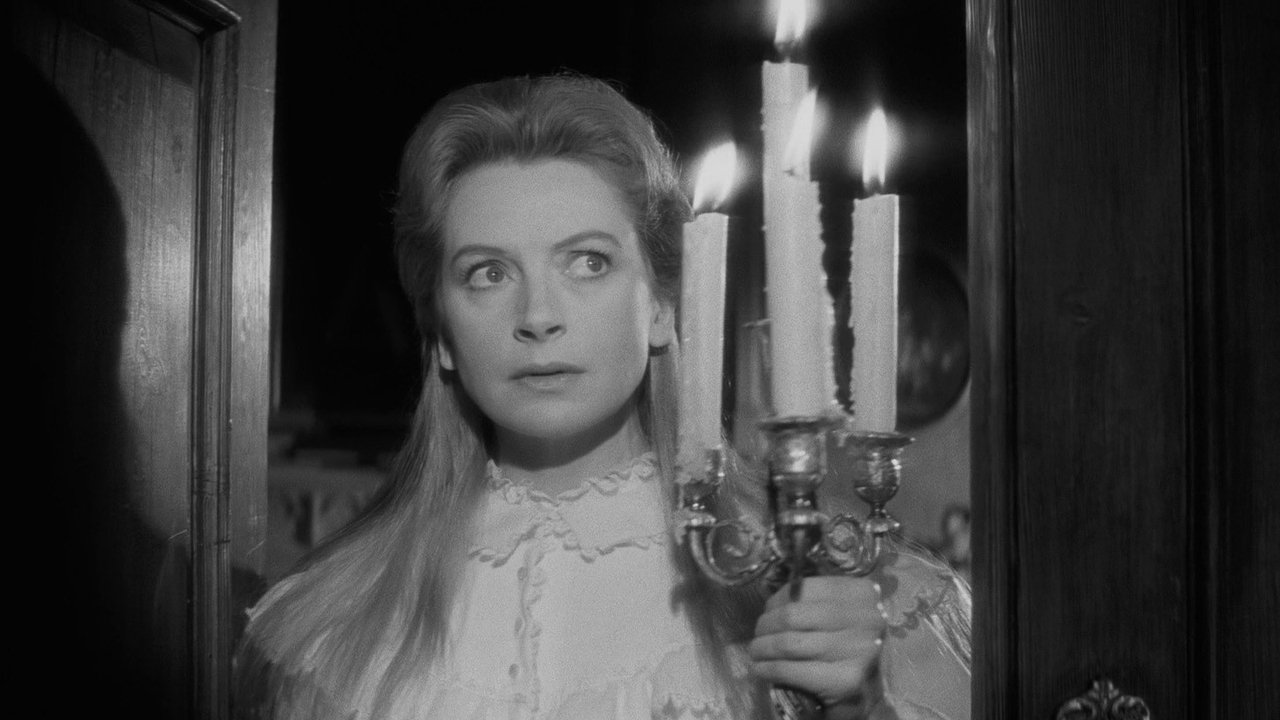
Miss Giddens matters because she arrives ready to be useful and is asked instead to be decisive. Deborah Kerr plays the role, but the character herself is written as someone whose job description is suddenly moral as well as practical: accept full responsibility for two children and never trouble their uncle with problems.
That arrangement tells us two things about her world. First: the adults who created that rule have washed their hands of parenting. Second: Miss Giddens now stands between that neglect and the children, which forces her to interpret behaviours that others would dismiss.
She is instantly taken with Flora, and builds a friendship with Mrs Grose — small, human ties that make the stakes personal. When odd behaviours and apparitions begin to intrude, the reactions are therefore not abstract; they are choices about family and protection.
Finally, Miss Giddens’ decision to press Miles about his expulsion, to confront the shadow of the previous governess and the memory of Peter Quint, is why she stays memorable: she moves from being a hired hand to someone trying to free the children from an influence she believes is real and poisonous.
Why Deborah Kerr's performance matters
The facts of the story make one thing clear: Miss Giddens spends most of the film moving from polite certainty to visible disturbance. She is repeatedly bothered by disembodied voices and apparitions of a man and woman in the house and grounds.
That arc — calm professional to a woman haunted in her duties — is the work the part demands. The performance role here is structural: the film often invites the viewer to watch how Miss Giddens registers and responds to things others either deny or cannot see.
Because the apparitions and the children’s secrecy are the triggers for her crisis, the part requires sustained close attention to changing moods. The story gives the actor that texture to work with. Put simply: what matters about the performance is not big gestures, but the sustained translation of growing doubt into action, and the film is built to follow that exact trajectory.
The Innocents has more on its mind than the plot suggests
On the surface The Innocents is a ghost story. Underneath it runs a quieter set of concerns: parental protection, mortality, love and family. Those themes keep returning because the film is essentially asking who is allowed to care for children, and whose needs get priority.
The uncle’s admission that he has "no room, mentally or emotionally" for the children sets up a moral gap. He chooses freedom over guardianship; that decision creates a pressure the film never lets go of. Miss Giddens is left to fill a role that should have been shared.
Mortality is threaded through the household: the previous governess died less than a year earlier, and the idea of disappearance — of adults who vanish from a child’s life — keeps the film quietly bleak. That absence makes the children vulnerable to other influences, whether spectral or psychological.
And then there is love, complicated and dangerous in this story: the housekeeper reveals the deceased couple had an abusive romantic relationship, and Miss Giddens comes to believe those dead intimacies are continuing through the children. So love here is not only protective; it can also be corrosive.
The Innocents could not belong to any other decade
Released in 1961, The Innocents sits at the start of the 1960s and carries the decade’s taste for stories that combine social manners with unsettling subtexts. It is both a chamber piece and a larger moral fable.
Because it was made as the 60s were beginning to reshape attitudes, the film’s negotiation between private freedom and family obligation reads as a conversation the decade was having — quietly, in parlours and drawing rooms rather than on the high street.
Its emphasis on responsibility, on who must sacrifice mobility and leisure to care for children, ties directly back to the era’s shifting social arrangements. The film feels of its time because it treats those questions seriously rather than as background colour.
Seen as a 1961 picture, The Innocents also exemplifies how horror could be refined and domestic: concerned more with what power adults exercised over children than with spectacle for its own sake.
What has aged — and what hasn't
What still works is the human spine of the story. The film’s insistence on family as a lived, imperfect thing — and the friendship between Miss Giddens and Mrs Grose — gives it an emotional anchor that doesn’t depend on period trappings.
The revelation that the deceased couple had an abusive relationship remains unsettling. It’s not used for shock alone; it reframes how we read the children and raises questions about cycles of harm that feel painfully contemporary.
The film’s central ambiguity — Miss Giddens’ conviction that the ghosts possess the children — still holds up. That uncertainty lets modern viewers decide whether they see literal haunting or a series of human failures laid over the children’s behaviour. What doesn’t date badly is the way the movie makes adults responsible for what happens in their house. That moral pressure feels neither quaint nor archaic; it still asks a question every parent or guardian can recognise.
Why The Innocents still matters
There are a few durable reasons people return to The Innocents. The central relationship dynamic — a governess arriving to care for two orphaned children while the adult who placed them refuses true guardianship — is a compact, morally tangled engine for drama.
The film keeps the human elements at its centre: Miss Giddens’ immediate fondness for Flora, her friendship with Mrs Grose, and the way the household is organised around an absent but self‑assured uncle who openly prioritises his own freedom over parenting.
Add to that the suggestion of the past refusing to stay dead — Mrs Grose identifies the apparitions as the late governess Mary Jessel and the valet Peter Quint, a couple with a damaging romantic history — and the drama acquires both mystery and menace.
Finally, the ending is hard to forget. Miss Giddens presses Miles about who taught him his worst behaviour; a series of dreadful events leaves Miles still on the ground, and in the film’s last gestures Miss Giddens cradles him, believes she has freed him, and then realises he is dead. The image of that final intimacy — and its confusion — is the kind of late twist that keeps viewers arguing long after the credits roll.
Does The Innocents still hold up?
Yes — but with a small rider. The Innocents is 100 minutes of tightly focused moral unease: a governess (Deborah Kerr) is hired even though the uncle is unconcerned by her lack of experience, because what he wants most is someone to accept responsibility without complaint. That premise still pays off.
The film’s insistence on parental protection, on mortality and on complicated love gives it emotional weight that survives the decades. The plot’s darker turns — an abused past, the idea that the dead continue through the children — still read as chilling rather than merely period drama.
If you’re curious about early‑60s British horror that prefers manners and moral pressure to bombast, The Innocents delivers. It’s short, deliberate and anchored in a handful of human relationships that matter.
So watch it for Miss Giddens’ trajectory from polite governess to a woman convinced she must save the children, and for the way the film makes a house into a battleground over who gets to love and who gets to be free. It’s a ghost story that never forgets the people inside the house.