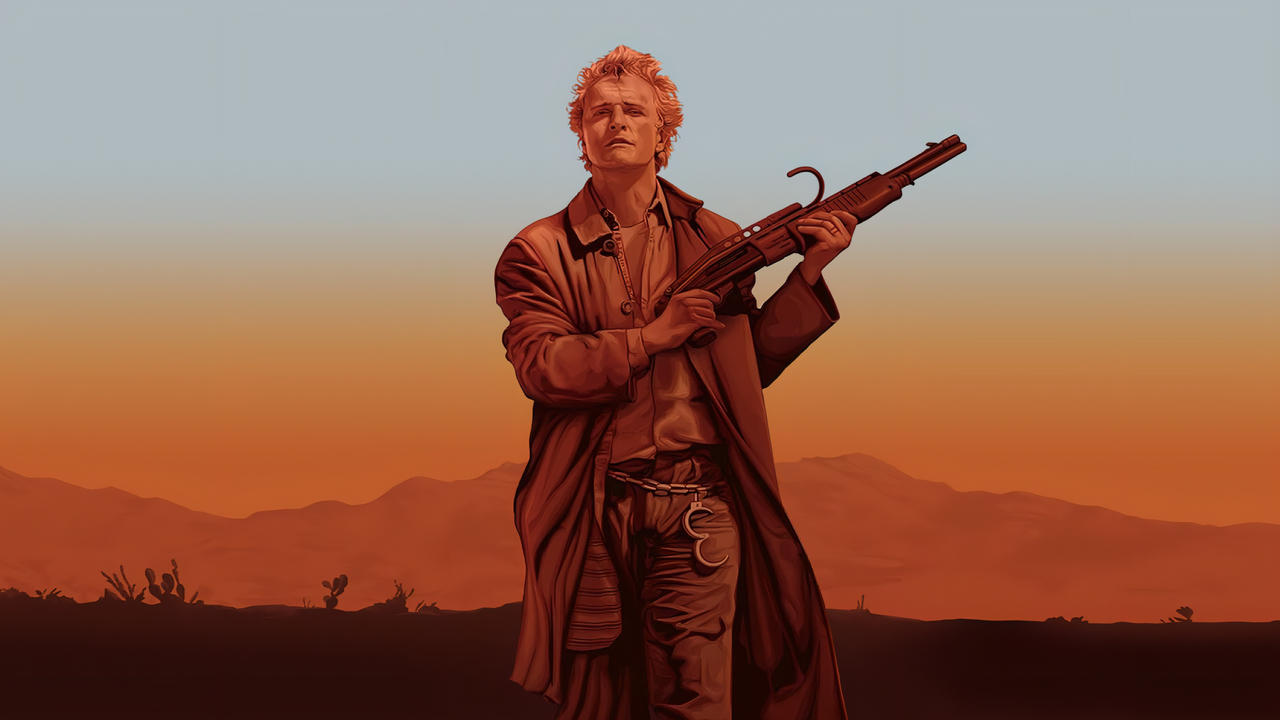
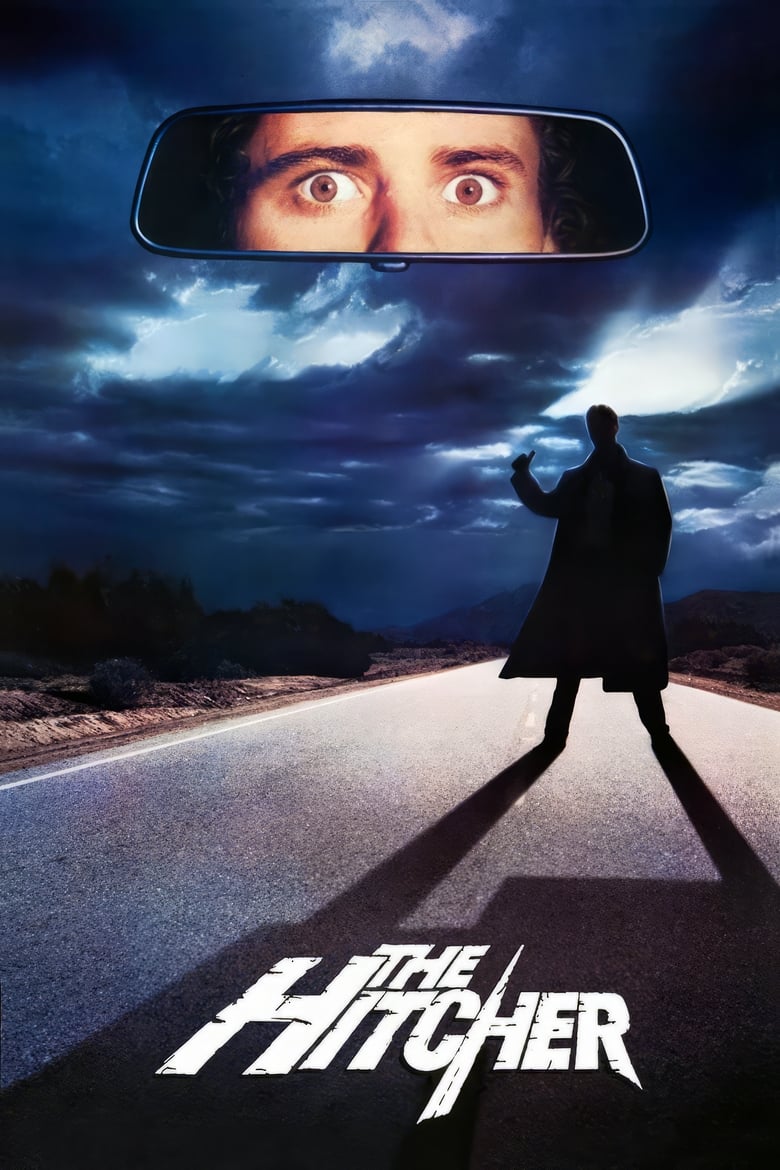
The Hitcher
“The terror starts the moment he stops.”
On a stormy night, young Jim, who transports a luxury car from Chicago to California to deliver it to its owner, feeling tired and sleepy, picks up a mysterious hitchhiker, who has appeared out of nowhere, thinking that a good conversation will help him not to fall asleep. He will have enough time to deeply regret such an unmeditated decision.
About The Hitcher
Why The Hitcher is still worth talking about
The Hitcher hooks you with one small, easily recognisable thing: a young man doing the sensible thing and picking up a stranger. Jim Halsey is delivering a car across America when he spots a hitchhiker and offers a lift — and that moment flips the film into a very particular kind of terror.
From there Robert Harmon keeps the pressure on. The movie runs tight — under 100 minutes — and it makes every stop on the road count. The threat is personified by John Ryder, played by Rutger Hauer, who becomes less an antagonist you can outwit and more a force that refuses to be loosed. It’s part road movie, part slasher, part thriller. That genre mash-up gives The Hitcher a simple, brutal engine: ordinary freedom colliding with a remorseless, unnatural will. You don’t watch it for comfort; you watch it because it refuses to let you feel safe.
The idea that sets The Hitcher in motion
The basic engine is clean and nasty: Jim picks up a hitchhiker and, before long, his life is unglued. He meets Nash at a roadside diner while trying to involve the police, but the situation only grows stranger and more dangerous.
At one point Jim finds himself on a bus recounting what’s happened. He surrenders when officers pull the vehicle over, which might sound like relief — except the surrender is precisely part of the trap the film constructs.
The escalation is abrupt. A chase breaks out and the hitchhiker joins it, turning what should have been a straightforward arrest into a bloody, public set-piece that widens the circle of victims and suspicion.
That compact blueprint — a small kindness becoming the first move in a game you didn’t agree to — is what keeps the story moving without ever getting bogged down in subplots.
Why John Ryder matters
John Ryder is not a one-note villain who laughs and monologues. He’s introduced with a tiny, terrifying act — he forces Jim’s foot onto the accelerator — and that gesture says everything you need to know: Ryder wants control, and he knows how to make you complicit in losing it.
That moment turns a helpful stranger into a predator who weaponises everyday motion. Later, when Jim tries to warn a family and ends up in an accident, Ryder’s presence is tied to collateral horror: ordinary people become proof that this isn’t just a personal score, it’s a wider threat.
The film uses those small, specific encounters — the forced acceleration, the ruined family car — to make Ryder more than a bogeyman. He’s an engine that exposes how fragile Jim’s assumptions about safety and decency really are.
So Ryder matters because he isn’t merely someone to be chased; he’s the reason the film’s moral questions feel urgent. The story is always asking what a person will do when a random act of kindness becomes the worst mistake of their life.
The Hitcher has more on its mind than the plot suggests
On the surface it’s a thriller about a man chased. Underneath, the film keeps circling three stubborn ideas: authority, freedom and family. Those words don’t need academic dressing — they’re present in how the story repeatedly tests Jim’s autonomy and what he’ll do to protect others.
Freedom is literal here: Jim is a young man on the road, making his own way. But that freedom is fragile; an act meant to be helpful clamps down into something that strips him of choices.
Authority is complicated. The apparatus that should protect Jim instead becomes an arena where he’s suspected, arrested and even imprisoned, which shifts the burden of action back onto him and raises questions about who can be trusted. And family provides the emotional cost. When Jim stumbles on the blood-soaked family car and physically recoils, the film makes the stakes personal — the violence isn’t abstract, it hits people who could have been innocents in anyone’s life.
The Hitcher could not belong to any other decade
Released in 1986, The Hitcher sits squarely in an era that favoured lean, high-concept thrillers. The decade produced films that mixed genre elements — horror with action, slasher beats inside road movies — and this one wears that blend openly.
That mix matters because it keeps the film uncomplicated and kinetic. It doesn’t ask for lengthy backstory; it sets up a situation and pushes it until something breaks.
The Hitcher’s DNA — a road movie spun into a thriller and slasher at times — is the kind of genre play that felt at home in the 1980s, when filmmakers often let premise lead and moral complexity follow in the damage it created.
Seen through that lens, the film looks like a product of its moment: economical, direct and willing to let violence do some of the narrative talking.
What has aged — and what hasn't
What still lands is the film’s willingness to make danger feel specific and immediate. The image of Jim discovering a family’s blood-soaked car and physically vomiting keeps the movie rooted in consequences — violence has weight here, and the film doesn’t let you forget it.
That focus on personal cost also preserves the family theme. It stops The Hitcher from feeling like a purely mechanical exercise and makes the threat feel real for regular people, not just a lead actor and a villain.
Where it might be harder for modern viewers is the film’s relentlessness. It builds through a series of escalating shocks rather than long psychological reflection, which is what many fans expect and what others find unforgiving.
But if you come to it for a razor-sharp, condensed thrill that doesn’t flinch from its nastier beats, plenty of this still works — especially the moments that remind you violence changes people, not just plots.
Why The Hitcher still matters
People remember The Hitcher because it takes ordinary decisions — giving someone a lift, trying to warn a family — and turns them into irreversible moments. The film opens with that precise move: Jim stops for a hitchhiker and, in a heartbeat, his life becomes a different genre.
The set-pieces are memorable in the way they expand the threat outward. Ryder forces Jim’s foot down, tosses him his keys, causes a gas-station blast, and even leaves a severed finger to underline his reach. Those are the kind of concrete incidents that lodge themselves in the brain.
There’s also the way the story bends institutions into part of the tension. Jim is arrested, locked up, wakes to find officers murdered and is repeatedly pushed into choices where the official channels either fail him or place him under suspicion. Finally, moments like the motel abduction and the truck confrontation — where Nash is tied in mortal peril and Jim is forced into impossible action — give the movie its darker emotional notes. They’re brutal, yes, but they also explain why the film lingers in memory: it makes the stakes human and immediate.
Does The Hitcher still hold up?
Yes — with a caveat. If you want a tidy moral drama or a slow-burn character study, this isn’t it. The Hitcher is a 97-minute sprint from a simple premise: a young man on a delivery run picks up a hitchhiker, and that small kindness explodes into a remorseless nightmare.
What keeps it worth watching is the clarity of that engine and the stakes it sets. The hitchhiker’s early brutality — forcing Jim’s foot to the floor and openly threatening to dismember him — makes the film’s questions about authority, freedom and family feel urgent rather than abstract.
Robert Harmon keeps things moving; the film’s shape and pace mean there’s little fat. You get a relentless sequence of incidents — public chases, police suspicion, the severed finger, the motel abduction and the truck confrontation — that make the danger feel widescreen and inescapable.
So if you’re up for a hard-edged, genre-mixing thriller that sacrifices comfort for intensity, The Hitcher still does the job. It’s not forgiving, but it’s exactly the kind of uncompromising ride the premise promised when Jim opened his door.