The Hills Have Eyes
“The lucky ones died first...”
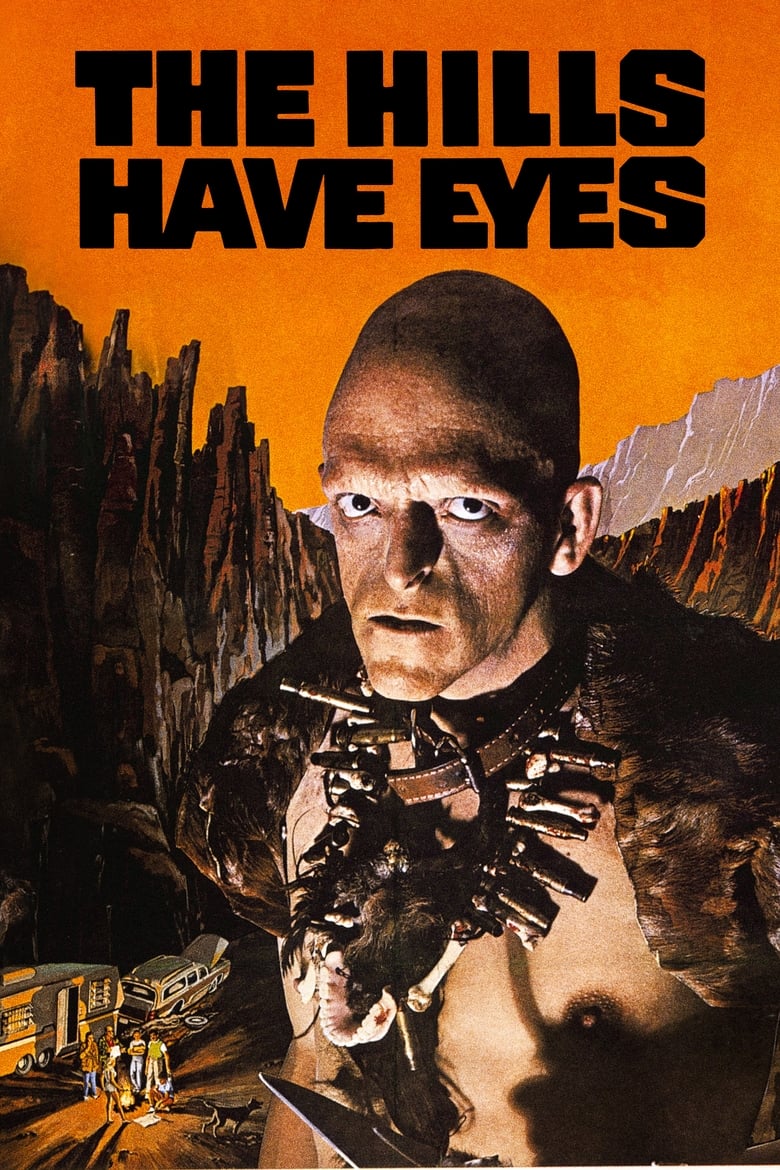
Taking an ill-advised detour en-route to California, the Carter family soon run into trouble when their RV breaks down in the middle of the desert. Stranded, they find themselves at the mercy of monstrous cannibals lurking in the surrounding hills.
About The Hills Have Eyes
Why The Hills Have Eyes is still worth talking about
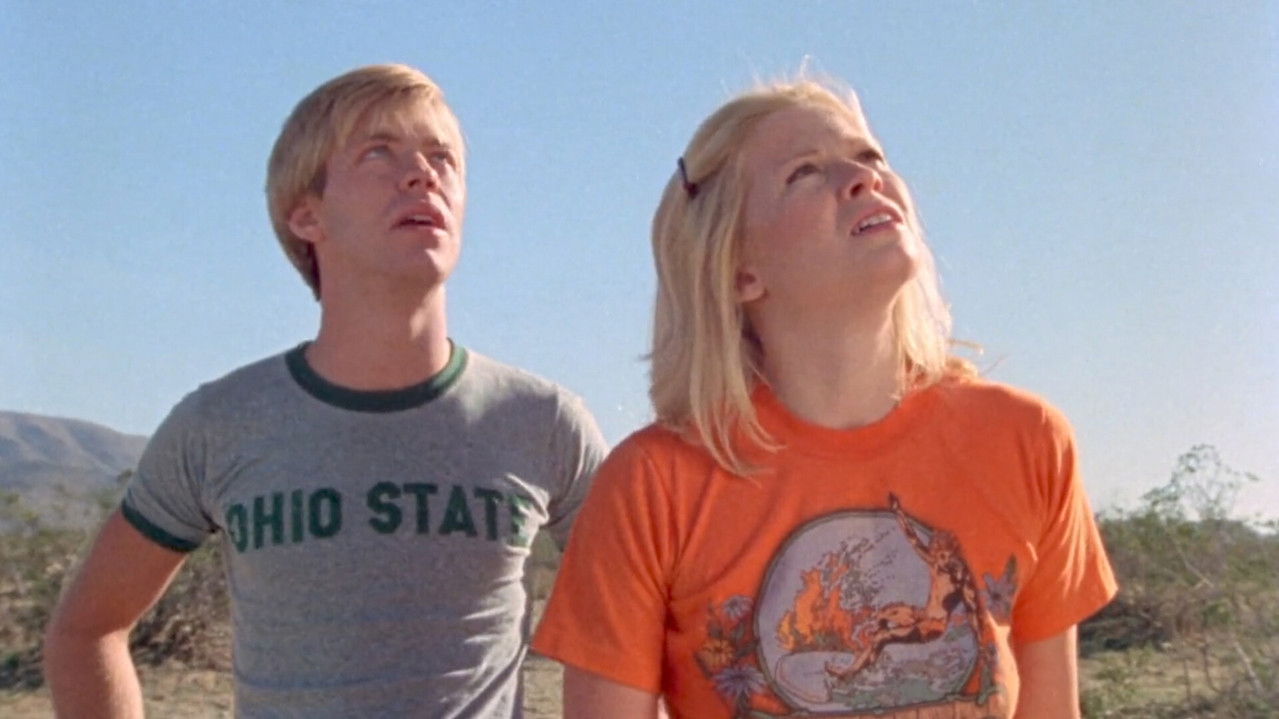
The film arrives like a small domestic tableau set against danger: the Carter family towing a trailer on their way to Los Angeles. The setup is disarmingly normal — parents, kids, a baby and two dogs — which is exactly what makes the shocks that follow hit so hard.
Wes Craven directs with a short runtime that doesn’t waste a second: at 89 minutes it’s compact, uncompromising and allergic to padding. The cast are plainly identified by part — Brenda, Bobby, Doug — and the movie trades on those relationships rather than mystery for its pull. From the dogs alerting at the hills to the violent collapses of ordinary routine, the film frames itself as a test of family: protection, loss and who survives to hold the pieces. That concentrated focus is what keeps conversation about The Hills Have Eyes alive.
The idea that sets The Hills Have Eyes in motion
Start with a family in transit and a moment that makes travel dangerous: in this film, the first violent discovery is enough to pull them apart. Bobby finds a mutilated body, and that single catastrophe escalates into something far worse.
The family fights to contain the damage. They manage to put out a deliberately set fire, but the cost is painfully real — Bob does not survive. The emotional gravity of that loss propels the next moves.
When the dust settles the immediate priorities change. The next morning, with grief still fresh, Doug sets out to find the baby, Katy, while the threat that attacked them prepares to finish what it began.
That simple chain — discovery, loss, a desperate search — keeps the story taut. The setup works because the stakes are immediate and narrow: save the child, or lose the family.
Why Doug Wood matters
Doug Wood starts out as part of the travelling party — eldest son-in-law, apparently just another passenger on a family trip — but the plot reshuffles roles. When loss comes, Doug becomes the person who has to act: he goes looking for the kidnapped baby while the rest reel.
That movement from incidental family member to active rescuer matters because it demonstrates the movie’s core calculation: ordinary people are put in extraordinary moral and physical positions, and we watch to see what they’ll do.
Doug’s urgency is tied to the film’s family theme. He isn’t a heroic figure in the abstract; he’s somebody with a tiny child to protect, and that domestic obligation gives his choices weight.
Against the movie’s brutal antagonists — a group that survives by preying on travellers — Doug’s role underlines the human element. He’s the family’s response, the plan in motion, and therefore the film’s barometer for parental protection.
The Hills Have Eyes has more on its mind than the plot suggests
On the surface it’s a survival thriller; underneath it’s preoccupied with family and how people protect the ones they love. The Carters’ trip to Los Angeles — a simple holiday — becomes a way of measuring how far parents and children will go for each other.
Mortality is threaded through the story. Early killings and later losses force the family to reckon with life span and what gets lost when safety collapses. Those losses recalibrate priorities: rescue matters more than comfort, and revenge becomes blurred with survival.
There’s also the odd, grim folklore that hangs over the antagonists: a local history of violence that explains some of their behaviour and gives the hill-country menace an almost mythic quality. That background thickens what would otherwise be bare survival action. Heroism here is not glamorous. It’s scabby, exhausted and very specific: it looks like a husband or a brother going after a baby, or two siblings setting traps to protect themselves. That particularity is what makes the themes feel lived-in rather than abstract.
The Hills Have Eyes could not belong to any other decade
Released in 1977, this film sits squarely in the late-70s moment when genre pictures weren’t shy about rough edges or moral murk. That timing matters: the movie’s compact, no-nonsense cruelty fits the period’s appetite for cinema that could be both shocking and low-budget.
Calling it a product of 1970s movies isn’t about styling; it’s about attitude — the willingness to place ordinary people in grim situations and not tidy everything up. The film’s economy of storytelling and stark choices feel of an era that favoured bite over gloss.
Wes Craven’s direction aligns the film with that decade’s willingness to push audiences, and the result is an experience that wears its era on its sleeve without relying on nostalgia.
What has aged — and what hasn't
Some things hold up because they’re simple human truths: a baby to protect, family members making terrible choices under pressure, and a character who goes out to search for a kidnapped child. Those building blocks still create real tension.
The notion of a predatory group surviving by scavenging and cannibalising travellers remains viscerally unsettling. The film doesn’t mask that threat — it treats it plainly — and that frankness can still unsettle modern viewers.
Small human details survive too: Bobby keeping the dogs' fate to himself to avoid frightening the family is the sort of quiet, believable lie that makes the family dynamics feel genuine even now.
If anything feels more dated, it’s the expectation that the movie will deliver a clean moral reconciliation. The story ends with survival and an ambiguous reach for connection — an alternative closing even lets a damaged outsider rejoin the family — which feels messier than the tidy resolutions many viewers expect today.
Why The Hills Have Eyes still matters
People who grew up with this film often remember its collapses of ordinary life: the dogs suddenly alerting to a menace, the discovery of a mutilated body, and the shocking brutality that follows. Those are the moments that lodge in the memory.
The movie gives us brutal set-pieces — Papa Jupiter’s sudden, violent entrance and the crucifying of Bob are the kind of scene that stick because they spin normal community violence into personal horror. The story’s extremes make the family’s response feel necessary, even urgent.
There are also wrenching human beats: Brenda and Bobby setting traps and fighting back, a remorseful outsider helping to save the baby, and an ending that offers the possibility of a damaged kind of compassion when Brenda reaches out to Ruby. That mixture of violence and hesitant mercy is hard to forget. All of which means the film’s afterlife rests on emotion rather than spectacle: people remember how it made them feel about families, vulnerability and what survival costs.
Does The Hills Have Eyes still hold up?
Yes — if you’re prepared for a short, unflinching watch about a family whose holiday mutates into a fight for survival. The film is 89 minutes long and stays committed to its premise: normal people tested by extraordinary cruelty.
It rewards viewers who care about the human elements — the dogs that warn the family, Brenda protecting baby Katy in the trailer while others go after Bob, and the moment Doug and Bobby return to find Lynne dead and Ethel mortally wounded. Those beats make the brutality feel costly rather than gratuitous.
Wes Craven’s direction and the film’s tight focus on family and parental protection mean it still packs an emotional punch. The final movement — Brenda and Bobby turning the tables on Papa Jupiter and Doug rescuing Katy with help from a remorseful outsider — gives the story a hard-won sense of survival.
If you can handle late-70s horror’s bluntness and moral messiness, The Hills Have Eyes remains a potent, unsettling watch: a film where the holiday becomes a furnace that forges the family into something different — scarred, yes, but surviving.