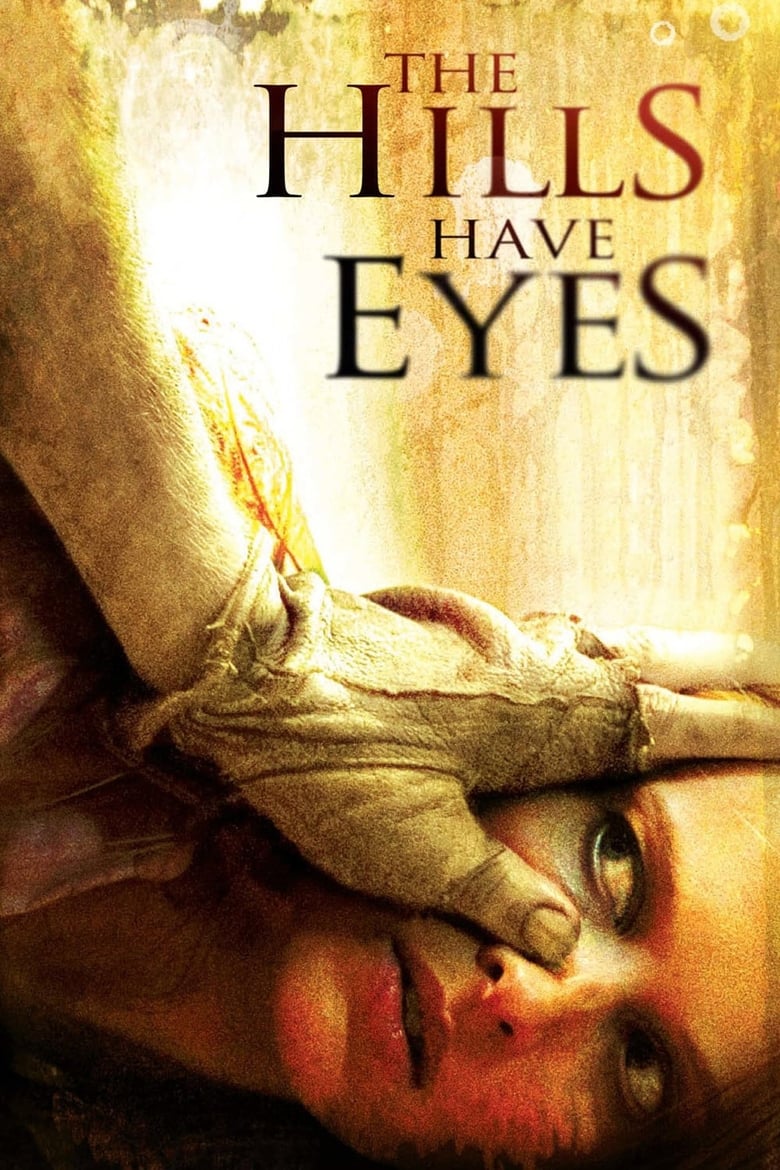
The Hills Have Eyes
“The lucky ones die first.”
Based on Wes Craven's 1977 suspenseful cult classic, The Hills Have Eyes is the story of a family road trip that goes terrifyingly awry when the travelers become stranded in a government atomic zone. Miles from nowhere, the Carter family soon realizes the seemingly uninhabited wasteland is actually the breeding ground of a blood-thirsty mutant family...and they are the prey.
About The Hills Have Eyes
Why The Hills Have Eyes is still worth talking about
Start with a family. A retired detective and his wife, their kids, a baby, two dogs and a caravan — the sort of domestic bundle you trust to get through a long drive. That trust is the engine; when it unravels, everything the film cares about follows.
Alexandre Aja's 2006 remake does not waste time sending them off-course. A stranger at a petrol stop points them toward a quicker path, and soon after the car is disabled by a concealed sabotage that leaves the group stranded. The set-up is deliberately simple: remove the comforts, accelerate the panic. It helps that the cast are recognisable pieces in a recognisable machine — Aaron Stanford as Doug Bukowski among them — so the movie can focus on the scrambling that comes after order collapses. What remains are the themes that make it more than a string of shocks: family, parental protection, lifetime and loss — the things that give the violence weight.
The idea that sets The Hills Have Eyes in motion
The film's premise is economical: a family car trip is derailed by deliberate sabotage, leaving them stranded beside their trailer. It asks a straightforward question — what happens when a routine journey becomes inescapable? — and then makes you live through the answer.
While one strand of the story follows the family, another follows a man who returns to a petrol station and uncovers clues: old newspaper clippings and a bag full of other people's valuables. Those discoveries quietly introduce a larger cause — damaged lives tied to recent nuclear testing — and turn a local menace into a historical wound.
Once the danger touches the trailer, the situation spirals. A terrified young man confesses his ordeal just as two of the attackers slip into the family's temporary shelter; the film pivots from mystery into immediate, messy horror.
By the time Doug and the others race back from trying to find help, the stakes have been raised beyond any single confrontation: survival is personal, and the forces arrayed against them have a backstory that explains their cruelty.
Why Doug Bukowski matters
Doug isn't the family patriarch. He's a son-in-law who ends up being the one who moves. That movement — the choice to leave the safety of the trailer and go look for help — frames him as the film's engine.
Aaron Stanford is credited as the actor playing Doug, and the role exists to test a particular domestic idea: when the ordinary structure of family fails, who becomes the improviser? Doug's decisions drive several rescues and confrontations that turn private terror into action.
Doug's importance is also emotional. The film is, at heart, about family: a community under stress. Doug's choices are a response to that obligation — he doesn't act because he wants to be heroic, he acts because the family depends on him.
There is one quieter connection that underlines his role: a timid, kind-hearted outsider intervenes on his behalf at a crucial moment. That intervention doesn't remove his importance; if anything, it shows how the film balances human fallibility with sudden alliances.
The Hills Have Eyes has more on its mind than the plot suggests
On the surface it's a survival horror with slash touches; underneath it keeps nudging back toward big-picture questions. Freedom is one of them — not political freedom exactly, but the film's recurring idea of being cut off from the choices you expect to have.
Parental protection and family recur so often they feel structural. Much of the narrative pressure comes from the need to shelter the smallest and weakest, to keep a baby and a household intact when everything that usually guarantees safety is gone.
Mortality and lifespan creep in through the film's background details: people affected by long-past decisions, lives shortened or mangled by older catastrophes, and the way that history can ambush the present. It gives the mutants' brutality a context beyond random cruelty. There is also a thread of belief — a willingness, on both sides, to interpret the world through different rules. Fear and loss are the emotional colours the movie paints with; they make the violence feel consequential rather than gratuitous.
The Hills Have Eyes could not belong to any other decade
Arriving in 2006, Aja's film sits comfortably in the decade's taste for remakes that sharpen and escalate older genre ideas. It takes a familiar premise and turns up the pressure until small choices become unbearable.
There is a particular 00s appetite for horror that foregrounds bodily risk and moral panic; this movie wears that appetite openly, offering a stripped-back moral test in place of subtlety.
Being a 2000s film also means it speaks the era's shorthand for escalation: take a classic premise, make it meaner, and don't be afraid to show the cost. The Hills Have Eyes is a product of that moment — direct, unapologetic and built to provoke a reaction.
That reaction is the point. In 2006 the film folded old anxieties into new intensity and let audiences decide whether the brutality served the story. Many viewers found it an effective fit for the decade's horror diet.
What has aged — and what hasn't
What survives best is the family spine. The film's focus on protecting a baby and the idea of ordinary people being pushed into extraordinary violence still rings true. Those stakes don't rust with time.
Fear, in its pure form, also endures. The set-up — stranded people with no obvious escape — is a timeless engine for tension. The film uses that engine relentlessly, and that relentlessness still affects modern viewers.
Certain relationships remain unexpectedly effective: the brief, compassionate bond between Doug and a timid mutant shows the movie can make space for small human gestures amid chaos. That contrast helps maintain emotional balance.
Less durable is the way the film leans into shock to make a point. Some sequences are designed to stun, not to explain, and the bluntness of that choice is more likely to divide audiences now than it did on release. But the core emotional logic — family under threat — is still persuasive.
Why The Hills Have Eyes still matters
People remember the film because it takes a recognisable domestic image — a family driving together — and subjects it to escalating cruelty. That initial, ordinary set-up makes the violence hit harder and leaves characters you care about in real jeopardy.
A few concrete moments stick: the petrol-station suggestion that sends them down the wrong route, the hidden sabotage that strands them, and the discovery of old clippings that tie the attackers to earlier disasters. Those beats give the nightmare a logic.
The movie also refuses easy comfort. Some scenes are deliberately difficult to watch because they refuse to soften the consequences of what happens to the family. That unforgiving stance is part of what people recall. Finally, there are the smaller threads that linger: the rescue of the baby, the survivors finding each other, the image of the group reunited while something still watches from the hills. It's a tidy but uneasy ending that feels like a warning more than a consolation.
Does The Hills Have Eyes still hold up?
Short answer: yes — if what you want is a lean, unflinching horror that makes family responsibility the thing worth fighting for. The film's engine is clear from the start: a road trip, a wrong turn suggested at a petrol stop, and then a deliberate act that ruins the journey. That economy still pays off.
It treats the family as a unit under pressure — parents, children, a baby, even the dogs — and uses that obligation to justify the characters' risks. Doug's decision to leave and seek help is the kind of quiet practicality that grounds the action in human urgency rather than spectacle.
Aja's direction, the film's 2006 timing and its compact 105-minute runtime keep the pace brisk; it rarely lets the central question breathe. That pace is part of its ongoing appeal, though the film's bluntness will also be its stumbling block for viewers who prefer implication over confrontation.
If you're thinking of watching it now, go in expecting a hard, focused nightmare about protection and loss. It still stings where it intends to, and it remembers who it's about: a family who only wanted an anniversary drive.