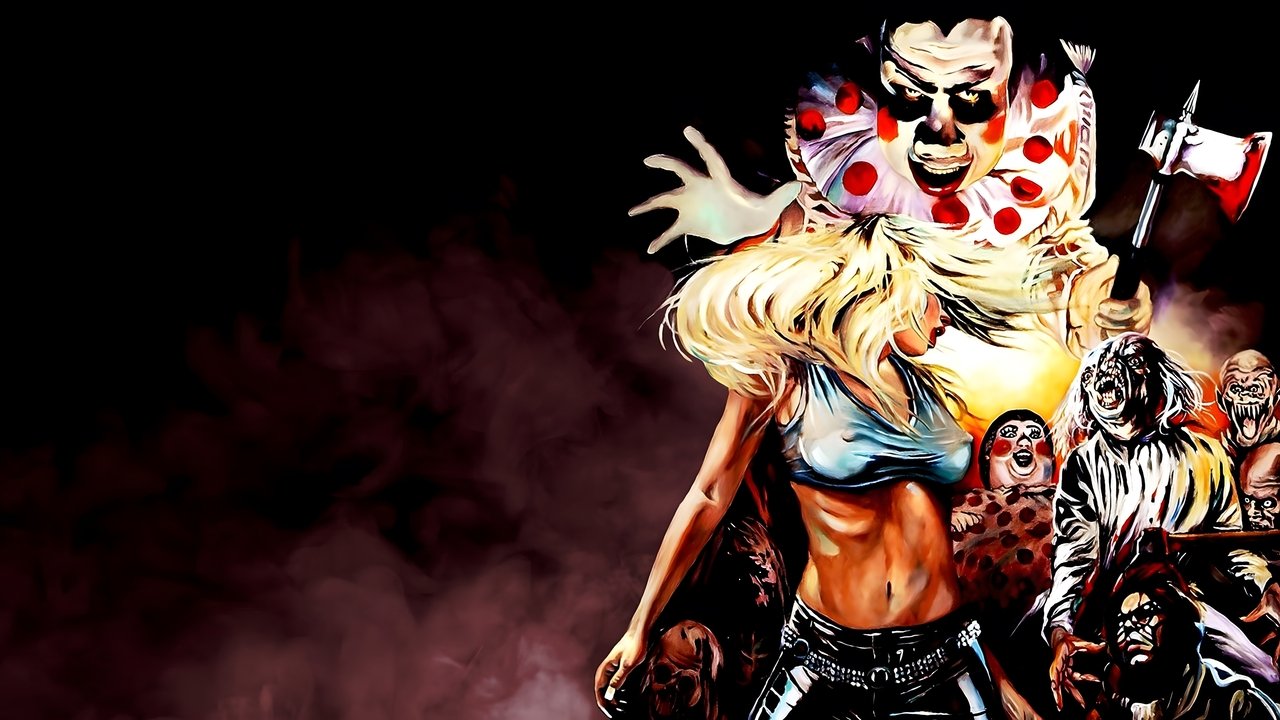
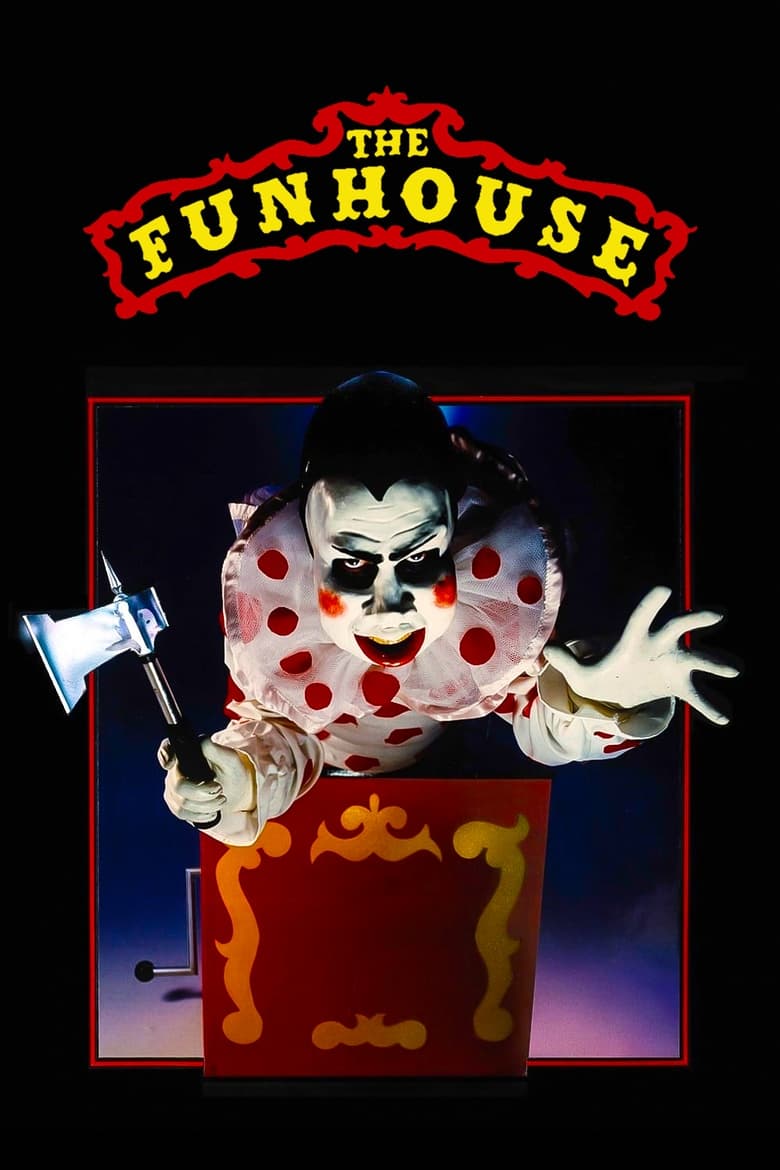
The Funhouse
“Pay to get in. Pray to get out!”
Rebellious teen Amy defies her parents by going to a trashy carnival that has pulled into town. In tow are her boyfriend, Buzz, and their friends Liz and Richie. Thinking it would be fun to spend the night in the campy "Funhouse" horror ride, the teens witness a murder by a deformed worker wearing a mask. Locked in, Amy and her friends must evade the murderous carnival workers and escape before it leaves town the next day.
About The Funhouse
What The Funhouse gets right
Tobe Hooper opens the film with a quick electric shock: a teenage girl attacked while she’s supposed to be private and safe. That early sequence — a home violated — establishes the movie’s appetite for putting ordinary young people in situations that feel suddenly precarious.
The set-up is spare on purpose. In under a hundred minutes, this slasher-adjacent picture moves from a small-town dare to a locked-in nightmare: teenagers sneaking into a travelling carnival for thrills, then choosing to stay overnight in the titular ride. The carnival becomes less a place of fun than a pressure-cooker of choices. And it finishes on an image you can’t shake: Amy Harper emerging at dawn, the survivor of the night’s chaos, while the automaton that crowns the funhouse seems to laugh at her. That mechanical mockery is a neat, nasty punctuation mark — the film knows how to leave you with a guilty, uneasy feeling.
Why Amy Harper matters
Amy Harper is the film’s anchor. We follow her through ordinary teenage rebellion — sneaking off with a new boyfriend and friends to a sleazy travelling carnival — and it’s her point of view that keeps the story from turning into an anonymous catalogue of death.
That domestic thread is important: family is a running concern in the movie, and Amy’s choices feel rooted in that context. She isn’t just a random victim; she’s somebody making decisions that clash with her father’s wishes, which makes the night feel like one more step away from home rather than a standalone misadventure.
The film also flips a private, almost comic scare into something crueler. The person who threatens Amy in an early scene turns out to be her younger brother — a revelation that reframes the family element from background to shock. It’s a reminder that danger in this movie often comes from close, familiar places.
By the end, Amy’s survival isn’t a triumphant crowning moment so much as the exhausted residue of trauma. The story uses her as the human measure against the thrills and cruelties of the funhouse: she’s the one who walks back into the world and has to live with what happened.
The Funhouse has more on its mind than the plot suggests
On the surface it’s a night-at-the-fair horror story, but underneath it’s fussed with a few simple, stubborn ideas: fear, greed and a consumerist tilt that turns entertainment into commerce with teeth. The carnival isn’t neutral here; it’s a place built to sell thrills, and those transactions have consequences.
Greed slides organically into the plot. Small acts of taking — whether money or a risk — domino into violence. The film treats those choices like moral short-circuits: want a quick thrill or an easy profit, and you’ll find yourself dragged into something worse.
Fear is both literal and social. The movie delights in physical fright, yes, but it’s also interested in the way ordinary safety — family, home, boundaries — can be stripped away by other people’s appetites. That collapse of trust is what makes the violent moments feel mean rather than merely shocking.
Finally, there’s a coming-of-age undercurrent. The teens’ choices are rites of passage that go very wrong; the film uses that transition to ask whether growing up can sometimes mean being forced to face the uglier instincts of adults — and of yourself.
The Funhouse could not belong to any other decade
Released in 1981, The Funhouse sits at the start of a decade that loved high-concept teen scares. It’s the kind of economical, genre-bending picture that felt at home at the time: part slasher, part exploitation, part moral fable.
That early-80s placement matters because the film wears its flavours plainly — a carnival’s sleaze, a small-town backdrop, teenagers testing limits. Those elements were being mined for scares across the era, and Hooper’s movie is a concise example of how horror then liked to mix familiar social spaces with sudden violence.
It’s also a brisk movie: under one hour and forty minutes. That compactness gives it a punchy rhythm that feels of a time when films often preferred lean genre storytelling over sprawling plots. Taken together, the film reads like a neat snapshot of what horror cinema was doing in 1981: finding terror in ordinary entertainments and using familiar rites of passage as the engine for its shocks.
What has aged — and what hasn't
A lot of the film’s scares are structural and therefore still effective: being locked in a dark ride, watching something illicit through a grate, or realising you’re trapped with people you don’t fully know. Those situations don’t date — they still generate real claustrophobia and tension.
Other bits sit more awkwardly. The carnival’s adult spots — the strip show and the scene of a ride assistant with a sex worker — are played bluntly and without much subtlety. Modern viewers may find those moments exploitative or discomforting in a way that’s different from the intended shock.
The movie’s family twist — the earlier home intrusion turning out to involve Amy’s younger brother, who was merely mimicking horror films with a rubber prop knife — reads differently today. It underlines a sadder, more domestic angle to the fear, but it’s also a reminder that the film mixes tones: comic, cruel and tragic in quick succession.
And finally, the survivor note still lands. Amy’s exit at dawn, exhausted and watched by a laughing animatronic, keeps the moral ambiguity intact: she survives, yes, but the film ends on a bitter, mocking note rather than catharsis. That sting is a quality modern viewers can respect.
Why The Funhouse still matters
People who remember The Funhouse tend to recall the set-piece logic: a travelling carnival, a dare to stay the night and everything collapsing from there. Those concrete beats — teens sneaking in, daring each other, and the choice to sleep in the ride — make the film easy to summarise and hard to forget.
There are specific, unsettling images that stick. The discovery that the ride assistant’s son has committed a violent act, and the grotesque reveal of the assistant himself, give the film a physical nastiness that lingers. It’s the kind of visual that buries itself in memory and keeps conversations going.
The chain reaction of small crimes and selfish acts — someone taking money they ought not to, adults reacting with violence, the kids arming themselves with props — makes the movie a compact study of how greed and fear escalate. For viewers who grew up with it, that escalation feels like a cautionary tale delivered at the midway.
And then there’s the ending image: Amy stepping back into ordinary life as the animatronic at the funhouse crowning the attraction seems to mock her. That final, almost bitter touch gives the film a signature note — survival, yes, but with no comfort. It’s a neat, mean little flourish that helps the movie stay in the mind.
Does The Funhouse still hold up?
Yes — with reservations. The Funhouse is a brisk, focused fright movie from 1981 that knows its compact running time and delivers a string of escalating set pieces. Tobe Hooper keeps it tight and keeps the stakes personal: teenagers make choices, and those choices have consequences.
The film’s themes — fear, greed and a consumerist edge — are clear and still readable. The night-in-the-ride conceit, the theft and the way adults and kids respond to danger give the picture a moral punch that survives the years, and Elizabeth Berridge’s Amy is the character you care about enough to follow out of the wreckage.
That said, some elements feel of their moment: the carnival’s seedier entertainments and the bluntness of certain scenes sit awkwardly beside the film’s more claustrophobic terror. It’s not a comfortable watch, and it isn’t aiming to be. People sensitive to exploitation in older horror may find parts difficult. If you like compact, idea-driven horror that trades on atmosphere and moral friction rather than subtlety, The Funhouse remains worth seeing. It’s short, it’s tidy and it leaves you with an ugly grin from a machine — which, in this film, is exactly the point.