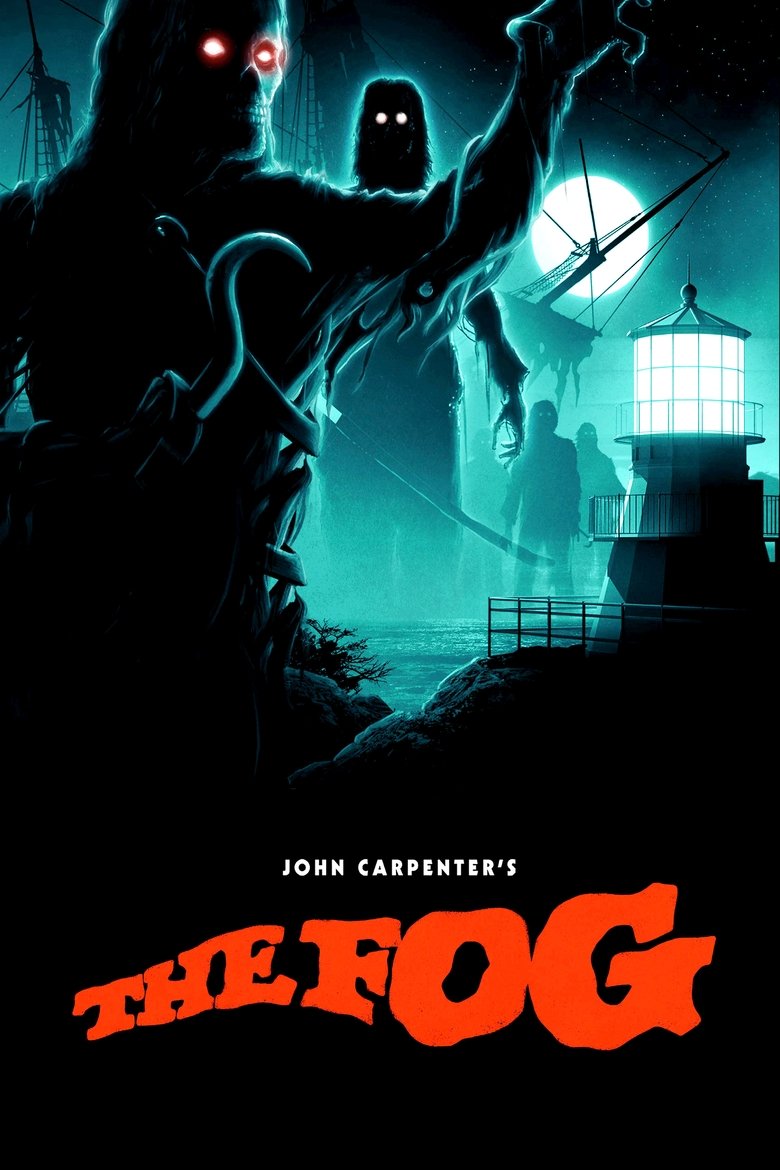
The Fog
“What you can't see won't hurt you...it'll kill you!”
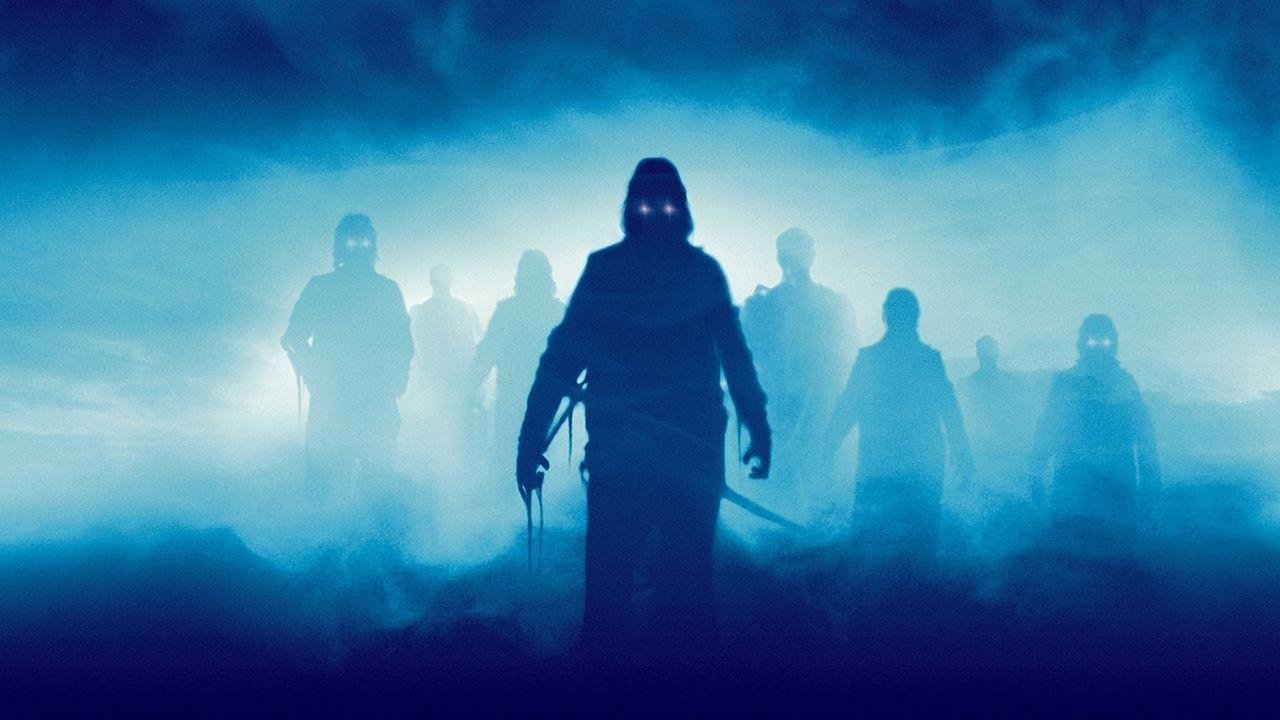
Strange things begin to occur as a tiny California coastal town prepares to commemorate its centenary. Inanimate objects spring eerily to life; Rev. Malone stumbles upon a dark secret about the town's founding; radio announcer Stevie witnesses a mystical fire; and hitchhiker Elizabeth discovers the mutilated corpse of a fisherman. Then a mysterious iridescent fog descends upon the village, and more people start to die.
About The Fog
Why The Fog still stands out
Start with a man at a campfire telling children a story about a ship wrecked on the rocks. That moment — old Mr. Machen spinning a local legend on the eve of Antonio Bay’s centennial — is both invitation and warning: this is a picture that will treat folklore seriously, and then let the supernatural answer back.
John Carpenter directs with a clear, economical aim. The Fog runs for ninety minutes and refuses to pad; it sets a small cast to work (among them Adrienne Barbeau as Stevie Wayne) and lets a single mystery push everyone forward. What keeps people talking is the way the film turns a seaside yarn into something personal. The clipper ship story is not a throwaway; it’s the hinge of the movie — midnight strikes, the town’s past peels back, and the supernatural begins to make itself known.
The idea that sets The Fog in motion
The Fog kicks off as a local legend: a clipper ship mistakes a campfire for a lighthouse and crashes, its crew drowning in an unnatural mist. That old story is the movie’s engine — not a backdrop, but the reason the town is about to be haunted.
Mr. Machen finishes his tale as the clock hits midnight and, as the story promises, strange things begin to happen around Antonio Bay. That neat turn — folklore meeting the supernatural in real time — keeps the film taut and purposeful.
The set-up works because the supernatural is allowed to arrive slowly. Everyone in town feels the shift; it isn’t only a monster movie, it’s a community suddenly forced to reckon with something it thought belonged only to the past.
And when the film asks why certain people are targeted, it doesn’t look for metaphysical excuses so much as human ones: the past — and the secrets that built the town — has consequences that will have to be faced.
Why Stevie Wayne matters
Stevie Wayne is the town’s radio voice and, crucially, its communicator. We meet her in a domestic register — her son brings her a piece of driftwood from the beach — and those ordinary details tether the film’s horror to something people can recognise.
That driftwood is not a mere prop; it connects Stevie and her family directly to the returning past. As the film moves, her role shifts from broadcaster to parent: the radio becomes a way to plead, to warn, to keep a child safe.
The movie layers that family concern on top of the larger mystery that Father Malone uncovers: his grandfather’s diary exposes a century-old betrayal. Stevie’s fear and practical urgency give the supernatural stakes that feel immediate — this isn’t abstract terror, it’s about protecting the people closest to you.
Put simply: Stevie matters because she makes the town’s crisis human. Her domestic life — the son, the radio booth, the lighthouse contact point — gives the film somewhere to aim its scares and someone to root for.
The Fog has more on its mind than the plot suggests
On the surface The Fog is a ghost story. Underneath, it’s about family — how ordinary people are drawn into extraordinary violence and what they will do for their own.
Parental protection is threaded through the whole film. The danger isn’t abstract myth; it threatens children, homes and the routines that make a town feel safe. That makes the horror feel urgent rather than merely atmospheric.
Loss is present in different keys: there’s the direct pain of death, but also the loss that comes from discovering your community was founded on a rotten secret. Heroism arrives not as grand gestures but as stubborn, small acts to save others. Isolation completes the set: Antonio Bay is cut off when the fog moves in, and that claustrophobia forces characters into choices. The film’s scares work because they are woven into these human pressures.
The Fog could not belong to any other decade
Released in 1980, The Fog sits right at the cusp of a new decade. That timing matters: it feels like a film unafraid to be concise — tightly plotted and compact in runtime — at a moment when horror was finding new shapes.
It’s a product of its year rather than a swaggering period exercise. Being an early-80s picture, it trades on small-town anxieties and local legends rather than blockbuster spectacle.
Put another way: this is part of the 1980s’ appetite for stories that use ordinary communities as their stage. The Fog chooses a single town and mines that confinement for dread and drama.
Its place at the start of the decade gives it a neat clarity of purpose: a compact runtime, a clear premise and a readiness to let regional folklore run the show.
Why The Fog still matters
The Fog lingers in memory because its starting image is so simple and effective: Mr. Machen telling a seaside tale about a doomed clipper, then watching midnight eat into the campfire’s comfort. That sequence makes the town’s fear feel inevitable.
The movie’s moral engine — a buried atrocity from 1880, revealed by Father Malone’s discovery of his grandfather’s diary — gives the supernatural weight. These revenants are not random; they are returning for an accounting, and that gives the hauntings a grim logic.
There are a handful of set-pieces people remember: the way Stevie’s life is dragged into the threat when her son brings her the inscribed driftwood, the cassette that seems to carry a threat, and the community sheltering in the church where the stolen gold cross is found in a cavity in the wall.
All of that combines into a distinctive emotional package: it’s a ghost story that asks who benefited from a crime, who pays for it a century later, and what ordinary people will do when the sins of their elders come knocking.
Does The Fog still hold up?
Yes — if you want a tight, character-centred ghost story that isn’t shy about tying supernatural events to human wrongdoing. John Carpenter keeps the running time economical and the stakes focused, and that restraint gives the film a steady pace.
The heart of the film is simple: family and protection. Stevie begging listeners to save her child, and the townsfolk gathering in the church around the stolen gold, make the horror feel urgent rather than decorative. Those human concerns are an effective hook for viewers who prefer dread with a moral edge.
It’s not aiming to be everything to everyone. At ninety minutes it’s lean, small-scale and intent. If you turn up expecting complex mythology or a sprawling epic, you’ll be disappointed. If you want a concise, sometimes brutal small-town ghost story, it delivers. So should you watch it? Yes — if you like your horror concentrated and character-driven. Think of The Fog as a short, sharp tide: it comes in, reveals what’s been hidden, and leaves the town changed — and just possibly warned for next time.