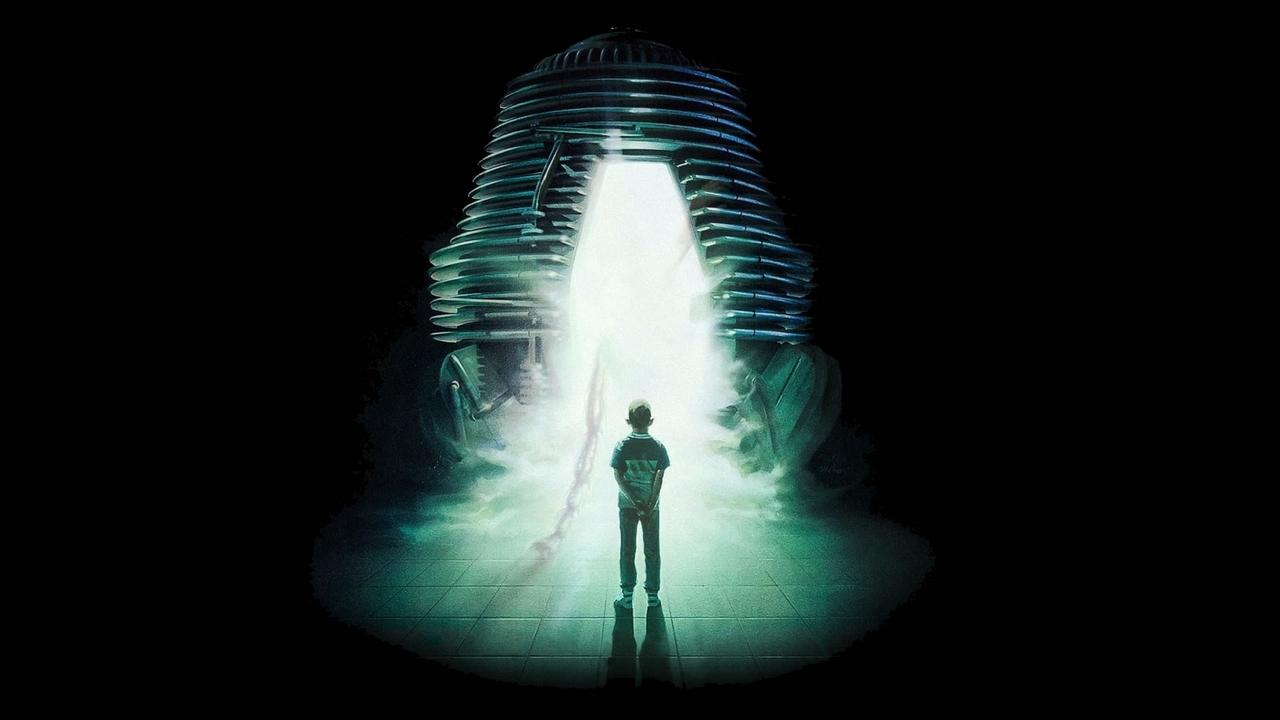
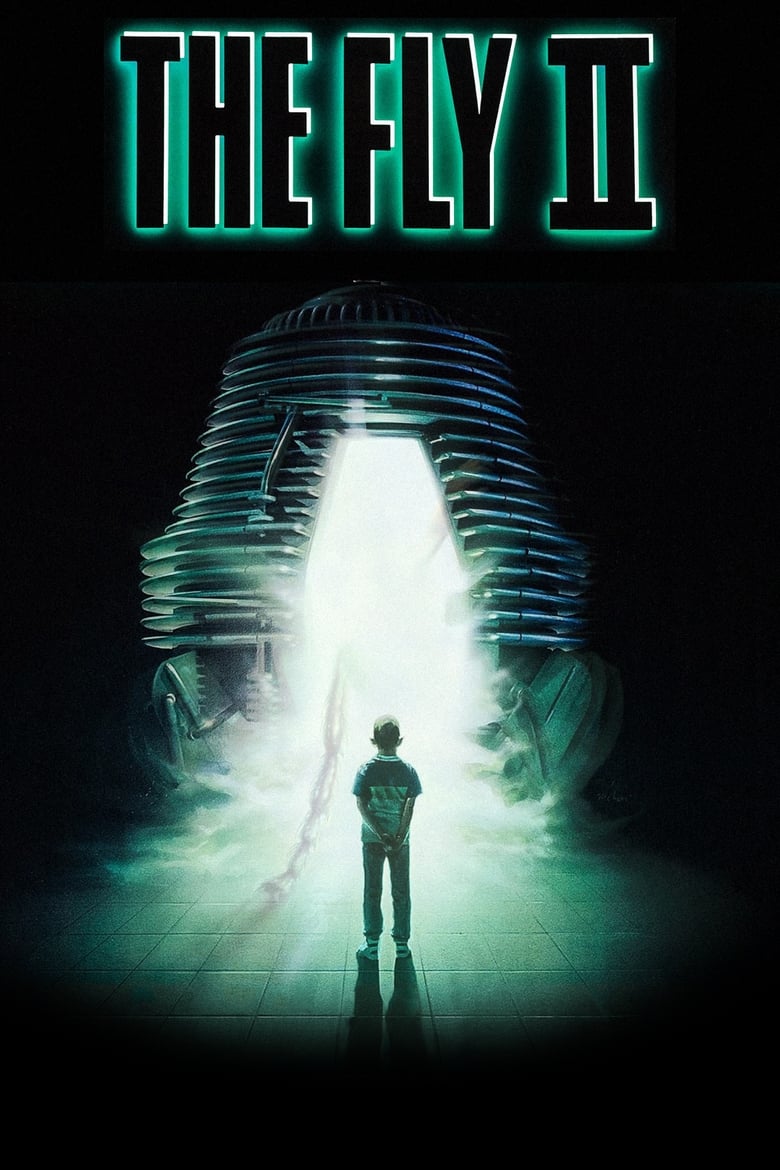
The Fly II
“Like father. Like son.”
Martin Brundle, born of the human/fly, is adopted by his father's place of employment (Bartok Inc.) while the employees simply wait for his mutant chromosomes to come out of their dormant state.
About The Fly II
Why The Fly II still stands out
Start with the opening fact: Veronica Quaife dies giving birth to a larval sac. Out of that sac comes a boy — and that single dare-to-be-weird image is the engine for the whole film. It sets The Fly II apart from the usual sequel treadmill because its central puzzle is not simply 'what will the monster do next?' but 'what does this child become?'
Chris Walas, making the jump from effects veteran to director, steers the story through horror and science fiction with one foot in family drama. The movie clocks in at 105 minutes and keeps the focus tight: this is Eric Stoltz’s Martin Brundle (and a younger Harley Cross as the child) trying to find a life inside systems that were never designed for him. Genre-wise it wears several badges — horror, body horror, sci-fi, the occasional thriller beat — but what lingers is the film’s interest in how a human life can be accelerated, contained and watched. That strange combination of tenderness and intrusion is what still makes people talk about it.
The idea that sets The Fly II in motion
The basic setup is deliberately simple and a touch cruel: a child born from experiment-related circumstances grows up inside the company that funded those experiments. He’s enclosed inside a clinical world where normal childhood rules don’t apply.
That world is where the film’s problem is planted. Martin is shown — repeatedly — that his only real shot at changing his fate lies with the very technology that produced him. Conversations with people who remember his father make it plain: the Telepods are not just equipment, they’re the only hope he’s been offered.
The story pushes on a neat dramatic hinge. Martin’s life is both a miracle and an experiment; that tension keeps the plot moving without needing elaborate set pieces. The setup works because everything he wants — understanding, cure, freedom — is tied to the same machine he’s been raised around.
And, yes, the setup lets the script swing between escape and transformation: without spoiling every beat, the film does take Martin through a very literal cocooning and a violent return to the place that created him.
Why Martin Brundle matters
Martin is the movie. Eric Stoltz plays the adult version, but the film never lets you forget where he comes from: a child who hatched from an unnatural birth, raised inside a corporate complex and watched like an experiment.
He matters because his contradictions carry the plot. He knows he ages faster than others, and yet he’s been lied to about the cause. That combination of bright curiosity and limited truth makes him sympathetic in a way a straight-up monster rarely is.
Those early scenes — the kid discovering laboratory animals, befriending a dog, then later seeing what the lab does to living creatures — give him moral weight. The moment he chooses mercy for the suffering animal is small and decisive; it tells you what kind of person he wants to be, even as his biology pulls him another way.
Crucially, Martin is also the bridge between intimate human relationships and the terrifying legacy of his father’s work. Offered a bungalow and the job of repairing the Telepods, shown videotapes of his father’s experiments, he accepts because he’s desperate for knowledge and for control over his fate. That makes his choices—breaking into records, demanding answers—feel painfully inevitable.
The Fly II has more on its mind than the plot suggests
On the face of it, The Fly II is about mutation and horror. Underneath, it’s quietly about family — what you inherit, what you lose, and who decides how you live. A child with no ordinary parentage still wants the same things: care, truth and a chance to be free.
Humanity is another recurring pulse. Martin’s actions — especially his tenderness toward animals and his attempts to find a cure rather than use someone else as a guinea pig — keep the story invested in what makes someone human beyond their biology.
Loss threads through everything. The film begins with a mother’s death and then places Martin inside a system that substitutes guardianship for affection. That cumulative absence shapes his mistrust, his vulnerability and the moral choices he faces. Finally, there’s mortality and technology tangled together. The Telepods promise transformation and longevity but at a terrible cost. The film treats technology as a double-edged thing: it can save, but it can also be used to commodify life.
The Fly II could not belong to any other decade
Released in 1989, The Fly II arrives at the end of the decade in which genre films were happy to mix visceral body horror with science-fiction outlines. That late-80s identity matters because the film expects audiences to sit with both scientific ideas and very physical, disturbing change.
The movie’s hybrid genre — horror, monster, body-horror and sci-fi — reflects a time when filmmakers were comfortable using special-effects-driven spectacle as a way of asking awkward questions about identity and technology.
Framing a familial story within a corporate scientific setting feels of a piece with the decade’s appetite for high-concept setups that still wanted to be emotionally readable.
Put simply: the film’s blend of personal stakes and grotesque transformation reads like a product of 1980s genre imagination, and 1989 is exactly the year that tone lands hard.
Why The Fly II still matters
People who grew up with The Fly II remember that it refuses to be merely a sequel. It starts with that stark birth image — a sac that opens to reveal a normal-looking baby — and then asks what life becomes when your origins are experimental.
The film’s setup — Anton Bartok adopting the child and raising him in a clinical environment — keeps the story intimate and unnerving. Martin’s accelerated maturity (a genius-level intellect, no need for sleep, physical growth that outpaces time) makes him an unusual protagonist: brilliant, trapped and always a little out of sync with the world.
Moments like the young Martin finding and then mercy-killing a maimed laboratory dog are the kind of scenes that stick. They give the monster story a moral centre: choices that prove the character’s humanity even as his body betrays him.
Finally, the movie’s trajectory — Bartok’s plan to exploit the Telepods, Martin’s transformation and the desperate gambits around the machine — leave a peculiar, unsettling image in the head: a ruined man crawling towards a bowl with a single housefly on its rim. It’s grotesque, yes, but it’s also the film refusing a tidy, sentimental ending.
Does The Fly II still hold up?
Yes—if your idea of holding up includes being weird, emotionally blunt and unafraid of grotesque images. The Fly II, directed by Chris Walas and running at 105 minutes, is not subtle in its body-horror mechanics, but it earns its shocks by keeping the story rooted in Martin’s strange life: a boy hatched from a sac, adopted by Anton Bartok and raised inside a clinical compound.
Eric Stoltz’s Martin is compelling as the central through-line because the film keeps returning to his dilemma: brilliant, ageing fast, raised on videotapes of his father and offered the Telepods as both work and hope. That knot of family, mortality and technology is the movie’s real currency.
If you care about monsters that make you feel something — guilt, pity, a squeeze of loss — then The Fly II will still land. It leans into its late-80s temperament, mixes horror and family drama, and doesn’t pretend the solutions are neat. So should you watch it? Absolutely — not as a perfect film, but as one that trusts a strange premise enough to explore the human decisions inside it. It’s a sequel that remembers to ask what childhood means when the past is scientific property, and that question has a way of staying with you.