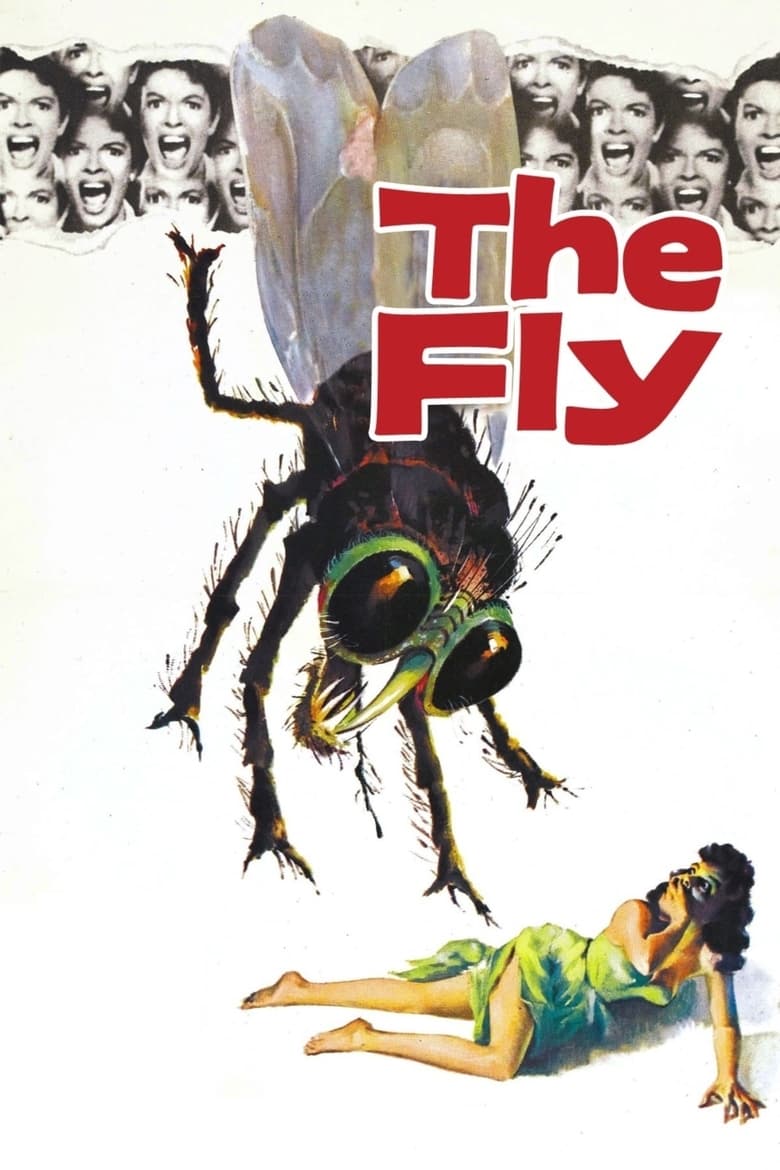
The Fly
“If she looked upon the horror her husband had become...She would scream for the rest of her life!”
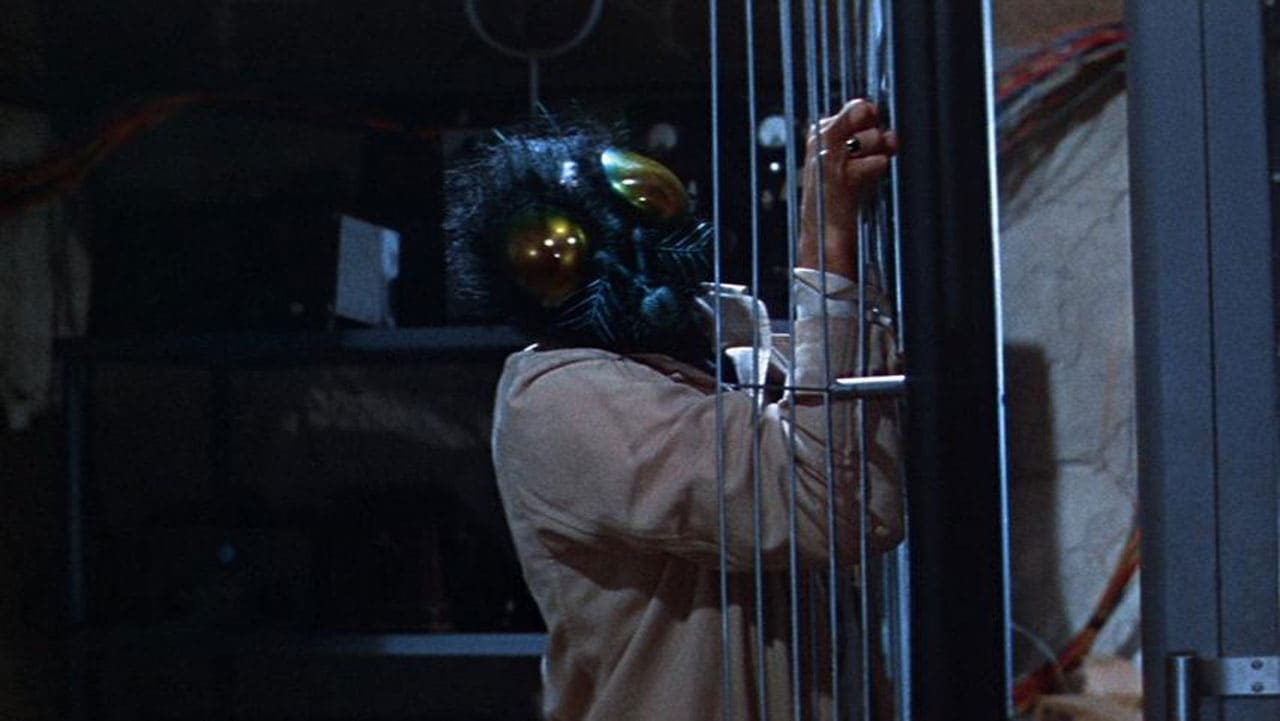
Industrialist François Delambre is called late at night by his sister-in-law, Helene, who tells him that she has just killed her husband. Reluctant at first, she eventually explains to the police that he invented a matter transportation apparatus and, while experimenting on himself, a fly entered the chamber.
About The Fly
Why The Fly still stands out
The Fly begins like a locked-room mystery and then quietly turns into something much harder to pin down: a domestic tragedy with a monstrous centre. Right away the film stakes its claim — a scientist is discovered crushed beneath a hydraulic press, and everyone around him must choose what to believe.
Kurt Neumann keeps the running time tight — 94 minutes — and the cast small enough that every loss lands. David Hedison's André Delambre is the absent father whose experiments ripple out through his wife and son; Patricia Owens and Vincent Price play the siblings left to clean up the wreckage in different ways. What makes the picture linger is its odd mixture of genres. It’s pitched as horror and science fiction, yes, but the engine of the story is family: how a cheerful household becomes a crime scene, how parental instinct and grief bend people into improbable choices. That 1958 combination still has the power to make you squirm — and to make you feel sorry.
The idea that sets The Fly in motion
At the heart of The Fly is a single, economical premise: a scientist builds a device that disassembles and reassembles matter. After proving the concept on small, inanimate items he scales up and builds a man-sized set of chambers.
The movie then turns that gadget into domestic misfortune. When the machine is used with living creatures, the tests go wrong — and a tiny mistake becomes a family crisis.
That combination of an ingenious device and a home life in peril gives the plot its push. It’s not a catalogue of scientific spectacle; it’s a device whose failure forces people into moral corners.
And when the frantic search for the escaped insect fails — the tiny thing slips away through a crack — the film tightens: the clock is invisible but very real, and the cost of failure becomes personal.
Why André Delambre matters
André Delambre is the story’s fulcrum and the first absence the film asks us to live with. David Hedison plays him, but the character’s importance isn’t a matter of screen time so much as consequence: his choices set the tragedy in motion.
Before the accident, André is a family man — the flashbacks show him at home with Hélène and their son, a household you can imagine as ordinary until the experiment intrudes. That domestic happiness makes the stakes immediate; this is a scientist whose work has real mouths to feed and a child who will have to explain his father’s fate.
André’s experiments are telling. He starts with newspapers and inanimate objects, then moves on to animals — a household pet and a guinea pig are part of the testing sequence. Those early trials read less like spectacle and more like a neighbour tinkering in the basement; the film uses that thrift to make his later accident feel like a family tragedy rather than pure shock.
Finally, André functions as a warning and a mirror. The film gives us the aftermath — a crushed man, a grieving family — and asks how curiosity, carelessness or simple bad luck can change ordinary people into someone else’s headline.
The Fly has more on its mind than the plot suggests
Strip away the insect imagery and the machine, and The Fly is really holding a mirror up to family life. The movie keeps returning to the household — the flashbacks of André, Hélène and Philippe remind you that whatever monstrous form the plot takes, people are the ones who must cope with the wreckage.
Mortality threads through everything. The failed experiments on animals, the way a small error can become irreversible, the diminishing of André as his human will fades — all of these are ways the film contemplates lifespan and loss without a lecture.
Parental protection and the cost of keeping a child safe are constant pressures. Hélène’s behaviour after the discovery — her fixation and the choices that follow — reads like someone trying to preserve an ordinary life against impossible evidence. And finally, it’s a film about technology and humanity rubbing up against each other. The disintegrator-integrator is a clever science-fiction idea, but the emotional engine is how people respond when that technology breaks the social fabric they're used to.
The Fly could not belong to any other decade
Released in 1958, The Fly lands squarely inside the era’s blend of postwar curiosity and anxiety about scientific progress. There’s no heavy-handed sermon; instead the movie uses a compact, almost parable-like premise to ask what happens when invention outruns judgement.
That late-1950s setting matters because the film treats technology as something domestic — a basement experiment rather than a distant laboratory — which turns futuristic ideas into immediate family problems.
It’s the decade’s appetite for high-concept stories married to intimate human consequences. The Fly takes a speculative machine and forces it into a kitchen conversation, which is why it reads so distinctively of its time.
You can enjoy it as a period piece, sure, but more interestingly it’s a snapshot of how 1950s cinema could make scientific speculation feel like bad news from next door.
What has aged — and what hasn't
Some elements of The Fly still punch. Its focus on family — a happy household upset by an experiment gone wrong — keeps the film grounded in emotions that don’t date. The domestic grief, the child's confusion, the sibling choices: those beats land because they’re recognisable human responses.
The way the film stages its early tests — objects, then pets — still reads as sensible plotting. You understand why the characters trusted the machine, and that makes the collapse believable rather than contrived.
Where it might feel quaint is in the trappings and the shorthand of genre — viewers today expect different pacing or more explicit science, perhaps. But the core tension, about a family trying to hold together in the face of a bizarre truth, remains effective.
A modern audience may also notice the moral shortcuts characters take — like a brother inventing a small lie about catching a strange fly — and read different shades into those choices. That ambiguity gives the film a useful second life; it’s not just a monster picture, it’s a story about people complicating each other’s grief.
Why The Fly still matters
People remember The Fly because it wraps a science-fiction conceit around ordinary people and then refuses to let the monster be the only point of interest. The opening death — a scientist crushed in a press — promises spectacle but the film spends a lot of time on what the household does next.
Hélène’s confession and her subsequent behaviour turn the story into a case study of how grief can look like guilt, and how communities try to make sense of things that shouldn’t be possible. That personal bewilderment is as memorable as any clever effect.
The film also gives us a neat, terrible logic: André’s device works well enough to tempt testing on living creatures; a tiny contamination — a fly — produces an outcome that is gruesome and intimate. That twist keeps conversations ticking over because it’s both inventive and horribly specific. In the end, the decision by André’s brother and the inspector to conceal the full truth so the mother isn’t prosecuted leaves the audience with a moral aftertaste. The Fly matters because it forces ordinary people into impossible choices, and those choices linger longer than the monster itself.
Does The Fly still hold up?
Yes — if you come for the human knot as much as the monster. The Fly is less a catalogue of shocks and more a short, sharp parable about a family undone by technology and the desperate choices that follow. Hélène’s odd behaviour after uncovering the truth, and François’s protective little lie about a white-headed fly, keep the drama domestic rather than purely sensational.
It helps that the film doesn’t overstay its welcome. At 94 minutes, Neumann’s picture moves with discipline: there’s room for tenderness in the flashbacks, time for the scientific setup, and then the fallout that shapes everyone’s life afterward.
If you’re watching now, look for the way the story uses small, believable details — the pet experiments, the brother’s white lie, the inspector drawn into complicity — to make the fantastic feel uncomfortably possible. Those are the elements that age well.
So yes: watch it. Not because of any one gruesome image, but because The Fly asks a sensible question in an odd way — what does a family do when the person they love becomes something they barely recognise? That question still lands.