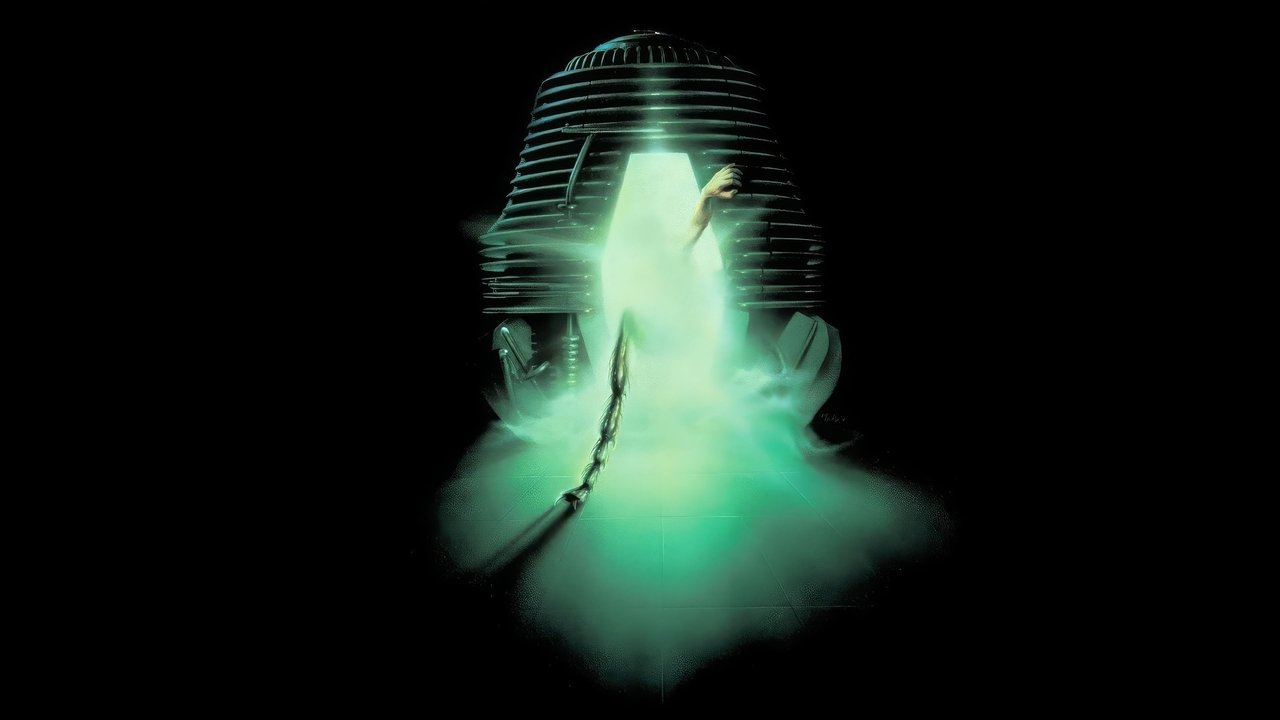
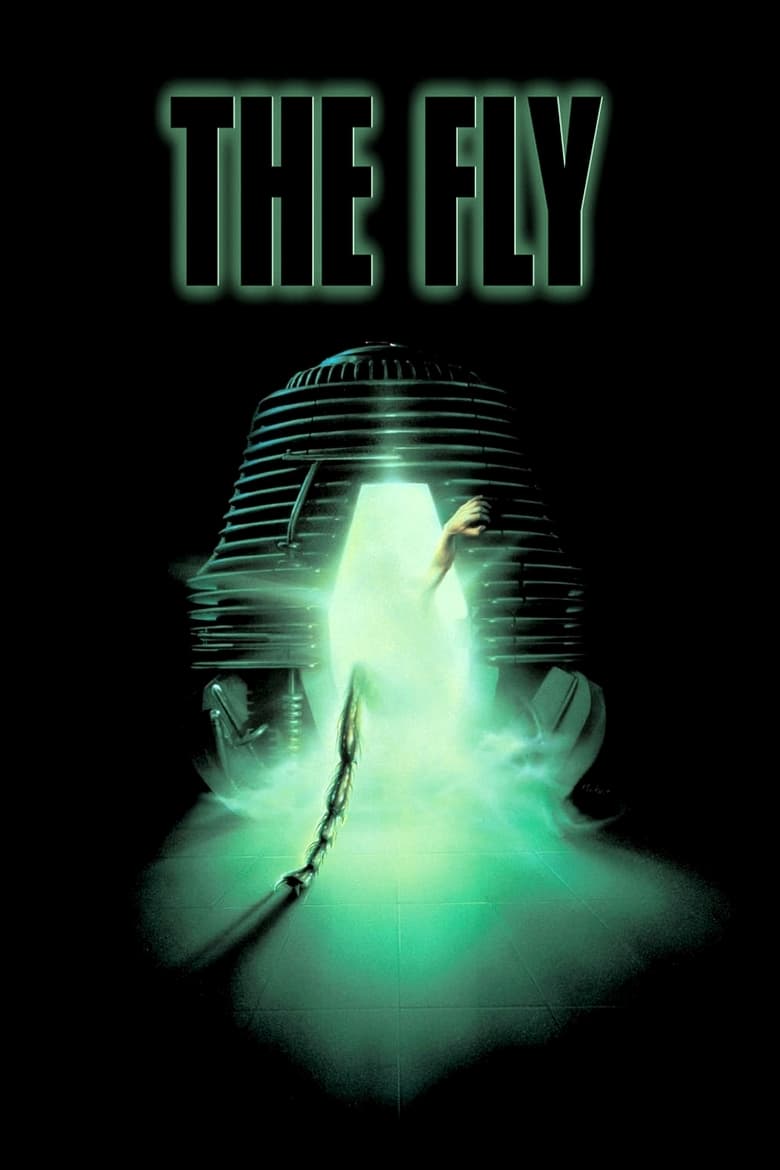
The Fly
“Be afraid. Be very afraid.”
When brilliant, eccentric scientist Seth Brundle makes a huge technological breakthrough in teleportation, he decides to test it on himself. Unbeknownst to him, a common housefly manages to get inside the device and the two become one.
About The Fly
Why The Fly still stands out
You start with a set-up that’s almost embarrassingly simple: a brilliant, eccentric scientist meets a science journalist at a press event and, one thing leads to another, he shows her his machine. The Fly wastes no time getting to the heart of its trouble — human curiosity bumping up against a piece of technology that isn’t quite ready for people.
It helps that the film keeps itself lean. At ninety-two minutes it’s brisk: an encounter, a romance, experiments, a mistake. That economy means the movie spends the right amount of time in each register — romance, dread, and then something nastier — without padding. And yes, it’s David Cronenberg’s film. He’s the director steering those ingredients — scientist, machine, lover — into a story that sits squarely between horror and something more human. What lingers isn’t just the creature spectacle; it’s the way the personal collapse is treated as the main event.
The idea that sets The Fly in motion
The engine of the film is tidy and obvious: Seth Brundle is working on teleportation — a pair of "telepods" that promise instantaneous transport. It’s a neat cinematic trick, because it’s both fantastical and precise enough to create plausible stakes.
When the journalist Ronnie Quaife agrees to document his work, their relationship gives the science a human scoreboard. That exchange — secrecy for exclusivity — is the bargain that drags personal loyalties into a lab problem.
The telepods demonstrate something important early on: they can move objects, but live tissue behaves differently. A failed experiment with a baboon makes it clear that the machine isn’t merely unreliable; it’s dangerous in a way that messes with living things.
From there the setup does what good premises do: it turns those facts into pressure. Romance, jealousy and a scientist’s hubris collide, and a single misstep — a fly in a pod — becomes the pivot that turns curiosity into catastrophe.
Why Seth Brundle matters
Seth Brundle is the film’s magnet. He’s a scientist first and a man second; the story measures everything against his experiments and the way those experiments reorder his life. That’s why the early meeting with Ronnie feels so important — it’s the moment his private world admits a witness.
His romance with Ronnie isn’t window dressing. It humanises the science and raises the stakes: what was a solitary obsession becomes something that can be loved, betrayed and, crucially, inherited. The relationship forces the movie to treat the telepods as more than a gadget.
Seth’s choice to test himself alone — and to do so while a tiny fly goes where it shouldn’t — is the undoing that matters because it’s recognisably human: impulsive, prideful and blindingly convinced that one clever fix will prove everything right.
Finally, the character’s turn toward arrogance and violence is what makes the tragedy compelling rather than merely gross. Brundle moves from eccentric experimenter to someone who insists his discovery is for the best, even as it corrodes him; the moral question isn’t abstract, it’s painfully personal.
The Fly has more on its mind than the plot suggests
On the surface it’s a horror about a scientist turned monster. Underneath it’s negotiating a few big human questions: what makes someone human, and what happens when technology changes that definition from the inside out? The film asks those questions through choices, not speeches.
Fear is the obvious compass here: fear of decay, fear of loss, fear of becoming someone you no longer recognise. The terror isn’t just physical; it’s about the loss of reason and compassion as something inside Seth is overrun by primitive impulses.
Love is folded through the whole thing. The romantic bond with Ronnie complicates every scientific decision — it makes some risks understandable and others unforgivable — and later becomes a grim measure of what might yet remain of Seth’s humanity. There’s also a quieter idea about freedom. Seth wants the freedom his invention promises: to move without constraint, to master space. But the film points out that freedom without humility can become captivity — for him, for Ronnie, and for the life they might have made.
The Fly could not belong to any other decade
The Fly arrived in 1986, and its timing matters. The mid-80s were a moment when science fiction and horror were comfortably entangled — not just spectacle, but moral discomfort about what new technology could do to people.
That era’s films often put scientific curiosity front and centre, and here Cronenberg takes that preoccupation to a personal place: the problem isn’t a looming machine or faceless system, it’s one man’s experiment and how it collapses his relationships.
Sitting where 80s genre cinema and intimate drama meet gives the film a tone that feels of its time without relying on nostalgia. It borrows the decade’s appetite for risky premises and then clamps down on sentiment, keeping the emotional ledger clear.
So while the film wears its decade like a context rather than a costume, you can feel why 1986 was the right moment for a story that treats technology as both promise and threat at once.
What has aged — and what hasn't
The central idea — a teleportation device that behaves unpredictably with living tissue — still hooks. The telepods are a tidy, cinematic problem: they give the story a clear mechanical rule and then show what happens when that rule is broken. That clarity helps the movie survive the years.
The love story remains a useful ballast. Seth and Ronnie’s relationship turns the technical horror into something emotionally immediate: the stakes are not just curiosity, but their life together and the question of what will be left of it.
Fear, too, survives. The film’s concern with loss — of self, of reason, of human shape — is a kind of fear that hasn’t dated. That dread is less about jump scares and more about the slow unravelling of a person, which reads as uncomfortable now just as it did then.
Some beats depend on the audience accepting the premise quickly — a man testing his own invention, a fly in a pod — but if you buy those choices the film’s momentum still holds. It’s compact enough that the setup pays off cleanly for modern viewers.
Why The Fly still matters
People remember this film because it pairs an intimate human story with a single clear piece of speculative technology. The telepods are simple to explain and devastating in consequence, which is why the movie sticks in the memory: the concept is easy to tell and hard to forget.
The romantic thread gives the horror weight. The fact that they fall in love turns the scientific misadventure into a tragedy: choices made in the name of discovery ripple into personal loss, and that emotional ledger is what keeps viewers talking.
There’s also the physical tale of deterioration: the machine’s confusion at two lifeforms leads to a molecular fusion, and from there the narrative tracks the steady human loss. That progression — discovery, fusion, deterioration — is narratively satisfying in a bleak sort of way. Finally, the ending cements the movie’s emotional register. The desperate attempts to salvage humanity, the plea to end suffering, the final, painful resolution — those are the moments that anchor the film in memory long after the mechanical idea has been summarised.
Does The Fly still hold up?
Yes — provided you want a horror that treats its grotesque turns as consequences of character, not just shock. At its core the film is about people who fall in love, and about how technology rearranges what that love means. That combination still feels sharp.
It’s compact (ninety-two minutes) and focused: the telepods are a clear device that forces moral and personal choices. The story’s insistence on asking whether any remnant of humanity remains — and on making that question personal — is what gives the movie integrity today.
The Fly isn’t comfortable viewing, and it doesn’t try to be. Its themes — humanity, technology and fear — are woven into the plot choices from beginning to end, and the tragic ending keeps the film from sliding into mere creature spectacle.
If you’re curious about a horror that uses science fiction to test human limits rather than to dazzle, this is still worth your time. Watch it as a small, sharp tragedy disguised as a monster movie — and bring a stout constitution.