The First Omen
“Create something to fear.”
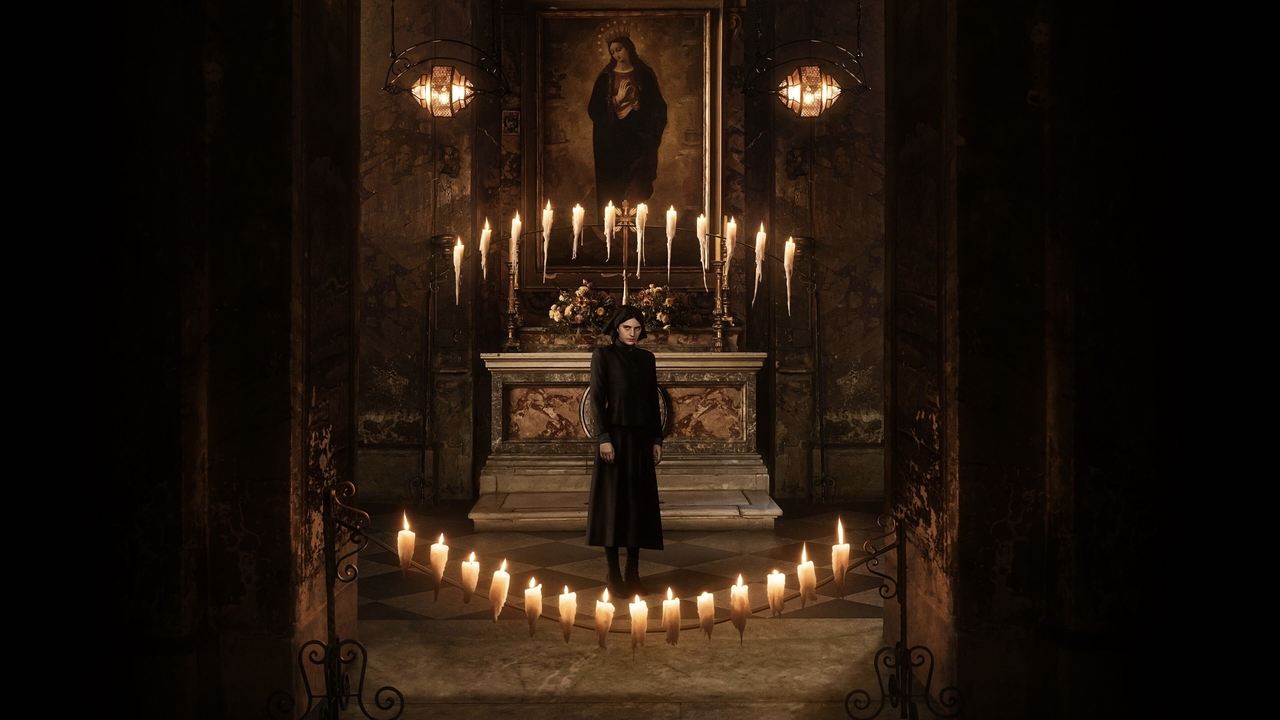
When a young American woman is sent to Rome to begin a life of service to the church, she encounters a darkness that causes her to question her own faith and uncovers a terrifying conspiracy that hopes to bring about the birth of evil incarnate.
About The First Omen
Why The First Omen is still worth talking about
You know the image: an old photograph labelled with a name that suddenly means everything. The First Omen opens with that small, unsettling thing — a picture of a baby marked "Scianna" — and that quiet detail pulls the rest of the film into its orbit.
Arkasha Stevenson uses a 120-minute running time to dig past jump scares and conspiracy set-pieces and steer the camera toward people who are trying, in very human ways, to cope with forces they don’t understand. Margaret, the film’s centre, arrives at the Vizzardeli orphanage amid unrest, and what begins as a story about belief gradually becomes a story about choices and protection. The cast around her — from Father Brennan to Abbess Silva and Margaret’s roommate Luz — all help make the dread feel organised rather than random. Which is important: when a film builds its quiet mechanics carefully, the loud horrors that follow land harder.
Why Margaret matters
Margaret is the film’s steady, stubborn centre. She arrives at Vizzardeli as a novice, disoriented by political unrest and the strange rhythms of the orphanage, and it’s through her eyes that we learn what the place hides.
A single night out — a disco invitation from her roommate Luz — changes everything: she dances with Paolo, blacks out, and wakes with a hole in her memory. That gap does more than drive plot; it leaves Margaret vulnerable in a way that makes her attempts to protect others feel urgent rather than performative.
Her bond with Carlita, the mistreated orphan who sees things no one else does, is where Margaret’s character becomes memorable. She doesn’t simply notice Carlita; she refuses to look away, even when Father Brennan warns that “evil things” are coming. That refusal is not naïve — it’s stubborn and costly.
The late-game revelations reframe her entire journey: Margaret discovers marks on herself, remembers being assaulted, and ends up choosing a life in the mountains years later, living quietly with Carlita and a daughter she protects. It’s a closed-loop that makes the character feel like she’s paid for her choices, and then chosen them again.
The First Omen has more on its mind than the plot suggests
At surface level it’s an origin story about a conspiracy to birth the Antichrist. Under the surface it’s quietly occupied with family — not just bloodlines but the messy, chosen families people form when everything else falls apart.
Parental protection is threaded through the film in a strangely literal way: adults in positions of power argue over who should rear certain children, and those arguments reveal desperation as much as malice. That tension makes the stakes feel intimate rather than purely apocalyptic.
Freedom is another recurring note. Margaret’s missing memories — she wakes with no recollection of what happened the night she collapsed — turn the film into a portrait of someone trying to reclaim agency. The horror comes from being denied the right to know yourself.
Memory itself operates like a currency. Recovering what happened reshapes loyalties and forces characters to act differently; the eventual choice to live in seclusion, years later, is a bargain struck between remembering and protecting what remains.
The First Omen could not belong to any other decade
This is a 2024 movie through and through: it was released in 2024 and sits squarely within the cinema of the 2020s. That placement matters because the film feels deliberately reflective — a modern director using familiar horror bones to ask personal questions.
The First Omen’s conversation with its own past is a 20s move. Instead of simply retelling a well-worn tale, it repurposes an origin concept to examine the human costs that such myth-making imposes.
Put another way: dropping a 1970s-set conspiracy into a 2024 release creates a two-way mirror. The film looks back at older horror vocabulary while speaking with a 2020s attention to interior lives and consequences. If you enjoy recent horror that likes its ideas loud and its motives quieter, this is very much a film of the decade — not because of gimmicks, but because of the way it lets contemporary concerns steer a classic story.
What has aged — and what hasn't
What still feels sharp is the film’s commitment to family as the key engine. The idea that people will rearrange institutions, lie or even commit monstrous acts in the name of protecting or controlling children is unpleasant and recognisable, and that unpleasantness hasn’t dulled.
The conspiratorial explanation that radicals within the Church want to manufacture fear to reclaim power — the argument Father Brennan lays out — still reads as timely in a world where institutions tussle with legitimacy. The film’s use of that motive gives its horrors a political weight beyond ritual and scares.
The quieter payoff — Margaret choosing a life in seclusion, years later, with Carlita and her daughter — lands emotionally now the way it would have on first viewing. It reframes the tale as one about survival and repair, and that choice to end on a human image rather than a spectacle helps the film age well.
What might feel tougher today is the movie’s willingness to put a lot of trauma at the centre of its plot. That’s not an argument against it; it’s simply a note that contemporary viewers are more likely to watch through a different, scrutiny-ready lens when a film builds so much on personal violation.
Why The First Omen still matters
People remember The First Omen because it gives us familiar horror landmarks — the photograph in Rome, the violent death of Father Harris, the disco blackout — but stitches them into a story that keeps circling back to human relationships. Those touchstones make the film easy to talk about; the way those moments connect is what keeps the conversation honest.
Key scenes become shorthand: Margaret discovering the "Scianna" files in the Abbess’s office, the grim catalogue of marked children, and the chilling discovery of the birthmark that links several babies are the kind of images that stick. They’re not just shocks; they’re evidence that the conspiracy is organised, which makes the moral choices that follow feel heavier.
The film’s late revelations — Margaret’s remembered assault, the coerced pregnancy, and the birth watched over by Cardinal Lawrence — play into why viewers keep returning. The final logistics of the conspiracy, and the fact that the boy is handed over to an American diplomat, give the story a neat, unsettling bridge into the later life it promises for the child.
Finally, the ending matters. Years later Margaret’s life in the mountains with Carlita and a daughter reframes the whole film as an account of protection and its costs. Father Brennan’s return, warning that the conspirators are still at large and naming the child Damien, ties an anxious bow on a story that began with a single photograph.
Does The First Omen still hold up?
Yes — if what you care about is a horror that remembers to care about its people. The First Omen is horror in service of human dilemmas: Margaret’s missing memories, her attachments to Carlita, and the awful choices she faces give the film emotional purchase beyond ritual and conspiracy.
It’s also a 2024 film that wears its period setting as a way of talking about agency and parental protection rather than as mere costume. Arkasha Stevenson gives us a story that starts with a strange photograph in Rome and ends with a woman choosing seclusion to keep her family safe — and that loop is satisfying in a way that many origin tales aren’t.
If you’re put off by bleak setups or by horror that uses personal violation as a turning point, this may not be a comfortable watch. But for viewers who value stakes that feel real, and who want the horror to mean something about who looks after whom, The First Omen still matters. In short: watch it for Margaret. Follow her through the conspiracies and the violence to the quieter, stubborn decision at the film’s end — because that choice is the reason the story still sits in your head after the credits roll.