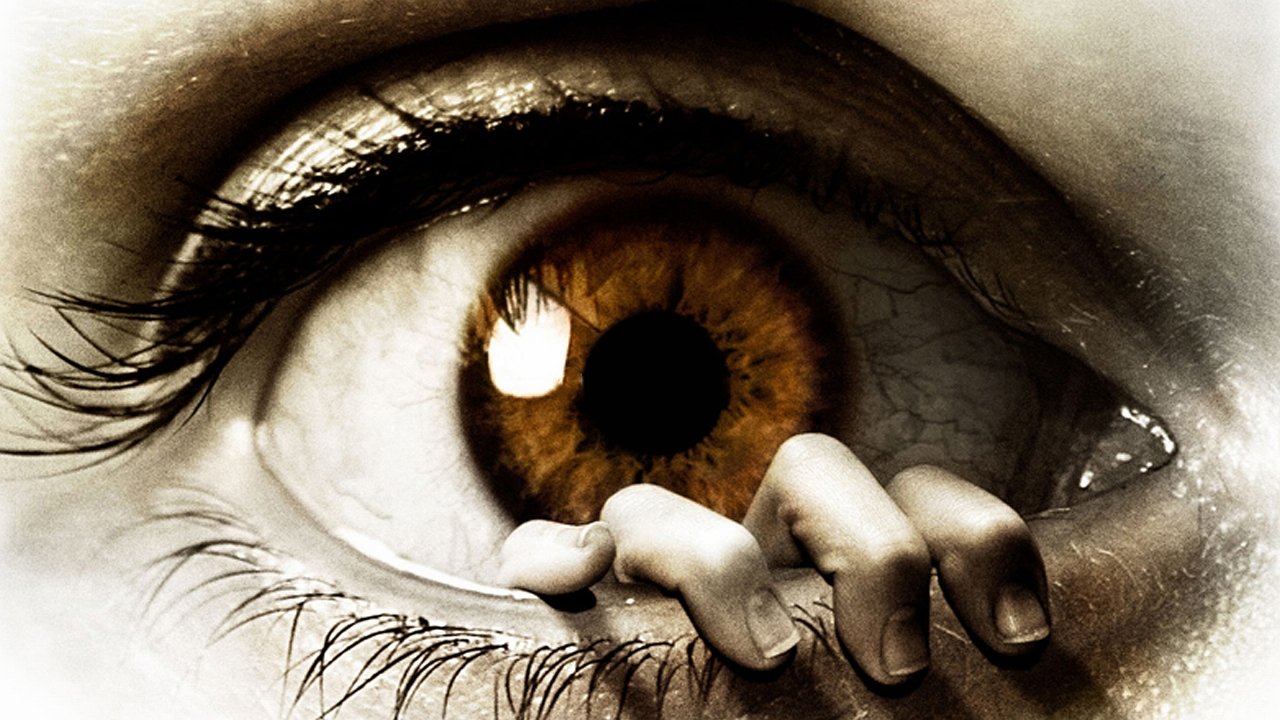

The Eye
“How can you believe your eyes when they're not yours?”
Violinist Sydney Wells was accidentally blinded by her sister Helen when she was five years old. She submits to a cornea transplantation, and while recovering from the operation, she realizes that she is seeing dead people.
About The Eye
Sydney Wells is still the reason this movie works
Put simply: The Eye hangs on Sydney Wells. She’s a successful classical violinist from Los Angeles who has been blind since she was five — a childhood accident with firecrackers ended her sight and shaped the person she becomes.
David Moreau’s 2008 thriller gives Sydney back her vision via a cornea transplant, and that clean dramatic engine is why the whole film moves. The basic hook — sight returns, but so do terrifying, otherworldly images — gives the story permission to be equal parts domestic drama and ghost story. Those visions are specific and relentless: flames, deaths, even people who clearly aren’t alive. The film keeps circling what that regained vision means for Sydney, and why her life — her family, her sense of home, her career — matters to every terrifying glimpse.
The idea that sets The Eye in motion
The film’s premise is tidy and economical. Fifteen years after losing her sight, Sydney undergoes a cornea transplant during the course of a rehearsal for conductor Simon McCullough.
Her eyesight returns — blurry at first, then steadily clearer — and with that clarity comes a problem: she starts seeing things she shouldn’t. Not ordinary hallucinations, but definite images of fire and people dying.
That single change — the restoration of sight — is all the story needs to unsettle the character and the audience. It converts a private medical event into a mystery that drags Sydney out of rehearsal rooms and into other people’s lives.
What works here is the simplicity of the set-up. You understand, quickly, where to place your attention: Sydney’s new vision and the consequences that follow.
Why Sydney Wells matters
Sydney is not written as a passive fright magnet. She’s a professional musician whose blindness is part of who she is — not a tragic label tacked on for sympathy. That foundation makes the return of sight feel disruptive in a believable way.
Her family life matters to the story too: Helen, her sister, sits in the background of decisions and worries about what the transplant will mean. The film repeatedly frames Sydney’s ordeal against ordinary familial ties rather than abstract metaphors.
The stakes become practical and moral. When Sydney and Paul help carry a child and her mother to safety during the film’s explosive climax, it proves that her visions aren’t just ominous images — they are warnings with consequences you can act on.
Put another way: Sydney is the bridge between the ghostly material and the human choices that follow. The plot gives her difficult information; her choices decide what that information will mean for other people.
The Eye has more on its mind than the plot suggests
Beneath the ghost-movie mechanics, the film keeps returning to a grim curiosity about lifespan and mortality: what you can see, what you can’t, and who is responsible when images of death arrive in your head.
Family is another constant: the transplant, the trips to find Ana’s mother, Helen’s presence — these are reminders that this isn’t an isolated metaphysical problem. It lands hard on people who love and rely on each other.
There’s a domestic angle too: home and safety are tested repeatedly, whether it’s a rehearsal room, a hospital or a crowded highway. The film asks how safe any of those places really are when death can show up unannounced. Finally, loss and authority weave through the story — who gets to decide what to do with knowledge of danger, and how do ordinary people cope when institutions fail them? The questions are simple, but they keep the film focused.
The Eye could not belong to any other decade
Released in 2008, The Eye sits comfortably in the late-00s horror landscape as a compact, idea-driven genre picture — not a sprawling prestige drama, not a franchise tentpole, just a tight thriller with a single conceit.
That era liked high-concept premises that could be explained in a sentence and then stretched into character choices; The Eye is exactly that. The transplant-that-reveals-a-problem premise fits the decade’s appetite for neat, transportable ideas.
It’s also a moment when mid-budget horrors could still attract name actors and tell a complete story in under a hundred minutes. At 98 minutes, the film uses its runtime economically.
All of which makes The Eye feel of its time: confidently genre-led, economical in length, and ready to trade broad spectacle for a single sustained question.
What has aged — and what hasn't
The core engine — a transplant that restores sight and brings strange visions — still reads clearly. The medical trigger is a compact way to move a character from stability into a moral puzzle, and that device hasn’t lost its power.
Where the film holds up best is in its focus on family and on the fragility of home and safety. The scenes that test those things feel sympathetic rather than manipulative, which helps the quieter emotional beats survive repeated viewings.
One sequence that still lands is the frantic, traffic-bound journey home: being trapped in congestion during a police chase is a concrete pressure that anchors the supernatural stakes to something immediate and dangerous.
What dates the film less are style choices and more the certainty of its premise — it’s an uncomplicated cause-and-effect ghost story. That simplicity can feel refreshing now rather than thin.
Why The Eye still matters
The movie’s afterlife rests less on single images and more on the narrative compactness it offers: a blind musician regains sight, inherits visions, and chooses to do something with them. That tidy arc is memorable.
Sydney’s investigation — travelling to Mexico to trace the cornea donor and learning about a foretold industrial accident — gives the ghost story a human origin and a moral resolution. It’s a ghost who’s not simply malevolent but burdened by failure and regret.
The climactic decision to act — getting people off a bus and out of harm’s way on a traffic-jammed highway — turns the film’s abstract horror into a tangible rescue. Sydney and Paul carrying a child and her mother to safety is a concrete payoff that anchors the whole premise. Finally, the ending — Sydney returning to performing as a blind violinist with a more optimistic view — closes her loop. The film leaves us with the idea that seeing, literally and figuratively, can change what you choose to protect.
Does The Eye still hold up?
Yes — if you come for a compact, human-scale ghost story rather than grand metaphysical mystery. The film’s premise is still the thing: Sydney’s cornea transplant returns sight and brings visions that force decisions with real consequences.
What keeps The Eye watchable is its moral throughline. Sydney isn’t merely haunted; she’s given a chance to act, and that leads to the film’s most persuasive set piece — getting people off a dangerous highway and saving lives at the cost of her own temporary blindness.
It’s a 98-minute film that chooses clarity over convolution. That makes it easy to recommend to anyone curious about small-scale 00s horror built around a strong idea and a simple, affecting payoff.
If you want a modern snack of ghostly questions, family stakes and one tidy, humane resolution — give Sydney Wells a watch. She’s the reason the film still matters.
Director & Cast