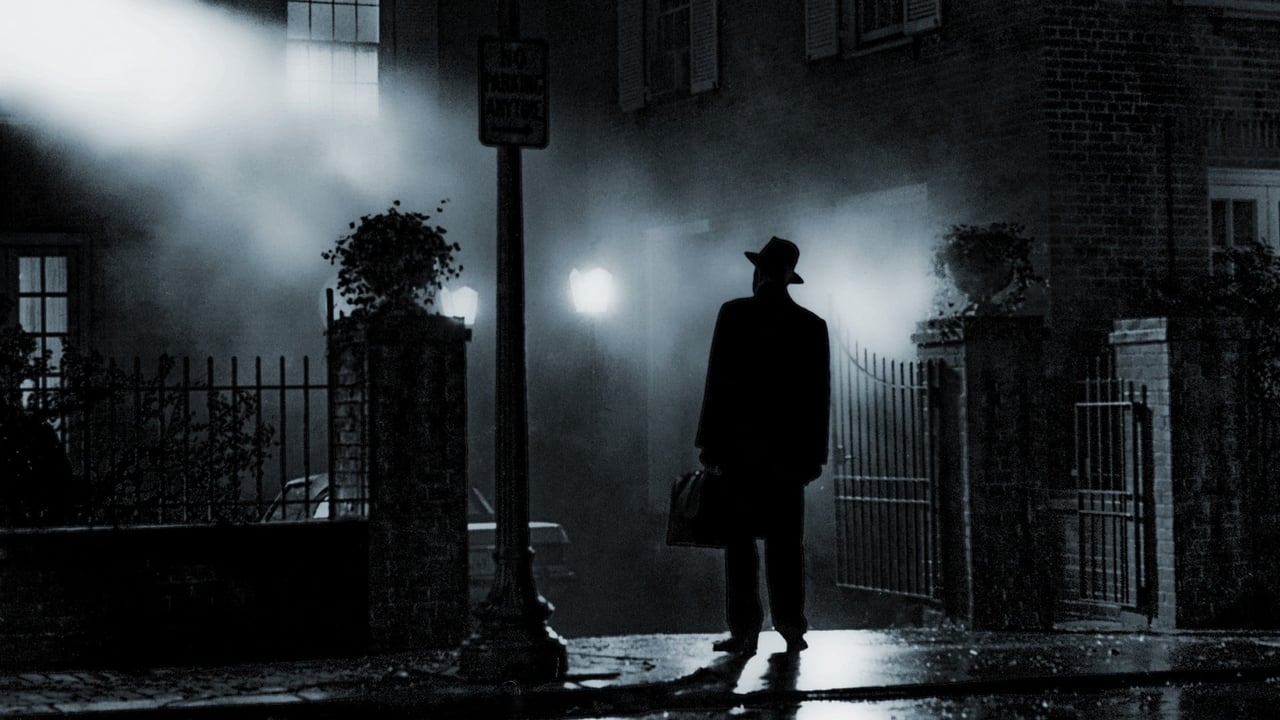
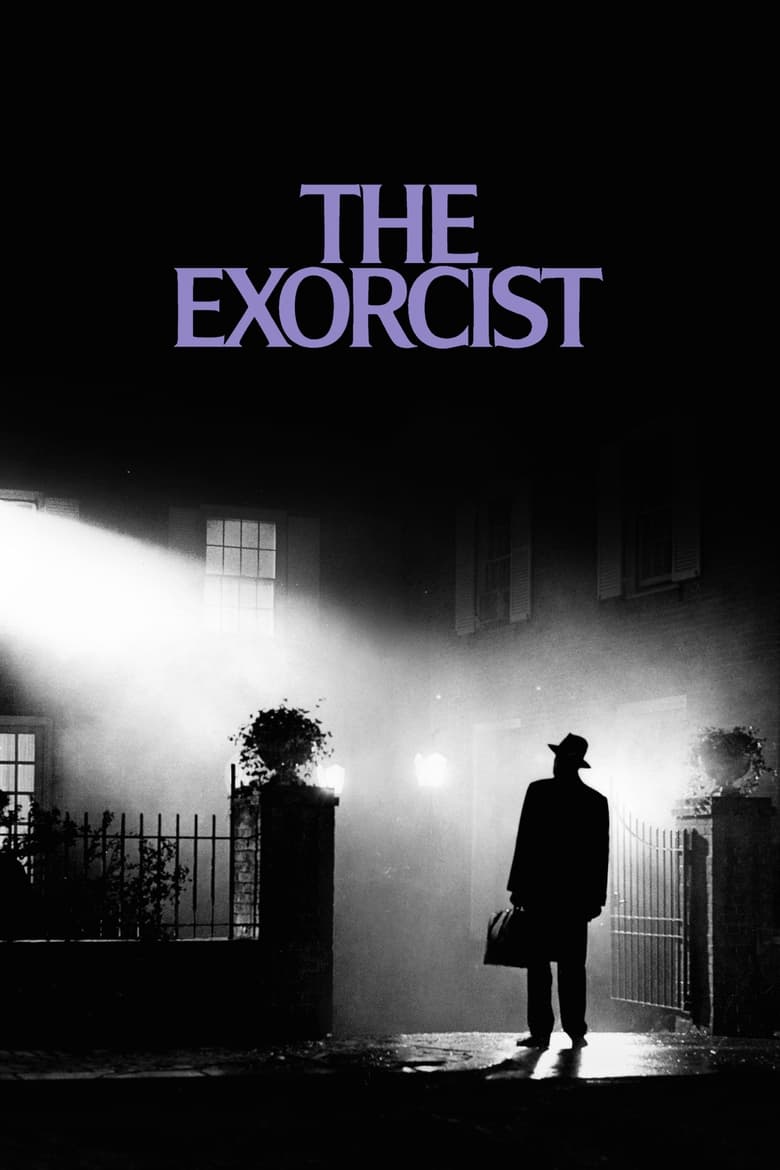
The Exorcist
“Something almost beyond comprehension is happening to a girl on this street, in this house…And a man has been sent for as a last resort. This man is The Exorcist.”
When a mysterious entity possesses a young girl, her mother seeks the help of two Catholic priests to save her life.
About The Exorcist
Why The Exorcist still stands out
The Exorcist announces itself oddly: not with a radio advert or a trailer slogan, but with a priest in the middle of an archaeological dig in northern Iraq. That prologue — a priest who has seen something in the ruins of Hatra that visibly troubles him — gives the whole picture weight. It says straight away that this story is not interested in jokey scares; it wants the uncanny to feel old and particular.
William Friedkin directs, and the film is firmly of its runtime: 122 minutes that let the strange creep from small domestic missteps into something catastrophic. The cast list reads like the scaffolding of that slow escalation — Max von Sydow as the priest Lankester Merrin, Ellen Burstyn as the worried mother Chris MacNeil, Jason Miller as Father Damien Karras, and Linda Blair as the child at the centre of it all. Why do people still talk about The Exorcist? Because it ties a global, almost archaeological menace to the most ordinary of modern anxieties: family, home and whether any of us can keep the people we love safe from forces we barely understand.
The idea that sets The Exorcist in motion
The engine of the story is deceptively simple: a child finds a spirit board and treats it like a game. She asks if "anyone" is out there, and she doesn’t follow the little rules that many traditions insist on — she leaves questions open and removes her hands without saying goodbye. That small carelessness, in the film’s logic, is the hinge that allows something in.
From private play to public emergency is a tight, effective stretch. Regan’s bed begins to shake; her behaviour hardens into something violent; doctors run tests and find nothing to explain how a child can suddenly be dangerous and cruel. The scientific explanations fail to land, and that failure is what makes the ordinary feel unsafe.
The result is a ladder of disbelief the characters must climb. Medical answers are checked and discarded; the family is pushed into the ugly business of choosing between institutional help and older rituals they barely understand. For the audience, that climb keeps one foot in the real world and the other in the inexplicable — which, for many viewers, is where the film finds its power.
And whatever else changes, the final fact remains: even after the worst has happened, Regan remembers none of it — yet something about the encounter leaves a tender, private trace, a small, human moment at the film’s close.
Why Lankester Merrin matters
Lankester Merrin is the film’s older weathered presence — the priest who turns up with the sense that he’s seen something like this before. Max von Sydow plays him, and his opening placement at an archaeological dig makes him read as more than a local clergyman: he’s a figure who carries history into the domestic crisis.
That dig in Hatra matters because it ties Merrin to an earlier, almost geological level of evil. The film doesn’t make him a mere plot device; his arrival signals that the problem at the MacNeils’ house is not a one-off freak. Whatever the household is facing reaches back into a far older story.
Merrin’s role is practical as well as symbolic: he’s the senior priest whose presence authorises the more serious spiritual response the desperate family needs. Bringing someone like him into a modern Washington household underlines the film’s recurrent tension between official, institutional knowledge and the messy, private world of family life.
Finally, Merrin's quiet weight gives the exorcism a spine. The crisis is not just about a child behaving oddly; it’s treated as an event that requires a priest shaped by other places and times to face directly, and that contrast — ancient ritual meeting contemporary fear — is one of the film’s lasting notes.
The Exorcist has more on its mind than the plot suggests
At the top of the list is family: the film keeps returning to the MacNeil household and refuses to let us treat the possession as a spectacle divorced from parental care. The stakes are always domestic, and that choice makes the horror feel intimate rather than merely theatrical.
Fear in The Exorcist is not a collection of jump scares. It’s the slow collapse of certainties — medical, legal and emotional. The film stages fear as erosion: confidence in doctors, trust in the familiar house, even a parent’s belief that they can protect a child.
Mortality and lifespan appear throughout, quietly. The presence of older priests, illnesses and deaths in the background gives the story a sense that this kind of crisis sits on a timeline longer than any one family. It’s a film concerned with what survives and what must be sacrificed. The film’s final concern is home and safety. By taking a threat that begins as a private game and turning it into something that contaminates the place you sleep and the objects you trust, it turns the ordinary into a battleground — and that’s why family, fear, mortality and home keep circling each other throughout the film.
The Exorcist could not belong to any other decade
It’s a film very much of 1973. That date does more than file it into a decade; it places the film at a moment when cinema was willing to hold domestic melodrama and mythic dread in the same frame. The Exorcist leans into that balance instead of picking a side.
Saying it’s a ‘70s movie is not shorthand for nostalgia. Rather, its release in 1973 helps explain why the film could ask audiences to watch the collapse of a private life without needing to dress the story as pure escapism or pure sermon. It treats horror as something that happens to ordinary people.
The context produces a bookish, almost matter-of-fact approach to the supernatural: an archaeological lead-in, a crisis that moves through medical and clerical institutions, and a willingness to let the plot sit with its own uncomfortable questions rather than tidy them away. That mood, recognizable in some other films from the period, helps The Exorcist feel anchored to its year of release.
Put simply: knowing it’s a film from 1973 helps you understand its appetite for mixing the everyday with the ancient, and why it expects viewers to follow both tracks at once.
What has aged — and what hasn't
Some things still land with a clean, sharp honesty: the family material. The film’s insistence that this is about a mother and her child — not purely about spectacle — keeps the emotional core intact. That focus is what makes the moments of crisis feel painful rather than merely sensational.
Fear, too, retains muscle. Because the film builds its dread from everyday failure — tests that don’t explain anything, authorities who can’t solve the problem — the scares remain anchored in a recognisable human panic that doesn’t date easily.
The threat to home and safety also travels well. The idea that danger can come in through a child’s innocent curiosity and settle into a house is still an unsettling, immediate notion. Even now, watching the film, the erosion of domestic certainty is the element that proves most durable.
If you watch The Exorcist now, expect its emotional architecture — family under strain, creeping fear, and a household that becomes unsafe — to speak plainly. Those bones are the parts that shrug off the years.
Why The Exorcist still matters
Certain set pieces stick. The movie’s opening, with Merrin in the dig and an object that unsettles him, stays in the mind because it announces a seriousness that the rest of the film keeps. That prologue hands the story a sense that the trouble has roots outside Washington and the macabre at home is part of a broader, older pattern.
Meanwhile, the image of a child discovering a spirit board and inviting something in is the sort of premise people remember the way you remember a line from a warning label: small negligence, big consequences. That idea — a child at play starting the story’s worst chain of events — is the neat kernel that makes the horror feel personal.
The film also leaves behind a catalogue of dramatic beats that people recall: a trusted adult suddenly dead beneath the child’s window; the failure of medical explanations; the moment when the priests convene and older rituals are read aloud; and the terrible, intimate endgame when a priest offers himself to spare the child. Those beats make the story feel like a sequence of moral choices as much as supernatural events. Finally, the film’s last exchanges — the parent embracing the child who remembers nothing, the priest taking his last rites — fold the horror back into ordinary grief and loss. For many viewers, that return to simple human gestures is what keeps the film present in memory: the big scares are vivid, but the small consolations are what linger.
Does The Exorcist still hold up?
Yes — if you’re coming for something that treats horror as a collision between the ancient and the domestic, it still holds up. The film begins with a priest in an Iraqi dig who finds something that troubles him, and that insistence on depth — on an evil with precedents — gives the film a seriousness harder to fake than a string of jump scares.
Max von Sydow’s Merrin matters because he brings that precedent into the Washington household: a priest who has encountered this sort of thing before is the film’s bridge between faraway ruins and a mother terrified in her own home. When Merrin is summoned and the older rituals are read, the film asks us to accept a clash between institutional experience and personal panic.
The narrative pays attention to human costs: tests that fail, a family pushed to the edge, and a priest whose crisis of faith becomes a matter of life and death. Those are not tricks of style; they are the film’s currency. Its themes — family, fear, mortality, and the safety of home — remain persuasive ways to make an audience care.
So should you watch it now? If you want a horror film that still feels composed around real human stakes rather than spectacle alone, yes. The Exorcist is less a museum piece and more a hand-me-down that keeps its bite: ancient trouble arrives in an ordinary house, and the choices people make there are the thing that haunts you afterwards.