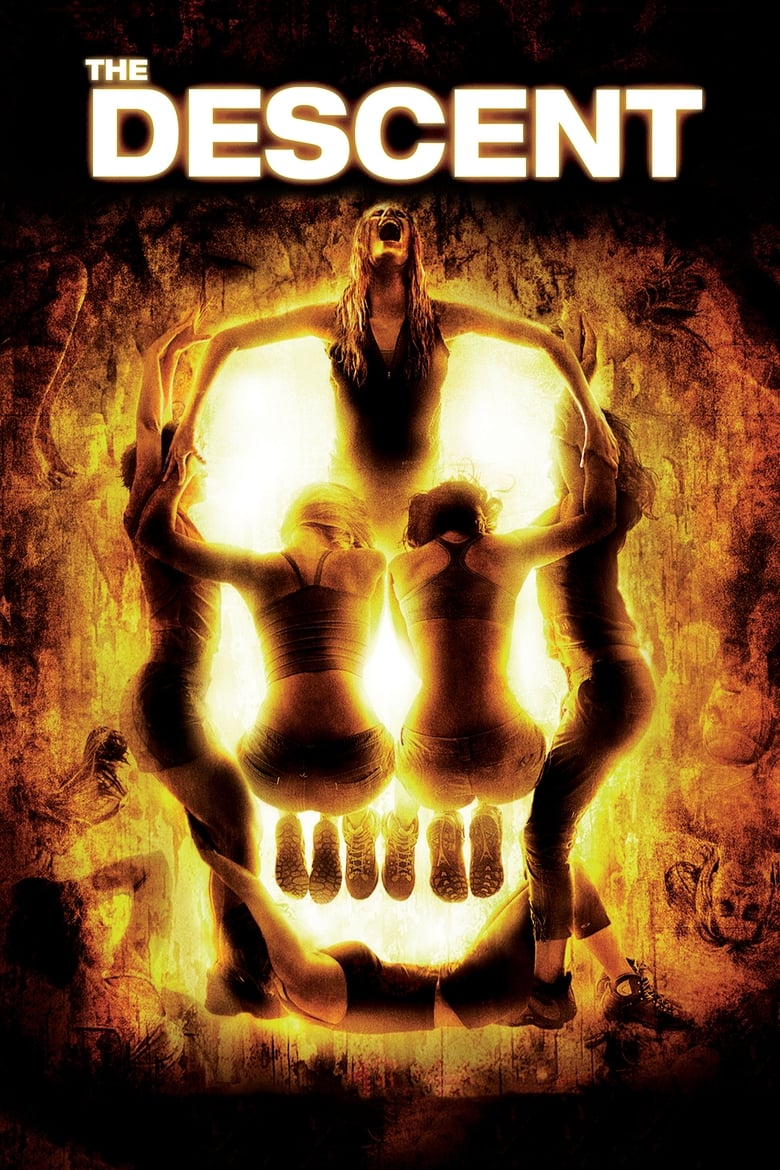
The Descent
“Scream your last breath.”
After a personal tragedy, Sarah joins her friends on a caving expedition in the Appalachian Mountains. But when a rockfall traps them deep underground, their adventure turns into a nightmare. As they search for a way out, the group discovers they are not alone—lurking in the darkness are savage, cave-dwelling creatures. With rising tension and dwindling trust, the women must fight to survive against both the predators and each other.
About The Descent
What The Descent gets right
The Descent begins with ordinary life grinding into catastrophe: Sarah is collected from a whitewater trip by her husband and daughter, and the car journey home ends in a crash that takes both their lives. That blow is the kind of blunt, immediate damage that the rest of the film refuses to paper over.
A year on, the same group of women — including Sarah and her thrill-seeking friends — choose spelunking as a way back to themselves. They hike to a mountain cave entrance and go down; what follows is ninety-nine minutes of pressure, decision and consequences, all directed by Neil Marshall. The premise is tidy and brutal: grief plus enclosed space equals a test. What keeps the film alive is how personal the stakes stay. It isn’t merely a monster movie. Between the claustrophobia and the attack scenes, the story never lets the women become abstract survivors — they’re people carrying things in their heads as well as on their backs, and that choice gives the whole film its particular, hard edge.
The idea that sets The Descent in motion
At its simplest, The Descent asks: what happens when a group of friends who are already carrying private damage decides to go somewhere that takes away options? The film opens with Sarah learning, in a hospital, that her husband and daughter have died — and a year later she returns underground with the same mates who were with her that day.
The immediate plot engine is practical and cruel. While pushing through the caves, Sarah briefly becomes stuck in a narrow tunnel and escapes, but the passage collapses behind her. The collapse severs the ordinary route home and turns an adventurous trip into an isolated fight for exit and survival.
Tension compounds from human choices as much as from environment. When Juno admits she led the group into an unmapped system — one that a rescue team couldn’t easily find — the film shifts from accidental peril to the murky territory of blame, risk and leadership under stress.
Then the subterranean discoveries pile on: cave markings, old equipment, glimpses of daylight that prove false. Those small discoveries keep the plot moving without ever softening the reality that every decision costs something — time, safety, trust.
Why Sarah matters
Sarah is not a clean-slate action hero. She arrives already damaged: the film gives us a domestic life that is then ripped away in a single, awful moment. That grief follows her down the cave and never lets her off the hook.
A year on she’s back with the same friends, descending into the mountain with a history attached. Early on she becomes trapped in a tight tunnel and gets out — but that very escape collapses the way back and forces her into choices she wouldn’t otherwise face.
Under pressure Sarah discovers truths about the people with her. In one of the film’s crueller twists, Beth tells Sarah that Juno’s pendant was a gift from Paul, confirming Sarah’s suspicion of an affair. Those revelations make every clash feel less like genre beats and more like consequences — betrayal inside the nightmare.
Sarah’s arc is also about limits: she ends up making devastating decisions for the sake of survival, including ending Beth’s suffering when Beth herself begs for it. Whether she reaches sunlight or not, the film keeps turning the question on her: what are you willing to do when everything that defined you has been taken?
The Descent has more on its mind than the plot suggests
On the surface it’s a survival-monster picture. Underneath, the film revisits ideas about freedom: these women seek danger as a way to feel alive, and the caves — a place with no routes back — force a question about whether that freedom was ever real.
Mortality is a constant shadow. The opening death and the claustrophobic setting combine to make lifespan feel fragile and compressed; every second spent finding a way out feels like buying time, and the film is relentless about measuring the cost.
Family and parental protection thread through the story too. Sarah’s losses are the deepest engine of her choices: when a parent and child are taken in an instant, it changes what counts as protectiveness, and that altered bar follows her into the cave. Finally, courage in The Descent is messy and pragmatic. It’s not heroic stand-ins or speeches; courage here looks like cold decisions, ugly realignments of loyalties, and the hard labour of survival when there’s no neat moral handbook to consult.
The Descent could not belong to any other decade
The Descent is very much a child of 2005. Its timing put a fresh spin on British horror at a moment when the decade was still finding a tougher, grittier voice.
Being a 2005 film anchors it in the 2000s in a straightforward way: its choices — a compact runtime, a clear genre pitch and a willingness to blend interpersonal drama with creature horror — fit a period when filmmakers were leaning into lean, intense shock cinema.
Put simply: it’s a 2000s movie that uses the decade’s appetite for smaller, sharper genre films to turn a woman-versus-darkness idea into something personal — a decision that helped the film feel immediate rather than nostalgic.
What has aged — and what hasn't
The emotional hook that opens the film — the car crash that kills Sarah’s husband and daughter — remains effective. It gives the later chaos a moral weight that still reads today: the cave doesn’t just threaten lives, it threatens the last thing Sarah had left to hold onto.
That focus on family means the film’s stakes are still easy to care about. You aren’t left to root for archetypes; you’re following someone who has lost everything and is forced into impossible choices.
Where time shows its fingerprints is not in the premise but in how spare the setup is. There’s no over-explaining of motives or backstory; modern viewers may appreciate the trust the film places in its audience to follow character through action rather than exposition.
So while some viewers may bristle at the level of brutality, the central emotional throughline — grief shaping survival — keeps the picture grounded and continues to make it work on rewatch.
Why The Descent still matters
There are obvious, visceral moments that people remember — a pale creature at a pool, a den of bones, the sudden, savage way the Crawlers attack. Those set pieces are memorable because they are earned by the story: the group walks into an unmapped system, and the consequences arrive fast and without mercy.
But the film’s staying power comes from how character and horror are braided together. The reveal that Juno’s pendant belonged to Paul and the admission of the affair make every monster confrontation double up as a human confrontation. Even in the caves, personal betrayals feel as lethal as the creatures themselves.
The casualties are specific and brutal — Holly’s fall, Sam’s throat being ripped while she fights, Rebecca being dragged away — and the losses pile up so the final decisions feel inevitable rather than contrived. That accumulation gives the film emotional gravity beyond the jump scares. Finally, the ambiguous ending options — whether Sarah really escapes or remains trapped in a vision — leave a mark. The film doesn’t quite close the wound neatly, and that refusal to tidy things up is part of why it still lingers in memory.
Does The Descent still hold up?
Yes. If you want a horror film that treats its squeeze of time seriously — grief funnelling into a survival problem where personal betrayals hurt as much as monster bites — The Descent still delivers. It’s compact (99 minutes), focused and willing to make its heroine do the ugly things a desperate situation demands.
This isn’t a comfort watch. The film opens with a domestic tragedy that defines everything that follows, and it keeps pushing Sarah into choices that are morally uncomfortable. That honesty about consequence is one reason the story endures: it refuses to turn trauma into a neat lesson.
It’s also a good fit for viewers who like their horror mixed with interpersonal drama. The combination of female-buddy dynamics, subterranean adventure and monstrous threat means the film operates on several levels at once — tension, betrayal, survival — without ever feeling scattered.
So go in ready to be pressured, emotionally and physically. The Descent still works because it remembers that monsters are only as terrifying as the human stories that accompany them — and here those stories bite back.