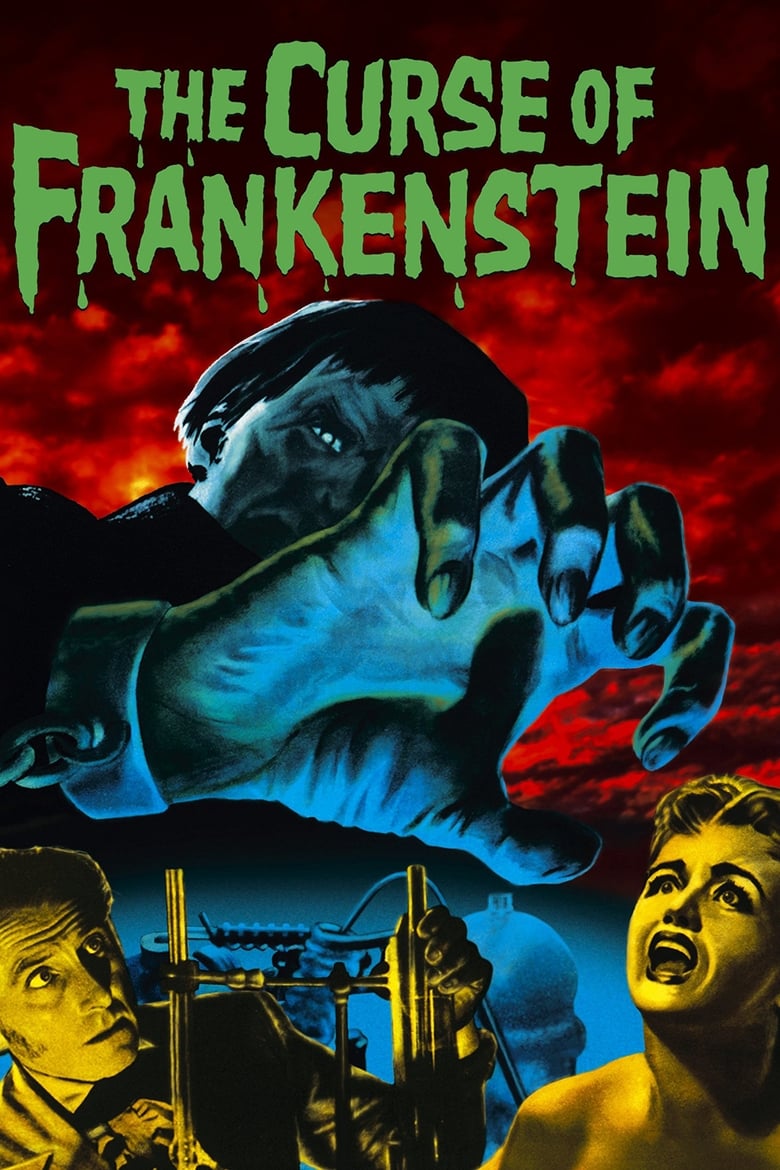
The Curse of Frankenstein
“The creature created by man and forgotten by nature!”
Baron Victor Frankenstein has discovered life's secret and unleashed a blood-curdling chain of events resulting from his creation: a cursed creature with a horrid face — and a tendency to kill.
About The Curse of Frankenstein
What The Curse of Frankenstein gets right
The movie opens with Baron Victor Frankenstein literally waiting for the end: he’s facing execution for the murder of his maid, and the whole story is framed as a confession to a visiting priest. That framing gives Fisher’s film an edge you can feel from the first line—this isn’t a cosy gothic stroll, it’s an explanation with consequences.
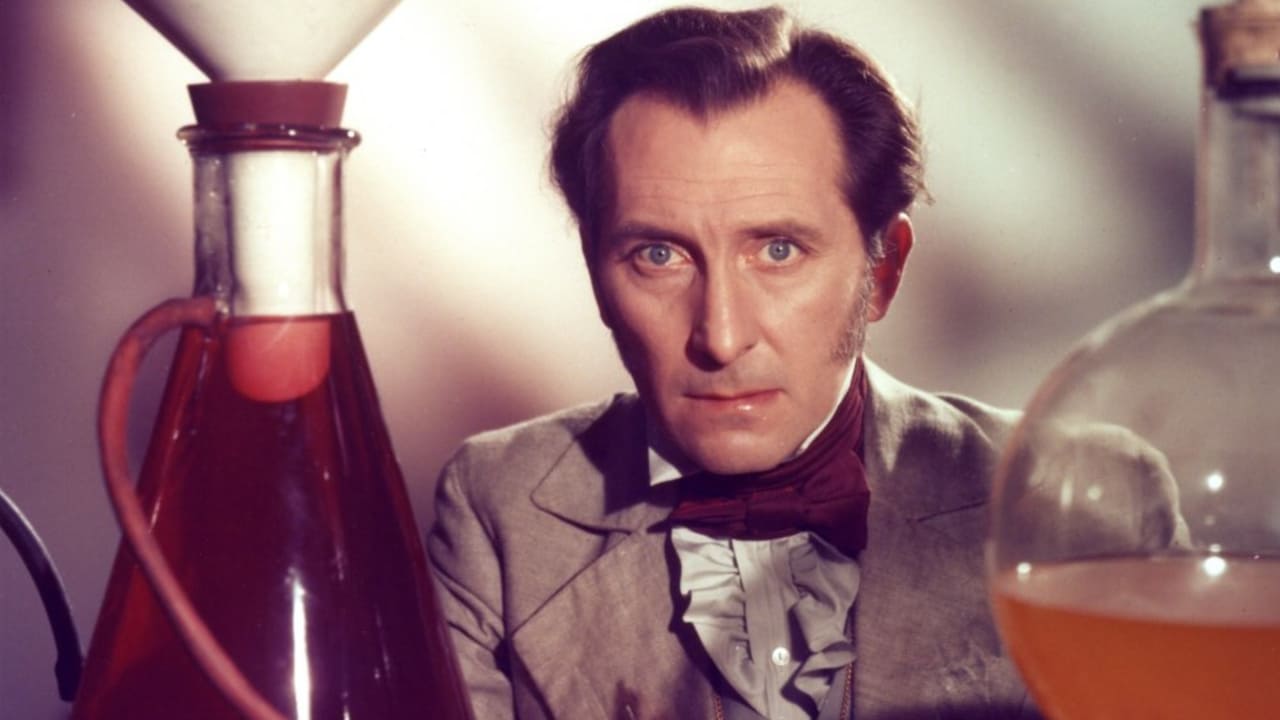
Terence Fisher keeps things lean. At just 82 minutes, the film rarely lingers for the sake of atmosphere; instead it moves with a purpose that throws the spotlight back onto its characters and the choices that unmake them. Peter Cushing plays the baron, and the picture very quickly makes you understand why his version of Frankenstein is dangerous: not merely for making a monster, but for what he’s prepared to do at home to get there. If you want a Frankenstein that treats horror as domestic business rather than metaphysical puzzle, this is the one to revisit: it’s tidy, sharp and mean in all the right ways.
The idea that sets The Curse of Frankenstein in motion
The whole film is introduced as a confession, which does two neat jobs at once: it lets Victor tell us his version and keeps the audience asking whether we believe him. Early on he hires Paul Krempe as a tutor, and the pair quickly graduate from lessons to experiments, which is where the trouble begins.
After they pull a dead puppy back to life—one of those 'look what we can do' moments—Victor suggests something far bigger: building a perfect human from spare parts. That leap from curiosity to construction is the engine of the story; it’s ambition made practical, and that practicality is what makes the later horror feel intimate rather than abstract.
Paul helps at first, but the work crosses lines. He recoils when the pair start to scavenge human remains, and that moral refusal matters: it isolates Victor and leaves him to keep going alone. Isolation, in this film, is not melancholy—it’s permission.
When Victor seeks an ageing professor’s brain and ends up killing him to get it, the experiment ceases to be theoretical. The setup gives us a scientist who treats his own house like a laboratory, and everything that follows—the buried creature, the revived creature, the domestic violence of those choices—flows logically from that single refusal to stop.
Why Baron Victor Frankenstein matters
Peter Cushing’s Baron Victor Frankenstein anchors everything. The film begins and ends with him—awaiting execution, recounting the story that put him there—so the plot reads as a moral map of his mind. We don’t just watch a mad experiment; we watch the consequences of a single man’s refusal to respect boundaries.
The script gives us a tidy origin: at fifteen Victor inherits the estate when his mother dies, and from that moment he’s in charge. That early transfer of power compresses his development; the boy who becomes baron has authority forced on him young, which helps explain why he treats other people as tools rather than equal human beings.
His most chilling act—inviting an elderly professor round under the pretense of friendship and then engineering his death so he can steal the brain—sums up his character. It isn’t a spur-of-the-moment lapse; it’s the logical next step for someone who has learned to put ends before means.
Put simply: the baron matters because the drama of the film is moral and domestic. The monster is the noisy consequence; the quieter horror is a house run by a man prepared to dirty his hands and pretend the stains weren’t his.
The Curse of Frankenstein has more on its mind than the plot suggests
On the surface it’s a monster picture. Underneath, it’s obsessed with what makes a home feel safe—or dangerous. Victor’s house is a constant reminder that the place meant to shelter can become the place that betrays you when the person in charge breaks the rules.
Humanity, in the film’s terms, is measured by how you treat others when no one’s looking. The film contrasts the baron’s clinical tinkering with the human cost of those experiments: stolen parts, murdered friends, and the creature itself as an unwanted by-product. That contrast keeps the audience on the side of decency even as the plot indulges a grim curiosity.
Freedom turns up as both temptation and punishment. The monster’s existence forces characters to confront the consequences of someone exercising freedom without restraint—freedom to experiment, to lie, to use and discard. The film doesn’t moralise with speeches; it shows how liberty without ethics becomes a domestic disaster. And mortality? It’s never abstract. Death is practical—brains harvested, bodies dug up, a hanging sentence waiting at the end—so the movie treats mortality as something you can mismanage, not merely fear.
The Curse of Frankenstein could not belong to any other decade
Released in 1957, The Curse of Frankenstein sits neatly in that late-50s moment when British studios like Hammer were sharpening old stories into something harder edged. It carries the decade’s appetite for a certain kind of storytelling economy: no padding, clear setup, quick escalation.
That 1957 stamp matters because the film treats familiar gothic material with a modern, almost clinical efficiency. It’s not sentimental about its monsters; it’s interested in the real-world cost of scientific ambition, and that focus feels of its time—steady, pragmatic, and willing to be a bit ruthless.
The picture’s choices—a short runtime, a tight moral frame, an emphasis on domestic consequence—echo the decade’s tendency to update older genres rather than merely imitate them. The result is a Frankenstein that reads like a compact, sharp-edged argument rather than a sprawling parable.
So while the story is 19th-century in set-up, its filmmaking instincts are recognisably 1950s: brisk, deliberate and unromantic.
Why The Curse of Frankenstein still matters
People remember this film because it rearranged the Frankenstein story into something domestic and immediate. It begins with a condemned man explaining himself to a priest, and that confession-frame turns the whole movie into a study of culpability rather than spectacle.
The film’s compact narrative—Victor inherits early responsibility, brings a dead puppy back to life, and then decides to build a human—makes its moral through-line easy to follow. You can point to specific decisions and trace the damage back to the house where they were made.
There are the raw elements that stick in the memory: the theft of a brain from an elderly scholar, a creature animated with a damaged mind, and the terrible consequences that follow, including the murders that tie the baron’s household to a public sentence. Those beats are structural but they also feel personal, which is why the story resonates with viewers who grew up with it.
Ultimately the film’s afterlife rests on its willingness to make the horror domestic. It isn’t satisfied with monstrous outsiders; it asks us to look at the man who thought he could rearrange life from his study, and that focus keeps the movie interesting long after the shock moments fade.
Does The Curse of Frankenstein still hold up?
Yes—if you’re after a Frankenstein that treats horror as a consequence of choices made inside a house, this one still hits. The film’s framing (a baron awaiting execution, confessing to a priest) keeps the story morally taut, and that moral tautness is its chief strength.
The picture is brief—82 minutes—so it never overstays its welcome. That compactness helps the narrative’s relentless logic: Victor inherits control young, he studies, he experiments, and the fallout is swift and personal. The film doesn’t ask for patience; it asks for attention to a chain of decisions.
It’s also worth watching for the way the story makes domestic safety itself into a theme. The film shows how a household can become dangerous when the person in charge treats people as means rather than neighbours, family or friends—an idea that still lands because the harm is concrete and human. If you’re deciding whether to press play: go for it. The Curse of Frankenstein remains a tight, unforgiving take on an old tale—one that reminds you the real terror is often the man who refuses to be stopped.