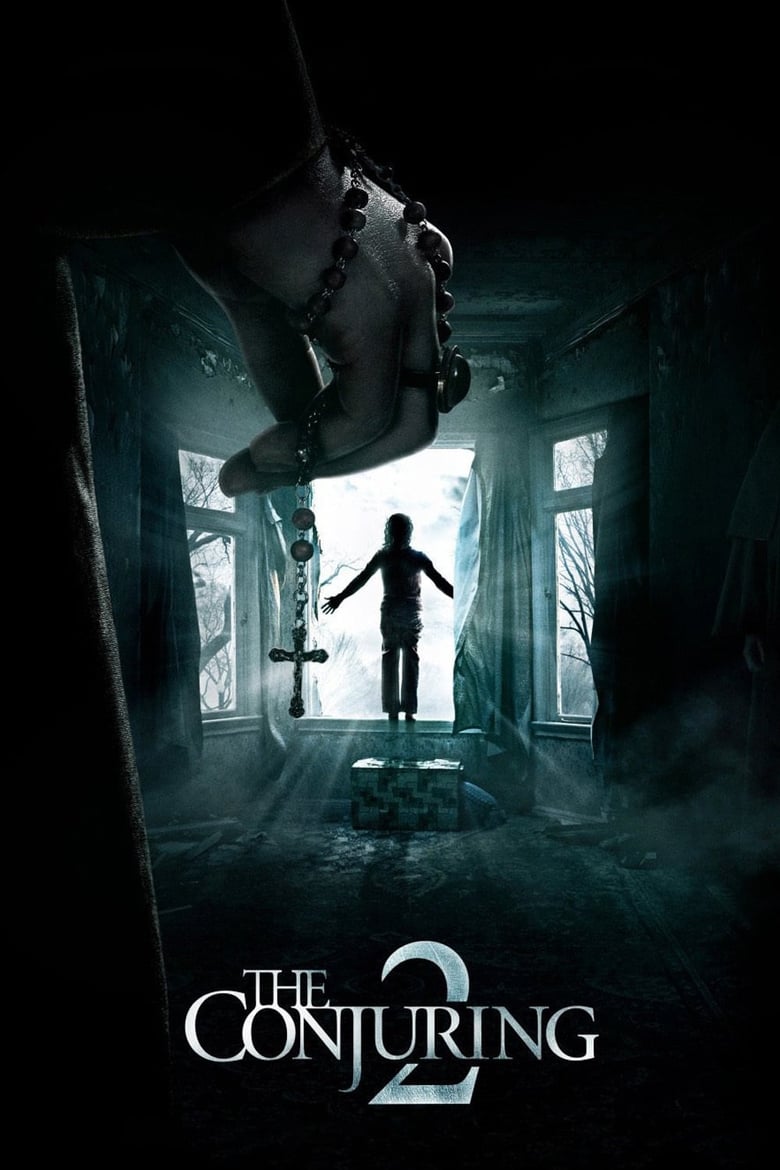
The Conjuring 2
“The next true story from the case files of Ed and Lorraine Warren.”
Lorraine and Ed Warren travel to north London to help a single mother raising four children alone in a house plagued by malicious spirits.
About The Conjuring 2
What makes The Conjuring 2 worth revisiting
The Conjuring 2 is one of those horror films that remembers to be about people while it’s busy scaring them. Released in 2016 and directed by James Wan, it swaps the cosy single-haunt set-up for something bigger: an international case that still feels, at heart, intimate.
At the centre of that intimacy is Lorraine Warren — played in the film by Vera Farmiga — who carries a vision so vivid it haunts the plot: during a seance she witnesses a demonic nun and sees Ed Warren impaled. That moment keeps the rest of the movie honest; every supernatural beat that follows comes with the weight of that image. But the film never forgets the family caught in the middle. One year after the Warrens' Amityville enquiry, the Hodgson household in Enfield starts to fall apart after Janet, the second-oldest of four children, plays with a ouija board. That tension — family versus something that is not merely unknown but actively cruel — is the engine that keeps you watching.
The idea that sets The Conjuring 2 in motion
The film rests on a tidy, effective premise: a young girl at home begins to act strangely after playing with a ouija board, and the behaviour soon escalates into something that looks like possession. It’s exactly the kind of small, domestic catalyst that lets horror feel close and immediate.
The Warrens arrive to figure out whether the Hodgsons are genuinely haunted or performing for attention. That ambiguity — are we watching an actual supernatural event or a family in crisis — keeps the engine turning without ever bogging the story down in needless complexity.
Crucially, the movie keeps one eye on the Warrens’ own history. Their previous investigation into the Amityville murders is a shadow over the proceedings, and personal stakes are threaded through every visit to the Hodgson home.
And when it’s all over, the film has room for the small, creepy detail: Ed adds a haunted 'Crooked Man' zoetrope from the Hodgsons’ house to the Warrens’ collection. It’s a neat, satisfying way to remind you that on-screen horrors become the Warrens’ trophies — and their responsibilities.
Why Lorraine Warren matters
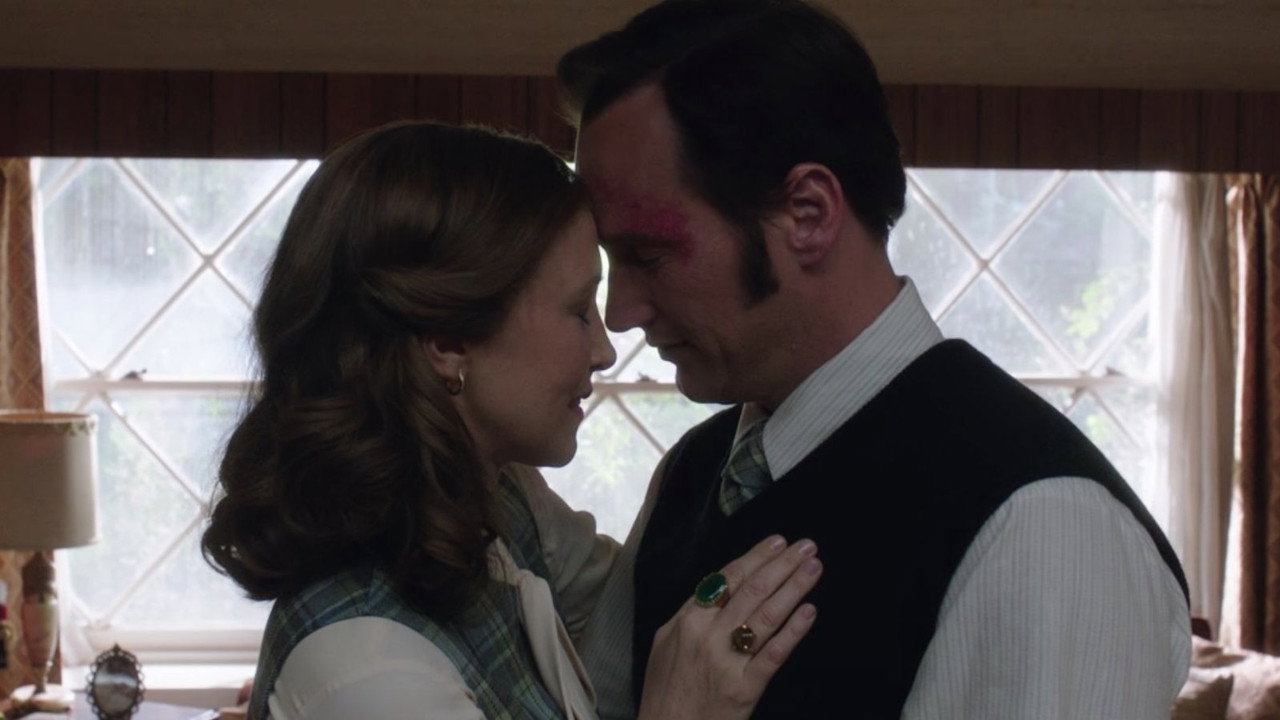
Lorraine Warren is the film’s moral compass and its shaky barometer for the supernatural. Vera Farmiga plays her in the movie, and the character is not an abstract 'psychic' — she’s someone whose personal history with cases like Amityville has left real marks.
That past matters because Lorraine brings a kind of weariness and urgency to the Hodgson case: she has seen violence before, and a seance drags up a vision of a demonic nun and Ed impaled. The vision isn’t a throwaway scare; it’s what the rest of the movie keeps circling back to.
Throughout the investigation the Warrens wobble between scepticism and conviction, and Lorraine’s blocked abilities — later explained as the nun preventing her from seeing clearly — make her the character who has the most to lose. She’s the person for whom the spiritual threat becomes painfully personal.
So Lorraine matters because she is where belief and vulnerability meet. The film asks you to watch a woman who can perceive things others cannot, and then to watch what cost that seeing exacts. That combination gives the scares a human stake.
Why Vera Farmiga's performance matters
Vera Farmiga’s Lorraine has to do a particular job: sell the idea that the Warrens truly believe in the things they witness. That job gains weight because the couple earlier investigated the Amityville murders, which sits in the movie as real backstory rather than flavour.
Because Lorraine carries the memory of that earlier case, every time she’s pulled into a vision the scene feels like more than a jump scare — it’s a reminder of consequences. The performance’s practical task is to connect those moments of private terror to the public work of investigating hauntings.
Crucially, the role asks for a balance: Lorraine must be believable both as someone with paranormal insight and as a partner who worries about the family she’s trying to help. That balancing act keeps the character anchored when the plot becomes more demonstrably supernatural. So, without making the film about acting per se, Farmiga’s Lorraine is the hinge that lets the story swing between casework and very personal threat.
The Conjuring 2 has more on its mind than the plot suggests
On the surface it’s a ghost story about possession and exorcism. Underneath, The Conjuring 2 keeps returning to family — not just as victims but as the measure of how much protection faith and expertise can provide.
Home and safety are treated as fragile, easily punctured. The Hodgson family’s ordinary domestic life is the setting for escalating supernatural cruelty, and that makes each intrusion feel urgent rather than merely spooky.
The film is also interested in belief itself. The Warrens are asked to prove whether the possession is real or a hoax, and that question — whether to trust the seen or the sceptical — drives much of the tension.
Finally, there’s a crueler twist: what looks like an old spirit — the angry elderly man who once lived in the house — turns out to be a distraction. The real antagonist is a demonic presence using smaller ghosts like chess pieces to break someone’s will. That idea turns the film’s scares into something more organised and, therefore, more threatening.
The Conjuring 2 could not belong to any other decade
Released in 2016, The Conjuring 2 sits where 2010s horror liked to sit: big enough to be cinematic, small enough to hinge on one household and a handful of characters. The decade favoured films that mixed classic scares with modern storytelling economy, and this one follows that pattern.
It’s a film that wears its genre labels openly — horror, thriller, ghost — and then uses them to tell a story about faith and protection rather than trend-chasing. Being of the 2010s means it can use those familiar ingredients and still feel fresh by tightening focus on characters and consequence.
In short, the film belongs to the 2010s because it exemplifies what the decade’s horror tried to do: borrow from older traditions but keep the emotional stakes contemporary.
If you want a film that demonstrates the decade’s taste for glossy, character-centred supernatural stories, The Conjuring 2 is exactly that kind of specimen.
What has aged — and what hasn't
The Conjuring 2’s central concerns — family under threat and a home that no longer feels safe — are the sort of things that don’t date. A haunted house is only scary if you care about the people inside it, and the film keeps that focus sharp.
Where the movie shows its age is in some of the machinery around belief: the media circus that tries to interview the Hodgsons and the sceptical investigators who present footage of Janet wrecking the kitchen do slow the film’s forward motion at points. Those scenes ask you to accept a certain procedural back-and-forth that can feel familiar now.
Still, key sequences endure because their emotional logic is simple. Lorraine’s visions — especially the image of Ed impaled during the seance — continue to land as more than cheap jolts; they’re promises the movie must fulfil, and the payoff matters because the film has been working toward it. And then there’s the small, lingering detail: the Crooked Man zoetrope ending up in the Warrens’ collection. It’s a reminder that the story doesn’t simply end with the case; it becomes another item on a shelf of nightmares. That kind of epilogue still reads well.
Why The Conjuring 2 still matters
People remember The Conjuring 2 because it does two things at once: it’s a recognisably big horror picture and it keeps its focus on a handful of human relationships. The Warrens’ involvement — and the way the film threads that Amityville backstory through the action — gives it a seriousness that lifts it above pure spectacle.
The film also foregrounds the idea that not every ghost is what it seems. The elderly spirit who once lived in the house turns out to be a distraction, manipulated by a darker demon. That structural trick — small haunt masking a larger threat — is a tidy piece of genre writing that sticks in the memory.
There are memorable set-pieces built around Lorraine’s visions and the day-to-day damage the family suffers, and the film closes with a quiet, unsettling nod to the Warrens’ collection: the haunted Crooked Man from Peggy’s youngest child joins April Perron’s music box and the Annabelle doll. It’s the kind of touch that keeps the story circulating in people’s heads.
So for those who grew up with it, the movie matters because it balanced personal stakes with a catalogue of creepy objects and images that feel designed to linger.
Does The Conjuring 2 still hold up?
Yes — but with a caveat. If you watch for atmosphere, character stakes and the kind of scares that grow from people rather than cheap jump edits, The Conjuring 2 still delivers. It’s a 134-minute James Wan picture from 2016 that knows how to pace dread and keep you invested in the Hodgson family’s fate.
The film asks you to accept its supernatural premise — Lorraine’s seance vision of a demonic nun and Ed’s apparent danger — and it honours that promise. Lorraine finds the Bible where she scratched the demon’s name, then addresses that name and pushes the entity back. Janet is freed and the immediate threat is resolved, which feels like a proper conclusion rather than an evasion.
At the same time, some procedural stretches — the sceptics and the media — can blunt momentum, and if you’re after innovation in horror form you might find it familiar. But familiarity here is not necessarily a flaw: the film refines a classic setup rather than overturning it.
If you want a well-made ghost story that remembers to care about the family inside the house, watch it. And if you like the idea of scares that leave small, uncanny souvenirs — a crooked toy joining a collection of other haunted trinkets — then The Conjuring 2 still has teeth.