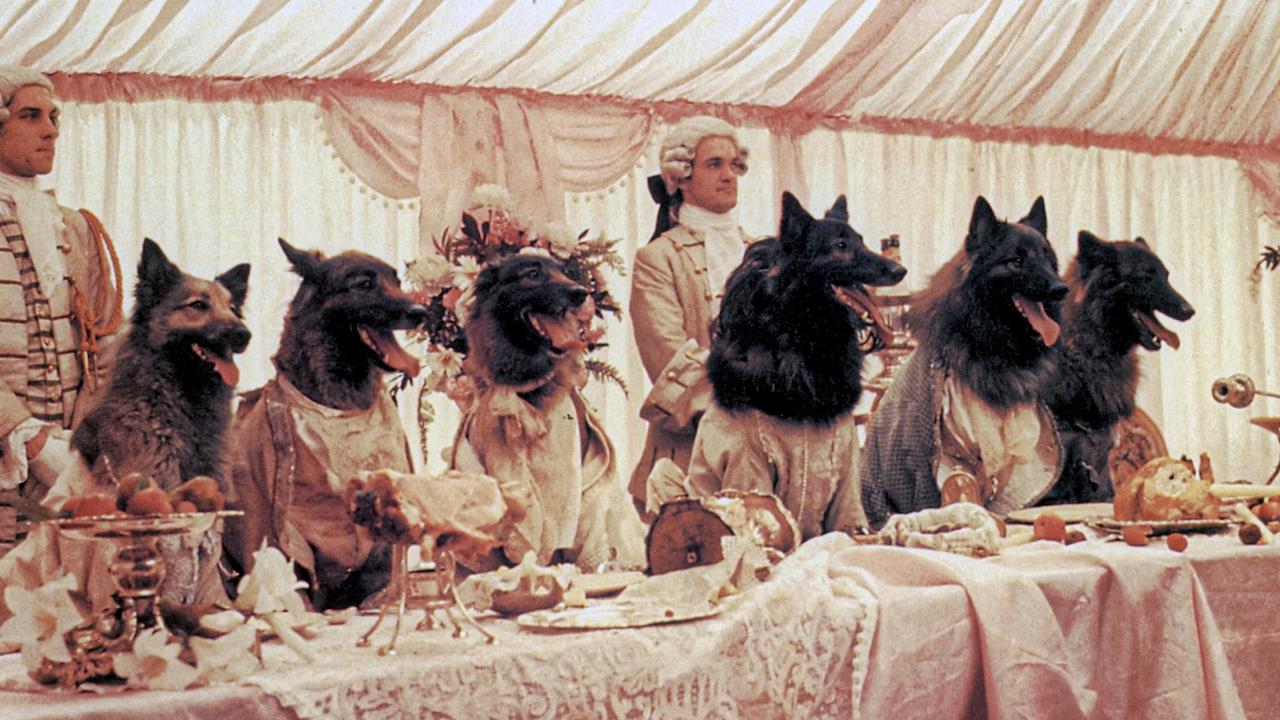
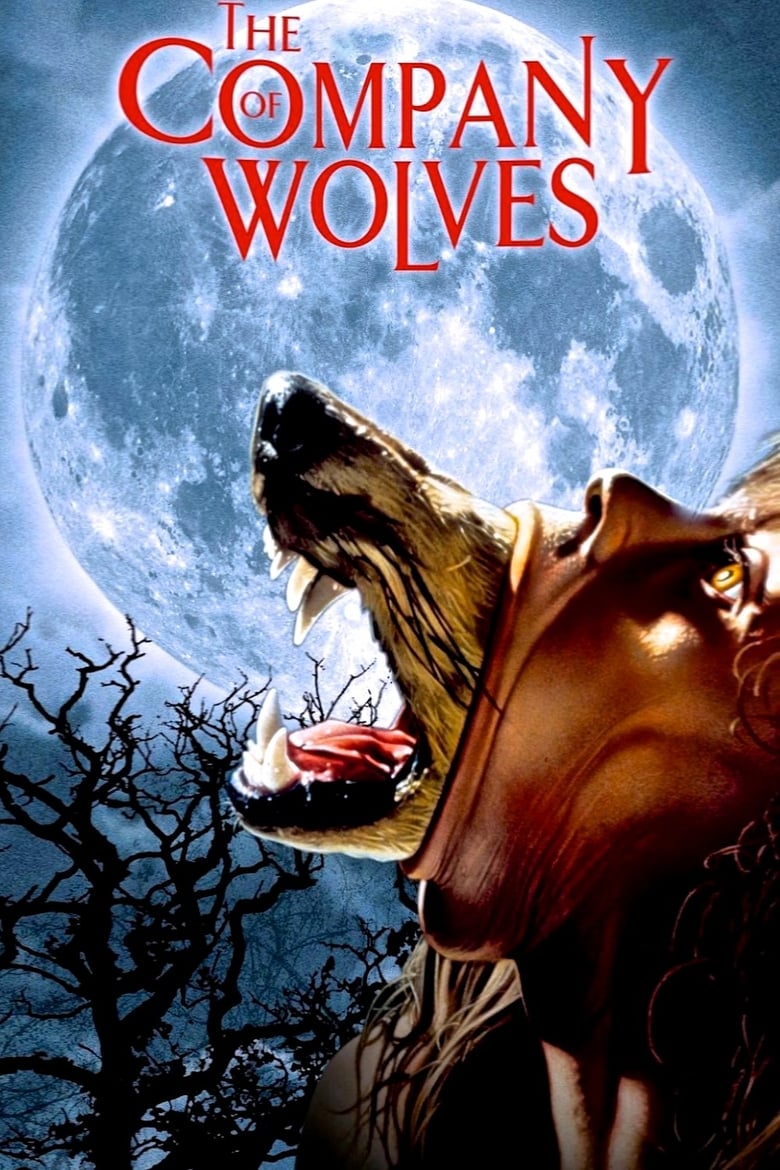
The Company of Wolves
“The Desire...The Fantasy...The Nightmare.”
An adaptation of Angela Carter's fairy tales. Young Rosaleen dreams of a village in the dark woods, where Granny tells her cautionary tales in which innocent maidens are tempted by wolves who are hairy on the inside. As Rosaleen grows into womanhood, will the wolves come for her too?
About The Company of Wolves
Why The Company of Wolves still works
There’s a present-day country house, a child who drifts into a fairytale world, and a filmmaker who treats nightmares like bedtime stories. That is The Company of Wolves in a paragraph: Sarah Patterson’s Rosaleen slips from domestic safety into a late 18th-century forest where family and danger sit cheek by jowl.
Neil Jordan made the film in 1984 and keeps it lean — roughly ninety-five minutes of horror, fantasy and monster-movie business that never lingers where it needn’t. The structure is simple but weirdly generous: tales are told inside the main tale, and those inset stories push and pull at the decisions Rosaleen must make. Angela Lansbury’s grandmother is the film’s moral map — the knitter of the red shawl who hands down rules about paths, apples and certain kinds of men — and those domestic instructions are what the film returns to, again and again, as safety and temptation begin to collide.
The idea that sets The Company of Wolves in motion
At its heart the film is framed as telling: Rosaleen comforts a wounded beast while telling it a story, and those nested tales are the engine that drives the main plot forward. The device keeps the movie dreamlike — one story bleeds into another, and we’re never quite sure where cautionary tale finishes and real danger begins.
Those stories are not decorative. They echo Rosaleen’s own choices. One tale shows a wronged woman who refuses to be silent, turning nobles into wolves; another follows a she‑wolf who is shot and later heals before slipping back to her other world through a well. Each yarn casts a shadow over Rosaleen’s journey through the forest.
This structure works because it treats folklore as instruction: stories offer both comfort and warning, and the film lets you feel how those two impulses can contradict one another. The conclusion isn’t so much a tidy lesson as proof that stories can change how you see people — and wolves — when you step off the path.
So the set-up is less about exposition and more about a rhythm: girl tells story, story refracts the girl’s choices, girl faces an encounter that forces those tales into the open.
Why Rosaleen matters
Rosaleen matters because she is the film’s compass: her dreams, her family ties and the warnings she receives steer everything that follows. Sarah Patterson plays the role, and the movie repeatedly returns to her domestic life — a present-day country house — only to slide her into those older, fairytale woods.
She is the child of grieving parents and the granddaughter of a superstitious grandmother who knits her a red shawl. Those small, homely details — the shawl, the rules about staying on the path and not picking up apples off the ground — are the film’s way of showing how family protection looks in practice.
What makes Rosaleen memorable isn’t a single heroic act but the shape of her dilemma: she wants safety and she also notices the huntsman who embodies danger and desire. When the huntsman’s nature is revealed and her grandmother is killed, Rosaleen’s need to protect herself becomes entangled with a confusing attraction that complicates the simple idea of fleeing or fighting.
By the end she is no longer merely protected; she’s transformed. Rosaleen’s shift from child inside a house to a figure who walks with wolves reframes the whole film: it’s less a tale about monsters than a story about who we become when the rules we were taught stop keeping us safe.
The Company of Wolves has more on its mind than the plot suggests
On the surface it’s tales of werewolves and hunters; under the surface it’s a film about the small rituals that families use to keep children safe. Family shows up as the practical work of warning, knitting and mourning, and Rosaleen’s choices are constantly read against that labour.
Parental protection in the film is not only about barricading a child. Granny’s stories teach rules: paths to follow, things to avoid. Those rules are offered because they are meant to preserve a household’s safety, yet the film insists those instructions can be inadequate — or even dangerous — when threats wear a human face.
Fear here is personal rather than abstract. Scenes where parents grieve, where villagers hunt, or where a bride discovers a vanished groom are all exercises in how communities respond when safety collapses. The film keeps asking whether staying at home under someone’s eye is truly protection, or simply postponing the moment you have to make your own choices. Freedom and humanity hook into that question. When characters choose to break rules — or are forced into new shapes — the movie allows a suggestion that humanity is not a fixed state but something contested by stories, family expectations and the wild needs of desire.
The Company of Wolves could not belong to any other decade
Released in 1984, the film arrives at a moment when genre was happy to be strange and small rather than loudly commercial. That matters because Jordan trusts a compact runtime — it’s ninety-five minutes — to do something slightly off-kilter: tell fairy tales for grown-up children without the obligation to explain every seam.
Labelled horror, fantasy and monster, it sits alongside other 1980s movies that liked mixing tones and borrowing from folklore. The decade gave directors permission to be a touch experimental inside genre frameworks, and this film uses that licence to let folk tales breathe alongside a modern family setting.
So while it wears the decade lightly (no retro posturing), it benefits from an era that allowed oddball, genre-blending projects to find audiences. It’s very much a product of 1984 in spirit: compact, a little eccentric and defiantly unshowy.
What has aged — and what hasn't
The film’s concerns about family, home and the work of keeping children safe have aged well because they remain recognisable. Granny’s rules — however blunt — still read as the kinds of instructions families pass down, and the film’s focus on the consequences when those rules fail still feels immediate.
Likewise, the way fear is personalised — grief in a household, a village hunting a suspected monster — translates easily to a modern viewer. Scenes where characters confront the results of old stories still carry emotional weight because they are about people reacting to the collapse of familiar protections.
Some elements are of their moment: the movie’s compactness and willingness to let stories interrupt a central plot is a style choice that will charm viewers who like a film that trusts mood over tidy answers. That approach can feel a little disorientating the first time you watch, but it’s part of what gives the film its lingering atmosphere.
Ultimately, if you watch it now you’re likely to find the core questions — who keeps us safe, and at what cost — still worth thinking about. The specifics of costume, effects or fashion might date a scene, but the family anxieties at the heart of the film remain clear.
Why The Company of Wolves still matters
People remember the film because it didn’t choose between being a fairytale and being a horror — it occupies the border and lets both do their work. The image of a girl who dreams herself into a forest, and of stories threaded through that experience, is the film’s signature move and the reason it lingers in memory.
There are particular scenes that stick: a killed wolf rearranging into a human body, a huntsman who turns out to be something else, and the moment Rosaleen comforts a wounded beast by telling a story. Those beats are memorable because they make folklore physical; the film takes abstract warnings and insists you live with their consequences.
Granny’s tales — the bride who loses a groom, the man who meets the Devil in a car — operate like mnemonic hooks. They’re little morality plays that echo in Rosaleen’s decisions and give the film a sense of continuity; the smaller stories keep returning to the same questions about loyalty, desire and retribution. Finally, the movie lives on because it trusts the viewer to hold ambiguities. Rosaleen’s transformation into something other than a protected child, and the wolves’ movement toward the domestic world, are unsettling images that keep rewarding re-watches: you can keep discovering what the film means about home and about how people change when rules loosen.
Does The Company of Wolves still hold up?
Yes — if you want a short, strange fable that treats family rules and the loss of childhood as things a film can taste and handle. It’s a 1984 movie directed by Neil Jordan that knows the economy of ninety‑five minutes and uses that to keep the momentum taut: dreams, stories and a handful of decisive encounters push Rosaleen toward a new life.
Don’t come expecting tidy answers. The film asks whether home is protection or a place that delays inevitable choices, and it leaves you with images rather than moral summaries: a grandmother’s red shawl, a hunter revealed, a girl who comforts a wounded beast and, later, wakes to wolves at her window.
For viewers interested in how genre can carry family concerns — about parental protection, fear and the cost of freedom — it still pays off. The Company of Wolves won’t always explain itself, but it will make you feel the rules you were raised under and the strange ways they change you.
If you watch it tonight, bring patience for stories inside stories and the willingness to be unsettled. The film doesn’t simply show monsters outside the home; it shows what happens when the household can no longer keep them out.