
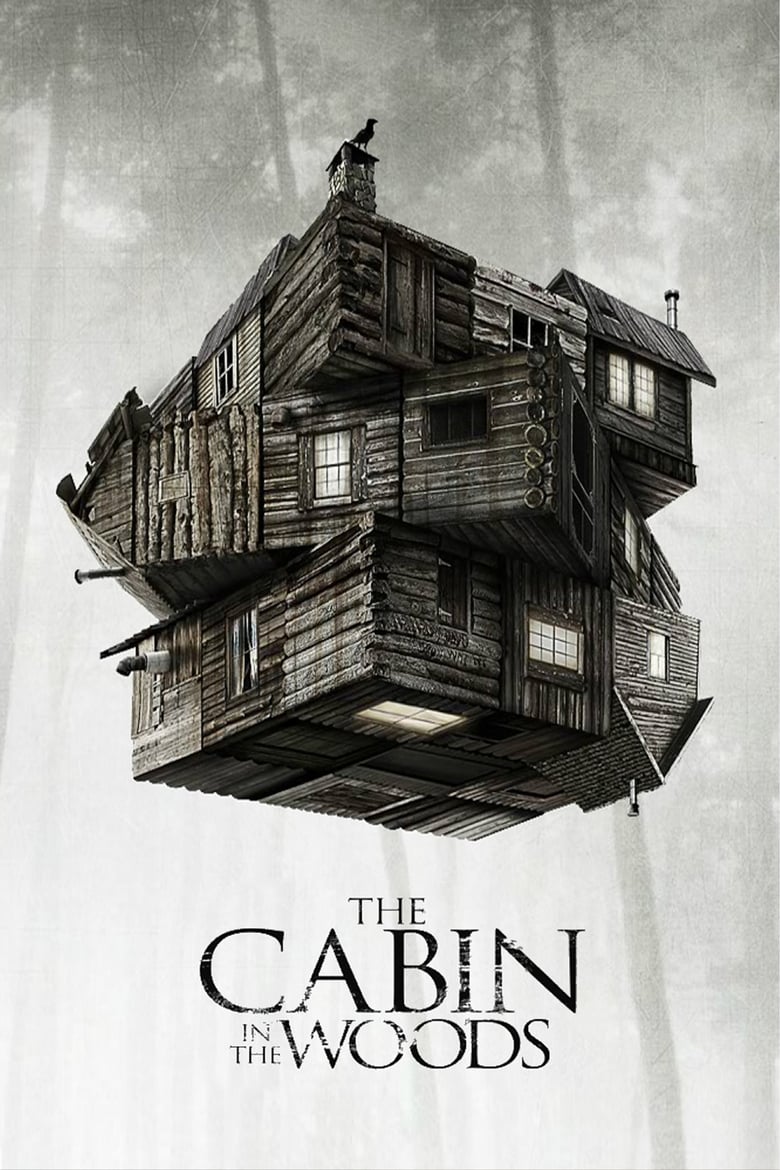
The Cabin in the Woods
“You think you know the story.”
Five friends set out for a weekend at a remote cabin in the woods, expecting nothing more than fun and relaxation. As night falls, they discover that something far more unsettling is at work and that nothing about their getaway is what it seems.
About The Cabin in the Woods
Why The Cabin in the Woods still stands out
There’s the familiar cabin set‑up: five college students head out for a weekend they expect to be uncomplicated. Then the film cuts down into an underground lab where two engineers are calmly preparing for something that looks nothing like a weekend getaway. That split — cosy teen horror above, clinical control room below — is the movie’s opening hustle. It gets you to play along, and then it rewrites the rules.
The twist isn’t just clever for its own sake. From the lab, technicians remotely tinker with the cabin and even alter the students’ behaviour with drugs, so the scares aren’t only about monsters in the trees; they’re about being manipulated. That’s where Dana Polk lands at the centre of things: she’s part of the weekend group whose discovery of a certain diary starts very bad business for everyone in the woods. Drew Goddard directs with an eye for squeezing genre beats tight — this is a movie that moves fast (95 minutes) and wears a handful of labels at once: monster movie, science fiction and, crucially, comedy‑horror. It winks at the audience while it stomps on expectations, and that voice is a big part of why people still pull it back out of the pile.
Why Dana Polk matters
Dana Polk arrives as one of five college students on a jokey weekend trip. That set‑up makes her feel recognisably expendable, which is precisely the point: the movie plays with archetypes until it finds the person it actually wants you to follow.
Her curiosity — the simple act of finding a diary in the cellar — tips everything over. That one discovery drags her into the Buckner family’s story and, by reciting what she reads, she accidentally wakes a whole line of horrors. It’s the kind of small choice that carries huge consequences, and the film makes you live with them.
Dana occupies more than the genre’s usual bit‑part because her actions connect the domestic past (the abused Patience Buckner) to the present chaos. Family is threaded through her storyline: the diary is a family’s scarred record, and that domestic violence provides the engine for the horror that follows.
Put plainly: the movie could have been about a handful of stereotyped victims. Instead, Dana’s discovery and its fallout make her the emotional fulcrum — the character whose choices force the plot to reveal how the system behind the scares actually operates.
The Cabin in the Woods has more on its mind than the plot suggests
On the surface it’s a monster movie with a handful of well‑timed gags. Below the surface it’s asking a quieter question about freedom: who gets to decide what we fear, and who decides what we sacrifice to keep going? The technicians in the lab are an obvious shorthand for that push‑and‑pull — they orchestrate the terror, and the students are the unwitting pieces.
Fear is treated as something engineered. The cabin sequence that ends with the Buckner family waking is a reminder that horror often wears familiar clothes: an abused domestic history, a hidden diary, an incantation murmured aloud. Those are classical triggers of dread, but here they’re plugged into a system that rather cheerfully exploits them.
Humanity is on trial, too. At one point the technicians discover that another site has failed and that this facility is humanity’s last hope. That raises the stakes beyond survival: it asks whether a civilisation is worth the rituals it requires — and whether obeying those rituals is morally defensible.
Parental protection and family motifs turn up in strange places: the Buckners’ brutal family backstory, the technicians’ strange duty to the Ancient Ones, the final choice between saving the world or letting it end. Courage and mortality are threaded through those decisions, and the film’s bleak finish — where the two survivors share a joint and watch everything fall apart — leaves you with a question about whether survival, at a terrible cost, is an unambiguous good.
The Cabin in the Woods could not belong to any other decade
Released in 2012, The Cabin in the Woods sits squarely in the 2010s: an era when mainstream genre films were comfortable mixing tones and playing with audience expectations.
The film’s comfort with blending monster movie mechanics and a science‑fiction conceit feels very of a moment when cinema was doing mashups without apology. It treats genre labels as useful tools rather than as strict rules.
That decade also liked its genre films to be slightly self‑aware, and this one wears that self‑awareness like a prop. It’s happy to be both a straightforward scare and a commentary about why we value certain types of storytelling. Put another way: this is a 2010s creature that remembers it has a brain. That attitude helps explain why it landed where it did in the decade’s landscape — part commentary, part carnage.
What has aged — and what hasn't
The movie’s central scares — the diary, the Buckners and the way a domestic horror detonates into full‑on undead violence — still land. Fear that comes from an unexpected personal history never goes out of fashion, and those sequences remain unpleasant in the right way.
Family as a theme also still holds. The Buckners’ violence is rooted in a household story; that particular strain of horror is timeless because it touches on private traumas. Scenes that connect a present character to a hidden family past keep working precisely because they’re personal before they’re monstrous.
What might feel a little more dated is the film’s very confidence in its meta routines. The joke of a control room pulling levers over clichéd archetypes is still funny, but modern audiences are now used to that idea being turned over and interrogated more deeply across many shows and films.
Even so, the emotional throughline — a small group of people making terrible choices under pressure — reads clearly today. When Dana opens that dusty diary and the consequences pour out, the core mechanics of dread and surprise are still effective.
Why The Cabin in the Woods still matters
There are a couple of images from the film that stick: a calm control room where technicians discuss rituals, and a subterranean temple that explains why the rituals exist. Those two halves — the lab and the temple — give the movie a memorable shape: it’s not just about monsters, it’s about the system that produces them.
The ritual idea also sharpens the movie’s stake: technicians in one facility learn another site has failed, making the American operation humanity’s last hope. That line reframes everything from a silly terror exercise into something with grim stakes, and it’s what keeps the final choices feeling consequential rather than merely gimmicky.
Discovering rooms full of caged monsters is a visual payoff that explains earlier mysteries (the objects in the cellar correspond to creatures). That reveal — monsters as curated catalogue — has an odd, grisly logic that stays with you: the film turns a prop‑filled cellar into a key to a larger machine.
Finally, the movie’s ending — when Dana and Marty decide humanity isn’t worth saving and watch the world end — leaves an unusual aftertaste. It’s nihilistic in a way that lingers; the story refuses a tidy moral tidy‑up and instead lets its characters make a small, private choice as everything collapses around them.
Does The Cabin in the Woods still hold up?
Yes — if you want a fast, clever horror that can be casually brutal and oddly thoughtful in the same scene. It wears its mechanics on its sleeve: five students at a cabin, a control room of technicians, and a temple explaining why the violence must continue. Those elements are all on display and they still work together.
Dana Polk is worth the ride: her discovery of the Buckner diary is the domino that topples the weekend, and the film trusts that a small, personal action can have huge consequences. The setup — manipulation from the lab, the staged archetypes, the cage of monsters — gives the story momentum until it decides to go bleak rather than neat.
The themes of freedom and fear are alive here. The movie keeps asking whether being saved is the same as being free, and that question still feels sharp as the final scenes let everything collapse and two survivors choose not to perpetuate the system. So: watch it. It’s 95 minutes of genre play that ends up asking something a little darker than most knockabout horrors. If you like your scares with a side of moral mischief and the occasional merman, this one still bites.