The Burning
“A legend of terror isn't a campfire story anymore!”
A caretaker at a summer camp is burned when a prank goes tragically wrong. After several years of intensive treatment at hospital, he is released back into society, albeit missing some social skills. What follows is a bloody killing spree with the caretaker making his way back to his old stomping ground to confront one of the youths that accidentally burned him.
About The Burning
What The Burning gets right
The film opens on one of those teenage pranks that feels funny until you realise how sideways it can go: campers shove a worm‑infested skull with candles into the caretaker’s bed. When he’s startled, the skull falls and a fire starts — and all of a sudden the laughter stops.
That blaze reaches a gas tank, the caretaker is engulfed and he runs into the river. He survives, horribly scarred after failed skin grafts, and five years later he’s released back into the world wearing a coat and hat to hide the damage. You can hear the wheels turning — the joke becomes an origin story, and the film never pretends to be anything other than a tight, mean little horror about the consequences of one awful night.
Tony Maylam directs, and clocking in at 91 minutes The Burning doesn’t waste time. It centres on a handful of counsellors — Todd among them — and the way a single event keeps growing into a legend nobody can ignore. For fans who like their scares unpretentious and swift, that economy is exactly the point.
Why Todd matters
Todd is planted firmly in the centre of the camp’s small social map. He’s one of the counsellors on duty when the petty terror and then the real terror start to intersect — the scene where Alfred frightens Sally pulls Todd and the other adults into the action.
That moment makes him more than background: he’s someone the story asks to notice and to act. There’s a scene where he and Michelle lead a canoe trip down Devil’s Creek, and scenes where he sits by the campfire telling the Cropsy story — the film keeps returning to him as a point of calm and responsibility.
Todd’s arc pushes him from teller of tales to someone who must actually face the threat. He’s knocked out while chasing Alfred, but he wakes up to confront the killer in an abandoned mine shaft with an axe — the plot explicitly places the responsibility of final opposition on him.
The film also gives us a Young Todd, which helps the character feel anchored in the camp’s past as well as its present. That continuity — boy who knows the place, man who must defend it — is why Todd is more than just another counsellor.
Why Brian Matthews's performance matters
Brian Matthews plays Todd, and one simple scene sums up how the role functions: when Alfred scares Sally as she leaves the shower, Todd is immediately part of the group reacting to it.
That placement matters more than any single line; the role requires someone who reads as part of the camp’s responsible core — the adult who notices when things have gone too far.
So what Matthews brings isn’t a flashy, standalone moment; it’s the steady presence the story needs whenever the campers’ daft behaviour turns dangerous.
In short: Todd’s role is to be the anchor, and the film keeps returning to him at the beats that demand notice and action.
The Burning has more on its mind than the plot suggests
At face value it’s a slasher built around a returned, disfigured aggressor. Underneath that surface, the film keeps nudging at three ideas: fear, freedom and authority.
Fear is obvious — the movie trades on a slow climb from practical joke to real danger — but it’s fear tied to memory: an old act comes back to punish, so the past hangs over the present.
Freedom is the campers’ currency. They’re young, away from home, testing boundaries; the kind of mischief that looks harmless at camp is treated here as the first domino in something darker.
And authority threads through both of those ideas. Counsellors are nominally in charge, yet their control is limited; the film repeatedly asks what happens when those in charge are unprepared for the consequences of a single reckless decision.
The Burning could not belong to any other decade
Released in 1981, The Burning sits at the clean start of the 1980s — a time when straightforward, no‑frills horror about teens and camp life was finding an eager audience.
Its short runtime and uncluttered set of characters feel like a movie that knows what it wants to do and does it quickly, which is very much an early‑80s approach to genre filmmaking: economical and direct.
More than style, the film’s story — a prank gone wrong that turns into an inescapable legend — fits the decade’s appetite for tales that turn youthful freedom into immediate peril.
Put simply: the year and the story belong together. This is an early‑80s slasher in form and temperament, and it wears that placement plainly without apology.
Why The Burning still matters
The film’s afterimage is a simple one: a prank with a skull turns into a fire, a man survives horribly burned, and years later that man comes back to haunt another camp. That clean origin — prank, burn, return — gives the movie a tidy, memorable spine.
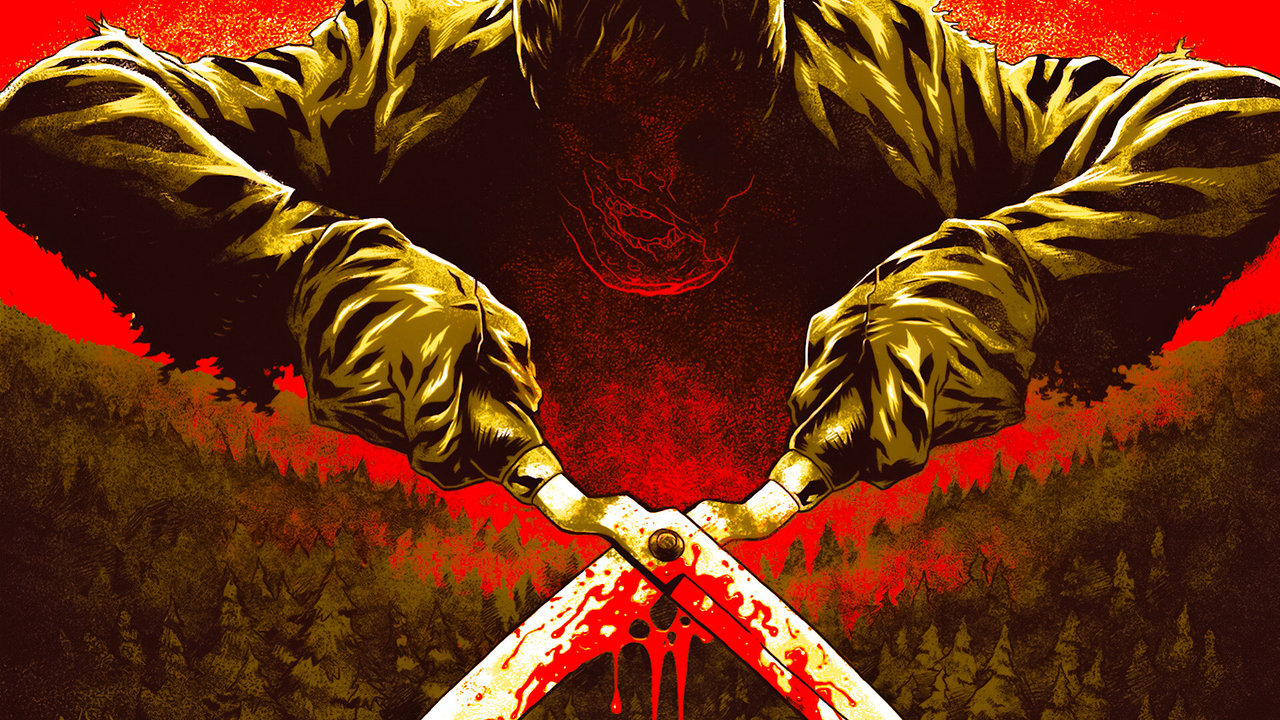
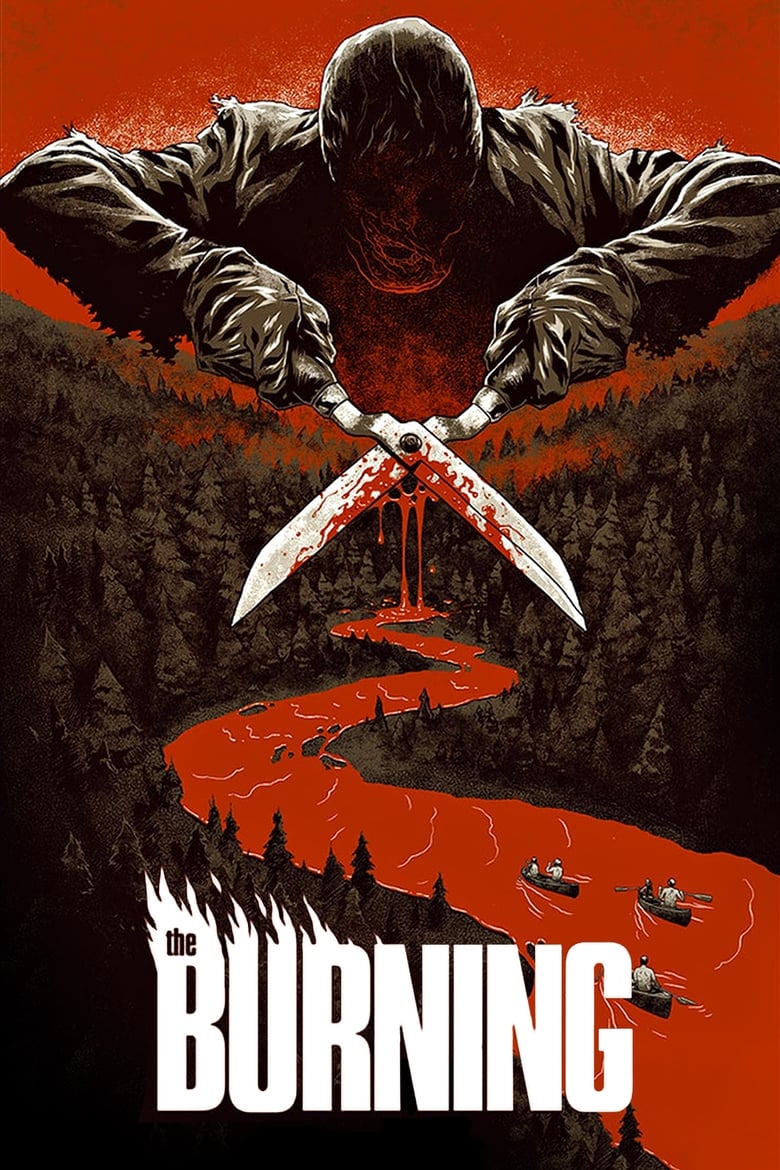
Cropsy’s survival and disfigurement make him a walking reminder of consequences. He hides himself, then escalates from killing in an apartment to arriving at Stonewater with pruning shears, turning a local legend into a very physical threat.
There are memorable set‑pieces — attacks from a canoe, the soft‑ball encounter, the stalking at the lake — and the film builds to a final confrontation where Todd and Alfred must face him in close quarters. Those moments are the reason people remember particular images and scenes.
Finally, the movie closes the loop by having new campers retell the Cropsy story around another fire. That final echo — the legend continuing — is the reason The Burning lingers: it doesn’t just end, it hands its own scarred tale to the next generation.
Does The Burning still hold up?
Yes — but with a caveat. If you want a concise, early‑80s slasher that gets from prank to payoff without fuss, The Burning delivers: 91 minutes, directed by Tony Maylam, focused on a small crew of counsellors and one very determined antagonist.
It’s worth watching for the way it turns a single stupid joke into a chain of escalating consequences. The prank with the skull, the fire that follows and the return of a badly scarred man give the film an almost mythic throughline that pays off in the final confrontation where Todd has to step in and finish the story.
The Burning isn’t trying to be cleverer or deeper than its materials allow; its pleasures are immediate and specific — the canoe attack, the lake scene, the mine‑shaft showdown. For viewers who enjoy that lean, spooky rhythm, it still works perfectly well.
So watch it when you want a compact, properly nasty campfire horror. It’s not subtle, but it doesn’t pretend to be — and sometimes that bluntness is exactly what a campfire story needs.